
Peak Oil is You

Donate Bitcoins ;-) or Paypal :-)


Page added on July 20, 2010

Peak Oil – yet another Inconvenient Truth
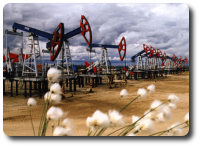
After Peak Oil was for a long time only discussed by a small group of international geologists and former employees of the large oil companies, in the meantime relevant organizations such as the International Energy Agency (IEA) in Paris or the German Federal Institute for Geosciences and Natural Resources (BGR) in Hanover have also confirmed that peak oil will probably occur before the middle of this century.
In recent times – before the oil catastrophe in the Gulf – even a much earlier date for Peak Oil was considered possible. In 2008, the Chief Economist of the IEA declared in an interview that worldwide oil production was expected to lag behind the global increase in consumption before 2020.
Rising oil prices linked to the financial crisis
Even the global financial crisis can be seen as a harbinger of Peak Oil. To take this into account as a possibility to be researched seriously seems to be too alien for academic economists whose models do not reflect the bio-physical foundations of economics, and the exchange of societies with nature, their ‘metabolism’.
Yet the causal relation between rising oil prices and the financial crisis is all too obvious. In the years before the crisis, the oil price had increased to US $ 150 per barrel and the soaring fuel prices had also pushed up food prices.
The more expensive commuting by car between home and work became, the quicker the lower middle class in the USA were lured into risky mortgages for purchasing suburban houses, falling into payment arrears, and the mortgage crisis took its course. Once again, the oil price proved to be a key variable for an industrial civilisation based on fossil energy sources.
Oil Peak will end to seemingly limitness growth
After the middle of 2008, only the even greater drama of the financial crisis pushed aside the tapering of oil – as well as the food crisis, which had even prompted food riots in some developing countries. As expected, the global recession led to eased tension on the world oil market, and the fall in price to $ 40 per barrel appeared to belie the Peak Oil forecasts. However, that could turn out to be a premature conclusion.
As soon as the world economy is back on track, and that’s what the economic stimulus programmes of all governments are aiming at, a new increase of the oil price is to be expected, particularly since the necessary investments in exploration and development of new oil fields have also been affected by the recession.
Possibly, there will not be a prominent Peak in oil production, but rather a corrugated plateau, on which the global economy pushes the oil price alternatively upwards and then lets it drop again with several dips and recoveries. In this phase, the debate about Peak Oil will continue, until, in ten or twenty years, the no longer deniable geological facts will shake the blind faith in limitless growth.
Savvy interpreters of capitalism have argued against the possibility of Peak Oil that the exorbitant oil price increases before the financial crisis were not indicative of a real shortage of supply of crude oil but could be explained by speculation alone. In fact, speculation did push up oil prices to excessive heights. But no speculation comes without any reason; in this case, the forecast of real shortage.
The world’s oil reserves are finite; and menkind will have to learn to use fossil energy sources more efficiently. If understanding climate change still requires an intellectual effort in order to see the connection – for instance between driving a motor car, global warming and the necessity to adjust one’s own behaviour – the oil price increase will certainly force drivers to do so at petrol stations.
While every rainy summer and every hard winter stokes up doubts about the climate forecasts, although these are short-term weather phenomena and not climate changes, there can no doubt about the finitude of both Earth’s resources and its capacity to absorb all emissions of industrial civilization.
Hoping for alternative energy sources
Now, all sides are counting on a Green Economy: it seems that we all just have to firmly believe that researchers and engineers worldwide will develop alternative energies into marketable products that are similarly fungible as crude oil at precisely the right time; in this way people in the old industrialized countries would not have to abandon their lifestyles, and the middle classes in the newly industrializing countries would not have to give up their hope of comparable prosperity.
And yet, during the transition from the fossil-based industrial society to a post-fossil or solar industrial society there will be frictions and conflicts, and maybe even a longer transitional period, in which the radical structural breaks will be accompanied by economic crises before the new age makes headway.
Even though there are still enough coal reservers for several hundred years, the climate-harming changeover from oil to coal must be avoided at all costs, unless technical progress enables us to separate the CO2 associated with coal combustion as far as possible and store this safely in the ground.
Effective climate agreement needed
An effective climate treaty and the development and worldwide introduction of more economical alternative energy technologies must prevent the changeover from oil to coal after Peak Oil. If the worldwide consumption of fossil-based energies were to be radically restricted with the help of an international climate protection offensive, Peak Oil could be deferred for decades and the associated world economic crises and structural breakdowns could be avoided. Effective climate policy is thus the best safeguard against the unpleasant consequences of Peak Oil.
Complete extraction of reserves after peak oil can be avoided by an effective international climate agreement that would force, like a demand cartel, oil producing countries to leave their oil in the ground. Alternatively, if renewable energies would become as fungible as oil and even cheaper, everybody would shift away from oil. At present however, both options are not very likely, so we will have to prepare for peak oil and its dramatic consequences.
Leave a Reply