
Peak Oil is You

Donate Bitcoins ;-) or Paypal :-)


Page added on March 1, 2013

Peak Oil, The Shale Boom and our Energy Future: Interview with Dave Summers
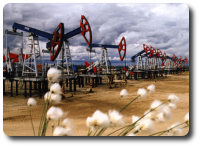
This where we stand, and it’s a fairly bleak view: Peak oil is almost here, and nothing new (with the possible but unlikely exception of Iraq) is coming online anytime soon and while the clock is ticking – forward movement on developing renewable energy resources has been sadly inadequate. In the meantime, the idea that shale reservoirs will lead the US to energy independence will soon enough be recognized as unrealistic hype. There are no easy solutions, no viable quick fixes, and no magic fluids. Yet the future isn’t all doom and gloom – certain energy technologies do show promise. We had a chance to speak with well known energy expert Dave Summers where we cut through the media noise and take a realistic look at what our energy future holds.
Dr. Dave Summers – scientist, prolific writer and author of Waterjetting Technology, is the co-founder of The Oil Drum and currently writes at the popular energy blog Bit Tooth Energy. From a family of nine generations of coal miners, Summers’ patented waterjetting technology enables the high-speed drilling of small holes through the earth among other applications. In an exclusive interview with Oilprice.com, Dr. Summers discusses:
• Why new drilling techniques aren’t enough to put peak oil off
• Why the shale revolution will not lead to energy independence
• Why the potential of nuclear energy isn’t being realized
• Why ‘plan B’ for Keystone isn’t beneficial to the US
• Why we should be worried about the South China Sea and the Middle East
• How low natural gas prices cannot be sustained
• Why Europe’s shale future is still indeterminate
• Why the coal industry’s days aren’t necessarily numbered
• Why geothermal energy has the greatest potential
• How media manipulation figures in to the climate debate
• Why nuclear fusion remains a fantasy in our lifetimes and beyond
Interview by. James Stafford of Oilprice.com
Oilprice.com: What do you foresee in our energy future? Will new extraction techniques and advances in drilling technology help put peak oil off?
Dave Summers: Most of the “innovation” in energy extraction from underground has been known for some time. It’s just taken time to work its way through to large-scale market use. There are techniques such as in-situ combustion, whether of coal or oil sand, that are now being developed that show some promise. But each increment of gain is at higher cost, and is chasing after a smaller target volume. Even if better methods of drilling were developed (and we have looked at several) in the cost of overall production this would not, in itself, provide that much benefit.
If ways could be found to economically release more hydrocarbon from existing and drilled reservoirs then this might have a significant impact, but though this has been sought after with lots of effort, there has been no magic fluid or way of doing that yet.
Peak oil is about here, though we can argue about fractions of a million barrels of day, it is hard to find any large volumes that can be expected to come onto the market in the next decade (with the possible, though unlikely, exception of Iraq). The clock on this has been ticking for some time, and some of the moves toward increasing renewable energy sources (though motivated by a different driver) have helped mitigate some of the problem, but sadly not enough.
Oilprice.com: Can the shale boom be replicated in Europe?
Dave Summers: The technology for developing the hydrocarbon volumes in tight shales and sands is now becoming well defined, and can thus be transferred to Europe. It will likely make that transition fairly quickly. That’s why some countries have American partners in their development. However, the environmental movement that is strongly against the technology is more entrenched, and has more political clout in Europe, so this may slow the transfer.
At the same time, though there are significant volumes of shale, it is only after wells have been drilled and fracked that one can get an estimate as to whether or not the resource can be turned into a reserve. This information is still a bit sparse, and it makes it difficult to be definitive at this time.
Oilprice.com: Is the Keystone XL pipeline vital to the US quest for energy independence?
Related article: The End Game for Oil & Gas Juniors: Interview with Chris Cooper
Dave Summers: The pipeline is something that is a convenience in getting more oil from Canada into U.S. refineries. There are other steps (pipelines now flowing backwards for example) that are being taken to deal with the situation. As long as the sole export market for the oil is into the United States, Canada has to take the price that it is offered for the oil, or not sell it. Should a second sales path (such as a pipeline to the coast) allow significant sales to other customers (say China) then the price will likely go up, and supplies to the US will get more expensive, and potentially smaller.
Oilprice.com: What happens if Keystone isn’t approved – is there a plan B?
Dave Summers: On whose part? The Canadians will run a pipeline to the coast and make more money over time. In the short term, the US will be able to balance any shortfalls with domestic production, but in about three years as that starts to fall off then life might get more difficult. It takes a long time to develop a new resource.
Oilprice.com: How much of a role will fracking play in US efforts to reduce carbon emissions?
Dave Summers: Grin, well that is a little bit of a loaded question. Any drop in carbon dioxide levels that will come from changing from coal-fired power stations to gas-fired are not really going to be significant on a global level, and the changes are more likely be market driven, than for political reasons.
It is hard to see, basic operational costs being what they are, that the low price for natural gas can be sustained that much longer. Any slippage in the supply, however, will drive the price up and that will cause a re-equilibration of the market. How that plays out against the political considerations in the Eastern states is, as yet, anybody’s guess.
Oilprice.com: If energy independence for the US comes at the cost of reducing carbon emissions, and vice versa, which target do you think they should aim for?
Dave Summers: The hope that hydrocarbon production from the shale reservoirs of the United States will lead to energy independence has about a couple of years of life yet before it is shown to be the unrealistic hype that it is.
The continuing rise in energy costs, both here and in Europe, is likely to continue to sap any strong drive toward growth and a rapid recovery from the events of 2008. This cost factor is not getting the recognition that it should, and this unrelenting drain on the global economies does not have an easy resolution. The quick fixes anticipated from investment in renewable energy has not been found to really help that much, and while every little bit helps, there are no magic solutions on the horizon that will help in the intermediate term and sooner.
And after a certain number of cold winters it becomes harder to convince the general populace that global warming remains a critical problem.
Oilprice.com: Do you think the coal industry’s days are numbered?
Dave Summers: Ultimately no, but in the short term there will be a reduction in demand for coal in Europe and the United States. But in the longer term there is still no viable replacement fuel that will meet the needs of the growing power markets in places such as China, India and most of Asia and Africa.
As the costs for imported fuels rise, the need to develop indigenous resources will become more vital, while the selection of the cheapest available import to sustain the competitiveness of domestic industries will likely surmount the pressures for change.
Oilprice.com: Many claim that oil consumption in the US will continue to soar to record levels, yet due to the fast rate of decline in production from fracking wells compared to traditional wells this seems unlikely. What do you predict will be the maximum oil production that the US could achieve?
Dave Summers: It is difficult to foresee where all the additional oil that will be needed to meet the projection of sustained growth in supply is likely to come from. Increasing production depends on finding enough people with enough money to fund the drilling costs, and without sustained successful investment, after a while the pool of likely investors shrinks.
Again I don’t see the current trends being sustained for more than a couple of years, for that reason. It also requires good potential sites for drilling, and those are becoming smaller and harder to identify.
Oilprice.com: Which renewable energy technologies do you think hold the greatest potential to make a meaningful addition to global energy production?
Dave Summers: I have always thought that we did not take enough advantage of the underground. There is a small but growing use of geothermal energy (and ground source heat pumps) but there are other advantages to putting buildings and other construction underground that will likely eventually dawn on enough people that it will become a more sustainable industry.
But I have been waiting for that to happen for 40 years, and it may well take as long again before it comes to pass.
Oilprice.com: Who or what is the biggest obstacle to renewable energy?
Dave Summers: Depends on where you are. In Botswana it was finding folk to do the maintenance in the villages. I look out of my window at a snow-covered back yard, in a state where neither wind nor solar has much viability, hence the local university is installing a geothermal system. Where do I get the heat? From the surrounding forest, I purchase wood almost every year for use in a tile stove, and the firebox is wrapped in copper tubing. But, as the British experience showed centuries ago, burning wood is a luxury, and coal was cheaper, as the forests disappeared.
Sadly the folks that discuss future energy alternatives tend to come to the discussion with their own agendas, so that it is difficult to have an open discussion that does not end up in emotional argument.
Related article: Can Leak Detection End the Pipeline Impasse? Interview with Adrian Banica
The world desperately needs new forms of energy to replace those that are starting to run out. The time available before those needs become critical is getting shorter, and thus an open debate is vital. But because of the politics there have been a number of decisions to move technology forward before it was really ready, and that has hurt new development, and is likely to continue to do so.
Keeping solar panels clean without scratching and power degradation has been something I first discussed in an ASTM panel over 30 years ago. Maintenance is likely the biggest hidden problem at the moment.
Oilprice.com: Which geopolitical hotspots should we be keeping our eyes on over the coming year for potential problems?
Dave Summers: The situation in the China Sea is starting to become a greater concern, and it is a reflection more, I believe, of the potential energy sources under the sea, than it is for any particular right to own tiny islands in the middle of nowhere.
The Middle East is always a worry. Once the can of democracy was kicked open the ways in which this will change things in the region can only be guessed at. Regime changes are rough and rarely run smoothly. Policy changes mean changes for investors, and there are many groups in the region that have little love for the United States or for many of the countries of Europe.
Oilprice.com: If energy demand around the world continues to grow at current rates, how do you imagine the future? Will it lead to war? Large differences between the top and bottom echelons of society? Wide spread starvation? Etc.
Dave Summers: Sadly wars have been fought over resources since the beginning of time, and in the last few decades human nature has not changed that much. The impact of mass communication, and its global reach may make it easier to tell the people on both sides the “truth”, which is always adjusted as a function of who is telling it, and the possible impact of fabricators over conventional manufacturing might, however, make more of an impact faster than currently anticipated.
The mass elevation of people into the middle class in Asia cannot be reversed, and the pressures that this will bring can provide unyielding momentum that leads to conflict, particularly where there is some control over communication.
There have been enough breakthroughs in agriculture that the risks of mass starvation are fading, though the availability of water is a constant concern in a number of countries. Spreading information, and providing assistance at the lowest levels of production will come about with the spread of electronic communication and this will have a beneficial impact.
Oilprice.com: How has media manipulation figured in the climate change debate?
Dave Summers: As long as journalists are advocates rather than reporters the true story will not emerge. The lack of journalistic challenge in the mainstream media to the deliberate deception employed in hiding the decline in temperature prediction accuracy with the tree rings which dropped just as temperatures were rising, thus invalidating the “hockey stick”, was an early indication that media manipulation was going to be a critical factor in this debate.
How long must global temperatures remain relatively stable before someone brings this up as a front page story? The amount of money involved with those who espouse anthropogenic causes of climate change dwarfs the funding that has gone to those who raise questions when so many papers so this “may” happen, and that “might” occur. And those who pay the bills . . . . .
Oilprice.com: Lockheed recently came out with a statement predicting that they will have a working nuclear fusion reactor within the next 10 years. If this prediction does come true – do you see this having any meaningful impact on the energy sector?
Dave Summers: Um! Nuclear fusion has been the next great thing in energy production for the full extent of my professional life. It is likely to continue to be so through the professional lives of my children, and likely grandchildren.
Oilprice.com: What are your thoughts on nuclear power? Is it essential to meet our growing energy demand?
Dave Summers: Nuclear power has a considerable potential to help solve some of the shortfalls in energy that are now appearing on the horizon. Unfortunately the long delays in construction, some of which are due to permitting issues that have become political footballs, make it a hard investment to justify.
The move to construction of smaller reactors may well have considerable benefit, and the development of thorium has also got its place. But to make progress requires political will, and that is sadly lacking, and will remain so until energy demand rubs the noses of the body politic in the reality that there is no ideal, only the viable.
Oilprice.com: Dave thank you for taking the time to speak with us. Hopefully we will have a chance to catch up later in the year.
For those of you interested in seeing more of Dave’s work please take a moment and visit his fascinating blog: Bit Tooth Energy
14 Comments on "Peak Oil, The Shale Boom and our Energy Future: Interview with Dave Summers"
Ian McPherson on Fri, 1st Mar 2013 6:06 pm
I was hoping for more from this article. I was particularly disappointed to find out he’s a climate change denialist. He should stick to what he knows.
Global warming over the last 16 years
http://www.youtube.com/watch?v=u_0JZRIHFtk
J-Gav on Fri, 1st Mar 2013 6:21 pm
Ian – Though there are some valid points on energy here, I share your disappointment on climate change.
“Relatively stable” temperatures he says? In some places but not the Arctic, where it actually counts a lot more due to the feedback loops. In addition, a recent report determined that a 1.5°C rise (we’re at about 1° now) over pre-industrial societies is enough to set off vast permafrost methane releases. I don’t see any way we’ll avoid that so, yes, “bleak” is the picture but not for all the right reasons in this article.
Ian McPherson on Fri, 1st Mar 2013 6:45 pm
He’s also full of nonsense about the potential of Geothermal energy. Nathan Lewis has done the numbers on Geothermal and found that the maximum potential is 11TW worldwide (with 100% efficient heat engines). Fast forward to 38 minutes.
Powering the Planet
http://www.youtube.com/watch?v=f1sYmBX7rNA
The real potential is from Solar energy, which could produce 600TW worldwide. That’s the future.
GregT on Fri, 1st Mar 2013 7:37 pm
He should also refrain from commenting on food production. Electronic communication will have little to do with solving the world’s impending food crisis.
From the OECD-FAO Agricultural Outlook 2012-2021:
“Agricultural production needs to increase by 60% over the next 40 years to meet rising demand for food. Additional production will also be necessary to provide feedstock for expanding biofuel production. Increasing agricultural productivity will be central to containing food prices in a context of rising resource constraints and will be a key factor in reducing global food insecurity.
At the same time, there is a growing need to improve the sustainable use of available land, water, marine ecosystems, fish stocks, forests, and biodiversity. Some 25% of all agricultural land is highly degraded. Critical water scarcity in agriculture is a fact for many countries. Several fish stocks are over-exploited or at risk. There is a growing consensus that extreme weather events are becoming more frequent and climatic patterns are changing in many parts of the world.”
BC on Fri, 1st Mar 2013 7:37 pm
We’re boiling here in the Kalahari desert! Where does he get off talking global cooling, like a new ice age or something?
Ian McPherson on Fri, 1st Mar 2013 8:12 pm
He’s a coal guy. ‘Nuff said.
J-Gav on Fri, 1st Mar 2013 8:22 pm
Ian – I’ll go along with the idea that building out more solar in Australia would make sense. But those direct current transmission lines are not cheap to lay in and power loss at what, 6-7%? Arrays lose efficiency if you don’t hose them down fairly regularly (dust; where’s the water coming from and who else needs it)?
There are some other problems with solar (finding investors for example, as fossil fuels still have a stranglehold there) but I’ll admit to having a secret preference for it over other alt-energies. To convince me that it might be a bona fide game-changer though, energy-conversion efficiency would need about a 50% boost.
Ian McPherson on Fri, 1st Mar 2013 11:58 pm
Cost would also have to come down radically. I like what Nathan Lewis at Caltech is doing. He is developing a system based on a “solar paint” idea that can store the electricity in carbon-neutral liquid fuels, without using wires, using only rainwater. He is planning to cut the cost dramatically, compared to today’s PVs. I have no idea how he sees the cleaning issue. The idea’s based on nanotube technology, so they may clog up or something I suppose. Nothing’s perfect…
BillT on Sat, 2nd Mar 2013 3:12 am
Solar panels work best in dry, sunny climates, which also happen to be very dusty and paint will still be blocked with dust. Not to mention that dust driven by winds are a form of sandpaper.
As for his comments, he is typical of the ‘know it all’ scientists who want to venture into fields that he does not understand or that does not pay his salary. Like asking a movie star about peak oil. “Peak what?”
We have passed peak oil unless you want to count cooking oil and moonshine.
Nuclear is so deadly, we were fools to ever use it for anything not medically necessary.
Lack of water is going to limit all of the fraking dreams of the petroholics.
This was a disappointing article.
Ian McPherson on Sat, 2nd Mar 2013 4:39 am
I may have misled you on the “solar paint” idea. That’s a term Lewis uses to explain how cheap solar panels have to get to achieve their potential. But his invention would perhaps be better called solar carpet. He explains it here:
http://www.youtube.com/watch?v=4NtwtYl24T0
How you’d clean this stuff, I don’t know. Lewis may have an answer.
kiwichick on Sat, 2nd Mar 2013 8:04 am
j gav
keep watching
@ least two companies i know of are predicting significant improvements
econ101 on Sat, 2nd Mar 2013 11:53 am
The author starts with a lie:
……………………………………………
This where we stand, and it’s a fairly bleak view: Peak oil is almost here, and nothing new (with the possible but unlikely exception of Iraq) is coming online anytime soon
……………………………………………..
Has the author forgotten that we have all the oil we need on federal lands that are off limits?
Possibly he could have started with:
“Now that politics seems to be making peak oil a reality, if we can stop fracking, its time to turn our attention to abusurdly expensive and unreliable alternatives is upon us.
We like expensive alternatives because we think we are paying for a clean environment. We dont like expensive conventional energy because it is ruining the environment.
When conventional energy is expensive civilization collapses. Excessively expensive alternatives will make the economy thrive because of economy of scales.”
A start like that would have kept me on board longer, that’s for sure!
Dave Summers on Sat, 2nd Mar 2013 7:33 pm
Gentle Folk:
In regards to climate I have actually looked at the temperature records for virtually every station in the contiguous US, and written about that record, by state, at Bit Tooth.
I have also looked into the Medieval Warming Period and the considerable evidence that it was warmer than today – so that regions that are now permafrost and were then farms did not generate the “runaway” increase in temperatures that fear mongers threaten.
In regard to Peak Oil, it is not what is in the ground, it is how and how fast we can recover it.
Ian McPherson on Sun, 3rd Mar 2013 2:24 am
Dear Dave,
You have not addressed the issue. You claimed that “global temperatures remain relatively stable”. Unfortunately, that’s not the case. From Skeptical Science:
Global warming over the last 16 years
http://www.youtube.com/watch?v=u_0JZRIHFtk
There are many climate myths. You are simply perpetuating the latest one. Here are most of them:
Global Warming & Climate Change Myths
http://www.skepticalscience.com/argument.php
I’d suggest you stick to coal, which you are obviously qualified to comment on. You’re not a practicing climatologist, that’s for sure.