
Peak Oil is You

Donate Bitcoins ;-) or Paypal :-)


Page added on June 12, 2014

Peak Oil Replaced by Oil Abundance
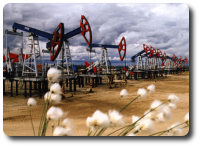
“Peak oil” has vanished from public discourse, replaced by news about the North American surge of unconventional petroleum liquids produced from oil sands, shales and tight formations.
Unconventional oils, we read repeatedly, are a”game changer” that will render North America “energy independent,” will offset declining production elsewhere in the world, and will prevent oil prices from rising.
Indeed, accepted wisdom in the industry today is that markets are over supplied and, sooner or later, prices must weaken.Public discourse is driven by over-simplification. During the peak of peak oil popularity, writers rarely emphasized the principal caveats.
Peak oil was most applicable to conventional oil in regions, like the contiguous states of the US,where past exploration drilling was dense and a long history of reservoir performance was well established and transparent. Peak oil also played down possible technical advances in petroleum exploration or production as well as price considerations. Now, seemingly, peak oil has lost its relevance in the face of “oil abundance.” Yet this widely held perception is just as much an oversimplification as was the popular version of peak oil, and just as misleading. The caveats are too easily omitted. Industry analysts differ over how long the dramatic increases in US shale oil production can be extended, with some suggesting the boom could last less than a decade. An even more important caveat is that some other nations, where an ever-increasing supply of conventional oil has been taken for granted, now seem unable to expand output significantly.Various oil-producing countries, including members of Opec, fall into this category. The reasons are different in each case, and are not limited to the geological arguments that underlie peak oil. Investment in incremental production capacity is inhibited by increasing costs, inadequate fiscal terms, and geopolitical and security issues — including civil strife and regional separatism (Iraq); popular anti-government demonstrations (Algeria, Venezuela); piracy and oil theft (Nigeria); collapse of central government authority (Libya); and sanctions (Iran).
The unspoken assumption that Opec, with its abundant reserves, will serve collectively as the ultimate swing supplier,able to provide additional oil whenever called upon, deserves careful re-examination. Ten years ago, the International Energy Agency projected Opec production would soar to nearly 50 million barrels per day by 2020. Instead, over the past 10 years, Opec output has stagnated at an almost steady 30 million b/d while global oil demand has grown by 8 million b/d. The anticipated Opec supply growth failed to materialize, even when members were not subject to individual supply quotas.Some might argue that Opec effectively restrained production — with or without quotas — to maintain prices.However, most members, with the exception of Saudi Arabia, the United Arab Emirates and Kuwait, appear to be producing at capacity. Optimistic announcements of future capacity increases sometimes do not take into consideration realistic declines in the output of older producing fields. And many Opec members have failed to meet expectations
3 Comments on "Peak Oil Replaced by Oil Abundance"
rollin on Thu, 12th Jun 2014 7:37 pm
What happened to supply and demand? If oil is so abundant, why is the price so high?
Because it is lagging behind demand and only by adding in tight oil,heavy oils, tar, alcohol and NGL’s can the numbers come near the demand. Of course demand is suppressed due to high cost, so that is one way to make it all work.
BC on Fri, 13th Jun 2014 10:09 am
in the near future the oil price will be so high that only the very rich will regularly buy it invest in some bicycles or walking shoes at least the air will smell better.
Davey on Fri, 13th Jun 2014 10:40 am
Bc, oil much higher will be the global systems death rattle. There will be few rich if any and many fewer people as our complex system collapses.