
Peak Oil is You

Donate Bitcoins ;-) or Paypal :-)


Page added on July 12, 2014

Peak Oil in Russia

This week no energy relevant developments came out of Iraq. The Islamic State seems to be still consolidating its territories, facing scant opposition from the Baghdad government. But the spectacular advances seem to be done with, at least for now. Few western media outlets are able to properly report the situation, with gory news now focusing on Israel and Gaza.
The news meat-grinder has recently been profuse in news regarding the breakaway of the BRICS from the IMF and other OECD controlled institutions. This was a setting trend but that has been accelerated by the backlash of the US spying programme and, more importantly, by the intervention of NATO in Ukraine.
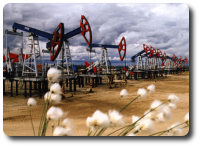
In the midst of all this comes almost unnoticed what is probably the most important energy news of 2014: Petroleum extraction in Russia has definitely peaked. Russian authorities are openly bracing for the ensuing decline in exports and revenues. This was one of the points I recently raised supporting the hypothesis of a return to price volatility.
UPI
Russian oil production expected to drop
Daniel J. Graeber, 07-07-2014An anticipated drop in oil production by 2016 is expected to hurt the Russian economy, the Russian Finance Ministry said Monday.
The ministry said Monday it expects a $4.5 billion decline in oil export revenue because of an anticipated 6.3 percent drop in oil production from 2014 figures.
The ministry said the federal budget next year will receive about $2.2 billion less than expected because of a contraction in exports.
In all likelihood, 2013 will go in history as the year Russian Petroleum peaked. But the decline will be far from dramatic and Russia can still count on relevant revenues for decades to come, adding to important Gas and Coal exports. It is primarily this resource might that allows Russia to lead the charge towards alternative institutions to the IMF and the World Bank.
Russia and India Report
Russia approves creation of BRICS foreign exchange fund
Alexei Lossan, 07-07-2014The Russian Government signed a draft agreement on the creation of a $100 billion pool of currency reserves that the BRICS countries are forming to guard against financial shocks. According to the document, the countries’ dollar reserves will remain on the balance sheets of their central banks. However, these reserves can be made available at the request of one of the parties.
Vasily Yakimkin, a senior lecturer at the Russian Presidential Academy of National Economy and Public Administration (RANEPA), says two substructures are being created under the project. The stabilisation fund with capital of $100 billion would be a direct competitor with the IMF. China would contribute $41 billion, Brazil, Russia and India, $18 billion each and South Africa $5 billion. The second substructure would be a new development bank will come into being with a start-up capital of $50 billion, with each country contributing $10 billion. “As expected, the agreements on the creation of these structures will soon be signed at the summit of the heads of the BRICS countries in Brazil on July 15,” Yamikin says. “The structures will start functioning starting in 2015.” He adds that each of the BRICS countries wants to host the headquarters of the new institution.
Negotiations among the BRICS are well advanced and a definitive announcement should come in a matter of days.
EUObserver
Brics to open alternatives to World Bank, IMF
Valentina Pop, 10-07-2014Brazil, Russia, India, China, and South Africa (the so-called Brics) are to establish alternatives to the World Bank and the International Monetary Fund, which they find too biased towards Europe and the US.
The “New Development Bank” to rival the World Bank will be launched at a Brics summit in the Brazilian city of Fortaleza next week, with all agreed except where to put the main headquarters, Russian finance minister Anton Siluanov said Wednesday (9 July).
The two options currently being considered are Shanghai or New Delhi, Siluanov said. Russia didn’t push to get the bank in Moscow, but will seek management posts instead, he said.
The project will see each of the Brics contribute €1.4 billion to the bank’s funds over the next seven years, with the bank’s maximum capital set at €73 billion. The bank will fund mainly infrastructure projects.
Also accelerated are the deepening energy ties between Russia and China. Before Ukraine such swift development was pretty much out of anyone’s cards, but alas, to every action there is a reaction.
Ria Novosti
Russia to Invest $60-70 Bln in Gas Pipeline to China – Kremlin
09-07-2014The construction of Power of Siberia gas pipeline to supply Russian gas to China is expected to begin shortly, at a cost to Russia of $60-70 billion, Kremlin Chief of Staff Sergei Ivanov said Wednesday during his visit to China.
“The Power of Siberia gas pipeline construction will start soon, the estimated cost of this whole project is $60-70 billion,” Ivanov said, addressing Russian-speaking students in Beijing.
The new pipeline is to supply China with Russian gas under a 30-year contract Gazprom and China National Petroleum Corporation (CNPC) signed in late May. Under the contract, Russian is to provide China with 38 billion cubic meters of gas per year. The value of the deal is estimated at $400 billion. Russia plans to invest $55 billion in the deal, and China around $22 billion.
As noted many times in this space, this shift in global power away from the OECD/NATO powers is a natural consequence of their increasing difficulty to access cheap resources, particularly fossil energies. But the foreign policy of the Obama Administration has greatly accelerated the process. Europe has so far taken an ambiguous approach, trying to keep a feet on each boat – the traditional Pax Americana versus the emerging powers. But this policy is becoming increasingly difficult, at some point the Union might have to yield to one side or the other.
Reuters
EU finance ministers to discuss euro trade role after BNP case
03-07-2014Euro zone finance ministers will discuss on Monday ways to bolster the use of the euro in international trade in the aftermath of BNP’s record U.S. fine, France’s finance minister said, adding that other banks could face the same fate as BNP.
France’s largest bank has agreed to pay almost $9 billion (5.25 billion pounds) to resolve U.S. accusations that it violated U.S. sanctions against Sudan, Cuba and Iran, in a severe punishment aimed at sending a clear message to other financial institutions around the world.
According to U.S. law, banks can be prosecuted for processing U.S. dollar transactions for countries subject to U.S. sanctions, even if the operations involve non-U.S. branches.
“BNP is the first but it is not the last one to risk facing such a situation,” French Finance Minister Sapin said. He did not name specific firms but said “this could concern banks in other European countries.”
Clearly, a new international monetary system is in the making. It is hard to foresee the end result, which is unlikely to end up in a clearly dominant currency. So far the process has been slow and without much consequence, but a seamless transition is not guaranteed.
Reuters
France urges bigger euro role in international trade
09-07-2014The euro zone must work to bolster the role of its common currency in international business transactions, France’s finance minister said on Wednesday, comments supported later by the head of French utility GDF Suez.
Michel Sapin made a similar call last week when France’s largest bank BNP Paribas agreed to pay almost $9 billion to resolve U.S. accusations that it violated sanctions.
He said on Wednesday that increasing the euro’s presence in international transactions would also allow businesses to avoid a currency exchange risk.
Talking about the extra-territoriality of U.S. laws linked to using the U.S. dollar, Sapin told a conference: “The euro zone must think about the role it is giving to its common currency – and mobilise itself to bolster the usage of the euro as an international exchange currency.”
The French are genuinely upset by the BPN case – and here I mean much more than the French government. Wait until similar sanctions fall on German banks, compounding on the recent espionage embroilment.
Reuters
Total CEO calls for bigger euro role in oil payments
05-07-2014Oil major Total’s chief executive said on Saturday the euro should have a bigger role in international trade although it was not possible to do without the U.S. dollar.
Christophe de Margerie was responding to questions about calls by French policymakers to find ways at EU level to bolster the use of the euro in international business following a record U.S. fine for BNP.
“Doing without the (U.S.) dollar, that wouldn’t be realistic, but it would be good if the euro was used more,” he told reporters.
“There is no reason to pay for oil in dollars,” he said. He said the fact that oil prices are quoted in dollars per barrel did not mean that payments actually had to be made in that currency.
Mr. de Margerie was not only vocal on the displacent way the US uses its currency to project power. In recent days he also detailed how the petroleum exploration programme conducted by his company has largely failed and may be soon suspended, or at least scaled back. Total is one more major joining the ranks of those divesting from exploration, another hint signalling price volatility ahead.
Reuters
Total CEO keeps costly drilling strategy to end: 2014
Michel Rose, 10-07-2014The chief executive of French oil major Total is giving himself until the end of the year to strike oil at a big new field somewhere in the world before considering whether to change direction and cut the exploration budget.
The Paris-based oil major, which launched a drilling strategy that it termed “high-risk, high-reward” two years ago, has had disappointing explorations results so far.
“It’s not a success in terms of results for the moment,” Christophe de Margerie told Reuters in an interview. “But exploration takes more than two years to yield results.”
De Margerie was asked whether the group could drop the expensive strategy, which had been a shift from Total’s previous, more cautious approach. “Not before the end of the year; at the end of the year we’ll see if we didn’t get enough,” he said.
Coming back to the rising tension between Europe and the US, where Ukraine is naturally an important piece of the puzzle. Following is an account of how the story is being distorted in the US for internal consumption, feeding the idea of a peaceful, uninterested and freedom seeking intervention.
David Stockman’s Contra Corner
Seven Obama Lies About The Ukrainian Civil War
06-07-2014The War on Truth” seems to be an appropriate name for the propaganda war waged in the theater of global media over the real war in the eastern Ukraine. I have borrowed the title from an op-ed article in the New York Times by Keith Darden. This particular propaganda war has human victims and has an influence on the real war in the east of Ukraine. A real war where human flesh is torn and scorched, limbs are severed and bone pulverized.
To sweep away at least some of the fog of this propaganda war and figure out what’s happening in the Ukraine, we must concentrate on verifiable facts. These facts are being convoluted by the Obama administration, and are keeping the American public from seeing the horror of the Ukrainian situation. The following are false claims that the Obama Administration has made via the popular media:
And while every other day a spy gets arrested, a bank or an IT company is sanctioned with record fines, a negotiation goes on far a trans-Atlantic free trade agreement. Some folks in Europe are dreaming of long-term fossil fuels contracts similar to those we are able to firm with Russia. Not only are such demands politically implausible, geology itself will prevent such contracts ever coming into place.
EUObserver
Leaked paper: EU wants ‘guaranteed’ access to US oil and gas
Benjamin Fox, 09-07-2014The EU wants the US to lift its restrictions on exporting gas and crude oil as part of ongoing trade talks, according to a leaked European Commission document.
The strategy paper by the EU executive, obtained by the Washington Post, calls for “a legally binding commitment … guaranteeing the free export of crude oil and gas resources”.
EU and US trade officials will hold their sixth round of talks on an ambitious Transatlantic Trade and Investment Partnership (TTIP) in Brussels next week, which officials argue could be worth €100 billion per year, equivalent to an additional 0.5 percent of EU GDP.
Although a trade deal, which negotiators hope to finalise in 2015, would probably scrap most of the remaining tariff barriers between the two blocs, the real value of an agreement would lie in harmonising regulation and sharing raw materials.
And to finish US related news a gentle note on what seem historically high petrol prices for the season in that country.
USA Today
Fourth of July gas prices highest since 2008
Rick Popely, 03-07-2014As millions of Americans prepare to hit the road for Fourth of July weekend, pump prices are the highest they’ve been since 2008, AAA said in its monthly gas price report.
The travel service organization said it doubts that the national average of $3.67 for regular unleaded — 19 cents higher than a year ago — will deter holiday travel, predicting that nearly 35 million Americans will travel 50 miles or more by car over the long weekend. That would be the highest level of Independence Day car travel since 2007.
The July 4 national average for a gallon of regular unleaded was $3.48 last year, $3.34 in 2012, $3.57 in 2011 and — brace yourselves — just $2.74 in 2010 and $2.62 in 2009. In comparison, motorists were digging much deeper on July 4, 2008, paying an average of $4.10 for regular unleaded.
Mitchell Prothero is one of the few journalists I am aware of that has been able to report relevant information out of Iraq. This week he helps detailing the dramatic siege to the Baiji refinery, where a tiny contingent of the Shiia army still resists.
McClatchy DC
Islamists have cornered commandos defending Iraq’s largest refinery
Hannah Allam and Mitchell Prothero, 09-07-2014The fight for Iraq’s largest oil refinery has deteriorated into a tense standoff as 75 troops loyal to the government struggle to hold out in a small compound in the sprawling facility, surrounded by hundreds of radical Sunni Muslim militants.
Interviews with an Iraqi politician who’d been briefed on details of the siege and accounts from residents who live near the refinery indicate that the Islamic State’s fighters and their tribal allies now control virtually all of the 300-acre refinery at Baiji, with the exception of the compound, which contains the facility’s main switches and controls.
The Iraqi commandos are cut off from supplies and reinforcements, but the Islamic State has yet to launch a final assault, apparently because the militant group doesn’t want to cause irreparable harm to the refinery’s operating systems.
The media widely reported major advances of the Islamic State in Syria last week. This week we get to know that the self-proclaimed caliphate now controls most petroleum assets in that country.
Associated Free Press
Jihadists control all main Syria oilfields: NGO
04-07-2014The jihadist Islamic State (IS) now fully controls all of Syria’s main oil and gas fields in Deir Ezzor province bordering Iraq, a monitoring group said on Friday.
The IS has declared an “Islamic caliphate” in areas it controls in Syria and Iraq, where it is spearheading an offensive against government forces.
“IS took control of the Tanak oilfield, located in the Sheiytat desert area in the east of Deir Ezzor province,” late on Thursday after rival rebels withdrew, the Syrian Observatory for Human Rights said.
Earlier the same day, the jihadists seized the major Al-Omar oilfield.
They have still not captured the tiny Al-Ward field, which produces barely 200 barrels of oil per day and is in the hands of a local tribe, Observatory director Rami Abdel Rahman said.
The IS seized Tanak and Al-Omar after rival fighters from the Al-Qaeda-linked Al-Nusra Front and other Syrian rebel groups withdrew, said the Observatory.
If last week optimism was spun on the apparent political breakthrough in Lybia, this week the situation seems still stalled.
The Africa Report
Oil exports from Libya’s eastern ports yet to restart
07-07-2014Last week, rebels agreed to allow the resumption of oil exports from the two major ports, ending an almost year-long blockade to press financial and political demands.
The port reopening would restore part of oil output fallen to a trickle of the 1.4 million barrels a day the OPEC member used to pump last summer when a wave of protests started.
Libya’s current output is running at 325,000, the spokesman said.
“Force majeure remains still in place. We haven’t received anything official from the government yet,” said Mohamed El Harari, a spokesman for NOC.
The state oil firm had declared force majeure, a waiver of contractual obligations, when the rebels seized the ports last year.
In the UK there was a shy acknowledgement of the resource constraints the global economy faces in the XXI century. No use holding your breath over the UK government openly taking action to address the issue comprehensively.
Resource
Report urges government to act on resource risks
Florence Layer, 09-07-2014Coming ahead of the Resource Association’s annual conference (9 July), the report highlights that the UK is approaching the ‘end of an era’ as its resource supply is put under strain by the global growth in middle-class consumers, increased demand for all commodities and ‘an over-reliance on China for strategic supplies’.
The report also raises concerns voiced by UK manufacturers that volatile material prices and security of supply pose a threat to economic growth, confirming that the UK faces ‘escalating risks.’
Susanne Baker, Senior Policy Advisor at EEF, said: “As we approach the end of an economic era we cannot afford to be left underprepared and overexposed.
“Manufacturers have sounded the alarm over the growing risks to material supply and others are now picking up the clarion call. But while competitor nations are already taking evasive action, our government is in danger of burying its head in the sand.”
On other geographically assorted news, one more European source rock gas hopeful bites the dust. Not much of a surprise, just left to know how big of a role legal regulation played in this débâcle.
Reuters
Chevron leaves Lithuania as shale gas prospects remain uncertain
08-07-2014U.S. oil major Chevron (CVX.N) has divested its assets in Lithuania and pulled out of the country, the company said on its website.
Chevron won a tender to explore for shale gas in the Baltic state in 2013, but pulled out from the tender later citing an uncertain legal framework.
“Chevron closed its office in Vilnius, Lithuania. The company has divested its 50 percent equity interest in LL Investicijos,” the U.S. company said in a statement on the website of its former office in Lithuania.
And India once again, with more details regarding the mounting Coal shortages. At the moment this seems to be caused by difficulties in sourcing adequate supplies from outside the country, possibly because internal electricity prices can not be adjusted accordingly.
Reuters
Nearly half of India’s coal power plants have one week of stocks
Krishna N Das, 07-07-2014Nearly half of India’s coal-fired power stations only have enough stocks to last a week, the power minister said, as the country struggles to connect millions to the grid and wrestles with a growing coal import bill.
Coal imports equate to about one percent of India’s economy as state behemoth Coal India, the world’s largest coal miner, has failed to raise output fast enough to meet demand.
This leads to frequent blackouts, something new Prime Minister Narendra Modi is keen to fix soon but which will raise coal shipments from countries such as Indonesia, Australia and South Africa. Coal fires more than half of India’s electricity.
And finishing off the usual positive note on alternative energies. Take it as you will: delusional hope, objective optimism or just as a gentle acknowledgement of méconnaissance about the future.
Climate Progress
Renewable Energy Provided One-Third Of Germany’s Power In The First Half Of 2014
Kiley Kroh, 08-07-2014Thanks to favorable weather and record production from solar and wind power, renewable energy accounted for approximately 31 percent of Germany’s electricity generation in the first half of 2014.
Non-hydro renewables made up 27 percent of the country’s power, up from 24 percent last year, according to new data released by the Fraunhofer Institute. And for the first time ever, renewable energy sources accounted for a larger portion of electricity production than brown coal.
Production of wind and solar in particular saw substantial gains over the same time last year. Solar grew by 28 percent in the first half of 2014 compared to 2013 and wind power grew by 19 percent over the same period last year. “Solar and wind alone made up a whopping 17 percent of power generation, up from around 12-13 percent in the past few years,” reported Renewables International.
Before I go a suggestion for reflection over what it seems an unrelated theme. When reading the following keep in mind that the majority of renewable energy systems in Europe are owned by individual investors, cooperatives and small communities.
Reuters
Paris’s return to public water supplies makes waves beyond France
Geert De Clercq, 08-07-2014Nearly five years after Paris took the management of its water supply back into its own hands, the move is inspiring other cities at home and abroad and hurting profits at private water firms Veolia and Suez Environnement.
In 2008, socialist mayor Bertrand Delanoe ended the contracts with the two firms that had operated Paris water distribution systems since 1985 – Veolia on the right bank of the city and Suez on the left bank.
Publicly owned Eau de Paris, which took over from 2010, has since become a model for a string of French and foreign cities and a threat civic leaders now use to force down prices.
[…] “The success of the Paris remunicipalisation, our ability to make profits and lower prices, has convinced many other cities, whatever their political colour, that public water is an option,” Celia Blauel, new head of Eau de Paris, told Reuters.
That was a long review, hope it made some sense. Enjoy the Tour … I mean, the weekend.
10 Comments on "Peak Oil in Russia"
J-Gav on Sat, 12th Jul 2014 2:57 pm
Just on the first and last points:
Yes, Russia still has enough petroleum to bring in big cash for some time, even if a ‘bumpy’ peak has arrived. Then there’s gas, where they haven’t yet peaked … Russia is and will remain an energy hub for years to come. But nothing lasts forever, eh?
Concerning Paris Mayor Delanoe’s decision to chop contracts with Veolia and Suez – that was one of the best decisions he made during his tenure. From inside sources I had contact with (a French company which audits cities’ water and energy use in several EU countries), those two outfits are basically price-gouging, incompetent, semi-criminal operations.
bobinget on Sat, 12th Jul 2014 3:22 pm
Not too much news over this summer’s week-end!
US oil consumers looks for oil on Wall Street. China, India seek cornering African oil. Russia, realized it needs Mideast ‘partners’ aims, one way or the other to replace Saudi Arabia in a new OPEC. As Shiite and Sunni duke it out, China, India and Russia stand ready
to help themselves with new alliances. As a for-instance, look how fast the US was ready for Iran to save US chili in Iraq.
No-one in the West wants another Islamic State encompassing most of Iraq’s oil save what rightfully belongs to the Kurds. It’s deal making time in Iraq, Iran. If the US won’t work with Iran, Russia will.
Mark my words, President Putin is orchestrating much more then Ukraine. Like Ukraine the ongoing hammering of Gaza is a US instigation. Used, as Russia used Ukraine as a diversionary tactic. Israel gets to have an almost free ride with US supplied weapons and few If any casualties. Empty out Gaza, occupy, rebuild for Jewish settlers. Like Ukraine there will be bumps in the road but in the end Israel believes it will prevail.
Make no mistake, the real war is over real oil. Not
a ginned up kidnapping and triple murder.
European Banks are highly pissed at billions in fines
levered by the US for doing bidness with Cuba, Sudan,
Iran etc. France in particular is smarting over losing six billion in foreign exchange to US bank regulators.
Frenchman are not amused. Swiss are not amused.
Forget about gold.. It has always been about oil and always will be. The ONLY reason the US seeks to deny Iran ‘the bomb’ is to keep balance of power in US favor.
Pakistan has lots of bombs but little oil or gas. So, who gives a fig. Now that Saudi Arabia most certainly has a bomb, what good will it do to control the Shiite birth rate? KSA has problems with Facebook, no nuclear weapon will cure.
France was the first nation in Europe to supply most of its power with nukes. Now that Germany has met renewable power goals it puts electric power into play as a geopolitical issue. Getting solar and wind power
plants permitted and operational has become routine
now in Europe.
If an Islamic terrorist group successfully targets a nuke
the outcome will be catastrophic. Blowing up pipelines,
conventional power stations, wind/solar farms can be annoying, inconvenient, nothing more.
Because world economies are growing almost as fast as money supply, what’s wrong with using alternative currencies? Promotes trade, jobs, peace.
Blaming US F policy at this stage is like blaming China for Climate Change. A lifetime smoker for premature death. An Islamic fighter for being Muslim.
A sexual minority. Apple for texting and driving.
Nony on Sat, 12th Jul 2014 3:49 pm
There are huge areas of Russia still to be tapped with anything approaching modern technology. They are not in some sort of Hubbert peak.
If you have not watched closely, Russia is a tacit OPEC supporter. they make hugr amounts of money by having the price high and they coordinate with OPEC. some meetings even being announced.
Russians are backstabbers and sneaks. Don’t trust what they say. If theu say they’re peaking, makes it less likely that they are. And then when you put that they want to talk scsarcity up for the general effects on markets and to make OPEC think they are doing their part…just makes it obvious, what crap this is.
JuanP on Sat, 12th Jul 2014 4:06 pm
Nony, While I suspect that maybe you have something against Russians, I admit I have given some thought to the pros and cons of promoting and advertising Peak Oil for different oil producers and exporters, both public and private. I agree there might be something to your idea of the Russians implying or saying they’ve peaked to scare prices up, but my intuition disagrees. I have a feeling Russians are plateauing. Dang, I might just have invented a new verb. I miss my dictionary!
J-Gav on Sat, 12th Jul 2014 4:43 pm
JuanP
For most of your dictionary needs you can use wordreference.com and linguee.fr
Both are free and pretty damn good!
By the way, the verb ‘to plateau’ has existed for some time.
JuanP on Sat, 12th Jul 2014 5:10 pm
Thanks, JGav, I knew about the verb of course, it is just that conjugating it sounds weird to my ear. I know you live in France and speak French. J’etudie Francais a dix ans a l’Alliance Francaise ill y a tres longtemps.
Pops on Sat, 12th Jul 2014 5:11 pm
Russia pretty well singlehandedly prevented peak oil after the north sea peaked last decade.
As usual there is a thread for that where I posted some charts and westexas put up some calcs as well:
http://peakoil.com/forums/post1189835.html?hilit=russia#p1189835
synapsid on Sat, 12th Jul 2014 8:55 pm
bobinget,
“Now that Saudi Arabia most certainly has a bomb…”
What is the source for this?
Thanks.
Makati1 on Sat, 12th Jul 2014 10:14 pm
US oil recovery peaked in 1970 at about the level Russia is at today. If the same slope holds true, (likely) then they have maybe 20 years before it drops 20%. In 20 years, the US will have almost no oil at any price. Ditto for most oil exporting countries today.
Interesting to think about, isn’t it? Kinda sets a timeline for future events.
Davy on Sun, 13th Jul 2014 7:37 am
Mak, extrapolating from the past in an uneducated and messy way. Mak, there is something called a global economy that supports the global oil industry. If the global economy sputters don’t you think Russia’s oil production will? “Or” are we going to us the “Mak logic” US bad Russia good” “US destroyed Russia the new world superpower”. You act like there is no connectivity in the globe. Mak, you are just like the MSM wonks and economist who preach “if you do this all will be better”.