
Peak Oil is You

Donate Bitcoins ;-) or Paypal :-)


Page added on July 12, 2016

Peak Oil: Half The Story
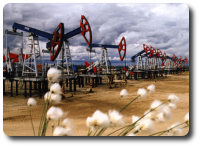
It’s just not that difficult to understand. But if your interests depend on a narrative contradicted by facts and reality, then telling only part of the story to unsuspecting others is the way to go….
HALF-STORIES TELL HALF THE STORY
Last week, yet another in the endless stream of manicured half-stories about the vast amounts of energy reserves just waiting to be pulled from the ground made its way back into internet land, leaving readers convinced we’re still on the Abundance Forever track. No worries about energy supply or powering our future with hundreds of billions [if not trillions] of barrels of oil lying beneath our feet.
A recent report by an energy consultancy suggests that the U.S. now has oil reserves bigger than Saudi Arabia’s. Believe it or not, that might be a huge understatement.
The Rystad Energy consultancy’s latest estimates for U.S. oil reserves says the U.S. may have as many as 264 billion barrels of the crude stuff, compared to Saudi Arabia’s 212 billion barrels and the world’s total of 2 trillion barrels.
‘At current production rates,’ notes Reason’s Ronald Bailey, “this is enough oil to supply the world for 70 years.’
He’s right. And that’s great news. But it’s even better than that, in fact.
Well, not “in fact,” exactly.
Then again, if you omit comments such as the following when discussing that very same report, you get to tell your Happy Story and no one is the wiser. How nice!
THE OTHER HALF
The true estimate of total U.S. oil reserves, when taking into account the current down business climate, may be unknown but is likely in decline. Oil and gas companies have essentially ended their usual obsession with reserves replacement ratios as the oil price collapse forced companies to focus instead on paying down debt and slashing their operating costs (EnergyWire, June 15).
New exploration and production has also fallen by the wayside, both in the United States and abroad, leading the International Energy Agency to warn of a potential supply shortfall in coming years as the industry has underinvested in new oil production during the downturn.
Despite the bullish tone, Rystad’s newest assessment also agrees that future oil supply may not match demand if demand expands at a higher rate than some analysts are expecting.
‘This data confirms that there is a relatively limited amount of recoverable oil left on the planet,’ the company concluded.
Well that’s a different spin! Then again, if you also neglect to mention those pesky investment cutbacks and business declines; the cancellation of billions of dollars worth of exploration projects; the industry layoffs and the impact those losses will have on production efforts going forward; the bankruptcies; the time, costs, and efforts required to resume exploration and production efforts [hint: it’s not exactly an overnight process]; the challenges required to explore, access, extract, and produce the more expensive unconventional resources … then you have a Happy Story to tell!
Can’t tell that Happy Story if all of those annoying fact-things muck up the narrative, Right? So ignoring them is still the choice in this above-referenced editorial:
As we have noted on these pages many times before, the amount of oil and gas reserves in the U.S. just keeps growing, thanks to huge advances in technology. Bailey quotes from ExxonMobil’s ‘The Outlook for Energy’ for 2016: ‘Technology is not just expanding our daily oil production; it also continues to increase the amount of oil and liquid fuels we can count on for the future.’
Fracking and highly sophisticated computerized geological survey software are just two advances that have boosted the amount of recoverable reserves….
Anu Mittal, GAO director of natural resources and environment, in May 2012 told a stunned Congress that just one U.S. energy region — the Green River Formation, which stretches across parts of Wyoming, Utah and Colorado — contained an ‘amount (of oil) about equal to the entire world’s proven oil reserves.’ With oil prices near $100 a barrel at the time, it was hard to believe.
Dubbed our Persia on the Plains, the Green River Formation is estimated to have four times the proven reserves of Saudi Arabia, Mittal testified. While the formation’s total reserves are 3 trillion barrels, even at the then-high prices for oil, recoverable reserves were about half that: 1.5 trillion barrels….
‘Rest assured: While much of the oil that the U.S. has underground is not recoverable under current market conditions, it will be there when we need it.
So here’s the thing … the numbers are impressive, to be sure. The oil industry has indeed advanced technology in remarkable ways, and fracking has produced much more needed oil then most observers thought possible. But….
THE QUICK OVERVIEW
When your motivations and financial interests depend on telling just part of the story, that means there’s another part untold. One has to assume that those storytellers certainly know by now that they aren’t sharing all the information at their disposal, so the “public good” is obviously not a prime consideration—at least not while there are still dollars to be had.
And so the same re-tread partial truths get recycled again and again from those working double-time to dismiss the energy supply/peak oil concerns of others—the ones willing to both admit the plentiful reserve numbers but then insisting on completing the storyline with the full set of facts. Someone benefits when facts are massaged to fit an ideological narrative, of course. Why else would the efforts be made?
The Green River formation reserves the quoted editorial cited? They’ve been trying to figure out how to extract oil from that region for more than a century. Perhaps there are some issues the fawning editors neglected to pass along to their readers? Word count restrictions, perhaps?
And what Happy Tale is truly happy if one has to actually explain that there is a significant difference between uttering impressive reserve numbers and what must happen [assuming it’s even possible in the first instance] to get those fossil fuel reserves from there to here for consumption. Dividing the estimated reserve totals by annual consumption to let everyone know how many decades of oil remains is simple math, but incredibly misleading once those pesky exploration, expense, time, quality, technology, and production challenges are included in the conversation.
Shocking, but that gushing editorial mentioned exactly none of those considerations. Is that Right?
It would be helpful to … well, all of us if the public could be clued in on not just the Happy Talk numbers but the factors which make that storyline not quite so happy.
5 Comments on "Peak Oil: Half The Story"
Apneaman on Tue, 12th Jul 2016 3:52 pm
Telling stories is what the humans do and they almost never tell the true story. The one that falsifies all the made up ones.
“In similar vein, the brain is often spoken of as though it were an architect-designed, fully integrated unit, rather like a computer—but one generally driven by novices and idiots. The human brain in reality is more like an old farmhouse, a crude patchwork of lean-tos and other extensions that conceal entirely the ancient amphibian-reptilian toolshed at its core. That it works at all should be cause for wonderment. As for pointing to our mental failures with scorn or dismay, we might as well profess disappointment with the mechanics of gravity or the laws of thermodynamics. In other words the degree of disillusionment we feel in response to any particular human behaviour is the precise measure of our ignorance of its evolutionary and genetic origins.”
http://regmorrison.edublogs.org/files/2012/03/free-will-1-v21f50.pdf
Sindre Sørhus on Wed, 13th Jul 2016 2:03 am
It’s worth looking up the actual analysis from Rystad energy. The Numbers include NON-commercial volumes and yet undiscovered fields. It also calculates that OPEC reserves are overstated by a factor of at least 2.
Ralph on Wed, 13th Jul 2016 5:01 am
The unique feature of human brains over other primates is the huge size of the pre-frontal cortex. We need all that expensive to run processing power, so that we can invent the stories that enable us to believe that the mishmash of instinct and subconscious thought processes that pass for decision making are rational and well thought through argument.
Davy on Wed, 13th Jul 2016 5:13 am
Pretty obvious that a huge size pre-frontal cortex combined with a moderate climate and accessible hydro carbons is a recipe for an extinction process. Let’s see if that huge size pre-frontal cortex can process that thought.
rockman on Wed, 13th Jul 2016 10:23 am
“…the amount of oil and gas reserves in the U.S. just keeps growing, thanks to huge advances in technology.” Difficult to follow at times: is this the writers belief or quoting someone else? First the “reserve” portion is rather meaningless since the classification isn’t stated. If the reference is for COMMERIALLY RECOVERABLE RESERVES then that statement is very incorrect: with the decrease in oil prices not only has CRR not grown but have significantly decreased in the last 2 years.