
Peak Oil is You

Donate Bitcoins ;-) or Paypal :-)


Page added on January 6, 2011

Peak Oil’ Doesn’t Matter
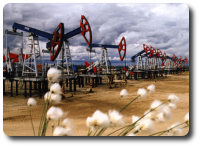
Are we running out of oil? According to the New York Times, apparently not. The paper of record ran two articles in close proximity over the holiday week, both of which regale us with stories of how wrong all those silly “Malthusian pessimists” have been.
First, John Tierney gloated about his 2005 bet with the leading voice for peak oil theory, investor Matthew Simmons (who, sadly, died in August). Tierney wagered $5,000 that oil would not average more than $200 per barrel in 2010. It was a bet that harkened back to the famous Simon-Ehlich Wager between Population Bomb author Paul Ehrlich and economist Julian Simon. Their bet began in 1980 and focused on whether the prices of five commodity metals would rise over 10 years.
Simon ended up winning — prices were actually lower in 1990, not radically higher as Ehrlich predicted. In the modern bet, supply optimism won again: Tierney was right, and oil averaged only $71 in 2005 dollars.
The second article last week declared that “Oil Bulls Should Take a Closer Look at Supply.” After poking fun at Goldman Sachs’ 2008 prediction that oil would hit $200 by now, the author points out how much oil the world is still finding.
So we should feel warm and fuzzy about not facing vast energy shortages, right?
I’d say no, since both of these articles are shockingly negligent in what they don’t talk about. The debate about moving away from fossil fuels is not just a battle between resource optimism and gloomy pessimism. Or even between economic triumphalism and the harsh reality of pressure on all resources as a billion people enter the middle class (see the recent concerns about the availability of rare earth metals, for example).
No, this is about much larger issues. Even if you skip over the risks of fossil-fuel extraction (BP spill, anyone?), or the cost to business of relying on volatilely-priced inputs, how can you discuss oil and not even mention two rather inconvenient, but enormous, problems: climate change and global security.
Let’s say you still deny the role of fossil fuels in radically changing the climate that our species evolved in. OK, fine. But how can you ignore the fact that our continued use of oil props up — as Thomas Friedman calls them — “petro-dictators” around the world.
As former CIA Director Jim Woolsey often points out, most pointedly in the pages of the Wall Street Journal last year, we’re currently “financing both sides in our war with radical Islam.” Woolsey calculates that when oil hits $125 per barrel (which, even with the Canadian oil sands and other new supplies, is an extremely likely outcome), half the wealth in the world will be controlled by OPEC nations.
So are we really running out of oil? I have no idea, but it doesn’t matter. We’re crazy to rely on it for any longer than we absolutely have to.
2 Comments on "Peak Oil’ Doesn’t Matter"
Kenz300 on Thu, 6th Jan 2011 1:44 pm
Our economic security and national security are at stake. Wind, solar, geothermal and second generation biofuels all need to become a bigger part of our energy supply.
Edpeak on Sun, 9th Jan 2011 12:29 pm
1. A bet on a radically more chaotic and one-step-further-removed issue like the PRICE of oil is not to be confused with the issue of the actual physical reality. The two are related but far, far from identical. Yes, the betters chose to bet on price, but that doesn’t excuse the author from confusing “see! the price didn’t reach QUITE so high a level” with the very different statement, “see! peak production is not as close!” which is completely different.
2. It’s not just “petro-dollars” proping up the likes of Saudi Arabia. Maybe NYT is too polite to mention this in the same breath as they mention the “dictator” part of “petro-dictator” but it’s WASHINGTON’S SUPPORT in military sales and diplomatic support and more that keeps these dictatorships in power, Saudi Arabia, Qatar, Kuwait, etc. If we have a remotely free press they would fall over laughing every time Washington spoke about “democracy” (or lack thereof) being the real reason for their policies vs. North Korea and others, while at the same time actively supporting and even funding or militarily supplying dictatorships, petro- and otherwise.
3. Any article that ends with using “running out of oil” to confuse with “peaking in supply” does as much if not more damage as good..