
Peak Oil is You

Donate Bitcoins ;-) or Paypal :-)


Page added on July 24, 2014

Peak Oil: Denial Magic 2
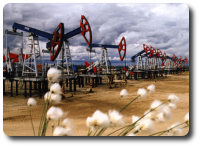
This is a second look at a recent Reuters article by John Kemp, which got me thinking that those who deny peak oil ought to be magicians.
The tactics are standard by now: Toss out some carefully massaged facts bearing the imprint of near-truths but without context (just to be safe), engage in a pattern of irrelevancies to help muddy the waters, toss in some meaningless numbers while carefully shielding the important ones from the discussion, and presto! No more peak oil theories.
If would be a great show were it not for the ending: reality.
But first, a little science [quotes from the Reuters article unless noted otherwise]:
New accumulations of fossil fuels are being laid down all the time, especially in organic rich depositional environments like the Mississippi and Niger deltas.
But the current massive fossil fuel reserves were laid down over 500 million years and the current rate of exploitation probably exceeds the rate at which new oil, gas and coal are being created.
“Probably”?!? Unless we’re extremely patient in ways beyond all definitions of patient, I’m fairly certain that waiting several hundred million years is not a sound energy policy. And given the time lag between laying down “accumulations” and that same several hundred million year window … yeah, we’re probably exploiting reserves a bit quicker than that.
Skipping past the issue of oil and gas reserves as discussed by former Shell geologist M. King Hubbert, generally credited with formulating the peak oil “theory” (but not other “theories” of like kind, such as the one about relativity and the one about gravity), Mr. Kemp offers this affirmation that we have more than enough fossil-fuel based energy resources available to us:
Coal, kerogen and even biomass can be converted into oil and gas using the well-established Fischer-Tropsch process.
“Well-established”?!? If by “well-established” he means “fairly useless,” then he’s absolutely correct.
Conversion of coal to liquid fuels using the Fischer-Tropsch process has been used for decades in South Africa and to a lesser degree elsewhere. More recently, gas-to-liquids plants have been constructed in Qatar and are proposed in the U.S. The conversion of both fuels to liquids suffers from several intrinsic problems:
* the infrastructure is very expensive.
* the process is very energy intensive and produces disproportionate amounts of CO2.
* the process is uneconomic unless gas and coal prices are very low relative to oil. Exxon Mobil expressed some of these issues recently on gas-to-liquids: ‘The reason you see so few [gas-to-liquids] plants is the economics are challenged at best,’ said William M. Colton, Exxon Mobil’s vice president of corporate strategic planning. ‘We do not see it being a relevant source of fuels over the next 20 years.’ Bartis et al. point out the infeasibility of scaling up coal-to-liquids (CTL) production: ‘CTL development at a scale of three million bpd by 2030 would require about 550 million tons of coal production annually.’ This would require scaling up coal mining in the U.S. by 50 percent. The collateral environmental impacts of coal mining are well known, and scaling by anywhere near this amount is likely impossible from logistical and reserve-availability standpoints. And, even if it were possible, 3 mbd is not that significant in the face of total consumption. (links/citations in original) [1]
Years before, the same topic was similarly dismissed. (Perhaps its “well-established” nature back in 2007 was already clear):
COAL-TO-LIQUID fuel is being touted in the Senate energy debate as a key to overcoming America’s dependence on foreign fuel. The argument is understandable, considering that the United States sits atop the largest coal reserves in the world, by one estimate a 200- to 450-year supply. But unanswered questions and environmental concerns raise the prospect that the price for this brand of energy independence may be too high.
To turn coal into liquid fuel it must be fired up to 1,000 degrees and mixed with water. Then the gas that’s created is transformed into fuel that can be used in cars and jets. Unfortunately, creating CTL, as it is known, is a very intensive process requiring coal, water and cash. To wean the United States off of just 1 million barrels of the 21 million barrels of crude oil consumed daily, an estimated 120 million tons of coal would need to be mined each year. The process requires vast amounts of water, particularly a concern in the parched West. And the price of a plant is estimated at $4 billion.
The most troubling aspect of CTL is that producing it will roughly double climate-changing greenhouse gas emissions. That’s because liquefying coal releases huge amounts of carbon dioxide in the atmosphere. Proponents of CTL say that could be remedied by capturing and storing the carbon underground. Yet this new technology is so untested on a large scale that the Senate energy bill seeks to conduct demonstration projects across the country to answer some vital questions, such as whether the carbon dioxide, once stored in a variety of geological settings, will remain there. And once past production questions, there’s another obstacle: Tailpipe emissions from cars using CTL would be only slightly better (or no better at all, depending on whom you ask) than from gasoline.
Facts suck when one is trying to make a gilded point.
But if twisted just so, they can support a theory or two. Prices, for instance.
Production rates have been sustained and are now rising again, but only by exploiting new resources such as offshore deepwater fields and shales, most of which are much more difficult and expensive to produce than the conventional fields Hubbert was analysing. Output has been sustained, but only at an increasing cost and price.
British economist William Jevons made similar predictions in the 19th century about the rising cost of coal production from Britain’s coal fields as seams near the surface were gradually exhausted and miners were forced to delve deeper.
In this form, the theory is true, but not meaningful.
It’s not?! Consumers beg to differ. High prices enable the industry to pursue “offshore deepwater fields and shales.” Consumers pay those high prices. When they stop (and with investors pulling back on their boundless enthusiasm about fracking, see this with links therein), so doesn’t the runaway production train.
Costs and prices are as much a function of technology as output. It is simply not true to say prices (in real terms) must rise in the long term as easy resources are exhausted because that too depends on changes in technology.
‘No mineral, including oil, will ever be exhausted. If and when the cost of finding and extraction goes above the price consumers are willing to pay, the industry will begin to disappear,’ according to MIT professor Morris Adelman.
If oil becomes too expensive it will be replaced by other forms of energy, just as coal replaced wood in the 19th century, and oil replaced coal in the middle of the 20th century.
In that sense, Hubbert’s theory is technically correct but practically meaningless because it rests on an essentially static view of technology.
That may not be quite nearly as reassuring as the writer intended. While technology has improved and no doubt will continue, the fact remains that the easy and relatively inexpensive conventional crude oil supplies are now on the downside of the slope, and have been for nearly a decade. Prices may indeed fluctuate just as has been the historical trend, but advanced technologies—from envisioning to mass utilization—is not a weekend project nor is it inexpensive no matter how generous the definition.
And given the resources Mother Earth is now offering up, higher prices will be the norm. That’s how the great god of free market enterprise designed it. Consumers will have their say on that issue as well. None of it bodes well for a trouble-free energy supply future.
It would be nice if some of those realities factored in to public discussions so that the public might be better-informed and better-served. A thought….
~ My Photo: Good Harbor Beach, MA – 10.11.09
* I invite you to enjoy my two new books [here and here], and to view my other work at richardturcotte.com :
Thought-provoking inquiries & observations about how (and why) Life does … and does not, work for everyone. [Inspired by my book of the same name]
A column offering a slightly skewed look at life for those of us on the north side of 50.
Looking Left and Right:
Inspiring Different Ideas,
Envisioning Better Tomorrows
Peak Oil Matters is dedicated to informing others about the significance and impact of Peak Oil—while adding observations about politics, ideology, transportation, and smart growth.
14 Comments on "Peak Oil: Denial Magic 2"
JuanP on Thu, 24th Jul 2014 9:23 am
I refuse to read this blue font. Please, editor, can you change the color?
Plantagenet on Thu, 24th Jul 2014 11:32 am
Blue font, brown font, red font, green font—it really doesn’t matter. What is important is the content and the quality of the ideas expressed.
I’d give this article a “C” on content, but an “A-” on the imaginative use of colored fonts.
JuanP on Thu, 24th Jul 2014 11:48 am
Plant, LOL. I don’t care about the content, I wish I could forget most of what I already know. I am suffering from information overload as it is. I miss my past deeper ignorance. Knowledge can be a burden.
Appearances are what’s important. Do you value the content more than the font’s color? Please don’t tell me so. And your grading is all messed up, that A- should be an F, IMO. 😉
dubya on Thu, 24th Jul 2014 1:25 pm
For thousands of years black font on a white background was, for some reason, popular. Now that we have 256 million colours available we can experiment with such artsy combinations as white on a pink background, orange on brown or baby blue on white; all of which apparently suck.
penury on Thu, 24th Jul 2014 1:53 pm
I guess that I agree mostly with JuanP. In a lot of cases ignorance is bliss. A little knowledge is a dangerous thing, but a lot of knowledge and no ability to do anything except watch what has been foretold unravel can be a terrible strain. It was said that in the valley of the blind the one-eyed man is king. I find the other version to be more accurate “In the valley of the blind, the one-eyed man is stoned”
Davy on Thu, 24th Jul 2014 2:11 pm
P, the one eyed man could voluntarily wear an eye mask and if he peeks then he will be stoned. Not sure how the blind will know he peeked but you get my point.
Dredd on Fri, 25th Jul 2014 5:49 am
Thanks for exposing the propaganda mills which catapult the propaganda Richard.
Richard Ralph Roehl on Fri, 25th Jul 2014 11:25 am
Currently… there are 7.25 BILLION human baboony consumers adding to the energy heat sink that’s being absorbed by the Earth’s biosphere and also its oceans.
The present time exponential growth of the human baboony consumer population suggests at least 9-10 BILLION baboonies by 2050. And the global exponential growth model (when extrapolated from the 20th century global population growth record) says human baboonies could approach 50 BILLION human baboonies by 2100.
Praying to the almighty white male sky-god man in the dictatorship of heaven is probably not going to save us from turning the surface of Earth into Venus or Mars.
As they say in L.A. (now quickly running out of fresh water)… Have a nice day!
JuanP on Fri, 25th Jul 2014 11:36 am
RRR, I have to disagree with one or two things you said. Population growth has been linear rather than exponential for several decades now, remaining in the range of 70-80 million people added per year.
And if you think there is any chance that we could be 50 billion by 2100, you are far out, man.
I agree with your point that we will destroy the Earth and praying won’t save us, but it won’t hurt us either. I don’t pray, but beliefs have intrinsic powers.
Davy on Fri, 25th Jul 2014 11:40 am
Tripple R, we will grow untill we won’t. Just like the financial markets. Both are millions of self organizing decisions that have a mind of their own. As of today I am not optimistic about either one’s future growth.
JuanP on Fri, 25th Jul 2014 12:00 pm
RRR, I had to come back for more because I had an itching.
Regarding your praying comment. First, it was offensive, unnecessary, and it didn’t add to the conversation. Second, while I don’t pray now, I did regularly for many years and found out that it is useful in many ways. Praying is a time for meditation, contemplation, and analysis. I realized many truths while praying and learnt many lessons. Whether there is a God or not, praying does more good than bad. And at least while they are praying, people are not hurting each other.
Nony on Fri, 25th Jul 2014 4:41 pm
1. John Kemp is one of the better MSM energy reporters.
2. This font is atrocious. Too painful (didn’t read).
3. A lot of the content in these kinds of pieces is really low value screeds. With all the good content from DrillingInfo blog, RBN Daily Energy, and PSU Marcellus webinars, why waste time on this light stuff?
Richard Ralph Roehl on Sat, 26th Jul 2014 5:50 pm
Wow! I must have opened a can of worms. A lot of fear and denial here. How terrifying a nugget of truth that dares breach belief.
Old Coyote Knose that time runs short for ewe-folks.
Nony on Sat, 26th Jul 2014 5:59 pm
RRR, projected 2100 population is 11 million. Google it.