
Peak Oil is You

Donate Bitcoins ;-) or Paypal :-)


Page added on September 17, 2012

Peak Oil Denial: Blind Faith
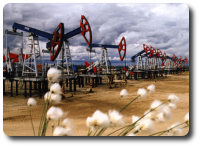
Optimism uninformed by realism will do us no good. [1]
The Peak Oil denial movement, as with its climate change denial kin, continues to chug along providing the public with half-truths and misleading arguments.
Why? What is the long term benefit in preventing millions from understanding and planning for an eventuality which will leave no one and no aspect of our daily lives untouched?
Porter Stansberry offered the most recent entry, and once again the same basic facts (remember those?) are contorted and cherry-picked just enough to offer a logical reason or two why no one should be bothered by any thoughts that our fossil fuel supplies are undergoing changes likely to create no small amount of adaptation and concern. No one wants to deliver that message, and surely no rational person wants to experience the changes and challenges of Peak Oil. But pretending it’s not a problem? Really?
If we aren’t properly informing our fellow citizens, we and they will have more problems than any of us need—plates being fairly full already. I realize that misleading and outright lying has become the unfortunately standard MO for one of our major political parties; they must be “succeeding” because they keep doing it and getting away with it—confirmation of the deceits notwithstanding. At some point I keep hoping that enough of us start to ask why we should be choosing our representatives based on how optimistic or nice their lies and deceptions sound. We reap what we sow, but I digress.
Mr. Stansberry begins his argument against Peak Oil by stating “I believe having a correct understanding of these issues is critical… perhaps the single most important economic issue of the next several decades.” He then he proceeds to demonstrate he does not understand, relying instead on the same worn-out, disingenuous arguments routinely offered by his peers. That some of the public continues to buy what they are selling doesn’t make any of it right or beneficial.
His premise centers around this tiresome argument: the mysterious and always unnamed Peak Oil advocates who raise alarms far and wide that we are “running out of oil” are wrong because the technological prowess and human ingenuity which mankind has relied upon for decades keeps finding more reserves. (I won’t go anywhere near his inference that how crude oil formed is subject to dispute. Even a hint that someone buys into the notion we may actually be replenishing our fossil fuel supplies courtesy of the Magic Underground Fairy should immediately disqualify that person from ever discussing energy supplies.)
No legitimate advocate of Peak Oil suggests we are running out of oil, but the Right, in keeping with their limited-fact playbook instruction to “keep repeating nonsense/half-truths and enough people out of the loop will continue to believe”, continues to insist that “running out of oil” is the position held by advocates of Peak Oil. In their fact-free world, sure, why not?
As I’ve mentioned in other posts, if the truth gets in the way of an ideological position, then get rid of the facts and keep the ideology. Wouldn’t want any slivers of integrity to creep into the discussions.
So by repeatedly raising Peak Oil advocates’ alleged doom and gloom position that we’re running out of oil, the deniers instantly create fear among those who rely on their “leadership.” Shameless, but give ‘em credit: it works—if misleading or lying is one’s preferred strategy. To what end is a different story, but deniers don’t seem terribly concerned with consequences so long as their interests are being protected today. Ugly, but that seems to be the primary rule.
With fear aroused, the smooth transition to the deniers’ preferred argument: “but we have several bazillion barrels of reserves that will last us for at least a kajillion years,” wipes away the concerns of the uninformed. Life goes on. One of two scenarios are likely: (1) They really don’t know what they are talking about, or (2) They do and realize that telling the truth and sharing all the facts is not in their best interests. Which is worse?
Of course, it is by now standard fare for the deniers to omit any discussion or explanation of factual consequences or even some basic facts about “reserves.” That would surely screw up everything for them, and we cannot have that! Nope. Just tell ‘em we’ve got vast quantities, and end the discussion there.
As I pointed out earlier this year (as have the advocates of Peak Oil for whom facts, reality, and evidence mean something):
‘Reserves’ do not equal available supply; not by a long shot. Quintuple the proved reserves figures if it floats your boat, but what might arguably be buried beneath the Earth’s surface offers exactly zero assurance it will in fact be produced economically, practically, or efficiently….And let’s not forget amid all of this great news the fact that we have been using for decades is being drawn down each and every day, and so much of what will be produced going forward will first have to match depletion rates before we marvel at their substitute potential … while billions around the world strive to improve their conditions … using more of the energy resources still available but depleting by the day.
As I’ve previously suggested, the fact that the banks within a ten-mile radius of my home have deposits totaling tens of millions of dollars is all fine and well. But until we start asking questions and getting answers about the availability of those funds and a host of other important considerations as to how they might benefit my community, only to then realize the totals are mostly for show, well—I’m not seeing that as any kind of solution to anyone’s financial concerns.
Likewise, cheerleading for impressive totals of “reserves” stops being impressive as soon as we start looking for answers about how we move from identifying those reserves to satisfying our needs and those of several billion others planning to improve their lives.
How easily are these reserves accessed? What’s involved in the exploration, production, refining, and delivery to my gas tank? How much effort and energy are we expending as compared to the conventional oil supplies we’ve been using for more than a century—the finite supplies that are … finite, and thus decreasing by the day? How much more does all of this cost us as compared to production and delivery of our conventional supplies? How much longer does it take from A to Z as compared to conventional supply? How does the efficiency and quality of the “reserves” compare to the wonderful conventional supplies we’ve been using for more than a century—the finite supplies that are … finite, and thus decreasing by the day?
Why is it okay to spend more and more money to find inferior substitutes with all the downsides, but not okay to spend money (yes, a lot) to start planning for a future relying on something other than the genuinely magnificent fossil fuels (the finite ones) we’ve been drawing down for decades. Who explains narrow-minded and shortsighted to the generations following us?
Get the picture? A lot more questions can be asked, but it’s probably not going to matter right now. Until we all become more educated about the challenges, we will not be seeing any answers from these desperate fans of the magic of increasing reserves. Providing answers won’t benefit them, so….
But let’s not get too concerned. After all, “Other supplies of energy will surely be discovered. Many already have been, like nuclear energy.” What a relief: “surely” and “many” have arrived! No problems there….Can’t think of more than a few dozen questions, either.
Blind Faith is still and always a better rock band than energy policy.
2 Comments on "Peak Oil Denial: Blind Faith"
BillT on Mon, 17th Sep 2012 1:16 pm
Ignorance is rife in the Us of greed. That 4% of the world’s population believe that they can continue to use 30%+ of the world’s resources is pure greed. It is going to be a big shock when their world collapses into that of the other 96%.
Kenz300 on Mon, 17th Sep 2012 1:46 pm
People tend not to spend much time planning for the future. We tend not to deal with a potential problem until the problem is upon us. In a world chasing from one crisis to another it would do us well to begin to prepare and modify our behaviors. In parts of the world we have a food crisis, a water crisis, a declining fish stocks crisis, a financial crisis, an energy crisis, a climate change crisis, and a jobs crisis. Every problem is made harder to solve with the world ever growing population. The world adds 80 million more mouths to feed every year as food stocks are reaching their limits. The oil companies and the oil producing nations love it when oil prices spike. They make huge windfall profits. They will do all they can to keep their monopoly on transportation fuels as long as possible.