
Peak Oil is You

Donate Bitcoins ;-) or Paypal :-)


Page added on March 5, 2012

Peak Oil Denial: Alive, Well, Still Not Helping (Pt 3)
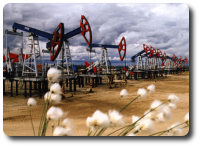
I devoted the first two posts of this series [here and here] to a discussion of an especially egregious but all-too-typical recent article denying Peak Oil, which found its way into the blogosphere, echoing the same tired, fact-free nonsense which now serves as the biblical foundation for denying the reality of what’s happening to a finite (as in NOT infinite) resource used each and every day for nearly two centuries by billions of people, industries, and governments. It’s a simple mathematical premise which continues to confound too many with prominent public voices. Their efforts cannot go unchallenged.
I’ll conclude this latest series on Peak Oil Denial by discussing issues related to the themes developed from that referenced article.
Picking up where we left off….
U.S. oil fields yielded an estimated 5.68 million barrels per day in 2011—their highest output since 2003, thanks largely to a surge of new production from shale oil that lies beneath the Great Plains. The rush so far is centered in North Dakota, where oil production has quadrupled (link in original) since 2005, but drilling is set to spread across the prairie and beyond.
A ‘great revival’ in U.S. oil production is taking shape,’ said Jim Burkhard, managing director of the energy consultancy IHS Cambridge Energy Research Associates in testimony last month (link in original) before a U.S. Senate committee. The resurgence provides the United States a welcome measure of energy security at a time of global economic uncertainty and geopolitical risk, he said. [1]
Echoing a point Mason Inman offered later in the above-cited post, Brad Plumer poured a bit of cold water on Mr. Burchard’s sunny optimism:
North Dakota’s shale plays still only produce 0.5 million barrels of oil per day….What’s more, the United States still remains the largest importer of crude oil and other refined products in the world, at about 9 million barrels of oil per day. We’re still very far from erasing that dependency.
Now, one reason that the United States imports so much oil is that many of its domestic fields, in places like Texas and California, have been in steep decline for decades. Back in 1970, the United States churned out 10 million barrels of oil per day. Now? We produce just 6 million. [In a recent research report from Citigroup, its analysts] expect that new shale oil plays, if combined with further exploration in the Gulf of Mexico and Alaska, could add 3.5 million barrels per day between 2010 and 2022. But as long as other domestic fields keep declining, the shale boom won’t be enough to get back to our peak. The industry will have to drill furiously simply to maintain the status quo. (Indeed, the International Energy Agency sees U.S. oil production rising briefly to 6.7 million barrels per day and then sinking back down to 6.1 million barrels through 2035 — about where we are today.) [2]
Mason Inman’s post adds a bit more cold water on the notion that we’re all saved from oil deprivation:
But uncertainties abound regarding this newfound oil supply. New regulations are expected due to concerns that the water-intensive process, which results in a large amount of polluted ‘flowback’ water rising to the surface, is a threat to groundwater and land. In his State of the Union Address, Obama said he wants companies that drill on public lands to disclose the chemicals they use.
And there are other issues. When first tapped, oil shale wells start off strong, but their production typically declines some 50 percent in the first year, and in later years drops further.
‘These wells have a pretty steep decline in their first year,’ said oil analyst John Staub of the EIA [Energy Information Administration]. ‘It requires a high rate of drilling to maintain production,’ let alone make it grow.
Reality sucks!
Not to be outdone in disseminating the nonsense and noise from the deniers’ standard playbook, the blogosphere offered us this:
If you haven’t noticed, the oil apocalypse has been delayed — again — and the doomsday predictors are undoubtedly eating crow while they concoct another mega disaster. ‘Peak oil,’ the theory that oil production will soon hit a peak and begin declining, sending the world into an economic disaster, failed to live up to its hype again….
But, like any other apocalypse, it never quite seems to unfold as the predictions assert. There are just too many factors that peak oil prognosticators can’t account for in their bold predictions, so they always get them wrong….
One of the problems with peak oil predictions is that they have so little imagination. They don’t consider the impact of new drilling techniques that open new oil fields to massive amounts of production [citing several companies that] have turned the desolate North Dakota prairie into an energy bonanza by unlocking shale oil there….[3]
After gushing over the fact that several drilling companies “are building ultra-deepwater rigs as fast as they can to unlock new fields off the coasts of Brazil, Angola, and other parts of the world” and production from the always popular tar sands of Alberta, Canada, the author states that: “Evidence that these innovations have turned peak oil on its head is undeniable.”
I guess that settles it, huh? No mention of depletion from current oil fields, no mention of costs, quality of fossil fuel produced, limited expectations for increased production, etc., etc. Why let facts get in the way when you’re on a roll, Right?
But if liberal doomers like me don’t get it yet, that same writer offers this (despite what others in the know like Kurt Cobb and Tom Murphy have pointed out—here and here):
Alternatives make a peak irrelevant
For the last century there were very few alternatives to the black gold that flowed freely from wells around the world. Today the dynamic is slowly changing, squashing the fear that peak oil once garnered. If diesel fuel gets too expensive, now truckers have an alternative in liquefied or compressed natural gas. [A company named by the author as a potential investment] is quickly building a national natural gas highway to make fueling possible.
Hate to interrupt, but just a couple of questions: That diesel alternative mentioned … this is available now to every trucker? Just like that? How much? What do they have to do to properly equip their trucks? How long does that take? How much does it cost? Can they just pull into their local diesel station and have the mechanic on duty take care of this? Can they buy a do-it-yourself-kit online? Who supplies the “liquefied or compressed natural gas” and how do they get that done? Must be kind of a big secret, ‘cause I’m not seeing too much of that in my own research.
Oh, and this one lonely company that’s “quickly building a national natural gas highway to make fueling possible…” Any details? Any at all? I haven’t seen much construction going on in the Boston area … in what part of “national” is this being done? Have they told anyone about it?
Nonetheless, the Promised Land offered by “human ingenuity” (in the space of just a few hours, I came across three separate articles disputing Peak Oil which each used that exact phrase … must be a few extra copies of the playbook in circulation now!) assures us that geology has met its match, and technology will ride to the rescue:
Technological advances enable companies to image, drill and shatter subterranean rocks with precision never dreamed of in decades past. Trillions of barrels of petroleum previously thought unreachable or nonexistent have been identified, mapped and in many cases bought and sold during the past half decade….[Wow! In “many cases”! That’s fantastic, Mr. Carroll.]
What changed? Engineers at Brazil’s state-controlled oil company, Petrobras, figured out how to bore holes in mountains of salt beneath the ocean floor that concealed vast reservoirs of crude. In the Gulf of Mexico, prospectors such as Chevron and Shell were doing similar things hundreds of miles offshore, farther out and in deeper water than anyone envisioned just a few years earlier. Ultra-deepwater drilling vessels that cost $750 million and can remain at sea for months at a time enabled explorers to burrow 5 miles into the Earth’s crust to strike their pay zones. [4]
Perhaps it’s just me, but I’m thinking this is not necessarily a good thing for all of us who are not oil industry executives….
And in what I have to assume must be an omission of accompanying details/clarification on an unprecedented scale, this fascinating bit of news popped up (my bold/italic):
It wasn’t until recently that hydraulic fracturing unleashed the massive potential of shale oil.
Hydraulic fracturing is a process that uses pressurized liquid to shatter oil and gas-bearing rock layers, literally squeezing the dormant fossil fuels within back up to the surface:
At a rate of 100 million barrels per day (25% more than today’s current rate of 80m bpd), hydraulic fracturing allows us to produce enough resources to fuel world demand for the next 53 years.
This is much more than a historic find or innovation…[5]
Say what?!
If the author of this gem actually believes—and is telling his investors—that shale oil is now being produced in quantities greater than the sum of all liquid fossil fuels combined, it is a misrepresentation standing alone in the annals of misrepresentations! As I noted in the first post of this series:
Fifty years of producing shale oil in the famous/infamous Bakken formation now being hailed as some sort of Great Energy Savior resulted in a bit more than 110 million barrels of oil. The planet uses approximately 85 million barrels of oil each and every day. The U.S. uses somewhere around 18 million of that total—every day. That 110 million figure is not a per day, per week, per month, or even per year total. Bakken produced 110 million barrels in the entire fifty year period up to 2008. Total. The half million or so barrels now being produced daily is better than a stick in the eye, but it took more than a half-century to get to this point.
Superman could not make the leap from half a million barrels of oil production per day to “100 million barrels!” If the author is suggesting that shale oil production will get to that level anytime in this millennium, well … I’m not sure I can offer anything reality-based to suggest otherwise. I’m simply going to give him the benefit of the doubt and assume he just mixed up his numbers (and hope a clarification is published before this post gets published.)
And let’s not forget the folly of thinking that we might come up with something other than fossil fuels to power civilization….Apparently “human ingenuity” is confined to oil drilling. We’re gonna use up every last drop of fossil fuel first, and then uh … someone will do something, I guess. Planning is for sissies.
I’m skeptical about renewable energy, such as ethanol, wind, and solar, mainly because they require so much government subsidy, especially problematic in an era of trillion-dollar deficits.
On the consumption side, increased mileage standards and higher prices encourage conservation. [6]
But subsidies to the oil companies are not “especially problematic in an era of trillion-dollar deficits” because … ?? Again, perhaps it’s just me, and while I’m all for “increased mileage standards,” I’m thinking that “higher prices” might have outcomes other than to just “encourage conservation.”
Worth pondering a bit more?
6 Comments on "Peak Oil Denial: Alive, Well, Still Not Helping (Pt 3)"
sunweb on Mon, 5th Mar 2012 2:33 pm
The “renewables” also require a huge infrastructure based on the fossil fuel system. Reading Willful Blindness by Hallernan helps to understand but does not lessen the sadness of our direction in population, waste of resources and environmental degradation.
george on Mon, 5th Mar 2012 3:58 pm
the deniers are 35 years older.
Kenz300 on Mon, 5th Mar 2012 6:43 pm
Humans tend not to react and change until we are forced to by events. High oil prices seem to have gotten some people attention. The number of people buying fuel efficient vehicles is starting to rise. Long haul truckers are starting to convert to LNG. GM announced today that they will sell a CNG fueled pickup truck starting in April. Honda sells a CNG fueled car. All these point to the fact that SOME people are starting to react to higher fuel prices.
Many are still in denial.
DC on Mon, 5th Mar 2012 7:24 pm
Im sorry to break it to you(again) Kenz, but those CNG vehicles are nothing but greenwash, like the co-called ‘Volt’ or Hybrids, or Fool-cell cars. They are not meant to provide people with ‘efficent’ anything. But to maintain the primacy of gas-burning everything with just a dash of green-wash to convince the masses.
And that aside, the myhical ‘glut’ of frak gas is a best, a transient condition. The ‘glut’ has far more to do with the permanent recession were in, than any techno-wonders the frakers have come up with. Nat-gas production in N.A. has allready peaked. Why would anyone seek to replace there peak-oil gas-burner with a peak-nat gas burner anyhow? What would be point of that, I sumbit to you. Besides if Nat-gas were so valuable(it is but) then Canadians wouldnt be diverting a full 20%! of our total Nat-gas production to cook the low EROEI tar-sands sludge would we? If CNG were such a hot idea, wed be useing that 20% to fuel vehicles directly. The fact that we are not says tons about the prioroites of the energy cartels that rule our planet.
GM and CNG HA, thats a good one….
BillT on Tue, 6th Mar 2012 12:48 am
DC, you said it all.
Kenz300 on Tue, 6th Mar 2012 9:26 pm
Bloom Energy will be supplying its Bloom Boxes to provide power for Apples new data center. The story on 60 minutes was interesting. The list of customers is impressive. Bloom Energy has deals with Bank of America, Coca-Cola, FedEx, Staples, Walmart, eBay, and Google. There might just be something to the fuel cell technology.