
Peak Oil is You

Donate Bitcoins ;-) or Paypal :-)


Page added on February 21, 2012

Peak Oil Denial: Alive, Well, Still Not Helping
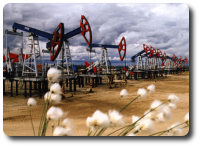
So much misinformation and delusion, one hardly knows where to begin! If only crude oil supplies were as self-replenishing as the Peak Oil denial movement’s continuing assault on (and inability to understand) those … uh … whatchamacallits … FACTS!
Someday, likely within the next decade, the US and the rest of world’s governments will have to acknowledge there is a problem here, and unless alternative sources of energy can be developed and brought into general use quickly, major changes in economic activities and lifestyles are going to take place. [1]
It will take bold leadership to cope with the peak and then decline of world oil production. But first, we need to start at home. We need a President who will explain to the American people simply and clearly that our oil production is in a long decline, and that there’s no easy solution. [2]
Harsh. Unpleasant. Pessimistic. All too true. That is the reality, and some of the salient, well-established facts supporting it are discussed below. Not today, or next week, or next year, but the road we’re on will lead us there soon enough. If we do no planning, preparation, or adaptation well in advance (years), the end of that journey is going to be one hellaciously awful destination for all of us. Deniers, too. We still have choices. They do, too.
What we don’t have is more time to allow the media and industry/political leaders to keep telling the uninformed that all is well in the fossil fuel arena. Offering half-truths, context-free statements, and outright misinformation may serve personal financial or professional interests, but hundreds of millions of people who do not have the time or means to learn the truths for themselves are being poorly served, to their eventual great harm. Sadly, this is not an isolated strategy, employed only when discussing fossil fuel supplies.
Why?
‘Peak oil’ refers to the maximum rate of production of regular crude oil. Period. It’s a number.
It is not a theory.
It does not mean ‘running out of oil.
It is not the moral equivalent of Malthusianism.
It is not a political movement, or a religion.
It’s not a dessert topping. It is not a floor wax.
It is not about oil reserves (oil that has been proved to exist and to be producible at a profit), or resources (oil that may exist in the ground, irrespective of its potential to be produced profitably). Those quantities do play a role in estimating the peak, but do not determine it in any way….‘Unconventional’ liquids such as biofuels, natural gas liquids, synthetic oil made from bitumen in tar sands or from kerogen in shales, and liquids made from coal or natural gas are not regular crude oil, nor are they equivalent to crude on several important counts. When you’re talking about unconventional liquids, you are not talking about oil, and lumping them in with oil does not increase the volume of oil. That’s why it’s called ‘peak oil’ and not ‘peak liquid fuels.’ [3]
Last week, an especially egregious but all-too-typical article found its way into the blogosphere, echoing the same tired, fact-free nonsense which now serves as the biblical foundation for denying the reality of what’s happening to a finite (as in NOT infinite) resource used each and every day for more than a century by billions of people, industries, and governments. It’s a simple mathematical premise which continues to confound too many with prominent public voices. Their efforts cannot go unchallenged.
Because it does so fine a job outlining many of the standard misrepresentations employed by those denying the truth about peak oil production, I’ll devote the first two posts in this series to a discussion of Mr. Cantu’s Why We Shouldn’t be Worrying About Peak Oil article [NOTE: all quotes following are taken from there unless noted otherwise]. I’ll conclude this latest series on Peak Oil Denial by discussing issues related to the themes developed from this referenced article.
The truth is fossil fuels will continue to dominate international energy supplies for the long-term simply because they are the least expensive and most pervasive fuel resources the world currently possesses.
Which means what, exactly? Absent context, the statement seems fairly benign. The truth is that this is NOT a good thing! Not for any of us. Fossil fuels are finite resources. Production peaked more than five years ago. (As Chris Nelder noted in the quote above, unconventionals are not the same thing as conventional crude and they do not give the same energy-efficiency bang for the buck.) Butane and propane may count by some as part of ‘fossil fuel production’, thus skewing the totals to the many who do not understand the difference, but I’m pretty damn certain that pouring butane into my gas tank won’t get me very far.
‘One of the methods EIA Washington and IEA Paris have increasingly relied on in recent years to obscure the very serious and now very real problem of oil depletion is to include biofuels and natural gas liquids in the accounting of global oil production. The technique that both agencies use to conduct this obfuscation is a familiar one, in which the key information is aggregated (buried) into a much larger barrage of data and presentations….
‘In order to rebut this Secrecy by Complexity it’s the obligation of responsible energy analysts to explain the falsehood of adding biofuels and natural gas liquids to measures of oil production. The reason is simple: natural gas liquids are not oil, and they contain only 65% of the BTU of oil. Worse, biofuels are barely an energy source themselves and are the product of a conversion process of other energy inputs. Accordingly, the world is not producing 84, or 85, or 86 million barrels of oil per day. Nor will the depletion of oil be solved by the production of biofuels in the future.
‘When the EIA in Washington falsely composes such forecasts, aggregating future natural gas liquids and ethanol into a supply picture for ‘oil’ as they do each year in The Annual Energy Outlook, this disables the public’s ability to accurately understand the true outlook for global oil supply.’ [4]
These are finite resources. Shouldn’t need much more of an explanation….Because they are finite resources, and we’ve already reached the peak of their production [see this, for example], we’re now going to be producing less. And waving the magic wand of touted increases in reserves will get you just as far as the butane in my gas tank. Until/unless they are produced and refined economically, timely, and efficiently, we could assert there are a bazillion barrels of reserves in the ground and they will be just as illusory. Rate of production is what counts, and the rate of production for these unconventional alternatives isn’t that great … not at all, actually.
(Fifty years of producing shale oil in the famous/infamous Bakken formation now being hailed as some sort of Great Energy Savior resulted in a bit more than 110 million barrels of oil. The planet uses approximately 85 million barrels of oil each and every day. The U.S. uses somewhere around 18 million of that total—every day. That 110 million figure is not a per day, per week, per month, or even per year total. Bakken produced 110 million barrels in the entire fifty year period up to 2008. Total. The half million or so barrels now being produced daily is better than a stick in the eye, but it took more than a half-century to get to this point. Expectations that within the decade we may be getting three or four million barrels per day is also better than a stick in the eye, but the solution to our fossil fuel woes? Seriously?)
So saying that “fossil fuels will continue to dominate international energy supplies for the long-term” without some serious planning for (and implementation of) alternative strategies long before declining supplies really start screwing us isn’t, shall we say, especially wise. Or advantageous. Or useful. It’s a statement, not a solution.
Mr. Cantu then offers this, (with my commentary bracketed [ ] and in italics):
Consider the sheer amount of petroleum and natural gas found in the one month of September in 2009: BP discovered three billion barrels of oil [which is about 6 weeks worth of oil usage] in the Gulf of Mexico; Spanish energy firm Repsol tapped into the largest natural gas find in Venezuela’s history [which means what, exactly? Context! Facts!]; Anadarko Petroleum announced the likely presence of hydrocarbon fuels for 700 miles along the west African coastline [“likely presence”?! How much is a “likely presence”?]; and Petrobras of Brazil found even more hydrocarbon fuels in the Santos Basin (which several years prior was said to contain enough energy to make Brazil a global energy power). [Problems solved! “Even more” has been found, which, as we all know, is exactly uh … um … how many barrels in an “even more”, and is it more or less than “likely presence”? How much must one produce to make a nation a “global energy power”? Sure sounds good!]* Simply put, peak oil alarmists and hydrocarbon declinists conveniently ignore the immense power of new technology to harness deeper, untapped sources of fossil fuels. [Actually, we don’t; we merely point out that it’s not Magic—much less assured in any manner; it won’t ride to the rescue next week; it’s more expensive and time-consuming, etc, and the very fact that we’re now resorting to exploration miles below the ocean bottoms is itself a powerful statement about the facts of our energy resources, which the deniers can’t quite fathom. They also seem constitutionally incapable of informing their readers that while all of this inordinate effort to find, extract, refine, and bring to market these inferior resources, existing crude oil resources are depleting daily—anywhere from approximately 4% to 8% per year**. So the one plus million barrels of tar sands and shale oil aren’t quite matching the few million barrels per day in depletion, unless the laws of math are now being repealed as well. The industry is working that much harder just to try and keep pace, and that’s not a good formula for long-term success or our well-being.]
I’ll wrap up this first post of the series with a couple of added observations:
* the “facts” are much like this recent offering—another in a line of context-free assertions making similar claims presumably intended to reassure uninformed readers:
Add in some significant new finds, including Petrobras’s huge field off Brazil’s coast, a large discovery off French Guyana, and Statoil’s potential 1.5 billion-barrel oil field in the North Sea. Then there’s the oil boom in North Dakota, which now produces more oil than OPEC member Ecuador. [5]
Conveniently omitted from this cheery bit of news is some context … facts and explanations would have been nice. A “potential 1.5 billion-barrel oil field”? Potential? If true, that’ll last us less than three weeks. As for the North Dakota is better than Ecuador contest: On the list of OPEC oil-producing nations, Ecuador ranks last. So the umbrella protection which this author presumably intended by mentioning OPEC and North Dakota in the same sentence loses a bit of its luster. In 2010, Ecuador supplied the United States with less than two per cent of our nation’s imports. Also better than a stick in the eye, but seriously … Ecuador? The high art of cherry-picking.
** Conventional oil fields typically see a drop in output of about a 5 percent to 8 percent rate per year. But, as some companies working in the Bakken field in North Dakota are now discovering, shale oil can dwindle far more rapidly than that. One oil executive tells Foreign Policy’s Steve LeVine that oil wells in the Bakken field can decline by more than 90 percent in the first year, leveling off at 8 percent per year thereafter. Once a well dries up, the company has to move over to a nearby spot in the field. That’s a lot of new drilling. And all that drilling is pricey. [6]
More to come….
6 Comments on "Peak Oil Denial: Alive, Well, Still Not Helping"
Alan Cecil on Tue, 21st Feb 2012 12:04 pm
Peak oil is an economic theory; likewise, peak oil denial is an economic theory as well. Only by publicly announcing that, sure, we have TONS of oil to exploit, that “peak oil” is far away in the future, blah blah blah can we convince those suckers in China and elsewhere to keep a-buyin’ those Treasurys. Personally, I like having food in the grocery stores and gas at the 7-11 down the street. Let the charade go on as long as it can: we’re already long past the point of no return; our civilization is toast. We in RIDICULOUS DENIAL right now. Let’s go to LUDICROUS DENIAL!
BillT on Tue, 21st Feb 2012 2:20 pm
Alan, you know how it is and how it will go. The sheeple will deny global warming and peak oil until they cannot buy gas for their cars and food is unfordable because climate change dried up the mid-west, California cannot get water because the snows are gone, Florida is a desert because the only water is polluted with salt.
MrBill on Tue, 21st Feb 2012 2:36 pm
Yes, Alan and BillT, that is how it will go, and then when Fl and Cali are all dried up, they (sheeple) will still deny it and will blame something or someone else.
Beery on Tue, 21st Feb 2012 3:54 pm
Because there will be things happening that make it appear like it’s something else for those who can’t handle the truth. This is how civilizations end – awash in denial.
Alan Cecil on Tue, 21st Feb 2012 7:16 pm
Well, Beery, that’s how the ancient Egyptian civilization ended…awash in denial.
DC on Tue, 21st Feb 2012 8:08 pm
Well written article. Should be thrown back in the face of every corny denier anytime they open their mouths. Glad to see him take down all the ‘super-giant’ finds, billion-bbl fields, ie 10 days world supply(10 years to get to market not included). Good to see him being very clear bio-fools are not an energy source(probably an energy sink), even many in the PO blogosphere dont go after bio-fools near as much as they should.