
Peak Oil is You

Donate Bitcoins ;-) or Paypal :-)


Page added on May 14, 2012

Peak Oil Denial: A New Batch Of Almost-Truths
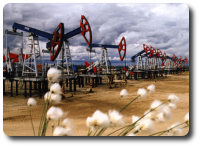
People who like conspiracy theory are well served by the Oil Establishment’s ceaseless quest to present world oil supply as sufficient if not ‘abundant’, denying the evidence of Peak Oil, and accessorily keeping a lid on oil prices. [1]
A Peak Oil Denial Sampler
We who feel an urgent imperative to explain the reality and expected consequences of Peak Oil by doling out facts, evidence, and reality, continue to deal with heaping doses of nonsense volleyed back from the other side of the net. Language from a recent Exhibit A is indicative of the “arguments” from those unwilling to accept the unfortunate facts about oil production (starting with the “good news” first … apparently a new way to measure fossil fuel resources):
We have more than enough of the black stuff to incinerate ourselves several times over….
[S]upply side bounty … offering a second pass at resource riches….
[A] dazzling display of unconventional technologies rapidly increasing kangaroo LNG production.
The North Sea can squeeze out a few more drops; Europe can finally get it’s ‘energy sovereignty’ back….
[T]he Arctic offers Russia untold oil riches….
[T]he new African oil rush….
Higher risk markets … hold undoubted hydrocarbon promise….
Initial trickles of oil will start to flow next year, but the Albert basin has already unearthed a billion barrels of proven reserves, figures that could go significantly higher when surveys are conducted….
Nairobi has struck its own oil. Tullow is plugging away in the Rift Valley; serious offshore plays are being looked at [my emphasis] in the Lamu Basin….
Thirty onshore and offshore areas are already under license, with a further eight
deep-water tracts coming up for auction….while trickier deep-water blocs have been taken….
Like it or not, East Africa has just added another serious swathe of hydrocarbon prospects to the global economy.…an attractive prospect for bullish supply side expectations. [2]
What The Peak Oil Denial Sampler Is Telling Us
Perhaps the author should have his keyboard checked out … other than the Albert Basin’s “billion barrels of proven reserves,” the entire essay was all but devoid of any production numbers amid all of those supposedly-optimistic, pseudo-factual pronouncements. (But we do have eight tracts coming up for auction, and we all know that ‘coming up for auction’ is almost like production by tomorrow … especially when ‘offshore plays are being looked at’ … and not just any offshore plays, mind you, but ‘serious’ ones! Wow! And one can only imagine just how much oil Nairobi has struck! We’re saved!
I think it’s fair to say that it’s entirely possible this information might potentially persuade several key officials that if certain things happen favorably, the oil supply future could very well appear to be bright … perhaps.
I’ll ask the same question I’ve raised before: How does this help us?
Humans don’t want to hear bad news. That’s just the way they’re built, the way they were designed by Nature. That’s the lesson I learned in a nutshell. If they’re not listening, that’s hardly a surprise. Certainly it’s nothing to worry about or get frustrated over. If they’re not listening to the bad news you’re bringing, for God’s sake don’t try harder. They simply don’t care about your carefully crafted, convincing arguments. [3]
It’s hard to dispute Dave Cohen’s perspective, and in fact quite easy to succumb to a healthy dose of despair when nonsense is the standard reply to our efforts to inform. The questionable notion argued by a more than a few deniers—that we derive some perverse pleasure in dispensing gloomy forecasts—seems enough of an excuse to pay no further attention to the information shared. It’s all the more discouraging when prominent media is more inclined to give voice to happy talk about the magic of “human ingenuity” and the Technology Fairy.
Peak Oil Denial Exhibit B
[T]he peak oil model itself shows an inadequate empirical representation of historical patterns. World oil discoveries have peaked at least four times since 1950. Take the United States: here, there has been a major deviation between Hubbert’s projections and real figures of oil production. As economist Daniel Yergin has pointed out, at the end of 2010, US oil production was 3.5 times higher than Hubbert forecast. [4]
Facts Keep Screwing Up Denials
U.S. oil production peaked four decades ago, exactly as Dr. Hubbert predicted! So what’s the point of nitpicking the fact he could not conjure up all of the future technological advances altering the amount of oil produced? The essential issue is that his prediction of the peak was spot-on!
It seems that Hubbert got the timing of the plateau (peak) of oil production almost perfectly, and he was off by a factor of two in the production level. He could not have possibly accounted for the offshore production in the North Sea, Nigeria, Angola, Brazil, deepwater GOM, etc. He had no way of predicting the discoveries and ascent of Cantarell, Tengiz, Majoon, Samotlor, Zakum, Prudhoe Bay, and many other supergiant oilfields….Hubbert’s data said nothing about the impact of 3D seismic, deviated wells, horizontal wells, massively hydrofractured wells, drilling in two kilometers of seawater, etc. Yet, almost 60 years ago, Hubbert was off by a factor of two in the production level and perfect in the timing of the peak. Now think about an economic forecast for the entire world that is this good after mere 10 years….
Hubbert’s prediction is close to a miracle….Hubbert simply did not have enough random variables in his data set, because these variables were still in the future when he plotted his [graphs]. In the intervening six decades, technology created by people like me brought these new random variables (oilfields) to life and doubled the production outcome, but did not change the location of the peak [my emphasis]. [5]
If At First You Don’t Succeed, Just Say Anything!
The same article cited in [4] above goes on to state:
Peak oil theory holds a static view of the world, and its models ignore price effects: lots of oil discoveries and high production mean that prices and profits wane, and incentives for further exploration decline. But ensuing oil shortages then restore these incentives. When incentives exist, the industry will continue to produce and is likely to produce even more…..
Peak oil theorists also neglect the role of technological advances in oil production as a great multiplier. The history of the oil industry reflects an endless struggle between nature and our knowledge. Progress in technology allows both new discoveries and the increase in recovery rate needed to turn non-recoverable or hypothetical resources into recoverable reserves….
Worse yet, peak oil theorists do not take into account the assessment of unconventional oil resources, such as oil shale, oil sands, biomass-based liquids, coal-based liquids and liquids arising from chemical processing of natural gas. These could substitute for conventional oil when new technologies, such as steam injection for oil sands deposits, mature.
Just a few comments on these statements. We can just assume that consumers/we are going to pay the higher prices no matter what? The first option available to most in the face of higher prices is to cut back on usage. So unless the fossil fuel industry has decided that they are going to absorb from profits the higher costs of exploration and production of the inferior substitutes relied upon to debunk Peak Oil, those higher prices get passed on to us, and we’ll react accordingly. Surprise!
When customers aren’t buying, profits decline. When profits decline, business investments aren’t made. Restoring those investments and deciding to resume exploration and production is not an overnight process, so the magic suggested in the first paragraph above isn’t quite as impressive when reality intrudes. And let’s keep in mind that what is being sought and eventually produced is of lesser quality, harder to access (and thus more expensive), and takes much longer to bring to market, among other notable drawbacks. Facts continue to suck!
And the suggestion that we “neglect the role of technological advances in oil production” and “do not take into account the assessment of unconventional oil resources, such as oil shale, oil sands, biomass-based liquids, coal-based liquids and liquids arising from chemical processing of natural gas” is a flat-out lie! We argue our position on Peak Oil precisely because “technological advances in oil production” and “unconventional oil resources” are woefully inadequate in substituting for the finite conventional fossil fuels we’ve been extracting and using for more than 150 years!
Those conventional oil fields are depleting daily, and these pixie-dust unconventionals are simply not able to keep up with those numbers, let alone meet increasing demand. The truth is that cornucopians just don’t like the production reality facts about these magical substitutes.
Gotta Keep Hammering Away
It’s maddening to deal with so much nonsense helping no one but investors, oil company executives, and corporate bottom lines. Dave Cohen is perfectly justified in throwing up his hands! But throwing in the towel simply cannot be an option for those of concerned about the facts of oil production and what Peak Oil will mean to all of us. If at first (or second, or twenty-third) you don’t succeed, try again. And so I will….
[D]enial which arises out of the innate subconscious urge we all have to adopt views that agree with our tribe, because of the importance of social cohesion, does not seem unethical. That sort of denial is a product of subconscious motivations, to a large measure beyond our free will. But the deniers who are consciously trying to sow doubt, and block action on what could be an existential threat to human life as we know it, not purely as a matter of ideology but to protect their profits and power and personal interests, clearly are behaving unethically, and we should be outraged….
It may take more cognitive effort to think critically and independently rather than just parrot our tribal leaders (like some Limbaugh-ian ‘Ditto Head’) but that simply can not excuse people knowingly and selfishly putting themselves and their self interests above others in their community and as a result putting the rest of us at risk. Whether the community is local or global, and whether the issue is climate change or jeopardizing the economy with ridiculous investments that make you rich, the principle is the same. It is fair to call unethical, and be enraged by, the conscious actions of those who would put the rest of us in serious danger in order to protect their safety and profits and power….[6]
I’ll have some more thoughts on other recent, related “denial” articles in an upcoming post.
Peak Oil Matters by Rich Turcotte
2 Comments on "Peak Oil Denial: A New Batch Of Almost-Truths"
Plantagenet on Mon, 14th May 2012 6:20 pm
As long as the Obama administration keeps pretending that high oil prices are caused by evil speculators, there is little hope of convincing Obama’s followers in the democratic party of the reality of peak oil.
BillT on Tue, 15th May 2012 1:19 am
When the news is full of quotes claiming we have 100 years, 200 years, 500 years of oil, the sheeple will yawn and go back to sleep. The fact that it is all lies does not register on their dulled minds. But $10 gas will wake them up…