
Peak Oil is You

Donate Bitcoins ;-) or Paypal :-)


Page added on October 18, 2013

Peak Oil: A Splash of Cold Water
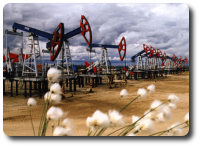
An observation worth noting … and pondering, from Steve LeVine:
If Montana is a microcosm of the world, one message to glean is that we are not in the midst of a decades-long flood of oil supply in the United States, as many suggest. Instead, the red lights are blinking across the exuberant U.S. oil patch. As you recall, much has been made in recent months about the momentous prospects for U.S. oil and gas, which are said to be leading a global fossil fuel revolution, with meaningful implications for fortune-hunters and geopolitical players alike: North America will be independent of outside oil producers, the U.S. will experience an industrial revolution, and OPEC will drift into laggardly inconsequence. So what to think about the latest news from folks approaching the punch bowl with bad intentions?
Let’s start with Montana, and the now-legendary Bakken shale oil formation. Bob Brackett, an analyst with Bernstein Research, studied a dozen years of shale oil drilling data for this mountainous state bordering Canada. What he found was a steep oil production increase through 2006 — surpassing 100,000 barrels a day — followed by a fast, 40 percent decline to about 60,000 barrels a day today. The plummet is counterintuitive because the time frame coincides with a capital spending binge by the industry — tens of billions of dollars poured into the new innovations and technology that have opened up the Bakken and other shale plays. So why has Montana’s production dropped? ‘Resource plays,’ Brackett writes in a note to clients today, ‘have limited/finite drilling locations. The best locations get drilled early, the less economic ones later, and once they are drilled, operators move on.’ In other words, Brackett told me in a followup email, ‘industry drilled the low hanging fruit first, and now can’t find the same quality of opportunity.’
But surely this is just Montana, right Bob? You don’t mean to suggest that the entire Bakken formation, including North Dakota — on which so many North American projections centrally rely — is in trouble, too? Sadly, that is precisely what Brackett means.…
‘All good things in the oil patch come to an end,’ Brackett told me. ‘In the case of North Dakota, that is a long time — years — off, but even that too will suffer the same fate’ as Montana.
Just another reminder that before we all get carried away with the vast potential that might possibly lead us, perhaps, to energy abundance/an energy revolution/energy independence/free ice cream for everyone, facts on and in the ground can toss a cup or two of cold water on all that wild enthusiasm.
LeVine’s piece ended with this:
[J]ust because you pick up the scent of oil and gas, a load of other factors affect how much will actually be produced, and for how long. Says Brackett in our email exchange: ‘There is an emerging view of a wave of oil production (from shale and otherwise) coming. I just want to point out the difficulties in an exuberant view.’
No one (and I include myself in the group) wants to hear that all of this dreamy pie-in-the-sky fossil fuel potential is a lot less noteworthy than some in the industry and media want us all to believe. As is the case to often these days—whether it’s politics, the economy, or the state of our energy supply and the environment—failing to tell the full story is, after taking care of today, a lousy strategy. It’s worse because citizens and officials and businesses are all relying (reasonably so) on the media and its chosen experts to tell us the truth about issues they cannot or do not invest enough time to properly appreciate and/or understand.
Is it that difficult to recognize that making or not making plans to address issues of great complexity and wide-ranging impact require as the fundamental element a truthful accounting of all relevant facts, and not just the ones that sound good in the moment?
How many more problems will we all have to deal with if the media and industry officials who know better keep shading facts to suit self-serving narratives?
~ My Photo: The Chateau Frontenac, Quebec City – Sept. 2009
Looking Left and Right:
Inspiring Different Ideas,
Envisioning Better Tomorrows
Peak Oil Matters is dedicated to informing others about the significance and impact of Peak Oil—while adding observations about politics, ideology, transportation, and smart growth.
7 Comments on "Peak Oil: A Splash of Cold Water"
rockman on Fri, 18th Oct 2013 6:05 pm
This may sound simplistic but it is none the less true: the Bakken has and will follow the path of every other oil play in the world. First discovery (about 60 years ago in the case of the Bakken), development based on prices at the time which leads to peak production, occasional resurgence of activity during higher priced periods, eventual steady decline to relatively insignificant production levels.
There is also another fairly universal rule: even in periods of resurgent drilling during higher price periods wells tend to yield lower recovers then the earlier efforts. Every play in the world, old or new, follows this profile. In some case new technology will provide a boost. But in the case of the Bakken and other shale plays that technology existed before their recent boom. What brought about the uptick was the higher price of oil that made the tech affordable. Long before everyone became familiar with the name Eagle Ford Shale the Austin Chalk was being drilled and frac’d in Texas during the 90’s was the hottest oil play on the planet. It worked then at much lower prices than we have today.
A similar case can be made for the Deep Water GOM. Which might surprise some folks but isn’t a new play but began over 30 years ago. Over 160 DW GOM fields have been discovered and developed to date. As long as oil prices stay high fields out there will be developed that have been identified long ago but were too small to justify development because of lower prices at the time. Every geologist, including the Rockman, has files in the back of the cabinet with prospects that look good but weren’t economic at the time when they were generated. So we wait. As I just did for about 10 years for an idea to horizontally drill in what appears to be depleted conventional reservoir. Was just as good idea back then as it is today. But I was just able to drill the first well (which is doing 150 bopd) because oil prices finally got high enough to induce someone to risk the money. But higher oil prices also justified drilling 3 exploratory wells in the trend. A trend that has produced 4.5 billion bbls of oil. The larger fields have produced 30 million to 150 million bbls of oil each. The target size for each one of my prospects was about 50k bbls of oil. Which indicates another common aspect: even as high oil prices justify more drilling the remaining prospects will tend to be smaller. And in heavily drilled trends they’ll tend to be much smaller.
The point of all this is just a mild cautionary note: there are a variety of reasons why oil production has increased in the US and elsewhere. But the prime reason is the increase in oil prices. And as long as oil prices stay high we’ll drill more wells. But only as long as our old inventory holds out. And every one of these wells drilled means one less future potential well. In time (everyone is free to guess when) we’ll run out of wells we can justify drilling for $100/bbl.
Newfie on Fri, 18th Oct 2013 8:27 pm
What goes up must come down. Such is Nature.
Norm on Fri, 18th Oct 2013 10:00 pm
Not ever mentioned isz EROEI. If U don’t know that acronym, stop reading. So these drillers are burning up 1 barrel to get 3. The cheerleader pom-pom production data dont even consider jt. So they ‘net’ even less than they pretend to. Situation isn’t good.
J-Gav on Fri, 18th Oct 2013 10:44 pm
A good reminder but that water isn’t even cold anymore – Art Berman’s been sloshing it around for so long that’s it’s already had time to warm up …
eugene on Sat, 19th Oct 2013 1:44 am
Many yrs ago, in a light hearted comment, I said BS is the grease upon which the world turns. I’m now old and realize it wasn’t a light hearted comment. The problem is untold millions, including the so-called well educated, don’t recognize BS when they see it.
In the scope of things, Bakken is a flash in the pan. We are scraping ever farther towards the bottom of the barrel. If all these world saving plays were so hot, they’d have been played long ago. We are now living on hopes and dreams.
BillT on Sat, 19th Oct 2013 1:55 am
We hear about 85 million barrels of oil, per day, recovered, but no mention that it takes 15* million of those barrels to accomplish it with a NET of 70 barrels per day actually available for other uses.
* 15 is a guesstimate based on many articles read. It could just as easily be 20 or even 30.
rockman on Sat, 19th Oct 2013 1:55 pm
Bill – Just a guess but I suspect the metric they were looking at was the energy needed to develop new production…not to produce a well. The energy needed to actually produce oil from the well head and prep it for transport is actually rather low. An example: I just put a well on at 150 bopd and 100 bbls of water per day. In addition I have to run an electric pump to produce it. And then haul it by tank truck to the buyer. So my well takes a fair bit of energy to produce. But that’s still about only several bobs of energy per day. The capital cost is several times the value of that energy.
Of course there’s more energy used to transport, refine and distribute the products. But those phases are invisible to my portion of the process. Now look at the exploration/drilling metric. A well takes X bbls of oil energy equivalent to drill. One well is a dry hole thus there is zero oil returned. For completed wells there’s an infinite range of outcomes: the expenditure of a few bbls for every 100 bbls produced to 99 bbls used to create a 100 bbls. I can’t offer any sense of what the global average might be. But I will offer that the energy used to drill wells is much less than most think. As I’ve pointed out before no operator would intentionally drill a well with an EROEI of less than 6 or so. But not for the sake of the energy expended but because of the economic constraints. The energy component of drilling a well is typically 10% or less than the total cost of a well. Rate of return will kill a play long before EROEI will.