
Peak Oil is You

Donate Bitcoins ;-) or Paypal :-)


Page added on February 17, 2014

“Peak is dead” and the future of oil supply
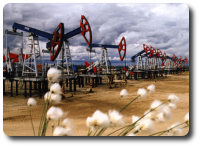
Peak Oil Review Commentary: Interview with Richard G. Miller
Dr. Richard G. Miller, trained as a geologist, joined BP as a geochemist in 1985. He studied peak oil matters since 1991, when BP asked him the following year to devise a wholly new way to estimate global oil resources. In 2000, he was tasked with creating an in-house projection of global future oil demand and supply to 2030. The model he created was updated annually through 2008; then the effort was disbanded and he moved on to his present work consulting on peak oil. Most recently, Dr. Miller co-authored The Future of Oil Supply, which was published by The Royal Society (on-line December 2, 2013), in a thematic issue of Philosophical Transactions entirely devoted to future world oil supply; he also served as co-editor of that 12-article publication.
Steve Andrews touched base with him last week for the Peak Oil Review.
Q: Andrews: BP has recently said definitively that “peak oil is dead.” How does an oil super-major reach such a conclusion, at least for purposes of public policy dialogue?
Dr. Richard Miller: I can’t shed any light on why they’re saying that today because it hasn’t been their consistent position in the past. A CEO like Lord John Browne clearly at least kept his options open on the idea; and he was the one who started to steer the company into alternative energy. The one who really didn’t have any sympathy with peak oil was Tony Hayward; it was really sad to see him bring the company’s investments in photovoltaics and other non-conventional energy almost to a screeching halt, deciding that the company was going to become a pure hydrocarbons company. That did seem very short-sighted. What’s odd of course is that he’s a geologist, and a very good geologist. You would think that someone like that could at least see that peak oil is not only coming, it’s quite probably here, in terms of conventional oil.
Q: The third-hand story from someone at the 2001 World Economic Forum is that Daniel Yergin was on a panel with Lord Browne and convinced him, right after his presentation, to doubt peak oil.
Miller: Daniel Yergin is a rubbish scientist. He’s a very good flak, he’s a very good writer, he’s very perceptive in many ways, but I’m not convinced that he has grasped the underlying science of anything. I’ve read The Prize cover to cover; it’s a lovely history. But he seems to fall into this camp that says if you’ve got over 50 years of reserves in the ground, at current supply rates, how could there possibly be a problem?
Q: In your paper, you mention the difficulties of accessing the relevant oil data, the unreliability of the data that are available, and the pervasive influence of powerful political and economic forces. How good or bad are the data?
Miller: At a national level, the data is reasonable in terms of production. There are some things that you can’t hide. Even if you are a Saudi Arabia or Iran or Iraq and you don’t want people to know too much about your industry, you still can’t hide how many super tankers are moving out of your country. You know how much is being exported, and you can have a good stab at how much is being consumed internally, so the national production numbers are pretty good.
Where it falls down is looking at field-by-field data because this is how you see what is going on. That’s important, that’s how you start to learn the reality and rate of decline. That data is frankly terrible. There are a few western countries that are quite open. The UK for example is entirely open. You can go online and find all that data, month by month and field by field. For most fields though, you have to turn to the commercial databases, and the biggest of those is IHS. If you’re looking for full access to that, you’re talking about a price, when I last looked, of well over a million just to study their field-by-field production data.
While I was at BP I was able to look at IHS data, and it’s increasingly clear that a lot of their data is very old. It was good when it was obtained, it was the best in the world, but some of it dates back 20 years and more. It’s still the best data there is, there is no other comprehensive source for it. At the same time, you know the data that goes into IHS is not really audited; there are no sources that you can cross-check for a lot of this stuff.
For example: There were an awful lot of tiny fields that appear to be included in their grand sum of reserves; you’re talking about fields from 1/10 of a million barrels to 10 million barrels in places where you can’t imagine that they would be economic to produce. So you have to wonder if those are included in IHS’s global reserves numbers and forecasts.
The model I built for BP’s internal forecasts was a bottom-up model, one which tried to get right down to that field-by-field level. Unfortunately, the more important the data were, the less reliable they were. But it did at that time suggest that there was a large quantity of undeveloped resource in the ground which looked like it provided a comfortable hump of supply into the future with no real supply difficulties. I have a colleague who refers to this as the Miller Hump. That was basically derived from IHS data. If memory serves, there was something on the order of 250 billion barrels which hadn’t been developed.
I still run this model, doing it year by year for many years. The funny thing is that that hump of undeveloped oil keeps moving forward. It never got developed. That was what got me thinking that that oil doesn’t exist as a reserve as we would generally understand it—something that is economically and technically worth producing. Some of those reserves are actually discoveries that are probably not recoverable.
I should add that BP had access to one or two other databases plus its own internal data base.
Q: You mentioned that between 2000 and 2007, additions to global reserves were over twice as large from reserves growth (33 gigabarrels) as from new discoveries (15 Gb). What’s the significance of that point?
Miller: If you look at total reserve increases, they exceed global consumption and thus reserves year by year are growing. And this is why economists like Peter Odell just point at the reserve numbers and laugh at people like me, “We’re not running out of oil, we’re running into oil.” However, increasing the reserves in a field, by better technology and craftier drilling and better data, doesn’t actually increase the rate of production from that field. It just slows down the rate of decline. What is important to realize is that the crop of fields that we have today is losing production every year by natural decline. For arguments’ sake, let’s say it’s 3 million barrels/day every year being lost. That decline cannot be reversed by reserves growth to older fields; reserves growth is making them last longer but it isn’t making them produce faster, it’s just holding global decline to that 3 million barrels/day per year. If you want to replace that 3 million barrels per day lost every year, you have to do most of it with new discoveries. And new discoveries equal basically only half of annual consumption.
This is why I use the ATM analogy: it doesn’t matter how much money you’ve got in your account, you’re still limited by the daily withdrawal limit.
It’s also fair to point out that although reserves have been growing year by year, it hasn’t stopped the price from jumping, which suggests that there is a supply issue there somewhere.
Q: You refer to the widely used phrase—“it’s not so much the size of the tank as it is the size of the tap.” Care to comment on what the bottom line message is there?
Miller: Nobody should be misled by discussion of the size of global reserves. What matters is the speed at which you can get them out, and that speed is limited by physics and engineering and money. Very basic stuff. If you really really wanted to get the existing reserves out faster, it would cost too much to buy. So there is a rational size to the tap that you can have.
Q: You were quoted as saying we can’t grow the supply at the average rate of 1.5% per year at today’s prices. What sort of price do you think it would take to grow supply at that rate?
Miller: The kind of number that comes to mind is about $150 a barrel, but it’s a complete spectrum. The marginal new barrel at the moment might be in the Canadian oil sands or Venezuelan heavy oil, and starting new production could cost $130 or $140 a barrel.
To grow by 1.5% per year, I don’t think it would be long before you got up into the $180 range. And that’s a price that breaks economies.
Q: You mention in your paper that natural gas liquids can’t fully substitute for crude oil because they contain about a third less energy per unit volume and only one-third of that volume can be blended into transportation fuel. In terms of the dominant use of crude oil—in the transportation sector—how significant is the ongoing increase in NGLs vs. the plateau in crude oil?
Miller: The role of NGLs is a bit curious. You can run a car on it if you want, but it’s not a drop-in substitute for liquid oil. You can convert vehicle engines in fleets to run on liquefied gas; it’s probably better thought of as a fleet fuel. But it’s not a substitute for oil for my car. By and large, raising NGL production is not a substitution to making up a loss of liquid crude.
Q: You’ve also been quoted as saying that “we’re probably in peak oil today, or at least in the foothills. Production could rise for a few years yet, but not sufficiently to bring the price down. Alternatively, continuous recession in much of the world could keep demand essentially flat for years at today’s price of $110” [the Brent price]. Yet there are several commentators who believe that prices are setting up for a modest decline. If prices did drop, say $20 over the course of a year, what impact do you think that would have on world oil supply on down the road?
Miller: I think you first have to ask yourself, why would the price fall? You have two possible reasons. One would be an increase in supply of cheap oil. The other would be a decline in demand—a continuation of the current recession. If the price does drop $20, I think it will be more of a signal that world economies are floundering and demand is sinking.
I suspect what we’re looking at into the future is a long set of short-term oil price and economic cycles. At the moment, the US economy is pulling a bit ahead, and the extra oil that involves is probably being produced by shale oil, so it’s not putting an extra load on global demand. But if the European economy tried to pull ahead, it would pull up oil demand, and that would be enough to raise the world oil price. And I think we’re probably operating at the maximum price that we can afford at the moment. If the price goes up, the economy slips into recession, demand goes down, oil price goes down, people start buying more oil and the economy goes up again. It becomes an oil price saw tooth that will probably never quite fall as low as it was before, it always keeps the price generally trending up.
Q: A sobering point you make in your paper is the following: there is a substantial risk of a sustained decline in global conventional production that begins before 2020. Why do you think that point is so under-appreciated, especially by policy makers?
Miller: Policy makers are only in there for the short haul. Policy makers answer to politicians and politicians answer to the electorate, and the electorate votes its pocketbook. Politicians have to say whatever’s going to keep them in power, to get them re-elected; only when re-elected can they “do something useful” for the country. To be re-elected, they have to grow the economy. In the UK today that’s why whenever there’s a conflict between the Dept. of the Environment and the Treasury, the Treasury wins. That’s also why the government wants to go fracking in the UK. They will do anything to try to reduce the price of energy because that will help the economy to grow. All of which means they cannot acknowledge the longer term problems.
The Chinese are more rational about all this. They get peak oil and they get climate change. But they also get that they have to finish hooking up their far-flung populations to electricity supplies and to create a bit more personal mobility. Without that they have civil unrest, with people still flooding in from the countryside where they might become useless and uncontrollable. So their bigger problem for now is also growing their economy.
It’s just a mess. Bottom line: we don’t have a shortage of resources, we have a longage of people and a serious longage of their expectations.
Q: Tight oil in the U.S. seems to be viewed by many commentators as a long-term savior in the energy realm, at least on this side of the Atlantic. How would you characterize the role of tight oil, both for the U.S. and elsewhere around the world?
Miller: For the U.S. case, I’m fairly certain that tight oil is going to be quite a transient bubble. Tight gas, I think, might have more legs to it.
I say transient because of things such as the decline characteristics of the oil wells, the fact that it seems to be the oil sweet spots that make the difference—all the stuff that’s well known. The sheer rate at which you have to drill new wells simply to have production stand still, and to keep paying dividends, is quite amazing.
I think some of the early US forecasts of just 2.5 to 3 million barrels a day from shale oil were pessimistic; the industry will probably do better than that. But I also think that seeing it top out and decline in the early 2020s looks to me like a good guess at the moment. It’s still very much guesswork.
When you move out to the rest of the world, there aren’t so many places where shale oil might work for you. It might work in parts of Australia, China, Russia, South America, but not in any place like Western Europe or parts of Asia which have high population concentrations because this is not an industry that is compatible with high population density. That’s because the upheaval involved in the process affects far more people, and because the economic benefits are spread out among far more people, so there is less benefit per head. I think that is one of the factors that may even stop shale development in Europe.
Q: In your paper you wrote, “The multiple forecasts of regional and global peaks that have been made since the 1950s have frequently proved premature. More optimistic forecasts have often proved equally incorrect, but it takes longer for their errors to become evident.” Where does this leave the broader energy dialogue in terms of the role of peak oil and the world economy?
Miller: First, I don’t think that anyone’s past forecast has got anything to do with current forecasts. The fact that someone else made a call, based on the best information that was available at the time, and that call has subsequently turned out to be wrong, is an interesting fact. But what has it got to do with any new estimate? There’s just no connection. I’m sure some people will say, “Well you’re connected because you’re using the same methodologies.” Sometimes we do, sometimes we don’t, but we’re using better data and have much more experience. We should be getting closer and closer to a good estimate.
But we don’t even know what the shape of the peak is going to be—whether a sharp peak or a long, undulating plateau. I suspect it’s going to be the latter.
The charge that—because all previous estimates have been wrong, therefore all future estimates are going to be wrong as well—is just ludicrous and completely unscientific. I can’t be bothered to listen to that anymore.
Consider this: if you did a distribution curve of all estimates of the date of peak—say from the early ones in the 1990s to the most forward estimate of a peak in 2100—and you’ve got a bell-shaped distribution, then somewhere in the middle of that bell shape is the correct answer, but we won’t know it until we’ve gotten there. Of course, at the peak all the premature estimates will already have been proven premature because you’ve already passed the dates and been proven wrong. But how do you prove someone wrong who says it won’t be until 2100? You can’t prove him wrong by direct experience; you can only prove him wrong by argument, at which he just shrugs his shoulders and dismisses it.
Where people have got it demonstrably wrong is folks like the IEA and EIA when they make price forecasts into the future and extrapolate demand into the future. Now it’s not the same as forecasting volume and supply, but nevertheless they are forecasting into the future. And they have been just horribly wrong, when you look how prices have deviated from their predictions, projections, forecasts, scenarios—whatever word they use. And you can see that they are no better today than the old peak oilers of the past who got the date wrong.
Q: About the IEA’s forecast of global liquids supply growth through 2035, you commented “The IEA projection assumes adequate investment, no geopolitical interruptions and prices that do not significantly constrain global economic growth.” How do you view the odds of those three trends not impacting global liquids supply growth for the next 20 years?
Miller: The IEA’s brief, of course, is not just to follow problems but to supply answers to governments, and the best answer they can come up with to maintain supply is probably the only possible answer for them—there will be sufficient investment. As I mentioned earlier, you could increase supply for a while longer if you threw enough money at it. But it seems inevitable to me that that would raise the price to a level that we can’t afford. And their price forecasts in the past have been horrible, so I don’t think their price forecasts in the future will necessarily be any more reliable. So I don’t think they’re going to get away with a nice scenario—prices we can afford, no geopolitical conflict and sufficient investment. That is a trio that has not happened in the past and isn’t likely to happen in the future either.
Here’s an interesting little fact: next year, 2015, might be the first year in a century that Britain hasn’t been at war, so don’t talk to me about lack of geopolitical conflict.
Q: Anything you want to add?
Miller: I’ve had little or nothing new to say. What I’ve said above is all words that have been used before. I’m just another grain of sand in the pile.
I would like to see more solid reliable papers printed on this topic; there is far too little about that. People say policy has to be driven by evidence; okay, we have to give them sizable, quantifiable, peer-reviewed evidence.
Perhaps there’s one more point to add, a despairing observation—we’re not going to get this one right until we get a government in place that is prepared to take these issues seriously and act as genuine statesmen, instead of being driven by short term goals set for them by economists who really don’t understand the problem.
I’m starting to diverge out of the oil and energy arena here to say things like: why do we have to have an economy that grows continually? It’s not the only model. It may be the model that’s worked for the last 150 to 200 years but it’s not the only model. And it’s the model that’s going to fail when the less expensive energy sources dwindle. But you just cannot get a democratically elected politician to take notice of that because it’s against his short-term interests. The only people who can do it tend to be folks like the Chinese and Russians who really don’t care about the democratic process and as a consequence can take very much longer views of things. That’s the kind of comment that makes me persona non grata to anyone who’s reading this. I’m not calling for dictatorships, tyranny or the rest of it. I am saying that we have to find a way to get a democracy to take a meaningful look into the future that includes worrying about things like climate change and energy supply and the fact that you cannot grow an economy forever and to look at possible intelligent responses. Are there truly “solutions” or are there just some responses that smarter than others, under the circumstances?
To get there, what I really hope is that we do not experience a sharp peak in oil supplies. I would like to see a slow but inexorable rise in price that constrains consumption and lasts for decades. That would be a more controllable situation than one in which populations rise up and, essentially, tear each other limb from limb.
Over here in the UK we’ve had essentially two months of unending storms, the worst since records were kept over 200 years ago. Now what this has done is that it has gotten newspapers to start saying on the front covers: “this is climate change, this is happening and what are you going to do about it?” Well, if the same thing happened for fuel supplies—if one day we could see a headline that says “This is what peak oil feels like; what are you going to do about it.”… It’s not that you couldn’t get fuel; you just couldn’t afford so much of it any more.
The worst case scenario is that we keep desperately trying to find and produce more oil such that it brings us to a sharp peak. If we get a sharp peak, we would simply get civil unrest and collapse, maybe in the space of a couple of years because that’s how quickly it could be. A loss of 5+% of global supply in two years would just be awful. But if we have a long slow decline in production with slowly rising prices—a bit like being in a war situation—none of the price change points would be sufficient to cause riots in the streets. So, that’s what I hope.
And remember in the meantime, when people say “peak oil is dead,” ask them “has the price gone down?”
Thanks for your time and your thoughts.
23 Comments on "“Peak is dead” and the future of oil supply"
Aaron on Mon, 17th Feb 2014 10:39 pm
I’m hoping for a “sharp peak”. It’s about time capitalism was put to bed, and anyway, it’ll be much more interesting than an undulating plateau.
ted on Mon, 17th Feb 2014 10:59 pm
Be careful what you wish for….
rollin on Mon, 17th Feb 2014 11:09 pm
He’s right, the world and it’s basic laws have not changed so we are headed to the same place we were before, over the peak and down we go.
The results of such an occurrence are hard to determine.
Some say we will descend into chaos with a total breakdown of society and billions dying.
Some say we will transistion to a new sustainable way of life, lower energy and more related to the soil and agriculture.
Some say that invention and innovation will triumph, old energy will be replaced with new and the grand machine age will continue forward; solving it’s predicaments because of superior brain power, superior computer power, robots and androids.
Pick one or two or something entirely different.
Of course the least popular is that the whole peak oil and descent thing is a non-starter, a fluff and will have very little effect on it’s own. That would imply a very slow descent and mitigation of our other predicaments as we go.
Nice stories but which will play out?
Davy, Hermann, MO on Mon, 17th Feb 2014 11:28 pm
The worst case scenario is that we keep desperately trying to find and produce more oil such that it brings us to a sharp peak. If we get a sharp peak, we would simply get civil unrest and collapse, maybe in the space of a couple of years because that’s how quickly it could be. A loss of 5+% of global supply in two years would just be awful.
Great article, is that because it is what I want to hear or because it describes accurately the POD (peak oil dynamics)@rock. Pretty much he is pointing to plenty of product in the ground. He mentions depletion of the easy oil. Then, the most important to me, he covers the above ground factors that will influence price. I didn’t see much optimism on the page or between the lines. He reaffirms the “lobby of plenty” and the National’s secrecy and distortions for self-centered reasons. I might add, he mentions 5% global supply loss. I think we can live with a maximum 5% but not 10%. I think the effects will be exponential much like the effects of a tornado or earthquake as they get bigger. So, going from 1% to 2% will be much different than 5% to 6%. I do not think the global world economy can take 10% supply loss without collapse if it happens within a space of more than 2 years. The lower range of supply loss figures we will just see the continuation of attrition or cannibalization of the lower classes and poor countries. Critical countries will manage to get help if they are critical enough to the global economy. It really does remind me of yeast in a dish. The global economy in its current structure cannot support the lower classes and poor countries without growth. They will be devour in the name of a psudo-growth of the 10% and above. Prices for food and fuel will be the tools of confiscation to maintain the status quo of BAU. People will just fall out of the line like the Bataan death march. It will not raise eyebrows because it will be within acceptable norms of behavior in the global economic system. There will be calls to do this or do that but little will come of it. I want to make myself clear that this situation or figuratively “racket” can continue for some time IMHO. At some point though the social fabric is destroyed and we could see the whole system freeze up
Nony on Mon, 17th Feb 2014 11:59 pm
It was better than I expected. Interesting things:
A. “Beyond Petroleum”: I never liked this. Awfully fluffy. Sounds like something a McKinsey consultant would come up with in 2000. All politically correct neoliberal and all. And then it turns out that they screw up engineering safety in the Gulf.
Also, EVEN if you think that oil is peaking, that is NOT an argument for BP to try to be a solar company. They are a buggywhip maker and they need to ride that trend into the ground. Core competency. Sell assets, make dividends, milk the declining cash cow, cost control, etc. But don’t try to be something you’re not. That’s expensive and stupid.
“Tight gas might have more legs.” Go, go gas! And shit yeah. We are swimming in gas. I got it coming out of my ass. They aren’t even incented to drill (much) since it is so damned cheap.
No growth, etc. at the end (philosophical). He is getting old and tired and pessimistic. We still have Red State young Americans ready to kick ass and move forward. Things are not as bad as he thinks. And besides, he will be dead soon.
Not completely discussed: would have like to seen him asked about the crude futures market (it is projecting price drops).
Davy, Hermann, MO on Tue, 18th Feb 2014 12:14 am
@nony – BP to try to be a solar company. They are a buggywhip maker and they need to ride that trend into the ground. Core competency. Sell assets, make dividends, milk the declining cash cow, cost control, etc. But don’t try to be something you’re not. That’s expensive and stupid.
Agreed Nony, BP can’t even handle competency with refining or deep water how are they going to handle solar. Although would probably be safer for society
@nony – No growth, etc. at the end (philosophical). He is getting old and tired and pessimistic. We still have Red State young Americans ready to kick ass and move forward. Things are not as bad as he thinks. And besides, he will be dead soon.
–Nony claiming a man is old and almost dead is not going to convince me his message is not valid. You need to do better than that.
@nony – Not completely discussed: would have like to seen him asked about the crude futures market (it is projecting price drops).
–Nony I would love to see you interview him and try to stuff that shit up his butt and see him puk it back in your face! Since when have the futures market been an accurate indicator of the future price of crude further then a few months!
Nony on Tue, 18th Feb 2014 12:24 am
Remember the 1970s? Carter and his sweater? Synfuels? Price controls? If you had said prices would crater in then 80s and we would get 20 years of cheap oil, people would have looked at you like you were crazy.
Shit happens. You should at least know what you don’t know. There is incredible uncertainty and that is BOTH on the low and high price side. Teh Rockman has seen busts before.
Davy, Hermann, MO on Tue, 18th Feb 2014 12:55 am
@nony 20 years of low prices were an aberration. Soviet Union demise destroyed demand but soviet supply continued. Several big fields came on line like North Sea. Alaskan production was in full swing. The oil from this period was convention with high EROI. Saudi’s had lots of spare capacity they used as a political tool to lower prices. Deep water drilling activity was gaining momentum. China and EM’s were not a demand factor like now. @Nony do you really think these historical events could ever happen again knowing what we know now? Never say never but let’s not be ruled by wishful thinking. The facts do not point that way.
GregT on Tue, 18th Feb 2014 1:25 am
“He is getting old and tired and pessimistic.”
The only thing more dangerous than perceived pessimism, is unwarranted optimism. Hope for the best, and prepare for the worst. Unfortunately, hope doesn’t put food on the table, or pay off the mortgage. Ask any one the the millions of Americans that have already lost their homes and their entire life savings, how hope is working out for them. A little bit of pessimism and preparation is always a smart plan. Along with a bit of humility.
“We still have Red State young Americans ready to kick ass and move forward.”
Maybe one day they’ll be ready, when they finally find gainful employment and move out of mommy’s and daddy’s basements. Sadly, more and more are losing out on their early employment years, and their debt loads are at historic highs. The only asses being kicked, are their own, and the problem isn’t getting any better.
“And besides, he will be dead soon.”
You will be dead too Nony, soon enough. Disrespect isn’t an overly redeeming quality.
“I got it coming out of my ass.”
You most certainly do, and other places as well.
MSN fanboy on Tue, 18th Feb 2014 1:36 am
More Bad News.. lets hope its not so bad.
Northwest Resident on Tue, 18th Feb 2014 3:15 am
Excellent straight-forward appraisal of the situation. I felt like I already knew what he was talking about because I’ve read so many of rockman’s posts — I’m edukated!
One point of disagreement: “…long slow decline in production with slowly rising prices.” I don’t think so. Why? Because all credit is based on expected growth. With a long slow decline or any kind of decline, the cat is out of the bag — End Of Growth. Who is going to issue credit? How will international traders get letters of credit to move their goods? How will industries finance their next quarter operations? How will insurance companies borrow enough to keep their ship floating another quarter? When the mirage of forever growth vanishes, TSHTF. Everything goes south, and fast. Just about any shortfall in oil production will be a shock felt around the world, and a total game changer. IMO.
Nony on Tue, 18th Feb 2014 3:16 am
“Maybe one day they’ll be ready, when they finally find gainful employment and move out of mommy’s and daddy’s basements.”
https://www.youtube.com/watch?v=9yXzZTYjUl0
Keith on Tue, 18th Feb 2014 3:58 am
You know how I know PO is here! 100 dollar barrel of oil. If we had spare capacity to crank it out and send it to 20 dollars a barrel. The Western governments would have already made it happen. Governments want to get elected and stay elected, improving the economy is a no brainer for votes. Where’s all the huge infrastructure projects? PO is staring us in the face everyday, but we’ve been so conditioned to be lied to in the face, we no longer have a sense for the truth.
GregT on Tue, 18th Feb 2014 4:52 am
It’s a trade off Nony. Human greed, or life on Earth. We can’t have both, for much longer.
Northwest Resident on Tue, 18th Feb 2014 4:53 am
Keith — They lie to us to keep us calm and to keep up confidence in BAU. Most of us posting on this site are wise to the lies, and we try to figure out what is true and what are lies. Once a person accepts that our world is about to change dramatically and TPTB are barraging “the herd” with propaganda to keep them calm and uninformed, then it all starts to make sense.
Arthur on Tue, 18th Feb 2014 8:58 am
Nobody should be misled by discussion of the size of global reserves. What matters is the speed at which you can get them out, and that speed is limited by physics and engineering and money. Very basic stuff.
Actually this is good news. Mother Nature starts to ration the fossil fuel that is left. There is more left than the ASPO2000 peakers thought, but, thank God, you will only get so much per year. In other words: an early warning system is in place. The decline will not be as fast as we all thought it would be 10 years ago. There will be no cliff, but guaranteed high prices from now on, causing peak demand to arrive before peak supply does. You see it happening most prominent in Greece and to a lesser extent in the US and the rest of the EU: we are beyond peak car. Not because you can’t get fuel, but because it is getting too expensive.
Davy, Hermann, MO on Tue, 18th Feb 2014 11:22 am
@N/R – Your observation seems true on a slow decline in oil supply wrecking the financial system. This is most likely the case but remember we are in a new normal of wealth transfer, manipulated markets, corruption, and outright theft. This racket can continue for a while. TPTB have every reason to keep it going. They are (some) I am sure enlightened. TPTB are misguided because they think they are doing God’s work. Saving the world economy from depression. It is not all pure greed. It is pure greed that is blinding them to the reality of the Ponzi scheme we are in now. The house of cards is teetering but not yet weakened enough to fall. Momentum is a powerful force so expect it to rumble down the Energy Gradient a ways. I imagine it will be like PO we will not see it happen until it is falling and it is in the review mirror. The new normal can remain (Kinda Normal) for some time then very quickly fall apart. This may be similar to water changing state.
rockman on Tue, 18th Feb 2014 12:25 pm
“…do you really think these historical events could ever happen again knowing what we know now”. IMHO yes…very easily. But it would take a global recession like we had in the mid 80’s. What’s the possibility of that happening? I have no idea. But it is a proven model for oil prices to decline 70% over a relatively short period.
Davy, Hermann, MO on Tue, 18th Feb 2014 12:36 pm
@rock – I do not deny price movement. I am referencing the unusual historic events and discoveries of the last big conventional fields. I agree with you on the price movements. That will be driven by POD@rock in a new normal of unconventional hydrocarbons, financial markets, and geo/political events.
Nony on Tue, 18th Feb 2014 4:22 pm
supply growth in the US and then the consequent fracturing of the OPEC cartel (parties cheating and then SA saying screw it we’ll cheat too and the market moving from cartel control to free competition) were very significant factors in the mid80s. I remember the recession in the early 80s, not mid.
Nony on Tue, 18th Feb 2014 4:49 pm
If price were purely a function of demand, you would expect that after the recession ended (and volume grew), that price would recover. But we had 20 years of cheap oil except for Gulf War I. Both supply and demand are important for setting price (this should be obvious, every commodity is like this).
In the 70s-80s, OPEC was intermittently capable of controlling price. In itself, this reflects some aspect of peak oil (peak “oil in countries we like politically”). But it was not an absolute. Releasing the price controls of the 70s and allowing fullout US production was important…not purely in the barrels and their effect as marginal volume on the price curve…but in how they fractured cartel cooperation.
The scary thought is…what if OPEC is pumping full out now? There’s no cartel to break up (and then enjoy a drop to free competition prices), but what if 100/barrel is the free market price? That’s actually scarier because it implies worldwide depletion (“peak oil”) as an important effect.
nemteck on Tue, 18th Feb 2014 5:35 pm
“[SA]:….we’ll cheat too and the market moving from cartel control to free competition.” OPEC is already pumping to max capability with little reserves, and that is not comparable to the event of the early 80s.
Nony on Tue, 18th Feb 2014 11:39 pm
I think you might be right.