
Peak Oil is You

Donate Bitcoins ;-) or Paypal :-)


Page added on March 8, 2013

Forget Peak Oil, We’re At Peak Everything
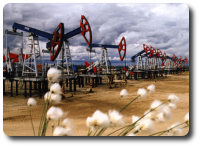
The idea that we’re running out of oil may have faded slightly from the list of concerns, but that’s just one of any number of precious natural resources we’re using up far too quickly.
Peak oil is the concept that new discoveries of commercially exploitable oil resources do not keep pace with growing demand. By extrapolating the data, you can estimate when we will run out of it for all practical purposes. There are a lot of disagreements about whether we have reached peak oil or when the downhill slope will hit a point that brings a significant percentage of our vehicles to a grinding halt, but the concept has made scientists and policy makers ask the question–what other critical resources may be peaking?
Asia Pulp & Paper Company, one of the world’s largest, announced last month that it will no longer use wood from natural forests for any of its $4 billion per year worth of products. Why? Because APP’s customers realized we are running out of natural forests from which to harvest lumber and have demanded suppliers to develop sustainable sources. The Walt Disney Company, Mattel, and Harper Collins are among many corporations setting sustainability standards for things like paper and packaging.
Water is another resource that may not be as mobile as wood or oil, but which has certainly reached its peak in many places. Last year, a report from the U.S. Office of National Intelligence predicted increasing global conflicts by 2030 as demand for water surpasses sustainable supplies by 40%. Nearly a billion people lack safe, sustainable water supplies already and, according to the UN and the OECD, almost half of the world’s population will live in areas of serious “water stress” by 2030.
Former Secretary of State Hilary Clinton confirmed these findings on “peak water” saying, “These threats are real and they do raise serious national security concerns.” And just where might peak water create such threats first? A 2011 report from the U.S. Senate’s Committee on Foreign Relations may have an answer in its title: “Avoiding Water Wars: Water Scarcity and Central Asia’s Growing Importance for Stability in Afghanistan and Pakistan.” Considering the price in human lives and taxpayer dollars for “peace” in that region already, we might want to help Afghans make water more plentiful even as our military tries to make things like guns and ammunition more scarce.
Another essential commodity that may soon hit its peak is food. Last year, more than half of the world’s seafood was farmed instead of wild caught, because we have long passed “peak fish” in the ocean. This was the last global food product where humans were mostly hunter-gatherers and we have now industrialized its production, however our fish farming methods are crude compared to the ways we grow row crops, grains, and other forms of protein, meaning that shortages and higher prices for many seafood items are already resulting from certain species peaking. In another example, the conversion of corn to ethanol has been well documented for several years as a contributor to shortages and price spikes for that staple in many parts of the globe.
These peak trends have motivated retailers like Walmart, Tesco, and Target to set standards for suppliers around sustainable sourcing, because executives I have spoken with are concerned their shelves will one day be empty or prices will exceed their customers’ budgets, which in turn impacts corporate bottom lines. Make no mistake, peak anything is a warning signal that smart consumers will increasingly use to make more sustainable choices and to plan for a resource-constrained future. And that should peak the interest of any business person or politician.
13 Comments on "Forget Peak Oil, We’re At Peak Everything"
J-Gav on Fri, 8th Mar 2013 11:08 pm
Can’t say it’s ‘bad’ if major rip-off retailers are re-setting standards but that’s not where’s it’s at. Their ‘little adjustment here and there’ approach is only meant to stave off the inevitable collapse as long as possible … buying time I think it’s called.
GregT on Sat, 9th Mar 2013 12:13 am
In 1953 one of our local rivers had a return of over 6 million salmon. That was the first year that they started counting. Last year the same stream had a return of 36 fish. Although not as bad, the entire west coast of Canada and the US has had dismal numbers of salmon return over the last decade, and it isn’t getting better.
The Pacific Ocean is in serious trouble.
Kenz300 on Sat, 9th Mar 2013 1:09 am
Mother Nature is wonderful….. people are the problem.
There are too many people putting too much stress on natural resources.
As the world ass another 80 million more people to the worlds population EVERY year they demand more food, more water, more energy and more resources.
This endless population growth is not sustainable.
oilforbreakfast on Sat, 9th Mar 2013 1:09 am
He didn’t even go into “peak soil” or any of the many minerals and ores and rare earths that are also running out.
Dmyers on Sat, 9th Mar 2013 1:40 am
We are probably going to start running out of things in the near future. I’m not sure the term, “peak”, properly describes all things that come and go. Let’s say the peak paradigm fits mass-extracted finite natural resources. Water and food have not, traditionally, been included in the “finite” category, although I don’t want to argue over whether they really are finite or not. A different model should be applied to food and water, to minimize confusion.
If we have reached the crescendo when it comes to fish, we run into some confusion over the relation of this particular peak with oil supply. If we have increased fish production (a la fishing), the the growth has been from using boats fueled by oil. The more boats you have, the more fish you catch. If oil peaks, fishing will decline. Unlike oil, fish are renewable and their population would replenish if fishing were to diminish.
BillT on Sat, 9th Mar 2013 2:34 am
Dmyers, The fish will not come back if the oceans are trashed. They are becoming acidified by the rising temperatures. The small plankton and other life that start the food chain are dying off also. Then there is the pollution from the rivers that are now sewage dumps, and the chemicals from deep water drilling and oil leaks, etc. Not to mention the acid in the air from burning coal and the radiation from Fukushima, among others. No, in a few more decades, there will be little life left anywhere.
GregT on Sat, 9th Mar 2013 3:08 am
I can’t find the link right now, but there is a video of a lecture given at the Scripps Institute of Oceanography, where the professor says that the oceans could be void of all life, except for jellyfish and cyanobacteria, by 2030.
BillT on Sat, 9th Mar 2013 3:14 am
This pertains to the oceans, and is the reply I made to a previous article on Fukushima.
ALL the article is is a huge pile of BS from the nuclear industry and it’s lackeys. Try this article on for size:
http://coyoteprime-runningcauseicantfly.blogspot.com/2013/02/fukushima-radiation-of-pacific-ocean-in.html
then come back and we’ll discuss the fallout from this coverup.
actioncjackson on Sat, 9th Mar 2013 3:33 am
I found a way to quietly rebel, and it truly makes the person on the other end of the line question themselves as they should. Every time you’re spammed an advertisement with a phone number CALL IT. The first thing I say is “If you’re going to spam me with an advertisement with you’r phone number, then I know you’re prepared for me to call in and say…” This is when you feel free to say whateverthefuck you like. Public info and public spamming of a phone number, only call what they publicly spam you with. Not only is it fun, but they can suck a fuck those fucking cunts because its only language and please record for quality purposes.
rollin on Sat, 9th Mar 2013 5:22 am
Sustainable sourcing = a way to sell your product longer while ignoring the destruction of other lifeforms during the harvest
So far there are no viable ideas on how to change humans so they are not so self-involved and can act more responsibly.
gates outcast on Sat, 9th Mar 2013 8:27 am
Humans will not change, and if you put a god or a religion in there, then birth control will not happen. Rand Paul and Penn from Penn & Teller tell us the free market will solve the problem, oh Ayn Rand our leaders says everything is fine.
Kenz300 on Sat, 9th Mar 2013 3:16 pm
Around the world we have a food crisis, a water crisis, a declining fish stocks crisis, a financial crisis, a climate change crisis, a jobs crisis and an OVER POPULATION crisis.
Every problem is made harder to solve with the worlds ever growing population. This is not sustainable.
Every country needs to develop a plan to balance its population with its resources, food, water, energy and jobs. THose that do not will be exporting their people and their problems.
Maybe this is an issue the United Nations should bring forward and discuss. Most countries have no plan except for hope of endless growth.
GregT on Sat, 9th Mar 2013 5:32 pm
Kenz,
As long as we have an economic system based on exponential growth, population growth will be encouraged by our governments. Without growth, our economies will come crashing down.
“The greatest shortcoming of the human race is our inability to understand the exponential function.” Albert Bartlett
“Can you think of any problem in any area of human endeavor on any scale, from microscopic to global, whose long-term solution is in any demonstrable way aided, assisted, or advanced by further increases in population, locally, nationally, or globally?” Albert Bartlett
It is the central banks and economists that are at the root of this dilemma, and the situation is not getting better, it is getting worse. They are in the process of systematically destroying every country on the planet that is not in their control, in order to impose their banking system on the people.