
Peak Oil is You

Donate Bitcoins ;-) or Paypal :-)


Page added on March 7, 2012

Doom Is (Not) Coming
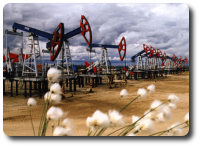
Long-term forecasts are rarely sunny or even middling. In fact, they’re often fairly dystopian: Peak oil, peak gas, peak water, peak food, mass hysteria, zombie apocalypse.
Yet, to believe such specific long-term forecasts, you must believe that, now, folks have the never-before-seen ability and technology to accurately make long-term forecasts based on far distant supply pressures, unknowable future innovations and myriad other factors in the complex beast that is the global economy. Consider just one example: The (always moving) peak oil date certain has come and gone many, many times. Why? Extracting from easy-to-find conventional sources may slow. But there was just no way for folks in the 1950s to know that, 60 years later, we’d still be finding caches of oil (and natural gas) and innovating new ways to get at said energy sources more cheaply. Every decade, the world consumes more energy, yet every decade, the known energy reserves increase. Amazing.
Or maybe not so amazing. Maybe that’s just the way of the world (as Peter Diamandis suggests in this marvelous video: Abundance is our future).
The belief the future will be unmitigated disaster isn’t new to this generation. Humanity is prone to be hypersensitive to unknown future risk. Our brains evolved through tens of millennia to be keenly focused on survival—hence our tendency to focus on the negative. This was handy when one was trying to stay three steps ahead of giant hungry predators and gather enough sustenance to survive a snowy winter in the wilderness, but is probably less useful in helping us think more clearly about the future.
Over the past 100 years average human lifespan has doubled, average per-capita income (inflation adjusted) has tripled and childhood mortality is down by a factor of ten. The cost of basic necessities has fallen—sometimes radically. (If you haven’t watched that video yet, stop and do it now.)
And the future likely only features still more health- and wealth-creating innovations—in the US and elsewhere. I’ve read plenty of dystopian predictions, yet none identify what the trigger was to make human nature change. To make us, suddenly, no longer apt to chase profits and, in doing so, innovate new solutions to squash disease, find energy, grow food, purify water and generally make life more comfortable (and entertaining). Then, too, the beauty of making long-term forecasts is they sound compelling, but folks rarely check back after 20 years to see if the forecaster was right. Meanwhile, actual history says that, since the Industrial Revolution, every 20-year period has unleashed heretofore unfathomable technological advances. And absent some fundamental and rapid human evolution, we likely only get more exponential innovation in the future. As Mr. Diamandis put it, “Technology is a resource liberating force.”
You may believe that’s not right. That societally we’re tapped out. No one will ever have any bright ideas ever again. Our response to dwindling water, food, energy and vaccine supplies will be to say, “Oh well. That was fun while it lasted. I think I’ll go find an ice floe to sit on.” And that, inherently, humanity is just more horrible now (a point the very smart Steven Pinker debunks). But then again, that may just be your amygdala kicking in.
10 Comments on "Doom Is (Not) Coming"
vaseline2008 on Wed, 7th Mar 2012 6:44 pm
Sure abundance for the 1%, no surprise that the TED presentation is stated in this Forbes piece.
vaseline2008 on Wed, 7th Mar 2012 7:01 pm
Just watched Peter’s presentation…at the same TED gathering Paul Gilding gave this presentation.
http://www.ted.com/talks/paul_gilding_the_earth_is_full.html
Castle_Bravo on Wed, 7th Mar 2012 7:03 pm
Interesting to see the use of the “evolutionary dissonance” argument trotted out and spun around like this – from the Peak Oil set the argument is that we have evolved to be aware of immediate dangers only – hence the boiling frog analogy for the slow moving energy crisis – so a “far future” energy apocalypse isn’t compelling enough for our attention. This guy’s saying that the negative outcome is compelling only because of our evolution and it’s the first time I’ve heard such complete nonsense from a cornucopian. Interesting because of the Profile of the Publisher, the pleading tone in the article, the utter weakness of the arguments, and the twisting of an oft used concept in the Peak Oil literature. The more I see tripe like this the more I know we’re continuing to slip down into the energy trap discussed on Do The Math.
Jeff on Wed, 7th Mar 2012 8:13 pm
Diamandis assumes technology can overcome energy constraints. His 5000x solar energy vs. current consumption is down to 1500x since Earth is 70% water. If photovoltaic or thermal plant efficiency is 10% then its down to 150x. Arizona is 1/500 of total land so 3 times the area of that state must be covered to meet global energy consumption. It also takes resources and energy to build and maintain solar panels.
DC on Wed, 7th Mar 2012 8:22 pm
Sigh this is forbes, one could do an easy take down of just everything in it…but why? Its gets tiresome arguing with the mouthpieces of crony welfare capitalism.
I do however, like the whole human lifespans have doubled. Sure they have! Once we stopped SH*ting in our drinking water and developed a very basic low-tech, but effective medical understanding, yea no wonder we stoped droping dead of typhus @ 35. O yea, and we also stoped useing the city streets as garbage dumps for everything from dead horses to human waste and evrything else, that also helped… Had little to do with either fossil-fuels or whatever this dude is pitching.
Rick on Wed, 7th Mar 2012 9:17 pm
Forbes sucks.
This video tells the real story:
http://www.youtube.com/watch?feature=player_embedded&v=VOMWzjrRiBg
Cabra1080 on Wed, 7th Mar 2012 10:04 pm
“Since the Industrial Revolution, every 20-year period has unleashed heretofore unfathomable technological advances.”
What a coincidence, “since the Industrial Revolution”, yep, that period when humans began tapping the resevior of Fossil Fuels. And now that that ONE TIME supply of fossil fuels is peaking and dropping off – what then? What CHEAP energy source will run the tech of the future?
Satori on Wed, 7th Mar 2012 10:56 pm
just ANOTHER puff piece
why do they even bother publishing this crap ??
tedious
Rollin on Wed, 7th Mar 2012 11:51 pm
Another member of “technology, the market and government will save us”. We have to save ourselves this time, corporations and government are primarilly moving in the business as usual mode on this one. Sure there are some advanced technologies that have been showing up, but they seem to not be applied even four or five years after discovery. Business rules, profit rules, money talks and the rest of us walk.
The most dangerous problem is the one that people refuse to see, no soft landing then. We have been warned by scientists worldwide since the 1960’s that we would come up against population and resource limitations in the 2030’s to 2050’s. Now the timeline seems shorter and definitely is closer. Time to act.
BillT on Thu, 8th Mar 2012 1:40 am
Brainwashing from your Masters! Bow to technology because it is the god of our consumer world. The new Apple gadget is out today. Waste…er…spend your hard earned Charmin dollars for another already obsolete piece of S—. Well, this time tech is not going to save our wasteful life style, and the sooner it crashes, the better for the world that is left.