
Peak Oil is You

Donate Bitcoins ;-) or Paypal :-)


Page added on March 13, 2011

Chaos, Collapse, And Survival
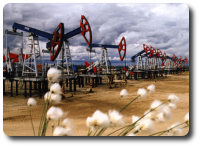
Systemic collapse, the coming dark age, the coming crash, overshoot, the die-off, the tribulation, the coming anarchy, resource wars — there are many names, and they do not all correspond to exactly the same thing, but there is a widespread belief that something immense is happening.
This event has about 10 elements, each with a somewhat causal relationship to the next. (1) Fossil fuels, (2) metals, and (3) electricity are a tightly-knit group, and no industrial civilization can have one without the others. As those three disappear, (4) food and (5) fresh water become scarce. Matters of infrastructure then follow: (6) transportation and (7) communication — no paved roads, no telephones, no computers. After that, the social structure begins to fail: (8) government, (9) education, and (10) the large-scale division of labor that makes complex technology possible. Excluded from the list are such uncertainties as anthropogenic global warming, and there are matters such as epidemics that may become important but that are nevertheless tangential. The international credit collapse that began in 2007 is vaguely connected to fossil-fuel decline, but mainly in the sense that both can be partly ascribed to the above-mentioned failure of government.
After those 10 elements, there are others, forming a separate layer. These are in some respects more psychological or sociological, and are far less easy to delineate, but we might refer to this mixture as “the four Cs.” The first three are perhaps (1) crime, (2) cults, and (3) craziness — the breakdown of traditional law; the ascendance of dogmas based on superstition, ignorance, cruelty, and intolerance; the overall tendency toward anti-intellectualism; and the inability to distinguish mental health from mental illness. Those three are followed by a final and more general element that is (4) chaos, which results in the pervasive sense that “nothing works any more.”
Systemic collapse, in turn, has one overwhelming cause: world overpopulation. All of the flash-in-the-pan ideas that are presented as solutions to the modern dilemma — solar power, ethanol, hybrid cars, desalination, permaculture, enormous dams — have value only as desperate attempts to solve an underlying problem that has never been addressed in a more direct manner. American foreign aid, however, has always included only trivial amounts for family planning; the most powerful country in the world has done very little to solve the biggest problem in the world.
Everything in the modern world is dependent on oil and other hydrocarbons. From these we get fuel, fertilizer, pesticides, lubricants, plastic, paint, synthetic fabrics, asphalt, pharmaceuticals, and many other things. On a more abstract level, we are dependent on these hydrocarbons for manufacturing, for transportation, for agriculture, for mining, and for electricity. As the oil disappears, there will be no means of supporting the billions of people who now live on this planet. Above all, there will be insufficient food, and the result will be terrible famine.
A good deal of debate has gone on about “peak oil,” the date at which the world’s annual oil production of useable, recoverable oil will reach (or did reach) its maximum and will begin (or did begin) to decline. The exact numbers are unobtainable, but the situation can perhaps be summarized by saying that about 20 or 30 major studies have been done, and the consensus is that the most likely date for “peak oil” is somewhere between 2000 and 2020, with the most likely date of all somewhere in the middle, when about 30 billion barrels were produced annually.
In the entire world, there are at most about a trillion barrels of usable, recoverable oil remaining — which may sound like a lot, but isn’t. When newspapers announce the discovery of a deposit of a billion barrels, readers are no doubt amazed, but they are not told that such a find is only two weeks’ supply.
After the “peak” itself, the next question is that of the annual rate of decline. Estimates tend to hover around 4 percent, which means production will fall to half of peak production by about 2030, although there are reasons to suspect the decline will be much faster, particularly if Saudi reserves are seriously overstated.
As the years go by, new oil wells have to be drilled more deeply than the old, because newly discovered deposits are deeper. Those new deposits are therefore less accessible. But oil is used as a fuel for the oil drills themselves, and for the exploration. When it takes an entire barrel of oil to get one barrel of oil out of the ground, as is increasingly the case, it is a waste of time to continue drilling such a well.
Coal and natural gas are also declining. Coal will be available for a while after oil is gone, although previous reports of its abundance were highly exaggerated. Coal, however, is highly polluting and cannot be used as a fuel for most forms of transportation. Natural gas is not easily transported, and it is not suitable for most equipment.
Alternative sources of energy will never be very useful, for several reasons, but mainly because of a problem of “net energy”: the amount of energy output is not sufficiently greater than the amount of energy input. All alternative forms of energy are so dependent on the very petroleum that they are intended to replace that the use of them is largely self-defeating and irrational. Alternative sources ultimately don’t have enough “bang” to replace 30 billion annual barrels of oil — or even to replace more than the tiniest fraction of that amount.
Petroleum is required to extract, process, and transport almost any other form of energy; a coal mine is not operated by coal-powered equipment. It takes “oil energy” to make “alternative energy.
The use of “unconventional oil” (shale deposits, tar sands, heavy oil) poses several problems besides that of net energy. Large quantities of fossil fuels and water are needed to process the oil from these unconventional sources, so net energy recovery is low. The pollution problems are considerable, and it is not certain how much environmental damage the human race is willing to endure. With unconventional oil we are, quite literally, scraping the bottom of the barrel.
More-exotic forms of alternative energy are plagued with even greater problems. Fuel cells cannot be made practical, because such devices require hydrogen derived from fossil fuels (coal or natural gas), if we exclude designs that will never escape the realm of science fiction; if fuel cells ever became popular, the fossil fuels they require would then be consumed even faster than they are now. Biomass energy (perhaps from wood or corn) would require impossibly large amounts of land and would still result in insufficient quantities of net energy, perhaps even negative quantities. Hydroelectric dams are reaching their practical limits. Wind and geothermal power are only effective in certain areas and for certain purposes. Nuclear power will soon be suffering from a lack of fuel and is already creating serious environmental dangers.
The current favorite for alternative energy is solar power, but proponents must close their eyes to all questions of scale. To meet the world’s present energy needs by using solar power, we would need an array (or an equivalent number of smaller ones) of collectors covering about 550,000 km2 — a machine the size of France. The production and maintenance of this array would require vast quantities of hydrocarbons, metals, and other materials — a self-defeating process.
Modern agriculture is highly dependent on fossil fuels for fertilizers, pesticides, and the operation of machines for harvesting, processing, and transporting. The Green Revolution amounted to little more than the invention of a way to turn petroleum and natural gas into food. Without fossil fuels, modern methods of food production will disappear, and crop yields will be far less than at present. Because of the shortage of food, world population must shrink dramatically, but we conveniently forget that war, plague, and famine are the only means available.
The problem of the world’s diminishing supply of oil is a problem of energy, not a problem of money. The old bromide that “higher prices will eventually make [e.g.] shale oil economically feasible” is meaningless. This planet has only a finite amount of fossil fuel. That fuel is starting to decline, and “higher prices” are quite unable to stop the event from taking place.
Much of modern warfare is about oil, in spite of all the pious and hypocritical rhetoric about “the forces of good” and “the forces of evil.” The real “forces” are those trying to control the oil wells and the fragile pipelines that carry that oil. A map of recent American military ventures is a map of petroleum deposits. When the oil wars began is largely a matter of definition, though perhaps 1973 would be a usable date, when the Yom Kippur War — or, to speak more truthfully, the decline of American domestic oil — led to the OPEC oil embargo.
There is no “big plan” for dealing with these problems, and there never will be, although most people assume the leaders of society are both wise and benevolent. There will be only the “small plan,” person by person, or family by family, at least for those who are not simply immobilized by shock. The “small plan” is variable, but it might include moving to a more-rural environment, where there would be fewer ties to the global economy.
3 Comments on "Chaos, Collapse, And Survival"
John Weber on Sun, 13th Mar 2011 9:41 pm
truth – hard and fast. Good for you. I think you would enjoy my Curmudgeon Report http://sunweber.blogspot.com/2011/02/curmudgeon-report.html
Among the many of the subject:
Tavris, Carol and Aronson, Elliot. 2007. Mistakes Were Made (but not by me) Harcourt. N.Y.
Thanks
Rick on Sun, 13th Mar 2011 11:49 pm
Great article. If only the world population never got above say a billion. And we managed the resources, and there was no greed, etc. I personally chose not to have kids.
Anyway, it seems to me the best way to survive going forward is the Small Plan, as the author suggests.
James on Mon, 14th Mar 2011 5:26 am
The Amish culture should be a guide to us for how to live without oil and all the other things that make so called civilization possible. They have been with us for many, many years and they seem to have a better lifestyle than most Americans do. Their lifestyle is not energy intensive. Their children learn more in the required 8 years of school, taught by older graduates, than most of the publicly educated kids of today, and they do it with a lot less money and resources. Because they have a lifestyle, (farming and physical labor) where they don’t get sick as much as the rest of the population, they don’t use up a lot of medical resources and they have longevity.