
Peak Oil is You

Donate Bitcoins ;-) or Paypal :-)


Page added on October 8, 2012

California Energy Infrastructure Ripe for Sudden Collapse
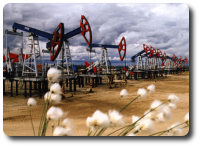
If you’re in California, you’re paying sky-high prices for gasoline this week. At some stations, prices are over $5 a gallon. But you might not be aware of why you’re paying this price. The answer may be more than a little disturbing: California’s energy infrastructure is so fragile that a power outage at a single gasoline refinery caused state-wide prices to skyrocket.
Yep, an Exxon Mobil refinery in Torrance was knocked offline several days ago by a local power outage. This, in turn, caused a sudden spike in gasoline prices state-wide. This whole fiasco may have been set off by something like a single electrical transformer failing somewhere along the electrical supply chain.
Our energy infrastructure is more fragile than you think
What this really reveals is just how close to collapse California’s energy infrastructure really is. And it’s worse than you think, by the way: California can’t import gasoline from neighboring states because its fuel refining requirements are so stringent due to air quality control concerns.
As Nancy Rivera Brooks, the LA Times editor, explained in a recent interview:
Because we have such a clean-burning recipe for gasoline here, very few refineries make it outside California, and there aren’t pipelines that bring it into California from those refineries that can make it. When something goes wrong, you’re stuck with what you’ve got in your tank.
I bet most Californians had no idea the gasoline supply across their entire state depends on a couple of high-voltage wires feeding a single refinery in Torrance. That’s how amazingly fragile California’s energy infrastructure really is. There are no pipelines from other states! When California’s refineries go out, they’re out!
And given how California is steeped in the culture of driving for hours each day, a loss of gasoline supply is the equivalent of an economic collapse. Without gasoline, in other words, California’s economy grinds to a halt almost immediately. For starters, nobody can get to work!
A reminder to prepare for worse things yet to come…
Despite the fragile nature of systems upon which they depend, most Californians don’t practice anything resembling preparedness. They have no stored gasoline, no stored water, no stored food and virtually no other supplies, either. They live their lives completely dependent on the system, and so they freak out when the system fails. They’ve been told the system won’t fail, but of course it does… sometimes catastrophically.
I know lots of people who live in Los Angeles. When I talk with them, I often ask what their plans are for a “grid down” scenario. The answers I get include things like, “I will try to escape by boat.” Or, “I hope it won’t be that bad.” Some even tell me, “I try not to think about that.” I love my friends, but many of them are living in denial.
And they’re not alone. Most Los Angeles residents have never really considered the reality of the city in which they live. If you think gasoline prices are bad right now from one little power outage at a refinery, just wait until the water pumps fail.
A water crisis would be far worse than a gasoline crisis
Los Angeles is an artificial city built in a desert. There is virtually no natural water supply there. Most of the water used by the city today is delivered using masses of electricity and a complex network of tunnels and pumps to lift an entire river of water 2,000 feet up and over the Tehachapi Mountains. That delivery system is called the California Aqueduct. Click here to see pictures of it.
Where does the electricity come from to power these pumps? Think about it. The Edmonston Pumping Plant has 14 pumps that push water over the mountains. Each one of those pumps uses 80,000 horsepower. These pumps use so much power that a power generating station had to be constructed nearby, just to power the pumps. A picture of that power station appears here. From the photo, it appears to burn coal, although I’m not 100% sure of the energy source.
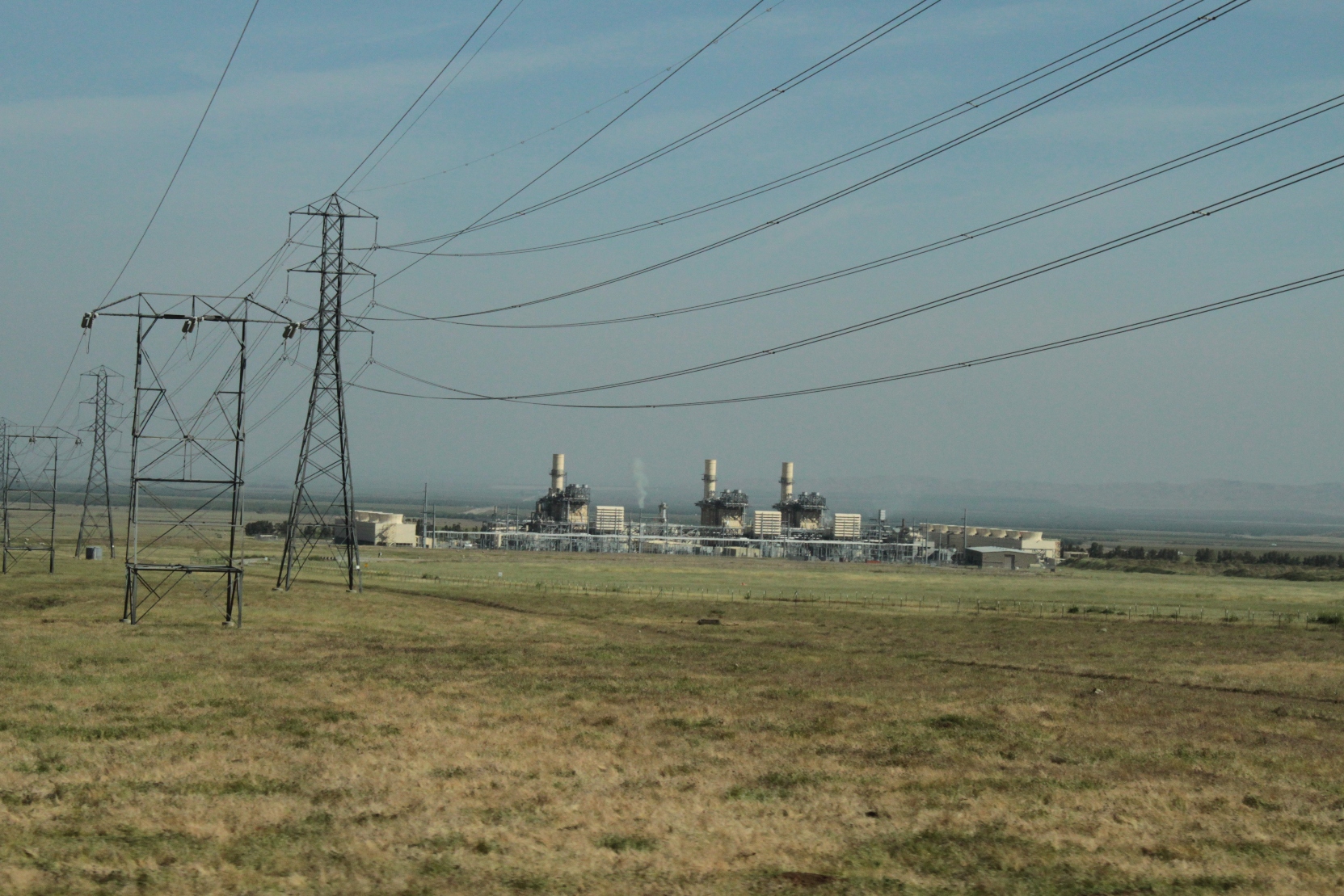
If it’s coal, this means that in Los Angeles, using water is the equivalent of burning coal. When you water your lawn, you burn coal. When you wash your car, you burn coal. When you even drink water, you’re burning coal. Because of this, the very act of living in Los Angeles is one of the most environmentally-unfriendly activities imaginable. So much for the “environmentalists” who live in L.A. and claim to be living in harmony with the planet. Living in L.A. is, by definition, completely out of harmony with the planet. Los Angeles should not be inhabited by masses of humans. At best, it can naturally support small bands of roaming tribes.
As Navy lieutenant Henry Augustus Wise wrote after visiting California in 1847:
Under no contingency does the natural face of Upper California appear susceptible of supporting a very large population: the country is hilly and mountainous; great dryness prevails during the summers, and occasionally excessive droughts parch up the soil for periods of 12 or 18 months. Only in the plains and valleys where streams are to be found, and even those will have to be watered by artificial irrigation, does there seem the hope of being sufficient tillable land to repay the husbandman and afford subsistence to inhabitants.
What exists in Los Angeles today, in other words, is 100% artificial. Another term for that is non-sustainable. When the water pumps fail, Los Angeles immediately falls into a state of collapse.
Los Angeles is a ticking time bomb for those who are not prepared
This recent gas price blip is but a gentle reminder of the reality of living in or near Los Angeles. This is a city which cannot be evacuated. Too many people and too few roads. As a result, if the water pumps fail, most residents will simply die within days.
To live in Los Angeles is to bet your life on the machines, day after day, and usually with zero preparedness buffer. To live in Los Angeles without a backup supply of food, water, supplies and medicine is truly a suicidal gamble.
Because if fuel prices can hit $5 / gallon virtually overnight, from a tiny little blip in a refinery, what happens in a full-blown economic collapse or grid-down scenario?
Solutions!
The solution to all this? Buffer yourself and your family from infrastructure failures. Have a supply of water, storable food, emergency medicine, emergency fuel and the means for self defense.
If you live in Los Angeles, you are living in a highly vulnerable area. Take steps now to ensure your long-term safety even if refineries fail or something worse unfolds.
Being prepared is being safe!
11 Comments on "California Energy Infrastructure Ripe for Sudden Collapse"
IanC on Mon, 8th Oct 2012 3:58 pm
Thank you for bringing up the natural carrying capacity of the landscape. This factor will be increasingly important as we power-down.
TIKIMAN on Mon, 8th Oct 2012 5:44 pm
Well this is what happens when you let liberals control a state. Lets have 50 grades of gasoline for every week so we don’t have so much smog?!?!
Let’s block any new refineries from being built so when one goes offline gas spikes to $6.00 a gallon.
California is a failed state. It’s a state like NY wher eonly criminals get guns becuase lawful citizens can’t.
Arthur on Mon, 8th Oct 2012 9:23 pm
Towns like LA are places you do not want to be if the shtf. Desasters like oil and water shortages, not to mention nuclear attacks, can changes these places into hell in no time. The best are towns of 10,000-50,000 people in sparsely populated areas with sufficient water and areable land, preferable within your own ethnic group and start civilization all over again, like in the 1800s. This time the ‘Indians’ will be hungry looting gangs.
DC on Mon, 8th Oct 2012 10:48 pm
The imperial valley allready has water problems, and fights between the heavily subsidized US agri-corps and the cities over water allocations have been going on for some time now. They will get worse. Both the cities AND the agri-corps want and waste too much water. How will it all end? Not well I suspect. California, along with Nevada will be where the first ‘water’ refugees appear. Its just a question of when.
BillT on Tue, 9th Oct 2012 1:25 am
The land mass of what we call the lower 48 supported, at best, a few million indians before Europeans invaded and began killing and pillaging the natives in the 1400s.
That is still the number that can sustainably be maintained in that area. Or, maybe even less now that we have destroyed most of the land and covered it with asphalt. What about the other 310 million? Guess…
And, NO, tech will NOT make it different or better. If anything, it has and will only make it worse. Tech does not grow food. Franken-crops will fail when the system goes down and does not come back up.
northstation on Tue, 9th Oct 2012 7:31 am
The article doesn’t make it very clear exactly what it is referring to. When it says LA does it mean just the city of LA, or the whole LA greater metro area that is dependent on the CA aqueduct? That makes a difference. A huge difference.
northstation on Tue, 9th Oct 2012 7:33 am
The article doesn’t make it very clear exactly what it is referring to. When it says LA does it mean just the city of LA, or does it mean LA county, or does it mean the whole of LA greater metro area including neighboring Riverside and OC that is dependent on the CA aqueduct? That makes a difference. A huge difference.
Sidd on Tue, 9th Oct 2012 12:43 pm
BillT – where do you get your numbers from? The US population before the heavy use of industrial fertilizers was over 30 Million and we were EXPORTING food at that time – in 1860 – 18 freaking 60 Bill – try using facts instead of your ass in future when it comes to numbers: http://www2.census.gov/prod2/decennial/documents/1860a-02.pdf
Sidd on Tue, 9th Oct 2012 12:46 pm
As a matter of fact I would suggest that the carrying capacity of the lower 48 states without industrial assistance is roughly 100 Million – yes, that is 33% (or less) than how many people live here presently and yes – that’s without exporting any food (perhaps) – but the idea that you could only support “a few million” is absurd.
MarkR on Tue, 9th Oct 2012 7:33 pm
The Roman Empire at its height numbered about 120 million with two thirds the territory of the United States. And this is with ancient technology. Not all the land in the U.S. is arable, but not all the land in the Roman Empire was either. Also China supported a larger population than the present size of the U.S. before modern agriculture. They did this with less arable land than the U.S. has.
ed boyle on Thu, 11th Oct 2012 1:32 pm
http://www.scag.ca.gov/rcp/index.htm
I don’t know if they thought of PO at the official side of things but here is their website and a PDF downbload for just water of 16 pages talks about the aqueduct run off from the mountains, climate change.
Also a 5 page PDF is there on security preparedness covering everything from drought, water and power outage to terrorism.
“Regional Comprehensive Plan
Helping Communities Achieve a Sustainable Future
The Southern California Association of Governments (SCAG) has released its 2008 Regional Comprehensive Plan (RCP). The RCP is a major advisory plan prepared by SCAG that addresses important regional issues like housing, traffic/transportation, water, and air quality. The RCP serves as an advisory document to local agencies in the Southern California region for their information and voluntary use for preparing local plans and handling local issues of regional significance.
The Regional Comprehensive Plan (RCP) presents a vision of how Southern California can balance resource conservation, economic vitality, and quality of life. The RCP identifies voluntary best practices to approach growth and infrastructure challenges in an integrated and comprehensive way. It also includes goals and outcomes to measure our progress toward a more sustainable region.”