
Peak Oil is You
Donate Bitcoins ;-) or Paypal :-)


Page added on December 8, 2012

Be honest: Apocalypse seems kind of exciting, in a way
If you’ve got dinner reservations for December 22, there’s probably no point in changing them on account of an apocalyptic prophecy.
December 21, 2012, is the endpoint of the 5,126-year Great Cycle marked on the Mayan people’s “Long Count” calendar. Some say that could be the end of everything. Or not.
We’ve noticed a few sarcastic story comments, but some readers seem fascinated. The apocalypse has left cultural footprints.
“Doomsday Preppers” is a popular, if somewhat controversial, TV program detailing how people are preparing for the possibility of disaster on the National Geographic Channel. TNT’s “Falling Skies” and NBC’s “Revolution” are fictional depictions of apocalyptic scenarios. For those more interested in a zombie apocalypse, “The Walking Dead” is shambling on AMC.
“The Hunger Games” book trilogy and movie series features a post-apocalyptic, dystopian society broken up into districts and a wealthy capital. The government forces children to fight to the death each year.
 Critic, iReporters review ‘Hunger Games’
 What scares the ‘The Walking Dead’ cast?
But it was the 2009 film simply titled “2012” that helped introduce the masses to the swirl around the Mayan calendar. The three-year storyline takes viewers through apocalyptic staples including solar flares, cataclysmic storms, tectonic distress, mass panic and terrorism.
Interestingly, Google Trends graphs show 2009 marking a turning point when Web searches for “apocalypse” started to gradually rise. The brief spike back in 2004 seems to be related to searches for the film “Resident Evil: Apocalypse.” Of course, the word “zombies” tops the apocalypse-oriented terms, while “end of the world” brings high peaks that meet up with “zombies” before dropping into deep valleys. “Doomsday” looks less popular.
Social media mentions of the word “apocalypse” are much harder to track, but Twitter posts appear to follow comparable trend lines both in the past month and since July 2010, as visualized with analytics site Topsy.
The apocalypse obsession seems palpable, but we wanted to know why. As we took a deeper look, we came up with five themes that seem to explain it.
Opinion: What we learn from collapse of the Maya
Awe-inspiring
It’s the recession, right? Maybe.
Robb Willer, an associate professor of sociology at University of California, Berkeley, studies political and religious psychology. He says the economy might be a factor, but other reasons include the rise of evangelical Christianity in the past 20 years.
Christian preacher Harold Camping predicted a Judgment Day on May 21, 2012, and also made a similar prediction in 1994. The “Left Behind” series of books bolstered the concept of a Second Coming.
People have been debating prophecies for a long time. The debunking research in “When Prophecy Fails” was published in 1956, and Stephen King put out his apocalyptic novel “The Stand” in 1978.
Willer says he’s been thinking a lot about the feeling of powerlessness that we get in the face of something undeniably powerful. Some would use the word “awe” to describe the sensation, and it affects how we view the world.
Apocalyptic prophecy behavior is puzzling at first glance because people tend to be optimistic, rather than pessimistic, Willer says. (See also: Powerball jackpot.) The people who believe in the prophecies, he explains, aren’t crazy. They just “need some kind of source for the apocalyptic prophecy that they believe is credible,” be it a Mayan calendar or the predictions of Nostradamus. Willer listed superstitions and astrology as examples of common nonscientific beliefs.
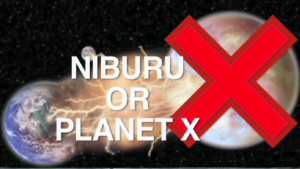 NASA to doomsday theorists: You’re wrong
A compelling narrative sometimes comes along with it.
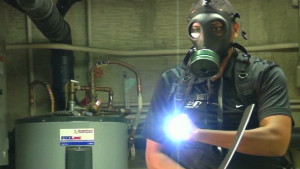 Preparing for the end of the world
Jerry Piven, a researcher who has studied psychoanalytic epistemology and wrote a book on the psychological undercurrents of terror and apocalypse, says he feels an apocalypse almost embeds a tale of fantasy into reality and provides safe theater for exploring death. He says a student once asked him if it was OK that he enjoyed using a Dungeons & Dragons character who is a “priest of apocalyptic power.”
“I asked if he believed that the world was truly so vile that he would really destroy it with the apocalyptic powers of his dark deities,” Piven explained. “Well of course, he did not.”
Willer said the apocalypse can be a spectator sport and a reality show for some people.
“It could be that a lot of interest in apocalyptic prophecy comes as much from people being ironically entertained by a few people believing in it as actually believing that the world will end,” he noted.
Concerns about the unknown
There’s nothing like a viral hoax to get people talking. We saw it right here on CNN iReport.
An unvetted iReport post about the “Nibiru” asteroid garnered so much traction — more than 90,000 page views and 10,000 Facebook recommends — that NASA created an account on CNN iReport and posted comments to help debunk the doomsday text.
This post and others like it allege that an asteroid is approaching Earth, which is pretty scary to think about. Even worse, NASA is said to be keeping this information under wraps so as not to incite panic. But the hoax notes that the news release is coming soon, so get ready.
For the most part, our community hasn’t been believing the Nibiru claims, although there were comments on the original iReport that were supporting the idea of a NASA cover-up. There seemed to be as many people trying to debunk the post as there were people who were afraid of total destruction.
“There’s always someone ready to buy into the latest doomsday story,” commented iReporter Mark Ivy of Farmersburg, Indiana. “For some, the titillation of it all is too much to resist.”
Astrophysicist Neil deGrasse Tyson was one of many experts who commented on the hoax on Twitter:
Things you might say if you flunked Astro101: “Planet Niburu is real and is headed toward Earth.”
 Neil deGrasse Tyson
NASA posted a page on their website devoted to the Nibiru buzz and other such theories. The common theme among the stories is they involve a force so strong that it could affect our entire world.
At the same time, there are people who say the world probably isn’t ending, but they aren’t leaving their lives to chance.
‘Doesn’t hurt to be prepared’
The door chime at a San Diego military surplus store called Bargain Center seems to ring steadily throughout the day, and profits are noticeably up. The store is a popular place to buy survival goods, even though they only make up about a 10th of the store’s selection.
Some customers specifically mention December 21 when they come in, says owner Joel Dreifuss. He feels that he’s been selling about 50% more survival-oriented items during the past six to eight weeks. MREs, water purification systems and storage supplies are the most popular items, as well as getaway backpacks and emergency supplies.
Dreifuss says many of them are adding to their existing supplies of survival gear, just in case they need to be ready for trouble. Many of these people are self-described “preppers,” a community of people who value preparations for life-altering events.
“It doesn’t hurt to be prepared for three or four days of not having anything, no electricity or heat,” Dreifuss said.
He says he’s rung up a few more gas masks than usual, but the numbers aren’t extreme.
Bad things do happen, and there’s plenty of media to cover it, which Dreifuss theorizes might be contributing to apocalypse fever; and if desperation trumps decorum, humans may be feared as much as the forces of nature.
He talked about 1992’s riots in Los Angeles and desperation in the aftermath of a severe storm. He shuddered at the thought of Black Fridays.
“They’re animals, and that’s over a $199 TV,” he said of holiday shoppers. “Can you imagine if it’s cold and they’re hungry and the power’s out?”
It’s the end of the world (as we know it)
There’s a popular reverse acronym among the “prepper” community that goes right along with a famous R.E.M. song that is topping apocalyptic playlists everywhere: TEOTWAWKI, or “the end of the world as we know it.” That, along with SHTF, or “s— hits the fan,” are emblematic of prepper philosophy.
“Anything that could or would change your life as you now know it” qualifies, says a blogger and Twitter user known as Survivor Jane. One might go through a natural disaster or lose their home or job.
Survivor Jane is a well-respected prepper who started a blog in 2008 to provide a place for women to explore their ideas about making disaster preparations. She says she created the #preppertalk hashtag on Twitter in August 2012, which allowed her to exchange knowledge with others more easily. Her following attracted National Geographic’s attention, and she has participated in some “Doomsday Preppers” tweeting sessions.
“I am more about taking accountability for myself and being self-reliant,” she said. “If that means extra food, water, shelter and a means to protect myself is a bad thing, so be it. I don’t want anyone to suffer like the victims of Sandy did, some needlessly.”
She says she receives more inquiries about staying safe from natural disasters than about the annihilation of humanity.
“A lot (of questions) are coming from people wanting to know how to better prepare for a storm like Sandy,” she explains. “But then again with the ‘end of the world’ looming, people are seeking its validity and how to prepare for it.”
Something to keep in mind: “If the world is going to end,” she adds, “There’s no need to prepare for anything because we’ll all be gone.”
Getting a fresh start on society
For Chicago-area author Alex Newton, there is a scale of disaster intensity that starts with house fires and flash floods and ends with a global pandemic or, if you’re really unlucky, a zombie apocalypse. The last item is a joke from his book, “Plan and Prep: Surviving the Zombie Apocalypse.”
Newton, known as @ZombieApocGuy on Twitter, specifically chose zombies as a metaphor for everything that can possibly go wrong. Whereas some people might admire the special powers of a vampire or werewolf, zombies are the “ultimate predator” because “they just don’t stop. They just keep killing.”
The September 11, 2001, terror attacks inspired Newton’s interest in prepping. He recalls feeling stranded for hours and unable to get in touch with his family. He vowed to never again be caught off guard and put his military experience to use.
He recommends getting started by assessing the real dangers in one’s geographic area, such as blizzards or earthquakes. One might make a “bug-out bag” for a quick egress or stash extra supplies. Newton’s concern is being ready to survive, rather than the “end of the world” or doomsday prophecies.
“What the Mayans determined back then was amazing,” he said. “I just think they didn’t get time to finish their calendar.”
He wonders if those who hope the world will end need a little excitement in their lives or secretly want society to start over.
“There’s a lot of benefit that may come for some if the world ends, unfortunately, and some people look forward to that,” Newton said.
Stayin’ alive?
Newton is optimistic that he’ll live to see his next “Plan and Prep” book come out. But there are also those who are concerned. What about you? Whether or not you plan on still existing come January, we’d like to hear your perspective.
If you think the apocalypse could happen, tell us what you plan on doing between now and The End. Are you making any preparations of any kind? Even if you don’t believe in it, we’d still like to hear how you’d theoretically spend your last days on Earth or how you’ll be celebrating come December 22.
10 Comments on "Be honest: Apocalypse seems kind of exciting, in a way"
Plantagenet on Sun, 9th Dec 2012 12:04 am
The real fun isn’t fantasizng about Planet Niburu or the Mayan calendar.
The real fun is watching the US economy implode as Obama stumble and bumble his way towards the fiscal cliff, all the while exploding the debt and debasing the US currency.
BillT on Sun, 9th Dec 2012 2:20 am
Planet, you are so right! The show is on-going and it will get better and better as time goes on. December 21st is only a marker for the eventual collapse of everything we think we know and have.
Why do I believe that?
1. The Western world is in debt so deep that only a radical change can save it.
2. The resources we need to keep our current system going are slowly disappearing.
3. We have an estimated 7 billion people on a world that can support maybe 1 billion.
4. We have about 1,000 aging nuclear plants and facilities scattered all over the world that are beginning to collapse.
5. We have an empire in the first stages of collapse that is trying to control the world.
6. We have rogue nations with nukes and psychos in leadership that have their finger on the button.
7. We have destroyed our ecological system to the point that the climate is changing in a very negative way for humans.
8. I’m sure I missed something…fill in the blanks.
So, pop some corn, get a ‘big gulp’ soda and sit back and watch the show. It promises to have something for everyone who likes suspense, horror, and action. For romantics, not so much.
pete on Sun, 9th Dec 2012 3:17 am
With both of you bill and plant. But just some food for thought, my #1 way is economic but, NASA is predicting a solar super cycle of the sun. Now just glazing a small understanding of what I have read a large sun flare occurred in 1859. Carrington event. these super cycles reach a apex every 77 about years. So the last one, would it have been in correct polarity with our poles and magnetosphere? And does that mean that the one coming in 2013 is in opposition to our poles and burn wires right off of poles like the carrington event did? Just that the odd number of switches the suns poles makes during every cycle the polarity would switch every super cycle, making every second cycle the same polarity, 1859 polarity.
just food for thought and I am far from expert, just read a couple of net pages.
BillT on Sun, 9th Dec 2012 12:05 pm
I knew I miss something! Thanks Pete. That one could end our way of life in an electronic blink…lol. 1800s anyone? ^_^
Ian Brett Cooper on Sun, 9th Dec 2012 12:16 pm
A couple of days ago I read that archaeologists had found a new Mayan calendar that goes out another 7,000 years. So I guess that’s the end of the 21 December 2012 theory.
csatadi on Sun, 9th Dec 2012 1:02 pm
If any of you believe the world will end in December could you remit me your savings?
BillT on Sun, 9th Dec 2012 1:40 pm
lol…21 December? We are already in the process of the end of the world as Westerners know it. Be patient!
Cloud9 on Sun, 9th Dec 2012 2:24 pm
The world won’t end, but there are a lot of crazies out there all dressed up with no place to go. Their overreaction may be just what it takes to tip the already teetering system created by the monetarists in 1913.
The angst felt by the general population is driven by a host of factors. Part of it comes from the importance we attach to dates. Whenever a century rolls over, it is an emotional cusp pregnant with hopes and dreams. When those hopes and dreams do not materialize with the arrival of a new century a whole lot of people find themselves overwhelmed by disappointment. These emotions spark actions. All kinds of social experiments formed up in the first part of the 19th century. Consider if you will the extremes represented by Oneida group and the Shakers. With the advent of the twentieth century, the world of the monarchs came to an end and we had the rise of the Isms that kept the world locked in their embrace for a goodly portion of the century. Remember when the MSM proudly announced the end of history with the collapse of the Soviet Union? Silly rabbits, we are not even through the first act.
Today with the obvious stresses on the environment, and rising energy prices, we are witnessing the end of growth. Our entire financial and political system is based on this paradigm. Mouse clicks stored in a hard drive of the Federal Reserve can only mask the collapse for a time. Every fiat currency ever invented ultimately failed. The game always plays out the same. For a time, the makers are seduced by the takers with easy money. The makers in the beginning willing part with their goods in return for scrip. The takers with the unlimited power of the printing press corrupt the rule of law, suspend the law of contracts and debase the currency. In the latter stages of the printing process, the makers are forced to surrender the products of their labor in return for ever more worthless piles of scrip. In the end their corruption crowds out all productivity and the system collapses. The dollar has lost ninety seven percent of its 1913 value. We are almost there and the body politic knows it.
DMyers on Sun, 9th Dec 2012 4:48 pm
To the Mayans, the 12/21/12 date is the ending of one age and the beginning of the next age. The eschatological feature (i.e. doomsday) likely comes from the Mayan belief that a shift in ages comes with a great unsettling. The exact nature of that unsettling is unknown. It may consist of any of the scenarios out there, whether astronomical, geological, climatological, solar, or some combination of these. All we can do is look at the signs, as with BillT’s enumeration, and it may appear that the focus of converging catastrophes, a culmination of recent history, so to speak, lies at the end of 2012, without the aid of prophecy.
Suppose the Theory of Ages, a term I just made up for the moment, is correct, and that the minds of ancient civilizations mastered the relevant patterns and relationships revealed by the night sky (which must have been stunningly vivid in unpolluted skies). The theory holds that each age imposes its own unique pattern on the universe. The action of this force can be observed but not explained by anything other than the coincidence of configurations in the sky and observed events in the world.
If the theory is true, then not only is it likely that the entry into a new age will be unsettling, it is necessarily so. A new set of forces in a new configuration come to rule the cosmos. With that would come the demise, or “cleansing”, of all that had relied on the prior equilibrium.
We see the Universe from the perspective of a human lifetime, but we rely on the longer term stability of a universal clock. In our lifetimes, even within the next few weeks, we may come to know whether even those grand, slow grinding ages can, at a certain moment, cross a cosmic line, where a sudden avalanche of rapid changes introduce the characteristics of the new age.
If there is a sense, or even a sensation, in the Collective Unconscious of this developing change, that itself may be regarded as a credible barometer. In our Age, we may have conquered Nature, but we are still saddled with an instinctive awareness that there are powers and forces in the Universe which are, and always will be, much greater than we.
actioncjackson on Mon, 10th Dec 2012 4:24 pm
Wikipedia thoroughly explains the Maya calender, there is no debate, Dec. 21 is simply the end of one phase and the beginning of another. Kind of like transitioning from the 20th to the 21st century with respect to the Gregorian calender. The end of the world spin on the Maya calender is an imagination, an entertaining story for profit.
“Misinterpretation of the Mesoamerican Long Count calendar is the basis for a popular belief that a cataclysm will take place on December 21, 2012. December 21, 2012 is simply the day that the calendar will go to the next b’ak’tun, at Long Count 13.0.0.0.0.”
http://en.wikipedia.org/wiki/Maya_calendar