
Peak Oil is You

Donate Bitcoins ;-) or Paypal :-)


Page added on September 20, 2013

Author Jeff Rubin on Energy Independence and Peak Oil
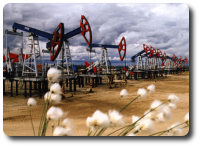
In his new book The End of Growth, the straight-talking Jeff Rubin, bestselling author and former chief economist of CIBC World Markets, paints a grim picture. He argues that triple-digit oil prices are here to stay, making it impossible for developed nations to return to the days of rapid growth built on cheap energy.
In part one of my interview with Jeff, we discuss the prospects of North American energy independence and the peak oil theory. The consequences of these trends could have major implications for the price of energy — and for related products like the United States Oil Fund (NYSEMKT:USO) and the Horizons NYMEX Crude Oil ETF (TSX: HOU). Below is the transcript of our conversation; it has been lightly edited for clarity.
Robert Baillieul: The concept of North American energy independence is in vogue with the growth of plays like the North Dakota Bakken, the Texas Eagle Ford, and the Alberta oil sands. Is this really attainable?
Jeff Rubin: The issue isn’t really where the oil comes from. There hasn’t been an oil shock in over 30 years. And in fact it’s the reverse now — saying that the U.S. doesn’t want Iranian oil as opposed to 1979 when it was the other way around. So it’s not as if there’s any real threat of a supply shock.
It certainly would be one thing if all this new, wonderful North American supply was displacing expensive oil from outside countries. But the fact of the matter is that it’s very expensive oil replacing what is the cheapest oil in the world to produce, which is the Middle East. So does it really matter where the nationality of the oil is when it’s still costing you over $100 per barrel?
You’ll notice that this big price gap between North America and the world has closed not with the world price coming down with North America but with North American prices going up to the world. And that, of course, has happened because we’re loading over a million barrels of oil per day on rail cars to get oil from the Bakken and the oil sands to coastal refineries and in the expense of new pipeline.
Baillieul: I guess if I was playing devil’s advocate, energy independence could benefit national security interests.
Rubin: Well sure enough, but what’s the basis of saying that? Certainly if this was 1983 or 1984 that would be a very cogent argument to protect against OPEC oil shocks. But as I’ve said, the world has changed. We haven’t had a shock in over 40 years. It’s not that anyone has turned off the spigots. Never before has more oil flowed through the spigot.
The problem is that we can no longer afford the prices that we need to get oil to flow through the spigot and the Bakken and the Alberta oil sands would be testament examples of that.
Baillieul: You’ve talked a lot about peak oil in your books. Your thesis sounds pretty bullish for oil prices.
Rubin: I don’t consider myself a peak oil person. I find the notion of peak oil as a supply concept to be nonsensical. Of course, I speak from the perspective of an economist and not a geologist. But one of the major tenets of economics is the upward-sloping supply curve, meaning the higher the price, the more something will be supplied.
Oil is a perfect example. There may be peak oil in terms of conventional oil but the higher the price of oil and all of a sudden once-marginal sources like tight oil and shale rock or bitumen in the oil sands have come into vogue and are now huge and important sources of supply. And if we go to $150 or $200 per barrel of oil, I’m sure there are all kinds of formations we’ll access for oil that we’re not right now. It’s a testament of economics.
But if peak oil has any meaning, it’s not about how much you can get out of the ground — it’s about price and what you can afford. I think what we’re finding is that the kind of oil prices that are needed to make the Bakken or the oil sands economically attractive for investors translates into the same oil prices that basically halts economic growth. Because don’t forget that oil continues to be the single most important fuel for global GDP.
Coming up next
In part 2 of my interview, Jeff explains how the end of cheap energy could spell the end of rapid economic growth.
8 Comments on "Author Jeff Rubin on Energy Independence and Peak Oil"
actioncjackson on Fri, 20th Sep 2013 10:50 pm
“I think what we’re finding is that the kind of oil prices that are needed to make the Bakken or the oil sands economically attractive for investors translates into the same oil prices that basically halts economic growth.”
Game over man, game over.
BillT on Sat, 21st Sep 2013 2:08 am
Fool.com, perfect name for the site. Not one word about what it will do to the environment we need to survive. Fuck prices and oil lies. It’s the end result that is going to kill us.
Techies want ‘progress’.
Investors want ‘BAU’.
Gaia wants us dead and gone.
My bet is on Gaia.
BillT on Sat, 21st Sep 2013 2:10 am
BTW: Part two is obvious. “…how the end of cheap energy could spell the end of rapid economic growth…”
The word is not ‘could’. The word is ‘HAS’. Any economic ‘growth’ other than lies, is over permanently. And about time!
J-Gav on Sat, 21st Sep 2013 10:59 am
Rubin’s not dumb and makes some points that are more reasonable than most of what comes out of fool.com.
Nevertheless, as BillT says,the Biosphere
will have the last word, even if it’s one that humans don’t want to hear.
Arthur on Sat, 21st Sep 2013 12:25 pm
“And if we go to $150 or $200 per barrel of oil, I’m sure there are all kinds of formations we’ll access for oil that we’re not right now. It’s a testament of economics.”
He is probably right. Fascinating though to see how much renewables are out of the picture in north America, regardless if you talk to an ‘oil-economist’ like Rubin or hardcore doomers like many posters here.
The explanation here is the vast differences in energy prices between Europe and north America. In Holland for instance we have to pay three times as much for 1 kwh electricity than in the US, which is a blessing in disguise, because we are pushed over the transition brink much earlier than Americans. And that’s ok because everybody has to do the transition anyway, sooner or later. US lower energy prices are masked by the cost of the military-industrial complex that artificially keeps energy prices low, by enabling the petro-dollar, enforced via keeping a few dictators in the saddle in Saudi-Arabia and elsewhere.
Sudhir Jatar on Sat, 21st Sep 2013 12:52 pm
So far crude oil was termed as a strategic commodity. Now it is the price of oil that is strategic!
NetCentric on Sat, 21st Sep 2013 4:11 pm
I’ve read at least a dozen of the most popular books on peak oil like The Party’s Over, Twilight In The Desert etc.
Jeff’s “Why Your World Is About To Get A Whole Lot Smaller” was the most readable and relatable by a wide margin. It made “how it will happen” and “what it will mean” very clear.
Here’s my favorite speech of his youtube.com/watch?v=wYuLjGQQ-jg
Arthur on Sat, 21st Sep 2013 4:45 pm
But in 2009 he was wrong about his 2012 – 225$ oil.lol