
Peak Oil is You

Donate Bitcoins ;-) or Paypal :-)


Page added on March 16, 2012

1970: The Peak of Everything
Forget “peak oil” for a moment. At least in terms of the United States, if not elsewhere, the decline of the good times began around 1970. From a broader perspective, that was the really big “peak.” Around that period, “it was the best of times, it was the worst of times,” as Dickens might say. It was Jimi Hendrix, “sex, drugs, and rock ‘n’ roll,” Easy Street. In the year 1969 there was the first moon landing. The gap between the rich and the poor was not so bad, whereas since then both the wealth and the income (two different things) of the richest five percent of American families have shot up enormously. Yet what some people regarded as bad news was that in 1968 the Tet offensive marked the turning point of the Vietnam War.
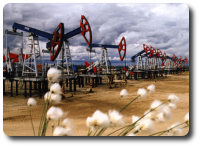
The bad news about oil was that US domestic production in 1970 began a permanent decline. The bad news about oil globally arrived not a great deal later: “peak oil” in the absolute sense was a few decades in the future, the “peak per capita” was in 1979, at 5.5 barrels of oil.
In 1973 the main industrial nations ended the practice of fixed exchange rates for their currencies; the innovation was supposed to create greater stability among the world’s currencies, but actually the opposite happened. As Soros explains, the swing of exchange rates is more like a wrecking ball than a pendulum. Money-market investors — like investors of any other sort — are generally short-sighted, and they are possessed of herd mentality: when a currency starts to gain value, it then becomes attractive to those investors who have not previously bought it, and the result is an even greater increase in value. The same is true of a currency that starts to fall: as soon as the decline becomes a matter of public knowledge, a panic ensues, everyone tries to get out, and the small loss turns into a major collapse.
The next few years saw a rapid expanse in both automation and globalization. There was once a vision that automation would lead to a life of leisure and freedom. In 1930 J. M. Keynes was saying that “for the first time since his creation man will be faced with his real, his permanent problem — how to use his freedom from pressing economic cares, how to occupy the leisure, which science and compound interest have won for him, to live wisely and agreeably and well.” At one time it seemed as if computers would give us an age of tranquillity and leisure. If the Luddites were alive today, however, they would tell us that computers are devices for increasing production while decreasing payrolls. Automation proceeds with little regard for the benefit of the average person. If it is profitable to replace a worker with a clever electronic device, then it will be done. Far into the future, “automated answering services” will be crackling and hissing to one another across the mountains and oceans.
Largely because of computers and other forms of automation, the human race has become immersed in globalization, global capitalism. International corporations move their factories to where they can find the cheapest workers. A poor country thinks it has hit the jackpot when a rich American corporation comes to set up business. Unfortunately, as Greider points out, if the factory starts doing well, it is inevitable that the workers will start asking for slightly more than starvation wages, no matter how many activists are picked up at night to be tortured and killed by government-paid death squads. Even the government itself might start to become greedy. The workers might succeed, and the country’s standard of living might rise. The punishment is simple: the international company packs up and moves to a country where the workers are still “uncorrupted.” Of course, all this shopping for cheap wages — “wage arbitrage” — also takes jobs away from workers in the US and the rest of the developed world.
International companies have become so big, so widespread, that they are free to make their own rules about everything. But the main effect of globalization is that companies can choose their workers from anywhere in the world. Conversely, those same companies can discard workers they don’t want: the jobs go to the people who will accept the least pay, while most people in developed countries have to accept a lowering of their work status and a reduction in income.
The shoes people now wear on their feet are sold by a company that has its head office in a skyscraper in New York City, but the people who actually make the shoes are living in an impoverished country on the other side of the world. Those workers live in a condition that is closer to true slavery than anything in the US. The concepts of democracy and civil liberty are so unknown there that labor organizers can be imprisoned or killed.
The workers experience great misery, enduring hard labor, long hours, low wages, and unsafe working conditions. “Handmade,” in fact, often means “made by the hands of children.” There is also trouble, however, for people in more highly developed countries, who are chronically unemployed because their jobs have been given to the slaves in poor countries. Of course, even those slaves will have their jobs only until even-more impoverished laborers are found in some other country — or until a machine can take over.
Globalization has also utterly transformed agriculture. Farmers don’t have the glamor of Hollywood actors, so when they lose their careers there is not so much public outcry. On the contrary, there is often a half-conscious suspicion that it might be better for everyone if farmers were forced out of their swamps and into the cities; they should join the modern world, discard their antiquated and inefficient lifestyles, and stop burdening government with their complaints. After all, if the agricultural oligopolies are bigger, better, and faster, then why should anyone protest? Unfortunately, the common beliefs don’t often match reality.
In 1776, most Americans worked on the land; now less than one percent do so. Monopolies and oligopolies have forced small-scale American farmers out of business, as they have elsewhere, and the despair is matched by the high suicide rates. The giant corporations control every aspect of food production: fertilizer, pesticides, the purchase of crops, the processing, packaging, and selling. And for the next year’s planting, the farmer must buy seed again from one of a small number of big corporations. Even worse is the problem of vertical integration: often one company controls the whole chain from fertilizing to processing to putting the finished product on the supermarket shelves. As a result of their loss of power, many farmers go bankrupt or sell off, and their children must find some other way of life.
Massive unemployment will continue to characterize the future. It already takes many forms: the official figures are often mendacious, and real jobs are increasingly replaced by rather vague forms of employment. The rate of unemployment jumps enormously if one adds the people who want jobs but are not officially part of the work force; the part-timers who would like to be full-timers; the people who are of the right age to be employed but who live in an economic limbo, without visible means of support; those who work “on call”; those who are day-laborers or seasonal workers; those who try to preserve their former pride by calling themselves “independent contractors” or “consultants”; and those who are in the country with questionable political status.
There has not been much help from the labor unions. To some extent they have harmed themselves, as Schor and Rifkin both explain. The short-sighted thinking of the closed-shop contract (you can’t work here unless you’re a union member, and you can’t be a union member unless you work here), as well as the shrinkage in manufacturing jobs, made union members an endangered species. The unions also helped to nail their own coffin back in the 1950s, when they decided that fighting for higher hourly wages was more important than fighting for a work-sharing program and a thirty-hour week. Several decades of battering by governments and corporations didn’t help them, however. There may be a small upsurge in union enthusiasm in the US, but the task may not be easy when most of a company’s workers are living on the other side of the globe.
How will it end? We can imagine a slow finish or a quick one. The first is that of a gradual slide into an impoverished police state, like that of Orwell’s 1984. In this scenario, governments and corporations do not disappear; they are here to curse us for a long time to come. We may be poor and living in chaos, but we will live in relentless drudgery, paying taxes and trying to support our mortgages. In some ways this is like the world of the Great Depression of the 1930s — no matter how people struggled, the banks were always ready to take away people’s houses and farms.
The second is that of a thermonuclear war that throws humanity back into a quasi‑medieval world, perhaps like that of Miller’s Canticle for Leibowitz. In the fight for the last of the oil, metals, and other non-renewable resources, civilization will be largely destroyed. The only good news is that governments and corporations will disappear at the same time.
11 Comments on "1970: The Peak of Everything"
BillT on Sat, 17th Mar 2012 1:44 am
I suspect that we will rapidly accelerate into an impoverished Police State and the military will revert to it’s intended function of protecting the 48 states. I see Hawaii being cut lose as will Alaska. Neither will be of much us to a poor US that cannot benefit from them once oil is gone and travel to the islands is rare.
If we are stupid enough to get into a shooting war, odds are great that nukes would be used and it would mean a slow death for those who survive the initial rounds. “Duck and cover” was a joke in the 1950s. Now it is a sick joke. Nowhere on Earth will be safe in the next war. Nowhere.
Gale Whitaker on Sat, 17th Mar 2012 2:04 am
Who can we blame for this mess? I think that human nature is to blame. Humans lived in small groups for hundreds of thousands of years. The group members protected each other because it was in their best interest to do so. That tribal kinship is gone. The challenge for modern humans is to maximize wealth, power and sex by finding someone to victimize.
josé on Sat, 17th Mar 2012 2:30 am
As Woody Allen once quipped,
“More than any other time in history, mankind faces a crossroads. One path leads to despair and utter hopelessness. The other, to total extinction. Let us pray we have the wisdom to choose correctly.”
BillT on Sat, 17th Mar 2012 3:40 am
Gale. perhaps it is ‘in our nature’, but we also have a mind. Unfortunately it is the megalomaniacs that are power hungry and want it all. The other 99.99% should curb those who lust after power or wealth, but they have not thought out the whole process that 7 billion cannot live like the US, ever. We have the greatest intelligence of all life on this planet, but we waste most of it on animal lust and blame it on ‘human nature’. We are doomed to be eradicated by the same process we see in every other species that exceeds it’s resources. Famine and death by disease and wars for food.
BillT on Sat, 17th Mar 2012 3:46 am
Think of what a great world we could be living in if…we had used our intelligence to make it so. Used TV as an educational tool, not a propaganda tool to sell ‘stuff’ and brainwash the masses. Used the internet to give everyone a college level education almost free. Education is the best way to promote population control. If everyone understood the world, they would do their part, but…instead we use our intelligence to make war and subjugate races for our use. Mankind deserves it’s fate. I only hope it ends before we totally destroy this beautiful world.
Stephen on Sat, 17th Mar 2012 10:33 am
I think society can change its course but we will have to do a lot of things differently and get our political leaders to listen to people other than CEOs, create new legislation that gives incentives to re-localize, and to stop making policy decisions that solely benefit mass scale marketers and instead listen to the people.
If it were me, I would do the following:
* Tax chemicals based on their toxicity
* Create an import tax per imported item that is far more than the US cost of labor to assemble the good in the states. Create a tax break for assembling a good within 100 miles of where it will be sold.
* Tax pesticides high and make organic food cheaper to produce than pesticide treated food.
* Tax items based on the distance they are trucked. Give tax breaks for use of freight trains for the same item.
* Rebuild the passenger rail system
* Create a federal mandate to legalize clotheslines, gardens, and backyard chickens in every city in the USA and in every HOA.
* Create a federal mandate that grocery stores accept produce and eggs from backyard trees close to the store. THis would help make small farmers more competitive.
* re-create local bus routes to work again.
* Mandate that children go their neighborhood school when possible.
* Reopen local electronics repair shops and give tax breaks for each component level repair they make. This would be better for the earth than throwing things away all the time.
BillT on Sat, 17th Mar 2012 10:57 am
Stephen, your ideas are good. I don’t see any of them ever being implemented, but you are going in the right direction. I think we could start by trashing every one of the 700,000+ laws on the books and go back to simple ones like a trial by a jury of your peers. Make the rules simple and eliminate 2,000,000 lawyers. Make the income tax 15% across the board and tax ALL income equally, no deductions. That would eliminate over 5,000,000 accountants. Neither profession actually produce anything. Eliminate 70% of the military/Security forces and bring all of our troops home. Then make the social programs ‘needs based’ and requiring real proof of need. Break up the banks and corporation into not too big to fail and make them loan only what they have deposits and equity to loan. Ah, but I am also dreaming. Fun though, isn’t it? ^_^
Arthur on Sun, 18th Mar 2012 10:00 am
@josé – Howard Kunstler predicts that one of the very first victims is going to be irony, after peak everything really starts to bite.
Arthur on Sun, 18th Mar 2012 10:13 am
Rather than investing in rail infrastructure I would invest in a ultra highspeed glass fiber data network. Eliminate the necessity of moving 90 kilo human bodies in enveloping steel structures of 1000 kilo (car or train) around and instead pump weightless data around. It is less comfortable to communicate with others via a screen but we will get used to it.
Arthur on Sun, 18th Mar 2012 10:24 am
Yes, return to fiscal simplicity and introduce flat tax rate with no deductions. Eliminate all wellfare as well and replace it with a base income for every legal citizen. Too much to die from, too little to live from. Maybe 400$ per month from age 25. Eliminate minimum wages in return and tell everybody to rely on the family again. With base income and free wages it is easier to make a living.
SOS on Sun, 18th Mar 2012 3:14 pm
Most of the “solutions” proposed here require dismantaling of the lefts overreaching policies and that gives me encouragement.