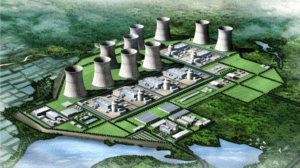
The world turns slowly in California. Instead of debating keeping one old plant open they should be planing six to eight new ones that would serve as the CO2 free base of their electric grid for the next fifty years.
" None are so blind as those that refuse to see."



PeakOil is You
THE Nuclear Power Thread pt 10 (merged)
Re: THE Nuclear Power Thread pt 9 (merged)
 by vtsnowedin » Thu 01 Sep 2022, 16:18:11
-

vtsnowedin - Fusion

- Posts: 14897
- Joined: Fri 11 Jul 2008, 03:00:00
Re: THE Nuclear Power Thread pt 9 (merged)
by Tanada » Thu 01 Sep 2022, 16:18:55
Now for something I personally got a pleasant surprise about. The Federal USA Government has updated their Nuclear Energy page for what seems like the first time in a long time and the new lay out is actually very pro-nuclear energy. For most of the time the page has existed the feel of the layout and descriptions was very blase' about the uses and advantages of fission over fossil fuels. The new page feels like something I could have written myself and has a lay out that is very professionally presented, far better than the old layout. Please check it out for yourselves!
Office of Nuclear Energy
Office of Nuclear Energy
$this->bbcode_second_pass_quote('Alfred Tennyson', 'W')e are not now that strength which in old days
Moved earth and heaven, that which we are, we are;
One equal temper of heroic hearts,
Made weak by time and fate, but strong in will
To strive, to seek, to find, and not to yield.
Moved earth and heaven, that which we are, we are;
One equal temper of heroic hearts,
Made weak by time and fate, but strong in will
To strive, to seek, to find, and not to yield.
- Tanada
- Site Admin

- Posts: 17094
- Joined: Thu 28 Apr 2005, 03:00:00
- Location: South West shore Lake Erie, OH, USA
Re: THE Nuclear Power Thread pt 9 (merged)
by Tanada » Mon 12 Sep 2022, 20:52:05
$this->bbcode_second_pass_quote('', '[')b]Should NC's clean energy future include more nuclear power? Duke Energy thinks so
When Duke Energy filed its carbon plan with the N.C. Utilities Commission in May, there was the usual focus on retiring dirty coal-fired power plants and embracing more renewable energy sources.
The company's proposal was in response to legislation hashed out by Democratic Gov. Roy Cooper, the GOP-controlled General Assembly, and Duke Energy that committed the Tar Heel State to reduce carbon emissions by 70% from 2005 levels by 2030 and to reach carbon neutrality by 2050. Duke, as the state's largest utility, has submitted several "pathways" to meet the requirement.
But raising some eyebrows was the utility giant's plan to incorporate 570 megawatts of new nuclear power into its future portfolio. These new reactors, however, wouldn't be like the giant plants the company already operates north of Southport on the N.C. coast or in southwestern Wake County.
Growth:With offshore wind projects set to increase, is NC ready to capitalize on the opportunity?
How to keep the lights on in the future:Duke, environmentalists jostle over future grid
They would be much smaller and simpler reactors.
Duke Energy is interested in adding more nuclear power to its North Carolina grid in the coming decades. But any new reactors would be much smaller and simpler than today's nuclear plants, like the Brunswick Nuclear Plant north of Southport.
According to the International Atomic Energy Agency (IAEA), small modular reactors (SMRs) are advanced nuclear reactors that have a power capacity of up to 300 megawatts per unit, which is about one-third of the generating capacity of traditional nuclear power reactors.
"Small nuclear reactors are essential for Duke Energy’s transition to a cleaner energy future," company spokesperson Jennifer Sharpe said via email. "The low-carbon, dispatchable energy of SMRs allows us to ensure reliable service for customers as we add more renewables to our system."
Duke is the largest regulated nuclear plant operator in the country and plans to reach net-zero emissions by 2050.
But the idea of adding additional nuclear power to North Carolina's grid isn't sitting well with everyone.
"The biggest thing is we just don't need them," said Jim Warren, executive director of NC WARN, a Durham-based nonprofit that promotes a swift move to clean energy options. "They are way too risky in a number of ways and just too expensive for the company and rate-paying customers to get them built."
Reliable and scalable
Depending on who you talk to, the rush by countries to shift away from fossil fuel power plants either represents the last gasp for nuclear power, which remains expensive to develop, or the renaissance of an often misunderstood industry through the development of safer, smaller less complex reactors.
Backers of nuclear power note that it is a source of emissions-free reliable power, and they believe their case has been strengthened due to the threat of climate change and the need to stabilize unreliable electrical grids.
Recent world events, notably the invasion of Ukraine by Russia and the subsequent upheaval in energy markets, has even convinced "green" governments like Germany, Japan and California to take another look at retaining or even expanding their nuclear power portfolios.
According to the IAEA, nuclear power provides about 10% of the world’s electricity, with thirty countries currently operating nuclear power plants and more than two dozen others looking at the power source as a way to meet their energy needs as they transition away from traditional fossil fuel power sources.
The Brunswick Nuclear Plant, located north of Southport, is expected to remain operational for decades to come.
Unlike wind and solar, nuclear power plants can also adjust output to meet demand throughout the day, allowing them to be paired with renewables to create a hybrid power generation system.
"Renewable energy sources, such as solar and wind, are intermittent, and while batteries can support them for a few hours, modeling clearly demonstrates the need for generation that can overcome extended weather conditions," Duke's Sharpe said. "SMRs are readily available and can be turned on anytime we need them."
Since they are small, SMRs also are viewed as easier to deploy than traditional reactors, which are often built to be site-specific, driving up their design time and costs. And because they are modular, a plant can also be scaled up by adding additional reactors to meet growing demand.
'Just not economical'
Three Mile Island. Chernobyl. Fukushima.
Accidents at those nuclear plants, in the United States, Ukraine and Japan, respectively, are seared into many people's memories.
Along with fears of potential radiation leaks, worries about what to do about nuclear waste produced by the plants and the energy source's association with nuclear weapons also makes many nervous.
But Warren said there's a more basic reason why North Carolina needs to move beyond nuclear energy.
"It's just not economical," he said.
Warren said nuclear plants have proven over and over again to be fiscal black holes, running into unforeseen development and construction problems that leaves utilities throwing more bad money after bad money as the cost and time lines for the projects balloon. While several new plants have been proposed in the past two decades only one is currently under construction, by Southern Company in Georgia.
"Duke Energy has already dragged us through this horror movie, and we can’t let them do it again," Warren said, referring to the utility's own efforts to build additional big nuclear plants earlier this century.
And as utilities across the world embrace renewable energy sources like offshore wind and solar, the price of those is dropping quickly.
In 2021, Wall Street financial consulting firm Lazard estimated that the cost of electricity from new nuclear plants would be between $131 and $204 per megawatt hour. That compares to between $26 and $50 per megawatt hour for utility-scale solar and wind plants.
Aside from public perceptions, the economics of developing and constructing new reactors also remain question marks.
"Significant technology development and licensing risks remain in bringing advanced SMR designs to market and government support is required to achieve domestic deployment of SMRs by the late 2020s or early 2030s," states the U.S. Department of Energy.
Unfair heat:Why Wilmington's neighborhoods aren't created equally when it comes to handling the heat
Tidal woes:'Undergoing a transformation': How increased high tide flooding could reshape the NC coast
Homegrown nuclear reactors?
As utilities, environmentalists and regulators debate the merits of adding new nuclear power to power grids, the impact for Wilmington residents could be more than just how the electricity to keep their lights on is produced.
GE Hitachi Nuclear Energy, based in Castle Hayne, is one of the leading companies working on a new SMR reactor.
GE Hitachi Nuclear Energy is headquartered in Castle Hayne, north of Wilmington. It is one of several companies developing new small modular nuclear reactors.
The company, which employs more than 2,000, has announced several agreements with utilities to explore the potential deployment of its new BWRX-300 small modular reactor. That list includes the Tennessee Valley Authority (TVA) and utilities in Poland, Sweden and Canada. Company spokesman Jonathan Allen said a reactor in Ontario could be completed as early as 2028.
So is Duke Energy interested in GEH's new reactor?
Allen said he couldn't discuss talks GEH might have had with customers that haven't been formally announced. Duke also declined to say if GEH would be the company's favored partner if more nuclear is in the utility's future — something that will be decided by the N.C. Utilities Commission.
"As outlined in Duke Energy’s carbon plan, we are evaluating all available SMR designs and will choose the option most complementary to our system and our goal to reach net zero," Sharpe said.
The utilities commission is expected to rule on Duke's proposed carbon plan by the end of the year. A coalition of clean energy and environmental groups have also submitted an alternative carbon-reduction plan that includes more renewable power and no additional nuclear reactors.
When Duke Energy filed its carbon plan with the N.C. Utilities Commission in May, there was the usual focus on retiring dirty coal-fired power plants and embracing more renewable energy sources.
The company's proposal was in response to legislation hashed out by Democratic Gov. Roy Cooper, the GOP-controlled General Assembly, and Duke Energy that committed the Tar Heel State to reduce carbon emissions by 70% from 2005 levels by 2030 and to reach carbon neutrality by 2050. Duke, as the state's largest utility, has submitted several "pathways" to meet the requirement.
But raising some eyebrows was the utility giant's plan to incorporate 570 megawatts of new nuclear power into its future portfolio. These new reactors, however, wouldn't be like the giant plants the company already operates north of Southport on the N.C. coast or in southwestern Wake County.
Growth:With offshore wind projects set to increase, is NC ready to capitalize on the opportunity?
How to keep the lights on in the future:Duke, environmentalists jostle over future grid
They would be much smaller and simpler reactors.
Duke Energy is interested in adding more nuclear power to its North Carolina grid in the coming decades. But any new reactors would be much smaller and simpler than today's nuclear plants, like the Brunswick Nuclear Plant north of Southport.
According to the International Atomic Energy Agency (IAEA), small modular reactors (SMRs) are advanced nuclear reactors that have a power capacity of up to 300 megawatts per unit, which is about one-third of the generating capacity of traditional nuclear power reactors.
"Small nuclear reactors are essential for Duke Energy’s transition to a cleaner energy future," company spokesperson Jennifer Sharpe said via email. "The low-carbon, dispatchable energy of SMRs allows us to ensure reliable service for customers as we add more renewables to our system."
Duke is the largest regulated nuclear plant operator in the country and plans to reach net-zero emissions by 2050.
But the idea of adding additional nuclear power to North Carolina's grid isn't sitting well with everyone.
"The biggest thing is we just don't need them," said Jim Warren, executive director of NC WARN, a Durham-based nonprofit that promotes a swift move to clean energy options. "They are way too risky in a number of ways and just too expensive for the company and rate-paying customers to get them built."
Reliable and scalable
Depending on who you talk to, the rush by countries to shift away from fossil fuel power plants either represents the last gasp for nuclear power, which remains expensive to develop, or the renaissance of an often misunderstood industry through the development of safer, smaller less complex reactors.
Backers of nuclear power note that it is a source of emissions-free reliable power, and they believe their case has been strengthened due to the threat of climate change and the need to stabilize unreliable electrical grids.
Recent world events, notably the invasion of Ukraine by Russia and the subsequent upheaval in energy markets, has even convinced "green" governments like Germany, Japan and California to take another look at retaining or even expanding their nuclear power portfolios.
According to the IAEA, nuclear power provides about 10% of the world’s electricity, with thirty countries currently operating nuclear power plants and more than two dozen others looking at the power source as a way to meet their energy needs as they transition away from traditional fossil fuel power sources.
The Brunswick Nuclear Plant, located north of Southport, is expected to remain operational for decades to come.
Unlike wind and solar, nuclear power plants can also adjust output to meet demand throughout the day, allowing them to be paired with renewables to create a hybrid power generation system.
"Renewable energy sources, such as solar and wind, are intermittent, and while batteries can support them for a few hours, modeling clearly demonstrates the need for generation that can overcome extended weather conditions," Duke's Sharpe said. "SMRs are readily available and can be turned on anytime we need them."
Since they are small, SMRs also are viewed as easier to deploy than traditional reactors, which are often built to be site-specific, driving up their design time and costs. And because they are modular, a plant can also be scaled up by adding additional reactors to meet growing demand.
'Just not economical'
Three Mile Island. Chernobyl. Fukushima.
Accidents at those nuclear plants, in the United States, Ukraine and Japan, respectively, are seared into many people's memories.
Along with fears of potential radiation leaks, worries about what to do about nuclear waste produced by the plants and the energy source's association with nuclear weapons also makes many nervous.
But Warren said there's a more basic reason why North Carolina needs to move beyond nuclear energy.
"It's just not economical," he said.
Warren said nuclear plants have proven over and over again to be fiscal black holes, running into unforeseen development and construction problems that leaves utilities throwing more bad money after bad money as the cost and time lines for the projects balloon. While several new plants have been proposed in the past two decades only one is currently under construction, by Southern Company in Georgia.
"Duke Energy has already dragged us through this horror movie, and we can’t let them do it again," Warren said, referring to the utility's own efforts to build additional big nuclear plants earlier this century.
And as utilities across the world embrace renewable energy sources like offshore wind and solar, the price of those is dropping quickly.
In 2021, Wall Street financial consulting firm Lazard estimated that the cost of electricity from new nuclear plants would be between $131 and $204 per megawatt hour. That compares to between $26 and $50 per megawatt hour for utility-scale solar and wind plants.
Aside from public perceptions, the economics of developing and constructing new reactors also remain question marks.
"Significant technology development and licensing risks remain in bringing advanced SMR designs to market and government support is required to achieve domestic deployment of SMRs by the late 2020s or early 2030s," states the U.S. Department of Energy.
Unfair heat:Why Wilmington's neighborhoods aren't created equally when it comes to handling the heat
Tidal woes:'Undergoing a transformation': How increased high tide flooding could reshape the NC coast
Homegrown nuclear reactors?
As utilities, environmentalists and regulators debate the merits of adding new nuclear power to power grids, the impact for Wilmington residents could be more than just how the electricity to keep their lights on is produced.
GE Hitachi Nuclear Energy, based in Castle Hayne, is one of the leading companies working on a new SMR reactor.
GE Hitachi Nuclear Energy is headquartered in Castle Hayne, north of Wilmington. It is one of several companies developing new small modular nuclear reactors.
The company, which employs more than 2,000, has announced several agreements with utilities to explore the potential deployment of its new BWRX-300 small modular reactor. That list includes the Tennessee Valley Authority (TVA) and utilities in Poland, Sweden and Canada. Company spokesman Jonathan Allen said a reactor in Ontario could be completed as early as 2028.
So is Duke Energy interested in GEH's new reactor?
Allen said he couldn't discuss talks GEH might have had with customers that haven't been formally announced. Duke also declined to say if GEH would be the company's favored partner if more nuclear is in the utility's future — something that will be decided by the N.C. Utilities Commission.
"As outlined in Duke Energy’s carbon plan, we are evaluating all available SMR designs and will choose the option most complementary to our system and our goal to reach net zero," Sharpe said.
The utilities commission is expected to rule on Duke's proposed carbon plan by the end of the year. A coalition of clean energy and environmental groups have also submitted an alternative carbon-reduction plan that includes more renewable power and no additional nuclear reactors.
LINK
$this->bbcode_second_pass_quote('Alfred Tennyson', 'W')e are not now that strength which in old days
Moved earth and heaven, that which we are, we are;
One equal temper of heroic hearts,
Made weak by time and fate, but strong in will
To strive, to seek, to find, and not to yield.
Moved earth and heaven, that which we are, we are;
One equal temper of heroic hearts,
Made weak by time and fate, but strong in will
To strive, to seek, to find, and not to yield.
- Tanada
- Site Admin
- Posts: 17094
- Joined: Thu 28 Apr 2005, 03:00:00
- Location: South West shore Lake Erie, OH, USA
Re: THE Nuclear Power Thread pt 9 (merged)
by Tanada » Wed 21 Sep 2022, 08:56:47
$this->bbcode_second_pass_quote('', '[')b]Coal plant sites could host 265 GW of advanced nuclear, costing 35% less than greenfield projects: DOE
Dive Insight:
The report comes as states and the federal government are looking for ways to take advantage of transmission lines and other equipment that was built to serve coal-fired power plants, in part to support the communities around the retired or soon-to-be shuttered generating facilities.
Illinois, for example, intends to install a mix of solar and battery storage at 11 retired coal-fired power plant sites while TerraPower is planning an advanced nuclear reactor demonstration project near the coal-fired Naughton plant in Wyoming.
DOE researchers from the Argonne, Idaho and Oak Ridge national laboratories found 190 operating coal plant sites that could host nearly 200 GW of nuclear capacity and 125 recently retired plant sites that could handle about 65 GW of nuclear capacity. There are about 100 GW of existing nuclear capacity in the United States, which account for 8.2% of all U.S. generating capacity, according to the Federal Energy Regulatory Commission.
Coal-to-nuclear, or C2N, projects appear to perform better economically than stand-alone, greenfield nuclear projects, the researchers said.
Also, building nuclear plants at retired coal plant generating stations may provide an economic boost to disadvantaged communities, according to the report.
“The study results suggest economic potential for communities and firms that pursue C2N transitions,” the DOE researchers said. “An implication of this is that there is a potential advantage for interested coal communities to be first movers in what could be a series of many C2N transitions across the United States.”
The researchers’ economic and environmental impact analysis was based on a hypothetical 1,200-MW coal-fired power plant in the Midwest that is replaced with a 924-MW nuclear plant.
That analysis suggests jobs in the region could increase by more than 650 permanent jobs, up from an estimated 150 jobs connected to the coal-fired power plant, the researchers said.
“Swapping out retiring coal-fired power plants with advanced nuclear reactors reduces carbon emissions, improves air quality, and provides economic benefits to communities,” Greenwald said. “It also minimizes siting challenges, reduces or eliminates community and economic impacts due to asset retirement while producing clean and reliable energy.”
Dive Insight:
The report comes as states and the federal government are looking for ways to take advantage of transmission lines and other equipment that was built to serve coal-fired power plants, in part to support the communities around the retired or soon-to-be shuttered generating facilities.
Illinois, for example, intends to install a mix of solar and battery storage at 11 retired coal-fired power plant sites while TerraPower is planning an advanced nuclear reactor demonstration project near the coal-fired Naughton plant in Wyoming.
DOE researchers from the Argonne, Idaho and Oak Ridge national laboratories found 190 operating coal plant sites that could host nearly 200 GW of nuclear capacity and 125 recently retired plant sites that could handle about 65 GW of nuclear capacity. There are about 100 GW of existing nuclear capacity in the United States, which account for 8.2% of all U.S. generating capacity, according to the Federal Energy Regulatory Commission.
Coal-to-nuclear, or C2N, projects appear to perform better economically than stand-alone, greenfield nuclear projects, the researchers said.
Also, building nuclear plants at retired coal plant generating stations may provide an economic boost to disadvantaged communities, according to the report.
“The study results suggest economic potential for communities and firms that pursue C2N transitions,” the DOE researchers said. “An implication of this is that there is a potential advantage for interested coal communities to be first movers in what could be a series of many C2N transitions across the United States.”
The researchers’ economic and environmental impact analysis was based on a hypothetical 1,200-MW coal-fired power plant in the Midwest that is replaced with a 924-MW nuclear plant.
That analysis suggests jobs in the region could increase by more than 650 permanent jobs, up from an estimated 150 jobs connected to the coal-fired power plant, the researchers said.
“Swapping out retiring coal-fired power plants with advanced nuclear reactors reduces carbon emissions, improves air quality, and provides economic benefits to communities,” Greenwald said. “It also minimizes siting challenges, reduces or eliminates community and economic impacts due to asset retirement while producing clean and reliable energy.”
LINK 1
$this->bbcode_second_pass_quote('', '[')b]Why Nuclear Energy Is Now Part of The Road to Renewables
What do Microsoft founder Bill Gates, climate scientist James Hansen, legendary venture capitalist Fred Wilson and the governments of Germany and Japan have in common? They are all exploring how nuclear power can be a part of the transition to a net zero world.
What a difference a decade makes. After the 2011 Fukushima crisis, nuclear power seemed to be facing possible extinction after Japan and Germany pledged to phase out nuclear energy. Now, everything is changing for three main reasons; a global energy crisis caused by Russia’s invasion of Ukraine, an evolving understanding of the role nuclear power can play in helping battle climate change, and advances in technology enabling smaller nuclear plants.
In late August, Japan said it will restart idled nuclear plants and may develop next-generation reactors, something unimaginable after a tsunami caused a nuclear meltdown at Fukushima. Japan’s short-term motive is ending its reliance on Russian oil. Long-term, it’s a step toward a fossil fuel-free world. And, in a policy reversal, Germany is expected to prolong the use of three nuclear power plants because bans on Russian oil and natural gas have made it possible that millions of Europeans may be unable to afford to heat their homes this winter.
Many in Generation X and Baby Boomers — the generations of my parents and most of their peers — understandably think of nuclear energy with dread. They grew up in a Cold War society fearing nuclear annihilation, and have vivid memories of nuclear accidents near home at Three-Mile Island, and in far away places like Chernobyl.
Putting Past in Perspective
But for many of my generation, the kids of Gen X, harnessing nuclear energy is an idea worth consideration. We can put those earlier nuclear disasters in perspective, mindful that the larger, looming catastrophe we face is climate change. Long after the Baby Boom generation has passed on, our generation and our children will inhabit a still-heating planet where we still pump carbon dioxide emissions from fossil fuels into the atmosphere.
To be sure, nuclear energy needs to be tightly managed. Corruption and ignorance played a part in past disasters and Russia’s bombardment of a nuclear plant in Ukraine highlights ongoing security concerns. But technology has advanced, and our outlook must evolve, too.
This shift in attitudes has boosted nuclear stocks. Significant investment is making nuclear facilities more agile, faster to build and bring online and, ultimately, safer. Regulations are also helping. Stocks of nuclear power providers have outperformed the broader stock market lately. Outperformers include Constellation Energy (Constellation Energy Corporation - $87.75 1.61 (0.01802%) ), NRG Energy (NRG Energy Inc. - $42.80 1.22 (0.02771%) ), Xcel Energy (Xcel Energy, Inc. - $73.48 1.05 (0.01409%) ) and Entergy Corp. (Entergy Corp. - $114.30 1.58 (0.01363%) ), which all outpaced the broad S&P 500 Index over the summer. Helping their advance has been the Inflation Reduction Act, which includes a subsidy for nuclear plants, including "production tax credits" to existing plants.
Why is Washington supporting nuclear energy in a law aimed at tackling climate change? Because the sun doesn’t shine at night and wind turbines only operate efficiently within a narrow range of wind speeds. That means we need something paired with renewables for reliability. One option is natural gas-fired peaker plants that burn fossil fuels. Or we could develop better batteries to efficiently store solar and wind power for when it is needed, or employ another form of clean energy, such as nuclear power. As policymakers consider these choices, nuclear is overcoming some of its long-standing constraints through innovation.
For Nuclear, Smaller is Better
Smaller nukes can now be built within existing electrical facilities to replace coal-burning plants. These space-efficient plants require less time for regulatory approval and are safer, requiring less oversight. The “tiny nuclear” movement (which shares its ethos with the distributed solar movement) has attracted investment from private firms testing new designs.
And two of the world’s smartest guys (a Boomer and a member of the Greatest Generation) are also betting on tiny nukes. Bill Gates’ Terrapower and Warren Buffett’s PaciCorp are partnering to build a facility on the site of a Wyoming coal-fired power plant. The 345-megawatt reactor would be the smallest commercial U.S. nuclear plant and could power 400,000 homes. Terrapower believes its design can enable faster licensing and construction, and position it to go live on the power grid in 2028. Through U.S. Department of Energy grants and other incentives, Washington has committed $1.9 billion to the project.
Public pressure triggered by Three-Mile Island in 1979, amplified by Chernobyl in 1986 and hammered home by Fukushima in 2011 caused the nuclear industry to retrench. But these disasters were unique and had limited consequences. Since Three Mile Island, there have been few notable U.S. nuclear incidents even as nuclear provides some 20% of our electricity. Chernobyl was caused by negligence while Fukushima was located near an undersea fault line. A common element of all three is how few humans were sickened or died.
The long-term safety record of nuclear energy was among the reasons why in 2020 the Democratic party changed its position regarding nuclear energy to favor “all zero-carbon technologies, including hydroelectric power, geothermal, existing and advanced nuclear, and carbon capture and storage.” This was the first time Democrats have backed nuclear since 1972 and today both parties are backing nuclear.
Even climate scientist James Hansen has called nuclear power one of the best means for rapidly reducing greenhouse gas emissions. Meanwhile, nuclear energy costs pennies on the dollar compared to fossil fuels. And while the sun gives away its energy for free, we’ve yet to figure out an efficient way to harvest, store and transport electricity from it at scale.
Technology could yet push nuclear energy to new advances. Legendary venture capitalist Fred Wilson has put out a call for novel ideas to advance nuclear energy. “I've been looking into nuclear reactors and batteries with the lens of how small is possible,” the famed investor wrote on his blog. “Could we make a nuclear reactor or battery that fits in our home? Could we make a nuclear reactor or battery that we carry with us like a phone? I know these ideas seem preposterous but … often we bump into something else along the way that is even more interesting.”
With enthusiasm like this from Wall Street, climate scientists and leading governments from Washington to Tokyo, it seems like nuclear power is getting a new lease on life.
LINK2
$this->bbcode_second_pass_quote('Alfred Tennyson', 'W')e are not now that strength which in old days
Moved earth and heaven, that which we are, we are;
One equal temper of heroic hearts,
Made weak by time and fate, but strong in will
To strive, to seek, to find, and not to yield.
Moved earth and heaven, that which we are, we are;
One equal temper of heroic hearts,
Made weak by time and fate, but strong in will
To strive, to seek, to find, and not to yield.