PeakOil is You
When does the next leg up in prices start?
Re: Oil prices below $40 - when?
 by copious.abundance » Thu 20 Nov 2008, 19:46:23
$this->bbcode_second_pass_quote('lorenzo', '')$this->bbcode_second_pass_quote('OilFinder2', 'O')nly $8 more to go!
Sure, but $40 (or slightly under) would be my last bet, though. Yours?
Hard to say. If the economies of Chindia tank as hard as the West, the $20's might not be out of reach.
Then there's the pesky but important question of where the dollar will go.
Stuff for doomers to contemplate:
http://peakoil.com/forums/post1190117.html#p1190117
http://peakoil.com/forums/post1193930.html#p1193930
http://peakoil.com/forums/post1206767.html#p1206767
http://peakoil.com/forums/post1190117.html#p1190117
http://peakoil.com/forums/post1193930.html#p1193930
http://peakoil.com/forums/post1206767.html#p1206767
-

copious.abundance - Fission

- Posts: 9589
- Joined: Wed 26 Mar 2008, 03:00:00
- Location: Cornucopia
Re: Oil prices below $40 - when?
by Cog » Thu 20 Nov 2008, 19:47:38
I voted by the end of the year. A month ago I would not have even considered this a remote possibility. The current global meltdown must be a lot more severe then even Helicopter Ben has been letting on.
-

Cog - Fusion

- Posts: 13416
- Joined: Sat 17 May 2008, 03:00:00
- Location: Northern Kekistan
Re: Oil prices below $40 - when?
by Polemic » Thu 20 Nov 2008, 19:48:12
You ought to come back to Austin, emerson. I wouldn't want to ride out teh d00m in Dallas.
Dallas is considered the 'financial capital' of the U.S. Southwest. Well, that's all down the drain now.
Oil price:
My hunch is that the dollar will tank and send oil prices soaring in USD.
Dallas is considered the 'financial capital' of the U.S. Southwest. Well, that's all down the drain now.
Oil price:
My hunch is that the dollar will tank and send oil prices soaring in USD.
-

Polemic - Lignite

- Posts: 353
- Joined: Sun 24 Sep 2006, 03:00:00
- Location: Austin, TX
Re: Oil prices below $40 - when?
by seahorse » Sat 22 Nov 2008, 08:59:57
Lorenzo,
This economic crisis may continue to crash oil to who knows where, but I disagree with this statement by you:
$this->bbcode_second_pass_quote('', 'T')ake into account a spreading recession and massive demand destruction, Iraq's recent revelation (bigger reserves than SA), Brazil's huge finds, and America's new investments in drill, drill, drill baby, drill.
This economic crisis may continue to crash oil to who knows where, but I disagree with this statement by you:
$this->bbcode_second_pass_quote('', 'T')ake into account a spreading recession and massive demand destruction, Iraq's recent revelation (bigger reserves than SA), Brazil's huge finds, and America's new investments in drill, drill, drill baby, drill.
I disagree with that statement bc you imply that new finds have something to do with the price of oil crashing, they don't. Further, there have been ample reports that the crash in oil prices is bringing a halt to many of these projects, if not all of them. So, we will not see that oil with prices so low. If you don't believe those news reports, then maybe you will listen to Rockman and Rockdoc who are both resevoire geologist who make the same point.
Crashing oil prices is really terrible for everyone, and probably mean will will hit "PO" sooner, rather than later, for several reasons. Crashing oil prices not only mean new oil projects get cancelled, but mean that projects bringing alternatives to oil get cancelled. Case in point, Boone Pickens energy plan is now on hold.
Lorenzo, I fail to see that you are right in your reasoning, and I have followed your posts for years. You and others used to argue that PO would not be a problem bc there was lots of other oil out there and that as oil got more expensive, society would make a transition to alternatives because prices, the market, will allow that transition to happen, but its not happening.
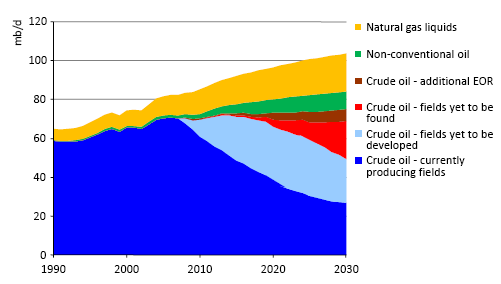
In fact, the opposite of all your previous assumptions are happening. If the IEA is right that declines in existing fields is upwards of 4%, and that we have to drill more and produce more just to maintain a plateau in oil production, then the world has to be drilling oil in the expensive hard to reach places and must be developing alternatives, all of which are very expensive. However, this is not happening. Your long held belief that "price signals" would force the transition are not there, drilling in new places is being cancelled and so are alternatives to oil. In my own opinion, this is the worse case scenario. I see nothing good about a crash in oil prices by a failing economy.
-

seahorse - Expert

- Posts: 2275
- Joined: Fri 15 Oct 2004, 03:00:00
- Location: Arkansas
Re: Oil prices below $40 - when?
by threadbear » Sat 22 Nov 2008, 12:59:31
It's all about the US dollar now. Gold is signalling expectations of a sling shot effect.
-
threadbear - Expert
- Posts: 7577
- Joined: Sat 22 Jan 2005, 04:00:00
Re: Oil prices below $40 - when?
by yesplease » Sat 22 Nov 2008, 16:32:29
$this->bbcode_second_pass_quote('seahorse', 'C')rashing oil prices is really terrible for everyone, and probably mean will will hit "PO" sooner, rather than later, for several reasons.
I agree that we may see PO sooner rather than later in terms of demand caving first, then peak catching up on the way down, but disagree w/ it being terrible. The sooner/lower the peak is, the more we have available post-peak and the lower the decline rate is. The oil is there is supply drops past demand and can be extracted at higher prices in the future, when the relative price/availability of renewables and whatever decline rate creates a consistent floor/floors.$this->bbcode_second_pass_quote('seahorse', 'C')rashing oil prices not only mean new oil projects get cancelled, but mean that projects bringing alternatives to oil get cancelled. Case in point, Boone Pickens energy plan is now on hold.
$this->bbcode_second_pass_quote('Professor Membrane', ' ')Not now son, I'm making ... TOAST!