Donate Bitcoin

Donate Paypal


PeakOil is You

PeakOil is You

THE Road & Highway Thread (merged)

What's on your mind?
General interest discussions, not necessarily related to depletion.

Postby Russian_Cowboy » Sun 27 Mar 2005, 01:39:52

$this->bbcode_second_pass_quote('Wildwell', 'B')e nice when it get's icy!

You can get a lot more down a rail system than a highway system in similar space, so not that many 'lanes'. Personally I think whole areas will have to be abandoned and we might see 'new garden towns' spring up nearer to food and water resources in the future. Supermarkets will be long gone.

A rail system is not a magic bullet in many places, especially the US because of population density and the way everything is organized around trucks. As for personal vehicles, small, short range I should think. It’s going to be interesting. Rail is just one solution to a great many serious issues based around urban development, to water supply, from food to economics and from industry to commerce.


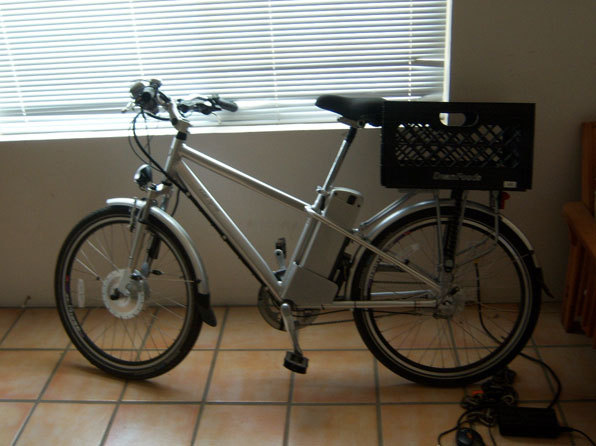
From what I have seen in Texas & Oklahoma, most towns, unless they are ghost towns, have railroads and even rail stations. Some are abandoned and most of them do not run passenger trains, but this can still be restored. Trucks can also be converted to locomotives or rail cars that can be assembled into trains. These trains would run between stations made at railroad junctions. At each junction, the trains would be taken apart and new trains, each running in a different direction, assembled. This way you can still have separate trucks, not entire trains, running from point A to point B, just like trucks. This may take a bit longer though, but you will have a lot better gas mileage than the 7 miles per gallon that an average semi guzzles. This is 21st century, so everything can be automated. Plus, you can sack all the truckdrivers and send them to build new railroads.
User avatar
Russian_Cowboy
Lignite
Lignite
 
Posts: 259
Joined: Wed 16 Feb 2005, 04:00:00

Postby NeoPeasant » Mon 28 Mar 2005, 21:01:21

Roads without traffic seem to hold up pretty well, as THIS LADY discovered in her ride thru the Chernobyl area.

I imagine the roads would wear quite slowly with mostly bicycle traffic.
NeoPeasant
Heavy Crude
Heavy Crude
 
Posts: 1003
Joined: Tue 12 Oct 2004, 03:00:00

Postby Half-Mad » Tue 29 Mar 2005, 00:07:44

$this->bbcode_second_pass_quote('Ludi', 'I')n many parts of the country the best soil is under pavement...


The soil is cleared away before the road is made. It's replaced with gravel, then the road is built on top of that.
User avatar
Half-Mad
Wood
Wood
 
Posts: 48
Joined: Thu 24 Feb 2005, 04:00:00
Location: Canada

Postby Half-Mad » Tue 29 Mar 2005, 00:41:39

$this->bbcode_second_pass_quote('NeoPeasant', 'R')oads without traffic seem to hold up pretty well, as THIS LADY discovered in her ride thru the Chernobyl area.

I imagine the roads would wear quite slowly with mostly bicycle traffic.


True that, without the wear from having the cars, the roads will last a lot longer. But, they will still break down eventually. Instead of 20 years until the roads are unusable, it becomes 100 years for the roads to be bad enough that they can't be used. Likely a lot faster here in Canada, and such places where ice gets into the cracks.
As long as the roads last, the trucking industry will last. Even if everybody is banned from driving, due to lack of gasoline, there will still be trucking, to get the products to the stores. The trucking industry will likely keep going until the agricultural industry is about to start losing fertilizer, at which time both industries will likely decline at about the same rate. Although, before this happens, the products being shipped from China will likely have stopped, thus removing a large portion of the trucking industry when that happens.

As uber stated, trains are better. But, the lines aren't there in most areas. For the most part, in North America, the rail system is a joke. Here in Ottawa, there isn't even a subway system. There is only one light rail line, recently put in, because the tracks were already there, and it would have been too difficult to put in a road for the bus system. For a rail system to be a practical replacement, there would have to be rail lines going down every 2nd or 3rd street in all retail and industrial areas, in every city. Down about one in ten or twenty streets in residential areas. Also, there is a question of the energy for the trains. Electric trains need the electricity produced. The subway system for New York required enough electricity to power a town. Steam trains, burning wood, coal, or whatever, need a water tower every 9 miles. I suppose a coal burning train could have a car dedicated to water for the engine, but then all that much more power is needed to move the water.
User avatar
Half-Mad
Wood
Wood
 
Posts: 48
Joined: Thu 24 Feb 2005, 04:00:00
Location: Canada

Postby bentstrider » Tue 29 Mar 2005, 01:07:39

I could do just fine without roads in my ride.
Whether it be my shoes, my bicycle, or longer than average jaunt in the Bronco II, hard-packed dirt paths are good for me.
As for ruts and hard-holes, throw some excess dirt into it, pack it down, and you're set.
Some people say it's bad for the suspension, I just tell 'em "I'll keep driving my vehicle on these paths until it breaks apart.
Or I don't get it converted to ethanol burning status soon.:wink:
bentstrider
Lignite
Lignite
 
Posts: 375
Joined: Mon 25 Oct 2004, 03:00:00
Location: Southern California Desert

Road removal

Postby OldSprocket » Wed 30 Mar 2005, 06:40:15

One poor part of Ohio is Perry County, known as Perilous County to the cyclists who ride there. The name comes from the quality of the roads. Perry County improved many roads in the '80s by simply grinding the cracked and potholed pavement into gravel. That may not sound like an improvement, but it was.

The grinding machine probably used more gas than your typical Toyota Prius, but I suspect that in the long term the roads used less oil for maintenance than before the grinding. That is only my guess.
User avatar
OldSprocket
Lignite
Lignite
 
Posts: 239
Joined: Fri 24 Dec 2004, 04:00:00
Location: Maine

Postby Ludi » Wed 30 Mar 2005, 08:29:12

$this->bbcode_second_pass_quote('', 'T')he soil is cleared away before the road is made.


Pardon me for being imprecise. The best farmland is under pavement.
Ludi
 

Postby RidgeRunner » Wed 30 Mar 2005, 08:57:55

Half-Mad wrote
$this->bbcode_second_pass_quote('', 'S')team trains, burning wood, coal, or whatever, need a water tower every 9 miles. I suppose a coal burning train could have a car dedicated to water for the engine, but then all that much more power is needed to move the water.


Steam trains do not need a water tower every 9 miles, a steam engine is quite capable of of going hundreds of miles between fill ups because it does have a dedicated car to water the engine AND to carry the coal too.
Have you ever heard of a TENDER???

A Pennsylvania Railroad K-4s 4-6-2 steam engine with tender weighed 541,500 pounds loaded with water and coal, with 209,300 pounds on the drivers.
Capacity of the tender was 43,600 pounds of coal and 11,300 gallons of water.
Tractive effort was 44,460 pounds.
That is enough power to pull a 10,000 TON train at 60mph for hundreds of miles without having to stop for water even once.

Notice that 11,300 gallons of water only weighs around 42 tons so in relation to a 10,000 ton train it is only a fly on it's back.

These specs came from "Modern Coal-Burning Steam Locomotives" Dec. 1944 edition. http://www.fortunecity.com/meltingpot/f ... -44_t.html

It would be nice if posters actually did some research about what they are writing about so that they sound at least Half-Intelligent.
User avatar
RidgeRunner
Wood
Wood
 
Posts: 20
Joined: Mon 28 Feb 2005, 04:00:00
Location: Indiana
Top

Postby formandfile » Wed 30 Mar 2005, 09:26:49

$this->bbcode_second_pass_quote('Half-Mad', '
') For a rail system to be a practical replacement, there would have to be rail lines going down every 2nd or 3rd street in all retail and industrial areas, in every city. Down about one in ten or twenty streets in residential areas.


Not really. Youre putting the horse before the cart here. In many cases, when urban streetcar railways were laid in the early 1900's, development followed the lines and intensified around trolley stops, not the other way around. The car allowed for growth to take off in whatever direction desired. Once autos are taken out of the equation again, concentration of various uses around trolley stops and rail stations will occur again, and the streets that are too far from these will simply fall out of favor. I walk half a mile to the nearest MARTA station where i live, passing 7 streets or so, and most other people can do it too.

$this->bbcode_second_pass_quote('Half-Mad', '
')Also, there is a question of the energy for the trains. Electric trains need the electricity produced. The subway system for New York required enough electricity to power a town.

I would be more worried about the energy required to merely pump water up all the taller buildings in new york. I believe electricity and investment will be there for the MTA though, as it will be the foundation of any future that lies ahead of the big apple.
User avatar
formandfile
Lignite
Lignite
 
Posts: 205
Joined: Wed 17 Nov 2004, 04:00:00
Location: Atlanta - GA - USA
Top

Postby nocar » Wed 30 Mar 2005, 11:11:48

I wonder if not the biggest (or only?) advantage a post-oil world will have over the pre-industrial world is that we will have many good roads. Even when the surface crumbles, the roadbed will remain, and this is the most important part of a road. Aside from sailing, the most energy efficient travel modes are railroads and bicycles, and really, these can be combined. Bicycles on railroads have been used for ages in Europe (but perhaps not so much since the 1950s) for railroad maintenance crews. In some places now in Sweden you can go on railroad bicycles on abandoned railroads, for recreational purposes. You easily get high speeds with little effort.

Certainly it is possible to build railroad bicycles for like 20 persons, that can be pedalled by the passengers, and of course you also can use it for transporting goods. There will be plenty of iron available from useless cars and trucks. My time perspective here is like 40-60 years post peak.

A four-lane highway can have two lanes for horses and bikes and two lanes for railroads, powered by humans or electricity.

I agree, we have paved over and destroyed far too much good farmland, which "we" will certainly regret. (I.e. Our descendents will curse our stupidity) And lots of roads will be useless - but in quite a few places the roadbeds will come in handy.
nocar
nocar
Tar Sands
Tar Sands
 
Posts: 810
Joined: Fri 05 Nov 2004, 04:00:00

Postby Half-Mad » Wed 30 Mar 2005, 14:57:59

$this->bbcode_second_pass_quote('Ludi', '')$this->bbcode_second_pass_quote('', 'T')he soil is cleared away before the road is made.


Pardon me for being imprecise. The best farmland is under pavement.


Yup. I mentioned this in another post, a few weeks ago. The cities are placed at locations of settlements from long ago. Those settlements were placed where the farming was best. Over time, the cities grew over the farmland.

I suppose under parking lots, they might not remove the soil first. I'm not sure about that. But, after having a parking lot sitting on top of the soil, I doubt anybody would want to use that soil for a long time.

It's now pretty much down to the remaining good undeveloped farmland being rocky, tree covered areas. Just dig out the rocks, and remove the trees. A lot of work, but that's pretty much all anybody would likely find for new agricultural land.
User avatar
Half-Mad
Wood
Wood
 
Posts: 48
Joined: Thu 24 Feb 2005, 04:00:00
Location: Canada
Top

Postby Half-Mad » Wed 30 Mar 2005, 15:14:17

$this->bbcode_second_pass_quote('RidgeRunner', 'H')ave you ever heard of a TENDER???


No, I haven't.

$this->bbcode_second_pass_quote('', 'N')otice that 11,300 gallons of water only weighs around 42 tons so in relation to a 10,000 ton train it is only a fly on it's back.


My mistake. I was thinking about the steam trains from over a century ago. A lot of small towns and villages were put in place to support the trains. I didn't realize steam trains were still in use today as anything more than tourist traps, and for transportation in some of the poorer areas of the world.
User avatar
Half-Mad
Wood
Wood
 
Posts: 48
Joined: Thu 24 Feb 2005, 04:00:00
Location: Canada
Top

Postby gary_malcolm » Wed 30 Mar 2005, 15:43:35

I have a Mad-Max employment fantasy about a hard crash... I become the mailman between Eugene and Portland Oregon (~100 mi) on the best bike path ever invented, I-5. All of that road bike training will really pay off.
:P
Gary Malcolm

US Empire

There is no alternative source for our gluttony. Power down or die.
gary_malcolm
Lignite
Lignite
 
Posts: 281
Joined: Tue 26 Oct 2004, 03:00:00
Location: US Empire

Postby bentstrider » Wed 30 Mar 2005, 18:28:20

$this->bbcode_second_pass_quote('gary_malcolm', 'I') have a Mad-Max employment fantasy about a hard crash... I become the mailman between Eugene and Portland Oregon (~100 mi) on the best bike path ever invented, I-5. All of that road bike training will really pay off.
:P

I've already got the ethanol powered KTM 250 in mind.
You relay the packages to me so I could carry them for the long distance runs.
I'll even drag a small fuel trailer behind me to maximize my mileage.
As per ethanol, I'll farm it myself without anybody knowing of course.
bentstrider
Lignite
Lignite
 
Posts: 375
Joined: Mon 25 Oct 2004, 03:00:00
Location: Southern California Desert
Top

Postby pea-jay » Wed 30 Mar 2005, 19:34:13

$this->bbcode_second_pass_quote('', 'I') suppose under parking lots, they might not remove the soil first. I'm not sure about that. But, after having a parking lot sitting on top of the soil, I doubt anybody would want to use that soil for a long time.


Good soil is nice, but not a requirement for non-conventional agriculture. If you have lousy (or no) soil simply make it by utilizing composting and raised bed agriculture.

Lion Kuntz came up with this idea of utilizing synergistic practices called EcoSyn to maximize the yields of agriculture in a minimal amout of area, lacking topsoils infact.

Looks like this:
Image
Imagine this popping up in your local supercenter parking lot...

The BioIntensive practices synthesized by Allan Chedwick are also a viable option.

A picture:
Image

Both compare much better than conventional row-cropping interms of necessary inputs, be it energy (labor) or nutrients.

Just because it's a mall today, doesn't mean its forever a mall. The future value of suburbia may be its readily available quantities of metals in easy to access forms.
UNplanning the future...
http://unplanning.blogspot.com
User avatar
pea-jay
Heavy Crude
Heavy Crude
 
Posts: 1547
Joined: Sat 17 Jul 2004, 03:00:00
Location: NorCal
Top

Postby pea-jay » Wed 30 Mar 2005, 19:39:29

Of course if everything goes really bad and we all end up extinct, a future civilization may evolve out of the one of the surviving lifeforms. And if they do, their archeological counterparts will puzzle about our peculiar artifacts, while their energy companies will scheme how to remove the oil from the abundance of oil-gravel deposits scattered around the planet.
UNplanning the future...
http://unplanning.blogspot.com
User avatar
pea-jay
Heavy Crude
Heavy Crude
 
Posts: 1547
Joined: Sat 17 Jul 2004, 03:00:00
Location: NorCal

Postby gg3 » Thu 31 Mar 2005, 06:32:54

For a road of a given material and quality of construction, longevity of the surface depends on a) traffic weight & speed, and b) freeze/thaw cycles.

The effect of traffic is equivalent to pounding on the surface, which aggravates any imperfections that occur. The effect of freeze/thaw cycles is to cause a) uneven expansion and settlement of the subgrade, which in turn cracks any pavement surface (asphalt loses its flexural strength at low temps, i.e. becomes brittle), and b) expansion and contraction of the surface material (normally the flex in asphalt takes this up; in concrete pavements, expansion strips are placed at regular intervals in the slab).

Both of these problems can be solved, and a sustainable & maintainable pavement surface produced, with "paving blocks." These are standardized units typically made of concrete. They are typically set in a base course of sand, with tar spread between them to provide room for expansion/contraction, and to provide adhesion to keep them from rising or settling precipitously.

Why sustainable & maintainable: When damage occurs to the pavement, it is localized to a few damaged pavers. These are easily replaced by breaking them out and setting new ones into place. They can be broken out with hand tools i.e. heavy sledge hitting a cold chisel which in turn is held by a small tripod that is set over the paver that is to be broken out. They can be replaced with hand tools, i.e. simply prodded into place with crowbars and tapped down with a mallet.

New pavers can be manufactured using gravel derived from crushing old ones. Yes, portland cement is needed, but the overall quantity of concrete is less than for conventional pavement repairs (in which larger sections of concrete are often chopped out and re-poured).

A road repair crew can operate using a small truck (choose your renewable power source) with a load of pavers and a few tools.

Any municipality can manufacture pavers with low-tech equipment, i.e. a small concrete mixer (human-powered if need be), a few sets of reusable steel forms in standard sizes, and a few common hand tools.

Roads made of pavers are viable for traffic up to about 30 miles per hour, which is adequate for most local applications. It may be that improved designs can support higher traffic speeds. Also the weight of vehicles would have to be limited to what is normally encountered in local traffic, but again, improvements may be possible. Both of these limitations will reduce damage due to vehicular pounding.

In the case of freeze/thaw cycles, the pavers will tend to rise and fall with the subgrade, restrained by the tar in between them (think of a brick walkway with the bricks set in mortar). If individual pavers get cracked or broken up, replacement is simple (as per above). The expansion and contraction of the pavers themselves will be taken up by the tar, which will form a proportionally greater area than the expansion strips in conventional slabs.

Another aspect of road maintenance that is possible with pavers but not with conventional materials: An entire road can be dug up easily enough by breaking out one row and then prying up the succeeding rows with the pavers intact. By this method, one could take a worn or "rutted" road surface and "re-arrange" the blocks so as to even out the wear. Unlike conventional asphalt or concrete, the pavers don't need time to harden after they're put into place.

For snow removal, use plows with rubber edges at the bottoms of the blades, that won't catch on the slight irregularities or cause damage to edges of pavers sticking up. Alternately, use rotary brooms mounted on the front of agricultural tractors, as is/was the practice in Copenhagen (useful application for tractors outside of growing season, and no need for separate dedicated vehicles for plowing). These snow sweepers can handle accumulations up to a foot deep, and operate in eschelon to move all the snow to the edge of the road in one pass.

For street cleaning, older-type broom sweepers are preferable to modern vacuum sweepers, as the high suction of the latter could loosen the pavers under the intake nozzle.

So yes, we can have roads. Nice ones. Not necessarily high-speed freeways, but at least good local roads that are friendly to all types of lower-weight, slower-speed mixed traffic of the type that will probably predominate in the foreseeable future.
User avatar
gg3
Expert
Expert
 
Posts: 3271
Joined: Mon 24 May 2004, 03:00:00
Location: California, USA

US Roads Crumbeling

Postby RonMN » Thu 26 May 2005, 18:56:16

As if we didn't know this already...here's a bit of a news report out today:

QUOTE:
About 71 percent of major roads and highways in the Kansas City area are considered substandard, ranking the city No. 1 on the list of large urban areas with poor quality roads.

The St. Louis area ranked No. 3, with 66 percent of major routes having unacceptable quality pavement, according to the study released Thursday by TRIP, a Washington-based transportation research group.

And my personal favorite quote:

"We get a lot of cross-country traffic and we get more than our fair share of heavy truck traffic as well," Briggs said. "A lot of these major highways are 30 to 40 years old, taking a tremendous beating from all this traffic, and they are simply wearing out faster than we can repair them."

Can you say "overshoot"???
User avatar
RonMN
Intermediate Crude
Intermediate Crude
 
Posts: 2628
Joined: Fri 18 Mar 2005, 04:00:00
Location: Minnesota

Postby Jack » Thu 26 May 2005, 20:05:53

It's a nationwide phenomenon. We built the roads - and now we cannot even maintain them.

Gee, I wonder what will happen post-peak? 8)
Jack
Light Sweet Crude
Light Sweet Crude
 
Posts: 4929
Joined: Wed 11 Aug 2004, 03:00:00

Re: US Roads Crumbeling

Postby ubercrap » Thu 26 May 2005, 21:09:27

$this->bbcode_second_pass_quote('RonMN', 'A')s if we didn't know this already...here's a bit of a news report out today:

QUOTE:
About 71 percent of major roads and highways in the Kansas City area are considered substandard, ranking the city No. 1 on the list of large urban areas with poor quality roads.

The St. Louis area ranked No. 3, with 66 percent of major routes having unacceptable quality pavement, according to the study released Thursday by TRIP, a Washington-based transportation research group.

And my personal favorite quote:

"We get a lot of cross-country traffic and we get more than our fair share of heavy truck traffic as well," Briggs said. "A lot of these major highways are 30 to 40 years old, taking a tremendous beating from all this traffic, and they are simply wearing out faster than we can repair them."

Can you say "overshoot"???


Ouch! That's what we get for being in the center of the country. Seriously, I find it hard to believe that Detroit doesn't beat out Kansas City, as I have lived in both cities. Many of Detroit's roads are like driving on the lunar surface.
User avatar
ubercrap
Lignite
Lignite
 
Posts: 359
Joined: Wed 27 Apr 2005, 03:00:00
Top

PreviousNext

Return to Open Topic Discussion

Who is online

Users browsing this forum: No registered users and 1 guest