
Donate Bitcoin

Donate Paypal


PeakOil is You

PeakOil is You

Diesel article from NY Times

A forum to either submit your own review of a book, video or audio interview, or to post reviews by others.

Diesel article from NY Times

Unread postby gonin02 » Sat 30 Oct 2004, 00:19:29

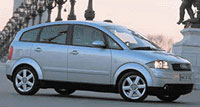
This is an article that was in the NY Times a few years back... I showed it to people when it first came out, but everyone just shrugged their shoulders...looks like they still are. BTW, anyone from Europe own an Audi A2? It looks alot like the Toyota Prius.. doesn't it (window panels) ?

Image


>May 26, 2001
> It Gets 78 Miles a Gallon, but U.S. Snubs Diesel
>
>
> By EDMUND L. ANDREWS with KEITH BRADSHER
>
>
>
> RANKFURT, May 26 - To judge by the mileage it can get, the Audi A2
> sounds like just the kind of exotic hybrid-fuel car that President
> Bush would want to promote with his new energy plan.
>
> The sporty new four-door compact has a top speed of 100 miles an
> hour. It can travel 78 miles on a single gallon of fuel and emits
> fewer "greenhouse" gases than almost any other vehicle on the
> market. Yet the A2 has at its core a technology that generates
> scorn in the United States: the diesel engine.
>
> The A2 is part of a powerful movement in Western Europe, where
> gasoline prices are often three times what they are in the United
> States. Diesel engines burn as much as 30 percent less fuel than
> gasoline engines of comparable size, and they emit far less carbon
> dioxide and other greenhouse gases, which have been implicated in
> global warming. After being disparaged for years because they were
> noisy, smelly, smoke-belching and sluggish, a new generation of
> much cleaner, more nimble diesel-powered cars is suddenly the
> height of fashion in Europe.
>
> Diesel engines powered 32.3 percent, or nearly one-third, of all
> new cars sold in Europe last year, compared with 21.7 percent in
> 1997. Analysts predict the share will rise to at least 40 percent
> by 2005.
>
> The contrast with the United States could not be more stark. Fewer
> than 1 percent of new American cars have diesel engines. And the
> gap is likely to widen, because American antipollution regulations
> severely restrict the sale of diesel engines, and American
> environmental groups are adamantly opposed to relaxing them.
> European environmentalists, while pressing for tougher standards,
> are far more accepting of the new diesel technology.
>
> A report commissioned by Congress and being prepared by a panel of
> the National Academy of Sciences bluntly suggests that the United
> States may be missing a big chance.
>
> According to a person familiar with the draft report, which is due
> in July and is being prepared with considerable secrecy, the panel
> will suggest that "the surest, fastest way to improve the fuel
> efficiency of the American fleet would be to allow diesels to be a
> greater part of the landscape." President Bush has said that he is
> waiting for the report before deciding what, if any, changes to
> make in American fuel-efficiency standards for automobiles.
>
> But the panel is not expected to call for a change in the
> environmental rules. The person close to the panel said a shift
> toward diesel would require "gigantic" investment and "would
> probably be a foreign- dominated technology."
>
> Harry Pearce, a vice chairman of General Motors until Friday, when
> he becomes chairman of its Hughes Electronics unit, said the
> company had no intention of investing in more diesel engines for
> the American market unless the air pollution rules change. "We're
> denying ourselves the largest incremental step we could take" to
> reduce American emissions of global-warming gases, he said.
>
> In Germany, home of Mercedes and Porsche and unlimited speeds on
> the autobahn, the average new car has improved its fuel efficiency
> steadily since 1990 and now gets about 32 miles a gallon. The
> average diesel car gets about 40 miles a gallon. By contrast, the
> average efficiency of new vehicles in the United States has
> deteriorated steadily over the period as ever more sport utility
> vehicles have been sold, and was just 24.5 miles a gallon last
> year.
>
> By all accounts, diesel technology has made a series of major
> advances in the last 10 years. The days are long gone when diesel
> engines spewed black smoke. The newest engines are almost as quiet
> and smooth as their gasoline rivals, and the telltale metallic
> knocking sounds have almost disappeared in some cars.
>
> Performance has also improved. The newest generation of
> pump-injected and "common rail" diesels offer better torque and
> acceleration than comparable-size gasoline- powered cars.
>
> "The performance is fantastic," said Paul Schröder, a German
> physical therapist who is trading his old Audi gasoline car for a
> diesel- powered A2. "My main goal was to save on fuel expenses. But
> I love to drive, and I wanted a car that would be fun. This car has
> great acceleration, and it is very agile. It really is a lot of
> fun."
>
> Mr. Schröder calculates that he will cut his monthly fuel bill by
> about half, partly because diesel fuel is cheaper and partly
> because of the new car's extraordinary mileage.
>
> Engines emit carbon dioxide and other gases implicated in global
> warming in direct proportion to the amount of diesel or gasoline
> they burn, so vehicles with more efficient diesel engines emit less
> of these gases. And today's diesel engines produce far fewer tiny
> soot particles than just seven years ago.
>
> As a result, European environmentalists and government officials
> have been much more comfortable with diesels than their American
> counterparts. "A liter of diesel takes one farther and produces
> fewer greenhouse gases," said Albrecht Schmidt, a top expert on
> energy issues for Germany's Green Party. "The big problem with
> diesel is the small particulates, but we think that problem can be
> solved with new particulate filters."
>
> American environmentalists remain highly critical. "Diesel is the
> quick and dirty way to increase fuel economy," said Daniel Becker,
> the director of energy and global warming policy at the Sierra
> Club. "As long as we have other technologies that are clean, I
> don't see the point in producing carcinogenic soot."
>
> Differences in attitudes among environmentalists are reflected in
> the stringency of air pollution rules, with European regulators
> giving fairly lenient treatment to diesels while American
> regulators have virtually banned them.
>
> Stringent air pollution rules for diesel engines were issued with
> virtually no warning by the California Air Resources Board in late
> 1998, and will take effect in the 2004 model year. The decision was
> made by the board itself, a group of political appointees, many of
> whom were about to leave office because their patron, Gov. Pete
> Wilson, a Republican, was retiring. The board's technical staff had
> recommended more lenient standards, but at its final meeting, with
> no staff analysis, the board adopted stricter rules with little
> discussion.
>
> The rules were chosen without consideration for the ramifications
> for global warming; California regulators say that is an
> international issue outside their purview.
>
> The Environmental Protection Agency traditionally copies
> California's air pollution rules and did so for the diesel rule in
> late 1999. The agency's decision, which also takes effect in the
> 2004 model year, came despite heavy federal subsidies by the Energy
> Department and the Transportation Department for the production of
> prototype vehicles with hybrid engines that could run on either
> diesel fuel or electricity.
>
> General Motors, Ford and DaimlerChyrsler each completed diesel-
> electric hybrid cars in early 2000 that could get 80 miles to the
> gallon, but have largely abandoned these projects because of the
> new air pollution rules. They are now struggling to catch up with
> Toyota and Honda in the production of hybrid vehicles that use
> electric power to improve the overall fuel efficiency of vehicles
> with gasoline engines.
>
> At the same time, compared with Europe, the United States has much
> dirtier diesel fuel - used by heavy trucks and in a slightly
> different form, as home heating oil - with far higher levels of
> sulphur. The American oil industry, much more influential than
> Europe's oil industry because the United States produces a lot of
> oil, has lobbied successfully to prevent rules requiring cleaner
> fuel to take effect until June 2006.
>
> In France, more than half of all new cars sold are powered by
> diesel engines. "Diesels are trendy," said Thierry Dombreval,
> senior vice president for marketing at Renault. "The customers for
> diesels are younger and more affluent, and those are the people who
> are trendsetters."
>
> BMW and Mercedes are selling diesels in nearly half of their most
> expensive cars. The waiting period for the diesel version of the
> Mercedes sport utility vehicle is 12 months, which is three months
> more than for the gasoline version.
>
> Diesel currently sells at an average of $1.45 a gallon in the
> United States, compared with $1.70 for gasoline, but diesel prices
> sometimes rise above gasoline prices in winter when refineries
> produce heating oil instead of diesel. In most European countries,
> diesel is at least 20 percent cheaper than gasoline because of tax
> treatment.
>
> A leading reason for Europe's boom in diesel-powered cars is their
> tax treatment. Most European countries impose much higher "ecology"
> taxes on gasoline than diesel fuel, mainly because governments want
> to avoid damaging commercial truckers.
>
> In the United States, the image of diesel cars has never recovered
> from the damage done in the early 1980's when automakers,
> responding to sharp rises in oil prices, raced to introduce such
> models on a large scale without working out the technical glitches
> first. "We put some vehicles out there in the marketplace that,
> independent of the emissions and fuel economy, just didn't work
> very well," Mr. Pearce of G.M. said.
>
> In Europe, both Ford and G.M., which have been producing cars
> there for decades, lost significant market share because they
> failed to recognize the coming popularity of diesels years ago.
> Today, both companies are racing to catch up.
>
> "I believe it is just a matter of time before the United States
> comes around to diesel," said David W. Thursfield, chief executive
> of Ford of Europe. "The technology has moved ahead so much. Fifty
> miles to the gallon is normal, and you don't even know you are
> driving a diesel."
>
>
>
http://www.nytimes.com/2001/05/27/busin ... 1&ei=1&en=
0908976c6854e587
User avatar
gonin02
Wood
Wood
 
Posts: 32
Joined: Sun 24 Oct 2004, 03:00:00

Unread postby frankthetank » Sat 30 Oct 2004, 00:51:10

It would almost seem that the powers that be don't want diesel to catch on in the US...???
User avatar
frankthetank
Light Sweet Crude
Light Sweet Crude
 
Posts: 6202
Joined: Thu 16 Sep 2004, 03:00:00
Location: Southwest WI

Unread postby gg3 » Sun 31 Oct 2004, 01:13:38

Governor Wilson was known as "Sneaky Pete" for good reason; he was basically a selfish opportunist without much in the way of principles. He wasn't much of a conservative either; more of a neo-con.

On the other hand, with Governor Schwarzenegger, I think we really have a decent chance to make some progress on this issue. The guy is more of an oldschool conservative, and I think more likely to let new technologies work themselves out in the market. The fact that he has roots in Austria probably counts for something in terms of his contact with European technologies and trends; that is, he should be aware of what Audi, Mercedes, and VW are doing in this area.

Speaking of VW, go do a web search for "VW Lupo." One hundred miles per gallon on diesel, clean-running, and inexpensive enough to be affordable by anyone who wants one. It's a small car, but perfectly adequate for the vast majority of most individual, family, and small-business needs. And, unlike some of the alternative vehicles, it has all the added comforts one would like in a vehicle, i.e. heating, fan-forced ventilation (probably also air conditioning), and a decent radio (to which one can add a CD player).

So, I'm thinking it might be interesting to organize a letter-writing campaign to the Governor's office, urging him to look further into the question of high-efficiency diesels. If anyone has "inside contacts" up there, it would be worthwhile getting an appointment to make a brief presentation, including photos of the Audi, VW, and other examples.
User avatar
gg3
Expert
Expert
 
Posts: 3271
Joined: Mon 24 May 2004, 03:00:00
Location: California, USA

Unread postby gonin02 » Mon 01 Nov 2004, 03:41:22

yeah, the Lupo has been for sale in Europe for a few years now... great mileage and creature comforts to boot... probably cheaper than the Smar t car too..

$this->bbcode_second_pass_quote('gg3', 'G')overnor Wilson was known as "Sneaky Pete" for good reason; he was basically a selfish opportunist without much in the way of principles. He wasn't much of a conservative either; more of a neo-con.

On the other hand, with Governor Schwarzenegger, I think we really have a decent chance to make some progress on this issue. The guy is more of an oldschool conservative, and I think more likely to let new technologies work themselves out in the market. The fact that he has roots in Austria probably counts for something in terms of his contact with European technologies and trends; that is, he should be aware of what Audi, Mercedes, and VW are doing in this area.

Speaking of VW, go do a web search for "VW Lupo." One hundred miles per gallon on diesel, clean-running, and inexpensive enough to be affordable by anyone who wants one. It's a small car, but perfectly adequate for the vast majority of most individual, family, and small-business needs. And, unlike some of the alternative vehicles, it has all the added comforts one would like in a vehicle, i.e. heating, fan-forced ventilation (probably also air conditioning), and a decent radio (to which one can add a CD player).

So, I'm thinking it might be interesting to organize a letter-writing campaign to the Governor's office, urging him to look further into the question of high-efficiency diesels. If anyone has "inside contacts" up there, it would be worthwhile getting an appointment to make a brief presentation, including photos of the Audi, VW, and other examples.
User avatar
gonin02
Wood
Wood
 
Posts: 32
Joined: Sun 24 Oct 2004, 03:00:00

Unread postby bentstrider » Tue 02 Nov 2004, 08:17:21

Bio-diesel markets going to love it.
I remember this late 80's Buick we had.
5.7 liter GM diesel. Sucked total ass.
Thats when my stepdad bought an '89 F 250 with the Detroit 7.3 .
22mpg, but burns home-furnished bio-diesel with no problems.
Hauls ass up the freeway too.
bentstrider
Lignite
Lignite
 
Posts: 375
Joined: Mon 25 Oct 2004, 03:00:00
Location: Southern California Desert

Diesel Hybrid is the ideal use of IC technology!

Unread postby Bytesmiths » Tue 23 Nov 2004, 02:28:05

Diesel hybrid is perhaps the ultimate in internal combustion technology. Not only is a diesel engine more efficient than a spark-ignition engine, the hybrid system conquers one of diesel's shortcomings: a narrow power band.

Gasoline engines love to rev -- at least 4,000 RPM or more -- and they produce more force (torque) and power the faster they turn. Unfortunately, they wear out faster at high RPM, and are less efficient.

Diesels, in contrast, exhibit a "humped" power curve, producing much more torque than gas engines at a lower RPM. Past a certain point (peak torque), they produce only marginally more power as RPM increases. Because of the heavier components needed to withstand the higher compression required for diesels, the RPM is generally quite limited, to 2500-3000 or so.

These factors -- limited RPM and a strongly peaked torque curve -- have kept diesels unpopular. Because they require sturdier transmissions with more gears to handle the higher torque and to keep the engine operating near peak torque, the transmissions are more expensive, and require more attention from the driver.

<b>But wait -- a hybrid doesn't even have a transmission!</b> The diesel can be operated at exactly the proper RPM for peak energy efficiency, which is generally the same (or nearly so) as the peak torque point. Pulse-width-modulated electric motors take the place of the transmission.

So a diesel hybrid can operate at its peak efficiency at high power output, whereas gas hybrids operate at peak efficiency at a fraction of peak power output. Plus, a diesel does this at a much lower RPM than a gas engine -- perhaps 1600 vs 3000 RPM. Finally, a decent diesel will have many times the useful lifetime of the gas engine, thus improving the "entrained energy efficiency," the ratio of energy used to produce the engine to the energy produced over the engine's lifetime.

To top this all off, diesels are multi-fuel champs compared to spark engines. Biodiesel has a better energy production ratio than ethanol, and diesels are readily adapted to burn pure vegetable oil, which can be produced without any fossil-fuel input whatsoever.

<b>All together, it's pretty silly that engineers are looking at anything other than diesel engines for use in hybrids.</b> I really don't understand it, except perhaps inertia -- the companies producing hybrids aren't known for making diesels.
:::: Jan Steinman, Communication Steward, EcoReality, a forming sustainable community. Be the change! ::::
User avatar
Bytesmiths
Tar Sands
Tar Sands
 
Posts: 730
Joined: Wed 27 Oct 2004, 03:00:00
Location: Salt Spring Island, Cascadia

Re: Diesel Hybrid is the ideal use of IC technology!

Unread postby clv101 » Tue 23 Nov 2004, 04:47:31

$this->bbcode_second_pass_quote('Bytesmiths', '
')<b>All together, it's pretty silly that engineers are looking at anything other than diesel engines for use in hybrids.</b> I really don't understand it, except perhaps inertia -- the companies producing hybrids aren't known for making diesels.

I'm a big fan of diesels, I drive a Skoda Fabia VRS with a 130bhp diesel engine from VW. Over the last 8000 miles I've owned it it's returned over 50mpg (European gallon) but it's also capable of 0-60 in 8.2 seconds - best of both worlds.

Diesel's aren't idea for hybrids though, they 'waste' a considerable amount of fuel starting and when cold are not very efficient at all. If I drive 20 miles on the motorway from cold I can get 60mpg average, if I drive 3 miles from cold I get more like 30mpg. The hybrid's stop/start of the engine is far more suitable for a petrol engine than a diesel.
User avatar
clv101
Heavy Crude
Heavy Crude
 
Posts: 1050
Joined: Wed 02 Jun 2004, 03:00:00
Location: Bristol, UK

Re: Diesel Hybrid is the ideal use of IC technology!

Unread postby Bytesmiths » Tue 23 Nov 2004, 12:42:21

$this->bbcode_second_pass_quote('clv101', 'D')iesel's aren't idea for hybrids though, they 'waste' a considerable amount of fuel starting and when cold are not very efficient at all...
I think this is because they have been engineered for continuous use. Small changes would make them more amenable to hybrid use.

Gas engines exhibit the same behavior -- when cold, they are not as efficient. The difference <b>also</b> works in favor of diesel -- their greater thermal mass means they will stay warmer between starts.

Finally, diesels do not need to be as warm when "warm." A typical gas engine likes to be 180-200 degrees F, but many diesels are "warmed up" when they hit 140.

I don't doubt that your car gets worse economy when cold, but I don't think that particular example carries over to hybrid use very well.
:::: Jan Steinman, Communication Steward, EcoReality, a forming sustainable community. Be the change! ::::
User avatar
Bytesmiths
Tar Sands
Tar Sands
 
Posts: 730
Joined: Wed 27 Oct 2004, 03:00:00
Location: Salt Spring Island, Cascadia

Unread postby xcel » Tue 23 Nov 2004, 23:05:32

Hi All:

___There isn’t really a whole lot of facts being passed on in this thread in regards to Diesels or Hybrids but there are other places to learn about them … Insightcentral.net, Priusonline.com, Greenhybrid.com, and TDIClub.com are a few to begin with.
___The main item is Hybrid’s and late model Diesels aren’t cheap enough in comparison to regular ICE based automobiles in the States even with $2.05 Diesel/$1.83 Regular unleaded here in the Chicagoland area as of the other day. That and the US already uses a very large % of its refined Diesel from a Bbl of oil for truck transport vs. Europe’s own personal transport. Europe actually ships their excess refined gasoline to the United States although the supplies are much tighter this year then in the recent past from my understanding …

___Good Luck

___Wayne R. Gerdes
___Hunt Club Farms Landscaping Ltd.
___Waynegerdes@earthlink.net
xcel
Wood
Wood
 
Posts: 21
Joined: Thu 18 Nov 2004, 04:00:00

Unread postby Bytesmiths » Fri 10 Dec 2004, 15:08:46

$this->bbcode_second_pass_quote('xcel', 'Y')ou have added this person to your <b>Ignore List</b>. Click <u>HERE</u> to view this post
If xcel has anything positive to say, perhaps someone can PM me. I grew tired of his personal attacks long ago, and so have shunned him. As a gas-hybrid enthusiast, I can only assume he's posting in a diesel thread as a troll.
:::: Jan Steinman, Communication Steward, EcoReality, a forming sustainable community. Be the change! ::::
User avatar
Bytesmiths
Tar Sands
Tar Sands
 
Posts: 730
Joined: Wed 27 Oct 2004, 03:00:00
Location: Salt Spring Island, Cascadia

Problems with diesel hybrids

Unread postby Optimist » Mon 13 Dec 2004, 20:11:21

I don't mean to suggest that diesel hybrids are not going to happen, but some real concerns remain and need to be addressed, as pointed out in this article: http://msnbc.msn.com/id/6151220/ For instance $this->bbcode_second_pass_quote('', 'T')he main problem is that diesel hybrid cars cost too much to produce -- thousands of dollars more than gas-electric hybrids.

In the end, an unaffordable solution is no solution.
User avatar
Optimist
Lignite
Lignite
 
Posts: 219
Joined: Tue 28 Sep 2004, 03:00:00
Top

Re: Diesel Hybrid is the ideal use of IC technology!

Unread postby small_steps » Mon 13 Dec 2004, 22:09:54

$this->bbcode_second_pass_quote('Bytesmiths', '&')lt;b>But wait -- a hybrid doesn't even have a transmission!</b> The diesel can be operated at exactly the proper RPM for peak energy efficiency, which is generally the same (or nearly so) as the peak torque point. Pulse-width-modulated electric motors take the place of the transmission.


I don't think you want an all electric transmission, on efficiency nor on high speed performance. Think about the three (or four) power conversions and the efficincies of them. Mechanical to electrical (generation), electrical to electrical (rectification) electrical to electrical (inversion) and electrical to mechanical (motoring). The electrical to electricals may be reduced due to use of a matrix converter, but that may be a bit if the future yet. IPMs that get a reasonable CPSR are more than a little pricey, and other machines that get high CPSR are even farther in their infancy. And since the electrical and magnetic loading of these machines are quite high (space and weight limitations), the efficiencies will suffer from what you might expect.
small_steps
Lignite
Lignite
 
Posts: 258
Joined: Sat 03 Jul 2004, 03:00:00
Top

Re: Diesel Hybrid is the ideal use of IC technology!

Unread postby Bytesmiths » Mon 13 Dec 2004, 22:37:24

$this->bbcode_second_pass_quote('small_steps', '')$this->bbcode_second_pass_quote('Bytesmiths', '&')lt;b>But wait -- a hybrid doesn't even have a transmission!</b>... Pulse-width-modulated electric motors take the place of the transmission.
I don't think you want an all electric transmission...
Perhaps I missed something. You don't need a transmission with electric motors, which are capable of achieving the same amount of torque at any power output. Who said anything about an "all electric transmission?" The speed control uses PWM and has no need of any transmission.

I agree that excessively converting energy is wasteful, but so is not converting.

Consider braking. Currently, the energy of deceleration is lost as heat. A hybrid can capture and store much of that energy. The way I see some people drive, about half their time is spent decelerating! Why not capture that?

The other case where hybrids win is idling and operation outside optimum conditions. Many drivers spend a lot of time idling, or stop-n-go in traffic, which (besides wasting the energy of deceleration) operates an engine in an inefficient manner.

That said, I'm no great fan of hybrids, but they do have their uses. If you primarily get in, smoothly accelerate to highway speed, and stay there until your destination, then a good diesel may perform better than a hybrid, since it does not have the energy transforms of a hybrid.

But if you drive in traffic and stop-n-go, or have sloppy driving habits like most drivers, then a hybrid can be used to advantage.

Regardless of where you stand on hybrids, my argument is primarily that diesels perform better in hybrids than spark engines.
:::: Jan Steinman, Communication Steward, EcoReality, a forming sustainable community. Be the change! ::::
User avatar
Bytesmiths
Tar Sands
Tar Sands
 
Posts: 730
Joined: Wed 27 Oct 2004, 03:00:00
Location: Salt Spring Island, Cascadia
Top

Unread postby Frank » Wed 15 Dec 2004, 11:09:42

I've emailed VW a couple of times asking if/when they're going to market a diesel hybrid in the US and they claim to have no plans to do so. Personally I like the concept of hybrids because (a) you can use a smaller hydrocarbon motor for cruising because the electric assist helps during acceleration and (b) it shuts off (some designs) in city driving. I suspect that manufacturers will move to even smaller gas engines as people get more used to the idea of slower acceleration, although I think a diesel hybrid is a no-brainer. Typical cars only need 15-20 hp to cruise at highway speeds so I'd also expect to see designs that lock-out cylinders during cruising conditions. BMW will be marketing such an engine this year.
User avatar
Frank
Tar Sands
Tar Sands
 
Posts: 556
Joined: Wed 15 Dec 2004, 04:00:00
Location: Maine/Nova Scotia

Re: Diesel Hybrid is the ideal use of IC technology!

Unread postby small_steps » Wed 15 Dec 2004, 14:48:05

$this->bbcode_second_pass_quote('Bytesmiths', '
')Perhaps I missed something. You don't need a transmission with electric motors, which are capable of achieving the same amount of torque at any power output. Who said anything about an "all electric transmission?" The speed control uses PWM and has no need of any transmission.


As you proposed no transmission, how do you propose to transfer the mechanical output of the engine to the electrical input of the electrical machine which converts this to mechanical power?

Electric machines are not capable of achieving the "same amount of torque at any power output" Mechanical power is the product of torque and speed:

Take a look at:
http://www.google.com/search?q=constant ... 8&oe=utf-8

Agree with everything after that.
small_steps
Lignite
Lignite
 
Posts: 258
Joined: Sat 03 Jul 2004, 03:00:00
Top

Re: Diesel Hybrid is the ideal use of IC technology!

Unread postby Bytesmiths » Wed 15 Dec 2004, 15:53:20

$this->bbcode_second_pass_quote('small_steps', '')$this->bbcode_second_pass_quote('Bytesmiths', 'Y')ou don't need a transmission with electric motors...
As you proposed no transmission, how do you propose to transfer the mechanical output of the engine to the electrical input of the electrical machine which converts this to mechanical power?
Uhm, with a generator? I don't understand what you're asking.

Perhaps we're simply misunderstanding each other. I submit that an adjustable, mechanical transmission of the sort commonly associated with motor vehicles is not needed with an electric vehicle.

If you loosen the definition of "transmission" to include any mechanical-electrical-mechanical transformation, then of course, you are right. But that is not what I was trying (poorly, it seems) to explain.

$this->bbcode_second_pass_quote('small_steps', 'E')lectric machines are not capable of achieving the "same amount of torque at any power output" Mechanical power is the product of torque and speed...
That's a non-sequitur.

An internal combustion engine produces very little torque at low RPM, which is why a mechanical transmission is needed to increase torque.

An electric motor produces nearly the same torque at zero speed (stall) as it does at full speed, so you just apply power to go. To control speed, you rapidly turn the power off and on (pulse-width modulation) so that the average power is just enough to go the speed you want. The electric motor still generates its full peak torque, albeit at lower speed, and therefore, lower power.

For example, Toyota claims its Prius electric engine develops 295 ft-lb of torque "from 0 to 400 rpm."

Together with regenerative braking, this is the key to hybrid efficiency. The engine is run at a constant speed at its peak efficiency point, and high efficiency electronic switching provides the speed control normally done with the combination of throttle and mechanical transmission.

Of course, you can put a mechanical transmission in a hybrid if you want to. Just because Honda did, doesn't mean that Toyota has to.

I've designed numerous motor speed controls, and I actually do know how to use Google. A bunch of gobbledy-google isn't going to change the laws of physics! :-)

I think How Stuff Works is more useful than a bunch of random Google hits. Be sure to read through to the end, because the first part is about the Honda, which <i>does</i> have a traditional transmission.

(The Prius has a "power splitter," which is used to switch between electrical or mechanical power -- or some combination of the two. One could certainly call it a sort of a transmission, but that is not what I was referring to when I said electric vehicles don't need transmissions -- and when the Prius is running purely on electricity, it does not utilize a speed- or torque-transforming transmission. My apologies if the context was unclear.)
:::: Jan Steinman, Communication Steward, EcoReality, a forming sustainable community. Be the change! ::::
User avatar
Bytesmiths
Tar Sands
Tar Sands
 
Posts: 730
Joined: Wed 27 Oct 2004, 03:00:00
Location: Salt Spring Island, Cascadia
Top

Hybrids don't NEED transmissions...

Unread postby Bytesmiths » Wed 15 Dec 2004, 16:09:09

Okay, in re-reading the thread, I can see how I misrepresented myself. :-)

When I wrote <i>"a hybrid doesn't even have a transmission",</i> I should have written <i>"a hybrid doesn't even need a traditional transmission for low-speed torque".</i>

Obviously, you can put a traditional transmission in a hybrid, and certain devices in hybrids that are unlike traditional transmissions could be called transmissions. I apologize for being so imprecise!
:::: Jan Steinman, Communication Steward, EcoReality, a forming sustainable community. Be the change! ::::
User avatar
Bytesmiths
Tar Sands
Tar Sands
 
Posts: 730
Joined: Wed 27 Oct 2004, 03:00:00
Location: Salt Spring Island, Cascadia

Re: Diesel Hybrid is the ideal use of IC technology!

Unread postby small_steps » Wed 15 Dec 2004, 17:00:25

$this->bbcode_second_pass_quote('Bytesmiths', 'U')hm, with a generator? I don't understand what you're asking.

Perhaps we're simply misunderstanding each other. I submit that an adjustable, mechanical transmission of the sort commonly associated with motor vehicles is not needed with an electric vehicle.

If you loosen the definition of "transmission" to include any mechanical-electrical-mechanical transformation, then of course, you are right. But that is not what I was trying (poorly, it seems) to explain.


$this->bbcode_second_pass_quote('small_steps', 'E')lectric machines are not capable of achieving the "same amount of torque at any power output" Mechanical power is the product of torque and speed...
That's a non-sequitur.

An internal combustion engine produces very little torque at low RPM, which is why a mechanical transmission is needed to increase torque.

An electric motor produces nearly the same torque at zero speed (stall) as it does at full speed, so you just apply power to go. To control speed, you rapidly turn the power off and on (pulse-width modulation) so that the average power is just enough to go the speed you want. The electric motor still generates its full peak torque, albeit at lower speed, and therefore, lower power.

For example, Toyota claims its Prius electric engine develops 295 ft-lb of torque "from 0 to 400 rpm."

Together with regenerative braking, this is the key to hybrid efficiency. The engine is run at a constant speed at its peak efficiency point, and high efficiency electronic switching provides the speed control normally done with the combination of throttle and mechanical transmission.

Of course, you can put a mechanical transmission in a hybrid if you want to. Just because Honda did, doesn't mean that Toyota has to.

I've designed numerous motor speed controls, and I actually do know how to use Google. A bunch of gobbledy-google isn't going to change the laws of physics! :-)

I think How Stuff Works is more useful than a bunch of random Google hits. Be sure to read through to the end, because the first part is about the Honda, which <i>does</i> have a traditional transmission.

(The Prius has a "power splitter," which is used to switch between electrical or mechanical power -- or some combination of the two. One could certainly call it a sort of a transmission, but that is not what I was referring to when I said electric vehicles don't need transmissions -- and when the Prius is running purely on electricity, it does not utilize a speed- or torque-transforming transmission. My apologies if the context was unclear.)


I am curious, for what types of machines have you designed speed controls, and what happens when you go above the base speed of the machine, how do you achieve field weakening? (above say 400 RPM in the case of the prius IPM)
My google search was intended to allow you (which I had assumed only had a casual knowledge of the subject) to further your knowledge, I missed on that one!
But I don't think that "how stuff works" site is that great- or up to date, I have a number of books within arms reach, including "Vector Control and Dynamics of AC Drives" by Novotny and Lipo, among others on related subject matter.
small_steps
Lignite
Lignite
 
Posts: 258
Joined: Sat 03 Jul 2004, 03:00:00
Top

Unread postby starm » Tue 11 Jan 2005, 14:28:36

small_steps I don't understand what you are talking about. Bytesmiths is right electric motors have high torque at low speed. That is why you don't need the standard multi-gear transmission. The only thing you might need is some kind of clutch between the diesel engine and the generator and maybe one gear to get the right speed ration between them. Everything else can be controled by electronics.

You guys might find it interesting that locomotives (and other large machinery) have been using hybrid dieseld-electric power plants for as long as I know. There's one motor per wheel on a locomotive (no transmission).
User avatar
starm
Wood
Wood
 
Posts: 10
Joined: Thu 02 Dec 2004, 04:00:00

Unread postby Bytesmiths » Tue 11 Jan 2005, 14:48:30

Thanks for your support, starm. I try not to respond in threads with know-it-all pedants like small_steps. "Having the last word is the final refuge for those who never had a good point in the first place."
:::: Jan Steinman, Communication Steward, EcoReality, a forming sustainable community. Be the change! ::::
User avatar
Bytesmiths
Tar Sands
Tar Sands
 
Posts: 730
Joined: Wed 27 Oct 2004, 03:00:00
Location: Salt Spring Island, Cascadia

Next

Return to Book/Media Reviews

Who is online

Users browsing this forum: No registered users and 2 guests

cron