Exciting topic!
Seriously.
An article about this guy Charles Taylor from Awake Consulting caused me to google and I found this info
Fueling New Supply Chain Practices
$this->bbcode_second_pass_quote('', 'M')any of the best practices that underpin supply chain design will become obsolete as rising energy costs force companies to rethink the way they make and deliver products. That was the main message to emerge from the Major Session panel on energy efficiency at the Council of Supply Chain Management Professionals’ (CSCMP) annual conference last October. The panel was organized by MIT’s Center for Transportation & Logistics (CTL), and a one-day conference this April at MIT organized jointly by CSCMP and CTL will take a more in-depth look at the issues.



PeakOil is You
Supply Chain Management
First unread post • 4 posts
• Page 1 of 1
Supply Chain Management
 by dinopello » Wed 11 Apr 2007, 10:56:30
People are thinking about this. This is good.
$this->bbcode_second_pass_quote('', 'A')bout three years ago, the company’s plants changed from manufacturing by product type to making all the products required in local geographies. “We send orders to the plant based on the zip code of the customer,” he said. The company built a $100 million facility in the United States as part of this effort. The strategy reduced outbound logistics costs by 20%, cut the delivery cycle time by a day, and yielded energy efficiencies, because the product is made closer to the customer.
Making stuff locally, also good.
The move by Buffett into rail I think is also an indication that costs of fufilling the supply chain (due to fuel/transportation costs) are being looked at and in some cases acted upon. Given that prices really haven;t risen all that much, I find this an indication that at least some are responding to predicted circumstances.
-

dinopello - Light Sweet Crude

- Posts: 6088
- Joined: Fri 13 May 2005, 03:00:00
- Location: The Urban Village
Re: Supply Chain Management
by MrBill » Thu 12 Apr 2007, 03:27:13
Good articles thanks. Supply chain management will definitely have to change in response to higher transport fuel prices and energy scarcity. More by rail and water. Less long haul trucking. Longer supply chains meaning more inventory tied-up and less just in time delivery (JIT). That will be more expensive for companies and eventually those costs will have to be pushed onto consumers.
Also, the Wal-Marts of the world may find that their suppliers are not willing to carry more inventory, longer on their behalf. Poorly capitalized suppliers will be squeezed by funding costs as well. It will be a changing landscape.
Ironically, I looked at buying CPR before I knew Buffet was also buying it. But at the time I was looking for a US recession in 2007 and thought rail would get clobbered. That has not happened so far and CPR is very expensive now. CNR does not have the same attractive fundamentals.
However, I think it was Conrail who said they can move one ton of cargo 400 miles using one gallon of diesel? That is pretty impressive. We may find we can no longer afford JIT or long haul trucking anymore.
Read an article lately that said places like Chicago desperately need to upgrade and expand their intermodal transport and rail links to keep up with surging demand. Some of the older railway cities may see an economic re-birth instead of being fly-over cities as high fuel prices and energy scarcity change transport dynamics. Water and rail will rule again.
Also, the Wal-Marts of the world may find that their suppliers are not willing to carry more inventory, longer on their behalf. Poorly capitalized suppliers will be squeezed by funding costs as well. It will be a changing landscape.
Ironically, I looked at buying CPR before I knew Buffet was also buying it. But at the time I was looking for a US recession in 2007 and thought rail would get clobbered. That has not happened so far and CPR is very expensive now. CNR does not have the same attractive fundamentals.
However, I think it was Conrail who said they can move one ton of cargo 400 miles using one gallon of diesel? That is pretty impressive. We may find we can no longer afford JIT or long haul trucking anymore.
Read an article lately that said places like Chicago desperately need to upgrade and expand their intermodal transport and rail links to keep up with surging demand. Some of the older railway cities may see an economic re-birth instead of being fly-over cities as high fuel prices and energy scarcity change transport dynamics. Water and rail will rule again.
The organized state is a wonderful invention whereby everyone can live at someone else's expense.
-

MrBill - Expert

- Posts: 5630
- Joined: Thu 15 Sep 2005, 03:00:00
- Location: Eurasia
Re: Supply Chain Management
by cube » Thu 19 Apr 2007, 18:37:34
too bad this thread isn't getting more hits. I guess the topic of "Supply Chain Management" isn't sexy enough for some people.
Anyhow in today's world of manufacturing the supply chain is very "long". What do I mean? according to this book:
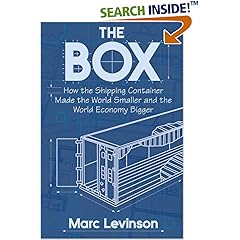
A Barbie doll may be made in China as what we would all guess but the supply chain is much more complicated.
1) The nylon hair comes from Japan
2) The pigment is made in America
3) The plastic components come from Taiwan
and finally all the pieces are shipped to China for final assembly. That's how the world economy works today. We no longer have factories that literally produce a product from scratch to finish unlike the old days when Henry Ford was in business. Instead today's factories are configured to produce only a "component" of a product and everything gets shipped somewhere else for final assembly. Imagine how many times you've seen a truck on the freeway hauling a container. Chances are that container holds "components" and not actual finished products. weird huh?
If you're an environmentalist who believes strongly in "localization" this is probably what you think ---> to quote a line from the movie 300:
"This is madness!!!"
How expensive does crude oil have to get before we give up on this type of system? or maybe some other variable might change things like currency devaluation? If/when the US economy goes to hell and the average American "only" makes 5 times as much as a Chinese instead of 10 times (or whatever it is right now)....rest assured we wouldn't be manufacturing Barbie dolls in this fashion....or at least they wouldn't be "made in China"
Anyhow in today's world of manufacturing the supply chain is very "long". What do I mean? according to this book:
A Barbie doll may be made in China as what we would all guess but the supply chain is much more complicated.
1) The nylon hair comes from Japan
2) The pigment is made in America
3) The plastic components come from Taiwan
and finally all the pieces are shipped to China for final assembly. That's how the world economy works today. We no longer have factories that literally produce a product from scratch to finish unlike the old days when Henry Ford was in business. Instead today's factories are configured to produce only a "component" of a product and everything gets shipped somewhere else for final assembly. Imagine how many times you've seen a truck on the freeway hauling a container. Chances are that container holds "components" and not actual finished products. weird huh?
If you're an environmentalist who believes strongly in "localization" this is probably what you think ---> to quote a line from the movie 300:
"This is madness!!!"
How expensive does crude oil have to get before we give up on this type of system? or maybe some other variable might change things like currency devaluation? If/when the US economy goes to hell and the average American "only" makes 5 times as much as a Chinese instead of 10 times (or whatever it is right now)....rest assured we wouldn't be manufacturing Barbie dolls in this fashion....or at least they wouldn't be "made in China"
- cube
- Intermediate Crude

- Posts: 3909
- Joined: Sat 12 Mar 2005, 04:00:00
Re: Supply Chain Management
by dinopello » Thu 19 Apr 2007, 19:35:05
$this->bbcode_second_pass_quote('cube', 'W')e no longer have factories that literally produce a product from scratch to finish unlike the old days when Henry Ford was in business. Instead today's factories are configured to produce only a "component" of a product and everything gets shipped somewhere else for final assembly. Imagine how many times you've seen a truck on the freeway hauling a container. Chances are that container holds "components" and not actual finished products. weird huh?
Not so weird, same as it ever was.
I used to work for a company called TRW that makes "components" for automobiles. Formally Thomson Products, and before that The Cleveland Cap Screw Company founded in 1902 to make cap screws and starting in 1908 valve stems for Mr Ford's factory. The factory to make the components was downtown in 1908 until 1941 along with all the other component makers for Mr Ford and all the other auto manufacturers.
Maybe the level of integration of components has gone up. Now TRW delivers complete air bag systems and steering linkages to be carted over and integrated at the auto assembly plant, but thats probably because they have become so complex that its easier labor management and other reasons. TRW in turn, now buys their components from suppliers - but all the supply lines are longer - I presume because labor is a big component of cost and its done where that is cheap.
The idea of "local economies" is that people that make things, and their support services are geographically proximate as they are to their markets. An 18th century publisher didn't make their own ink, glue, or paper but bought these components and added value by printing the words and binding - although the printing and binding may have been done by different companies as well.
Local economies means smaller granularities, more component and service providers supporting more manufacturers and more distributers and resellers.
It happens a lot around here now with local, independent restaurants that buy their bread from local bakeries, produce from local farmers etc and hire local designers and architects to redo their interiors - supporting a complex local economy in this one segment.
-
dinopello - Light Sweet Crude
- Posts: 6088
- Joined: Fri 13 May 2005, 03:00:00
- Location: The Urban Village
4 posts
• Page 1 of 1
Who is online
Users browsing this forum: No registered users and 3 guests