Donate Bitcoin

Donate Paypal


PeakOil is You

PeakOil is You

THE Private transportation after PO Thread (merged)

What's on your mind?
General interest discussions, not necessarily related to depletion.

How to eliminate the private automobile

Poll ended at Wed 23 Nov 2005, 12:44:14

Better public transit! That will draw people out of their cars.
8
No votes
The humble bicycle -- the most efficient way to get around.
5
No votes
A new technology that hasn't been invented yet.
1
No votes
Market forces will take care of it.
4
No votes
Better urban planning and tax penalties/incentives.
12
No votes
We should not eliminate the private automobile. Cars are good.
7
No votes
 
Total votes : 37

Re: What happens to private transportation?

Postby Wildwell » Fri 02 Dec 2005, 14:24:38

$this->bbcode_second_pass_quote('MonteQuest', '
')In this world of today, nothing is manufactured or transported oil free.



Funny that, I went 20 miles today in an oil free mode of transport and very nice it was too, gliding through a storm at 90mph.
User avatar
Wildwell
Heavy Crude
Heavy Crude
 
Posts: 1962
Joined: Thu 03 Feb 2005, 04:00:00
Location: UK

Re: What happens to private transportation?

Postby GreyZone » Fri 02 Dec 2005, 14:46:31

$this->bbcode_second_pass_quote('Wildwell', '')$this->bbcode_second_pass_quote('MonteQuest', '
')In this world of today, nothing is manufactured or transported oil free.


Funny that, I went 20 miles today in an oil free mode of transport and very nice it was too, gliding through a storm at 90mph.


And what mode of transportation was that? If it was a glider, how did you get aloft? How was it made? How were the components to finish assembly transported?
GreyZone
Peat
Peat
 
Posts: 113
Joined: Sun 25 Sep 2005, 03:00:00

Re: What happens to private transportation?

Postby Wildwell » Fri 02 Dec 2005, 15:26:35

Looked just like that. Of course it's got plastic in it, but plastic doesn't have to be made by oil.
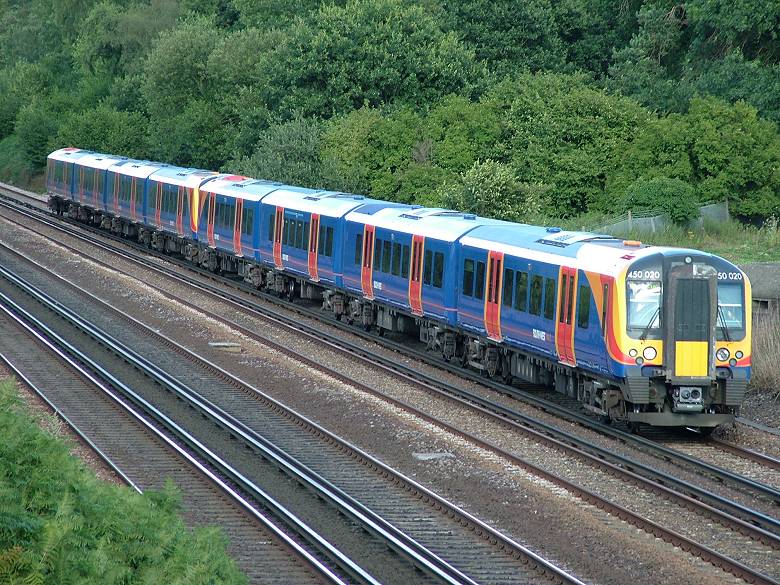

Image


Oil free plastic

http://www.mitra.biz/blog/archives/2005 ... plast.html

http://www.eurekalert.org/pub_releases/ ... 082305.php

Oh and before you start metals can be dug out oil free too

http://www.mining-technology.com/projec ... omas4.html
User avatar
Wildwell
Heavy Crude
Heavy Crude
 
Posts: 1962
Joined: Thu 03 Feb 2005, 04:00:00
Location: UK

Re: What happens to private transportation?

Postby Daryl » Fri 02 Dec 2005, 16:07:13

What part of Hubbert's Peak theory says we are going to have no oil??? Doomers are alway making the grand leap from a shrinking supply of inexpensive oil to "not enough oil for lube jobs". Everytime someone suggests a solution, it always has to be 100% oil free, or it is nonviable. The tar sands arguments and hydrogen economy arguments make sense, but they can't be extended to everything.
User avatar
Daryl
Tar Sands
Tar Sands
 
Posts: 927
Joined: Mon 10 Oct 2005, 03:00:00

Re: What happens to private transportation?

Postby dub_scratch » Fri 02 Dec 2005, 17:37:05

$this->bbcode_second_pass_quote('Daryl', '
')Dub is one of the aggressive anti-sprawl advocates on the boards. I sympathize with the goals, but I'm sceptical our societal structure can be so completely transformed, at least without an Eco-Stalin in power. If depletion plays out the way it looks, electric transport will probably be the only way to prevent a doomer type of collapse.


Oh no. Everybody, Daryl says now that if we aren't powering traffic jams & car crashes on electricity in the future then we are all going into dieoff doom collapse. Run for the hills *or* Run to your local dealership and ask for a new EV. Just Run! Run! (Hey that would make a pretty good ad campaign for these EVs. :-D )

Here you have painted two polar scenarios in one paragraph. One is that there will be no societal or cultural change and the other is dieoff. Do you really expect that societal structure is going to remain unchanged in this energy transformation? Based on what? Is it that we'll build a huge fleet of EVs and the boogie-man of energy shortage will just go away? And do you really think that the public will hardly notice oil depletion when output is about 40 mb/d so long as we have our electric cars? Or do you really think if our culture is forced to give up its cars it would slip into collapse? Isn't there any chance we could see significant change in societal structure without the dieoff?

Actually I believe cultural change will prevent collapse and will allow for our civilization to endure. But cultural conservatism will endanger us. Read Jared Diamond's Collapse and you will learn how the Greenlandic Norse refused to adapt their culture and that is what doomed them into total inhalation. I imagine that we here in the US can squander our remaining resources on trying to preserve traffic jams while neglecting more pressing issues. A new EV car fleet can cost us the resources needed to build alternative energy, for example. These non essential luxuries are diversions.


BTW. Speaking of your hero Stalin, You seam to be fond of socialism quite a bit. You must like it so long as it serves your agenda of perpetual car culture.
http://www.peakoil.com/fortopic15007-0.html
Last edited by dub_scratch on Fri 02 Dec 2005, 22:08:20, edited 2 times in total.
dub_scratch
Tar Sands
Tar Sands
 
Posts: 700
Joined: Thu 16 Dec 2004, 04:00:00
Location: Santa Monica, CA

Re: What happens to private transportation?

Postby DigitalCubano » Fri 02 Dec 2005, 18:13:03

$this->bbcode_second_pass_quote('Daryl', 'N')o wonder industry is pushing for hydrogen. Electric is too simple. They want to keep the ICE and the massive infrastructure that supports it. More profitable.


Lately I have been thinking that another reason for the political support for hydrogen over plug-in EVs may be the ability to impose a fuel tax. It would be difficult to do that in a plug-in EV world with the exception of an across-the-board increase in electricity tax, which may be unpopular.

Another potential tension in favor of a fuel cell design over a battery design is the rapid ability to refuel the former over the latter. Even with a range approaching conventional ICEs, battery-powered EV's are limitied in that they can't be rapidly recharged during a long road trip.

Yeah yeah yeah...these are minor issues in the grand scheme of things. Like I said, they are just some thoughts that have been floating around in my head.
User avatar
DigitalCubano
Permanently Banned
 
Posts: 434
Joined: Fri 19 Aug 2005, 03:00:00
Top

Re: What happens to private transportation?

Postby emersonbiggins » Fri 02 Dec 2005, 18:24:58

$this->bbcode_second_pass_quote('DigitalCubano', '.')..may be the ability to impose a fuel tax.


Simple statement - of immeasurable importance. These roads and interstates don't just build and maintain themselves. Unless we are to shift highway appropriations to some other funding mechanism (EV outlet surcharges, equipment/vehicle purchase fees, etc.), the system will fall apart in no time. Since the fuel tax has been the principal fund with which the interstate/federal highway system was built and maintained, it's hard to imagine funding it from anywhere else, especially out of general appropriations. When TSHTF, highway users will be ill to persuade the walking/biking general populace to underwrite their freeways out of the general budget. But lobbies run the government anyways, so highway users shouldn't have too much to worry about. :x
"It's called the American Dream because you'd have to be asleep to believe it."

George Carlin
User avatar
emersonbiggins
Expert
Expert
 
Posts: 5150
Joined: Sun 10 Jul 2005, 03:00:00
Location: Dallas
Top

Re: What happens to private transportation?

Postby Daryl » Sat 03 Dec 2005, 00:07:21

$this->bbcode_second_pass_quote('DigitalCubano', '')$this->bbcode_second_pass_quote('Daryl', 'N')o wonder industry is pushing for hydrogen. Electric is too simple. They want to keep the ICE and the massive infrastructure that supports it. More profitable.


Lately I have been thinking that another reason for the political support for hydrogen over plug-in EVs may be the ability to impose a fuel tax. It would be difficult to do that in a plug-in EV world with the exception of an across-the-board increase in electricity tax, which may be unpopular.

Another potential tension in favor of a fuel cell design over a battery design is the rapid ability to refuel the former over the latter. Even with a range approaching conventional ICEs, battery-powered EV's are limitied in that they can't be rapidly recharged during a long road trip.

Yeah yeah yeah...these are minor issues in the grand scheme of things. Like I said, they are just some thoughts that have been floating around in my head.


Good article on EV's here.

http://www.ecoworld.org/Home/Articles2.cfm?TID=373

This type of serial hybrid will be the first step toward total EV. The hybrid will die when they figure our rapid recharge and how to run heating and airconditioning properly By that time, they will have probably figure out home solar too.

Nice point about the fuel tax. Battery tax maybe? One guy was saying the batteries only last 20,000 miles or so and they cost alot to replace, so the cheap electricity compared to gas is a little misleading. You have to consider the price of the replacment batteries over the life of the car. The good news is the chassis and motor last a long,long time, another reason Detroit doesn't lie the numbers on these things.

But when you think about all the oil refineries and oil tankers and tractor trailers delivering gas to every godforsaken corner of the world 24/7, replaced by some power plants and battery manufacturing. Much simpler world.
User avatar
Daryl
Tar Sands
Tar Sands
 
Posts: 927
Joined: Mon 10 Oct 2005, 03:00:00
Top

Re: What happens to private transportation?

Postby GoIllini » Sat 03 Dec 2005, 00:25:11

$this->bbcode_second_pass_quote('emersonbiggins', '')$this->bbcode_second_pass_quote('DigitalCubano', '.')..may be the ability to impose a fuel tax.


Simple statement - of immeasurable importance. These roads and interstates don't just build and maintain themselves. Unless we are to shift highway appropriations to some other funding mechanism (EV outlet surcharges, equipment/vehicle purchase fees, etc.), the system will fall apart in no time. Since the fuel tax has been the principal fund with which the interstate/federal highway system was built and maintained, it's hard to imagine funding it from anywhere else, especially out of general appropriations. When TSHTF, highway users will be ill to persuade the walking/biking general populace to underwrite their freeways out of the general budget. But lobbies run the government anyways, so highway users shouldn't have too much to worry about. :x


That's true. I think, however, that as the oil age ends, so will the age of asphalt. We'll move on to concrete.

Case in point:

20 years ago, the state of Illinois decided to rebuild the Edens Expressway on the north side of Chicago. They hated shutting down half of the busy commuter expressway for two years, so they vowed never to do it again and built it using concrete.

Twenty years later, the highway's still in great shape and has never been under construction. The decision made 20 years ago to use more expensive concrete has already paid for itself, and it looks like we won't need construction for at least another 20. It was such a success, that about eight years later, the state decided to make another expressway, the Kennedy, out of concrete.

If the government plans ahead, I think it can make the roads cheap enough to operate by just handing out tickets and charging tolls on some of them. But in the end, I think we've got bigger issues to worry about. How do we get to electric cars before we find ourselves living in mud huts- or worse, speaking Chinese?
User avatar
GoIllini
Tar Sands
Tar Sands
 
Posts: 765
Joined: Sat 05 Mar 2005, 04:00:00
Top

Re: What happens to private transportation?

Postby Daryl » Sat 03 Dec 2005, 00:26:34

OK Dub. Tell me how your Eco-Stalin is going to force march the population of Phoenix to Eco-World after he bans the use of cars.
User avatar
Daryl
Tar Sands
Tar Sands
 
Posts: 927
Joined: Mon 10 Oct 2005, 03:00:00

Re: What happens to private transportation?

Postby MonteQuest » Sat 03 Dec 2005, 01:48:44

$this->bbcode_second_pass_quote('Wildwell', '')$this->bbcode_second_pass_quote('MonteQuest', '
')In this world of today, nothing is manufactured or transported oil free.


Funny that, I went 20 miles today in an oil free mode of transport and very nice it was too, gliding through a storm at 90mph.


So, you maintain that this train was built without the use of oil, uses no oil, and that the parts were transported by oil free means in vehicles that were not made with oil?

I stick with my post 100%.
A Saudi saying, "My father rode a camel. I drive a car. My son flies a jet-plane. His son will ride a camel."
User avatar
MonteQuest
Expert
Expert
 
Posts: 16593
Joined: Mon 06 Sep 2004, 03:00:00
Location: Westboro, MO
Top

Re: What happens to private transportation?

Postby GoIllini » Sat 03 Dec 2005, 02:24:32

$this->bbcode_second_pass_quote('MonteQuest', '')$this->bbcode_second_pass_quote('Wildwell', '')$this->bbcode_second_pass_quote('MonteQuest', '
')In this world of today, nothing is manufactured or transported oil free.


Funny that, I went 20 miles today in an oil free mode of transport and very nice it was too, gliding through a storm at 90mph.


So, you maintain that this train was built without the use of oil, uses no oil, and that the parts were transported by oil free means in vehicles that were not made with oil?

I stick with my post 100%.


Tell me, how did we build railroads before we had oil?
User avatar
GoIllini
Tar Sands
Tar Sands
 
Posts: 765
Joined: Sat 05 Mar 2005, 04:00:00
Top

Re: What happens to private transportation?

Postby emersonbiggins » Sat 03 Dec 2005, 02:51:37

$this->bbcode_second_pass_quote('GoIllini', '
')That's true. I think, however, that as the oil age ends, so will the age of asphalt. We'll move on to concrete.


The adage that best applies here is 'your results may vary.' To my recollection, most of the interstate system was built with concrete, not asphalt. The parts that I'm significantly familiar with (TX & OK) are mostly all concrete with subsequent asphalt overlays in some areas. The concrete, sorry to say, has not held up well to the amount of NAFTA traffic that has barreled through this part of the country in the last decade or so. This is not surprising, however, as concrete highways have a nominal design life of just 25-35 years, even though this is much greater than asphalt alone. As you could probably guess, concrete + reinforcing steel is not cheap and the end of the ICE will unfortunately not be the end of the deterioration of the freeway system, so we must figure something else out. My suggestion is to scale back the existing system to something more manageable and eliminate urban freeways altogether, replacing them with transit and boulevards. Of course there will be those who will be kicking and screaming for the status quo, but the improved property values along the revamped corridors should appease the affected masses. 8)
Last edited by emersonbiggins on Sat 03 Dec 2005, 03:04:03, edited 1 time in total.
"It's called the American Dream because you'd have to be asleep to believe it."

George Carlin
User avatar
emersonbiggins
Expert
Expert
 
Posts: 5150
Joined: Sun 10 Jul 2005, 03:00:00
Location: Dallas
Top

Re: What happens to private transportation?

Postby The_Toecutter » Sat 03 Dec 2005, 02:51:47

$this->bbcode_second_pass_quote('', 'G')ood article on EV's here.

http://www.ecoworld.org/Home/Articles2.cfm?TID=373

This type of serial hybrid will be the first step toward total EV.


The serial hybrid already outdated. Why bother when EVs can now go 150-300+ miles per charge and with a powerful enough outlet, charge in under 30 minutes?

$this->bbcode_second_pass_quote('', 'T')he hybrid will die when they figure our rapid recharge and how to run heating and airconditioning properly


Already have. AeroEnvironment has a rapid charge system that could charge a lead acid battery pack for 60-100 miles range in 9 to 15 minutes. Rich Rudman of Manzanita Micro has demonstrated systems that can charge a vehicle in under 30 minutes. Mitsubishi has demonstrated a lithium ion battery FTO EV that can charge from 0 to 100% in 20 minutes.

Heating and air conditioning running on full both take about 1-3 Kw and 500-1000 w respectively in an electric car. There is no way around that(except much smaller cars), but there is also little appreciable effect on range.

$this->bbcode_second_pass_quote('', 'B')y that time, they will have probably figure out home solar too.


So long as you're paying more than $.16/Kwh from the utilities, home solar could save you money.

$this->bbcode_second_pass_quote('', 'N')ice point about the fuel tax. Battery tax maybe?


Better idea: tax the new car at the point of purchase.

$this->bbcode_second_pass_quote('', 'O')ne guy was saying the batteries only last 20,000 miles or so and they cost alot to replace, so the cheap electricity compared to gas is a little misleading.

Depends on the battery type and how often the batteries are discharged.

A lead acid battery pack that is routinely discharged to 50% will last 1,000 cycles or so. A car with 50 miles range to 100% discharge will thus see about a 25,000 mile pack life if routinely brought down to that deep of a discharge. A lead acid battery pack will run between $800(golf cart batteries) and $3,000(high power sealed lead acid batteries) for most cars.

That same pack if properly sized to 100 miles range to full discharge and the same average trip size kept, would last over 2,500 cycles. This would increase battery pack like to over 60,000 miles(in theory. Lead acid battery GM EV1s have demonstrated this, however).

Much longer lasting are lithium ion and NiMH batteries.

The Ovonic NiMH battery is rated to 1,750 cycles to full discharge, and more with shallower discharges. A pack sized to give a car 200 miles range and discharged to 100% all the time would last over 300,000 miles. In mass production, such a battery pack could go for $4,000-7,000 or so, BUT Chevron Texaco bought the patent and is sitting on it, refusing to let anyone use it for pure EVs by restricting the max AH of the modules produced and fighting in court anyone who develops a similar NiMH battery of their own design(they've won every case thus far, including one against Matsushita who designed the Prius battery pack). In mass production, NiMH batteries could go for $150/Kwh storage. The oil company insures they stay at $1,000+/Kwh by sitting on the patent.

$this->bbcode_second_pass_quote('', 'Y')ou have to consider the price of the replacment batteries over the life of the car. The good news is the chassis and motor last a long,long time, another reason Detroit doesn't lie the numbers on these things.

Even with batteries factored in, an electric car is most likely to be cheaper than a gas car even with gas prices at $1.50/gallon(exception, electric trucks and SUVs, which will break even at about $2.20-2.50. More energy consumed means bigger battery pack for equivalent range and higher battery cost).

$this->bbcode_second_pass_quote('', 'B')ut when you think about all the oil refineries and oil tankers and tractor trailers delivering gas to every godforsaken corner of the world 24/7, replaced by some power plants and battery manufacturing. Much simpler world.

And also a world that will be greatly powered down. To shrink the economy means to shrink revenue and profits. The corporations(in this case, the auto and oil industry), are vehemently opposed.

That is why we don't see much mass transit either. The government would rather you boost the economy by buying cars, and if mass transit is widely available and convenient, you aren't likely to use a car anywhere as much...

With the EV replacing a gas car, much less money would be put into the economy.

Conflict of interest: the people versus industry. Who wins determines how bad of a crisis peak oil will become.


That article had one thing I take issue with:

In the example above, the average car requires 20 horsepower to drive at a speed of 50 miles-per-hour on a level surface.

The real figure for 50 mph is more like 10-12 horsepower for a midsize car comparable to a Ford Taurus. 15 or so with with all loads running on full blast.

Better aerodynamics can drastically reduce this figure. It is conceivable to get a midsize or even luxury size car capable of only needing 10 horsepower to travel 60 to 70 mph, or about 5-6 horsepower to go 50 mph! This would require an exceptionally low drag coefficient, however. Low drag even better than today's hybrids has been done over 70 years ago: google search either "Tatra T77a", "Alfa Romeo BAT", "Dymaxion Car", "Rumpler Wagon" and the term "drag coefficient" in the same search. Today's Toyota Prius and Honda Insight have .26 and .25 drag coefficients respectively and might need about 9 and 7 horsepower respectively to do 50 mph. The Tatra T77a was a full size luxury car that achied a .21 coefficient drag back in 1935! Even in 1921, the Rumpler Wagon achieved a .27 Cd.

Modern low drag designs like the GM Precept achieved a .19 coefficient of drag. It was a midsize diesel-hybrid car capable of 80 miles per gallon and 0-60 mph in 11 seconds. A comparable electric with a 50 Kwh lithium battery pack would do more than 400 miles per charge at 50 mph and achieve about 100-120 wh/mile energy consumption at that speed. 65-70 mph range would be 300 or so miles.

$this->bbcode_second_pass_quote('', 'O')f course there will be those who will be kicking and screaming for the status quo, but the improved property values along the revamped corridors should appease the affected masses.

I'd like those eyesores known as urban freeways gone from our cities as well. Talk about a huge waste of real estate...
Last edited by The_Toecutter on Sat 03 Dec 2005, 03:09:53, edited 3 times in total.
The unnecessary felling of a tree, perhaps the old growth of centuries, seems to me a crime little short of murder. ~Thomas Jefferson
User avatar
The_Toecutter
Intermediate Crude
Intermediate Crude
 
Posts: 2142
Joined: Sat 18 Jun 2005, 03:00:00
Top

Re: What happens to private transportation?

Postby MonteQuest » Sat 03 Dec 2005, 03:00:03

$this->bbcode_second_pass_quote('GoIllini', '')$this->bbcode_second_pass_quote('MonteQuest', '')$this->bbcode_second_pass_quote('Wildwell', '')$this->bbcode_second_pass_quote('MonteQuest', '
')In this world of today, nothing is manufactured or transported oil free.


Funny that, I went 20 miles today in an oil free mode of transport and very nice it was too, gliding through a storm at 90mph.


So, you maintain that this train was built without the use of oil, uses no oil, and that the parts were transported by oil free means in vehicles that were not made with oil?

I stick with my post 100%.


Tell me, how did we build railroads before we had oil?


Warning! Troll alert!

If we used fairy dust then, it doesn't change a thing about what we use today.
A Saudi saying, "My father rode a camel. I drive a car. My son flies a jet-plane. His son will ride a camel."
User avatar
MonteQuest
Expert
Expert
 
Posts: 16593
Joined: Mon 06 Sep 2004, 03:00:00
Location: Westboro, MO
Top

Re: What happens to private transportation?

Postby DigitalCubano » Sat 03 Dec 2005, 03:53:42

$this->bbcode_second_pass_quote('MonteQuest', '')$this->bbcode_second_pass_quote('GoIllini', 'T')ell me, how did we build railroads before we had oil?


Warning! Troll alert!


Why? It seems like a valid point to me. As has been written on these forums a number of times before: this is a peak oil crisis, not a peak energy crisis. I think its important to determine what industries can continue in an era of scarce oil. We were able to build a railroad infrastructure in this country sans oil. If need be, why can't we do it again?
User avatar
DigitalCubano
Permanently Banned
 
Posts: 434
Joined: Fri 19 Aug 2005, 03:00:00
Top

Re: What happens to private transportation?

Postby dub_scratch » Sat 03 Dec 2005, 04:25:20

$this->bbcode_second_pass_quote('Daryl', 'O')K Dub. Tell me how your Eco-Stalin is going to force march the population of Phoenix to Eco-World after he bans the use of cars.


Eco-Stalin? You sound like one of those pseudo-libertarian Republicans with your "Eco-Stalin" label. Ditto Daryl.

What the hell is Eco-Stalin? Let's say Eco-Stalin is whatever natural limits come down on us in this energy transition. After all, it should be expected natural laws will rule with an iron fist as the vale of cheap energy is lifted. In terms of dogshit sprawl garbage like Phoenix, yes Eco-Stalin (dry heat, sun, lack of water, lack of farming capacity, lack of EV welfare from government) will march those poor souls out of a place that should have never been built in the first place.

But don't shed a tear though. Nobody will miss that ugly giant parking lot in the middle of the scorching desert. When people do end up leaving the sunbelt car sprawl, they will hate everything about those places.
dub_scratch
Tar Sands
Tar Sands
 
Posts: 700
Joined: Thu 16 Dec 2004, 04:00:00
Location: Santa Monica, CA
Top

Re: What happens to private transportation?

Postby Daryl » Sat 03 Dec 2005, 14:09:27

$this->bbcode_second_pass_quote('dub_scratch', '')$this->bbcode_second_pass_quote('Daryl', 'O')K Dub. Tell me how your Eco-Stalin is going to force march the population of Phoenix to Eco-World after he bans the use of cars.


Eco-Stalin? You sound like one of those pseudo-libertarian Republicans with your "Eco-Stalin" label. Ditto Daryl.

What the hell is Eco-Stalin? Let's say Eco-Stalin is whatever natural limits come down on us in this energy transition. After all, it should be expected natural laws will rule with an iron fist as the vale of cheap energy is lifted. In terms of dogshit sprawl garbage like Phoenix, yes Eco-Stalin (dry heat, sun, lack of water, lack of farming capacity, lack of EV welfare from government) will march those poor souls out of a place that should have never been built in the first place.

But don't shed a tear though. Nobody will miss that ugly giant parking lot in the middle of the scorching desert. When people do end up leaving the sunbelt car sprawl, they will hate everything about those places.


I'm trying to follow you, but I'm lost. Let's say gas get's too expensive and drastic measures have to be taken because people can't afford to drive. People stop buying SUVs and Detroit requires a government bailout. (By the way, it's not exactly normal to equate Stalin with FDR, but who said you were normal?). It's going to be hard enough to retool the industry to provide people with electric cars that don't need gas. Who's going to make the decision to abandon the automobile and simultaneosly require 25 to 50% of the country to abandon their property and relocate to we don't know where while we try to parcel together some bulky transportation system that will probably never function properly in places like LA, Phoenix, Dallas, Las Vegas etc, not to mention every other greater metropolitan area.

That's what I'm talking about. We're barely going to be able to pull off such a massive shift in our energy source. Some changes to the basic infrastructure will probably start to play out the way you would prefer, more transit denser housing , better govt planning etc. I say to enact the changes you are talking about on the scale you are talking about you would need a Rush Limbaugh paranoid fantasy Eco-Hitler in charge, who, like you, don't care if millions are impoverished because their city has been declared unsustainable because Hitler doesn't like cars.
User avatar
Daryl
Tar Sands
Tar Sands
 
Posts: 927
Joined: Mon 10 Oct 2005, 03:00:00
Top

Re: What happens to private transportation?

Postby Daryl » Sat 03 Dec 2005, 14:18:32

Thanks for all the EV info, Toecutter. Very interesting.
User avatar
Daryl
Tar Sands
Tar Sands
 
Posts: 927
Joined: Mon 10 Oct 2005, 03:00:00

Re: What happens to private transportation?

Postby dub_scratch » Sat 03 Dec 2005, 15:59:02

$this->bbcode_second_pass_quote('Daryl', 'I')'m trying to follow you, but I'm lost. Let's say gas get's too expensive and drastic measures have to be taken because people can't afford to drive. People stop buying SUVs and Detroit requires a government bailout. (By the way, it's not exactly normal to equate Stalin with FDR, but who said you were normal?). It's going to be hard enough to retool the industry to provide people with electric cars that don't need gas.


You're not getting my point, Daryl. I say that we do not bail out the auto industry. I say if the auto industry does want to-- and can-- survive and retool to build EVs, then fine. Let 'em. But I don't want my non-driving tax money to pay for someone else's energy consuming driving habits. Let the free market decide.

After all, most car-hugger Libertarians will argue that the success of the car & sprawl today is totally due to the so-called free market, and that we made this decision to abandon our [privately run] trollies as rugged individualist. And they (perhaps you too) will insist that the auto industry did not conspire to destroy mass transit. Any they will argue that people drive cars today because they like their cars, not because government distorted the transportation market in the US.[I strongly disagree with that opinion but it's all water under the bridge at this point]

So now I say, if the auto industry sinks, let 'em. Based on the free-market arguments for the car culture above, I say we should let that play itself out.

We probably won't be able to support a bloated auto industry anyway. I Think the decline in oil will likely be too great to have all that car building capacity. Maybe some of it can be retooled for other uses such as busses, trains, wind turbines and even a small amount of golf-cart EVs. But the last thing we are going to need in this country is a bunch of new solo-occupied metal boxes to stack on the crumbling freeways.

$this->bbcode_second_pass_quote('', '
')Who's going to make the decision to abandon the automobile and simultaneously require 25 to 50% of the country to abandon their property and relocate to we don't know where while we try to parcel together some bulky transportation system that will probably never function properly in places like LA, Phoenix, Dallas, Las Vegas etc, not to mention every other greater metropolitan area.


How do you know that there are other schemes that will not work as a viable alternative to solo driving in those places? This is what is so preposterous about these car-hugger EVer arguments. To you, absolutely no alternative transport will work because supposedly people can't change their commuting habits. But on the other hand, massively scaling up some costly alt car/fuel scheme is a snap, even though it has never been done beyond some prototype. I say that is garbage. Every alt car scheme is untested at a massive scale and we can see transport schemes that have been done (i.e. Curitiba). And it is far more easy for people to adjust their behavior-- to forego a luxury perhaps-- then it is to build your giant EV project. And by-golly, high energy price will tell people to change their behavior anyway, so we got that on our side.

$this->bbcode_second_pass_quote('', 'T')hat's what I'm talking about. We're barely going to be able to pull off such a massive shift in our energy source


If that is the case, which I agree on, then we sure is hell aren't going to be able to build and maintain a giant, nationwide EV traffic jam in parallel.

$this->bbcode_second_pass_quote('', 'I') say to enact the changes you are talking about on the scale you are talking about you would need a Rush Limbaugh paranoid fantasy Eco-Hitler in charge, who, like you, don't care if millions are impoverished because their city has been declared unsustainable because Hitler doesn't like cars.


It isn't going to be some leader or government that determines the unsustainablity of some cities. It is going to be natural limits that will make that distinction. That was the point of my previous post.
Last edited by dub_scratch on Sat 03 Dec 2005, 16:59:21, edited 2 times in total.
dub_scratch
Tar Sands
Tar Sands
 
Posts: 700
Joined: Thu 16 Dec 2004, 04:00:00
Location: Santa Monica, CA
Top

PreviousNext

Return to Open Topic Discussion

Who is online

Users browsing this forum: No registered users and 5 guests

cron