I have an understanding that many recessions are caused by energy price spikes or energy shortages. In the Great Recession/GFC of 2008, the root cause of that crisis was the shortfall in energy supply (particularly oil) to demand which resulted in a huge price spike resulting in a significant increase in energy prices. As energy prices increased, consumers cut back on discretionary spending resulting in lower economic activity which eventually led to the Global Financial Crisis.
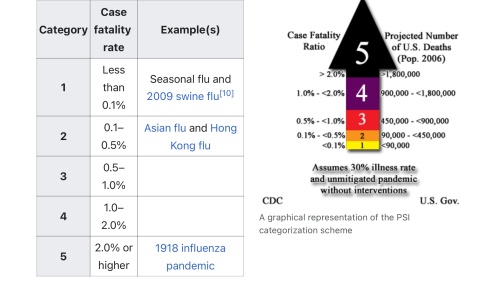
I also believe that a severe pandemic could also cause a severe recession or even an economic depression far worse than the 2008 crisis even in an absence of an energy crisis or expensive energy let say in a scenario where the world depends mostly on cheap unlimited from cold fusion. This scenario would happen if the world has no viable plan B to manage this crisis. In the worst case scenario in a severe pandemic, consumers cut back drastically on discretionary spending due to the fear of getting ill and supply chains breakdown. The following effects that would occur are listed below.
-Mass Unemployment at over 30 percent, even at over 50 percent
-Supply chains are disrupted due to pandemic which results in a drastic rise in prices of goods including food or goods being unavailable
-A global financial crisis which could be far worse than what happened in 2008/2009 resulting from debts unable to be serviced due to low consumer spending or unable to conduct business due to severe supply chain breakdown.
-An unprecedented biblical wave of evictions and foreclosures as the unemployed are unable to pay rent or mortgage.
-The severe ongoing economic effects and supply chain disruptions could make it impossible to respond effectively to the pandemic.
-Waves of business failures occur. Even large fortune 500 companies fail.
-Unbound monetary collapse- if currencies lose their value in their nation of origin, they can no longer be exchanged for foreign currency. International value chains collapse as well.
-Disintegration of regional political ties, new alliances, political upheavals, or even dozens of failed nations could result from this crisis.



PeakOil is You
Could a severe pandemic cause a severe recession?
Could a severe pandemic cause a severe recession?
 by cantonn11 » Thu 18 Mar 2021, 14:05:36
- cantonn11
- Wood

- Posts: 4
- Joined: Wed 24 Apr 2013, 21:47:57
Re: Could a severe pandemic cause a severe recession?
by Outcast_Searcher » Thu 18 Mar 2021, 23:47:46
$this->bbcode_second_pass_quote('cantonn11', 'I') have an understanding that many recessions are caused by energy price spikes or energy shortages. In the Great Recession/GFC of 2008, the root cause of that crisis was the shortfall in energy supply (particularly oil) to demand which resulted in a huge price spike resulting in a significant increase in energy prices.
No it wasn't. You're on the internet, you can look it up and check what all sorts of very credible economic experts / sources say on that. The 2008 great recession was CLEARLY primarily a real estate disaster causing a big capital dislocation and crisis of confidence in the banking and then the entire financial system. (Facts and expertise are both "things").
No doubt the high energy, especially oil, prices didn't do any GOOD. They were certainly a big inconvenience for many, but they were NOT shutting down the US or global economy at the peak in July of 2008, even though they were causing some people to park their gas guzzlers and drive econoboxes to work to save money on the daily commute. (There were people like that I discussed the issue with as neighbors in my apartment complex, for example). But that was only a secondary issue, and a far distant one compared to the primary one of real estate and financial dislocation from that.
Given the track record of the perma-doomer blogs, I wouldn't bet a fast crash doomer's money on their predictions.
-

Outcast_Searcher - COB

- Posts: 10142
- Joined: Sat 27 Jun 2009, 21:26:42
- Location: Central KY
Re: Could a severe pandemic cause a severe recession?
by Outcast_Searcher » Thu 18 Mar 2021, 23:56:35
$this->bbcode_second_pass_quote('cantonn11', '
')I also believe that a severe pandemic could also cause a severe recession or even an economic depression far worse than the 2008 crisis ...
')I also believe that a severe pandemic could also cause a severe recession or even an economic depression far worse than the 2008 crisis ...
Do you live on planet earth? We're just coming out of what, for at least a good quarter, WAS far worse than the 2008 mess, due to the shutdowns over most of the globe, even though it wasn't as hard on the stock market (which managed to believe in the recovery before it was clear how soon vaccines and effective treatments would be widely available). And that's with a moderate pandemic, re the danger of the disease. Imagine how bad it could get if a bug killed people ten or more times as often and put people in the hospital far more often. Then imagine something that was also far more contagious. Bad as it was, we got pretty lucky this time. (I'm presuming we end up managing the variants reasonably well, even if that means everyone who will take vaccines needs a booster or two a year for X years while Covid-19 greatly dies down globally.)
All you have to do is look at how severely GDP dropped and how bad the unemployment numbers got during the worst of it to see that.
Given the track record of the perma-doomer blogs, I wouldn't bet a fast crash doomer's money on their predictions.
-
Outcast_Searcher - COB
- Posts: 10142
- Joined: Sat 27 Jun 2009, 21:26:42
- Location: Central KY
Re: Could a severe pandemic cause a severe recession?
by Newfie » Fri 19 Mar 2021, 18:37:32
Well, we may be testing that theory with Covid. There are some pretty steep financial steps being taken right now, how they play out in the long run is anyone’s guess.
While you have some specifics wrong the idea that a pandemic could drive a recession or depression is pretty accurate, whether this pandemic does or does not.
Aso I think you could expand that a bit. The pandemic could be against humanity directly OR it could attack one of our principal food sources. Just last year China lost about 50% of its pig production IIRC. Chickens, corn, wheat, rice, potatoes are all vulnerable to some new biological attack. If one or more were hit hard there could he strong ripples through the global economy.
While you have some specifics wrong the idea that a pandemic could drive a recession or depression is pretty accurate, whether this pandemic does or does not.
Aso I think you could expand that a bit. The pandemic could be against humanity directly OR it could attack one of our principal food sources. Just last year China lost about 50% of its pig production IIRC. Chickens, corn, wheat, rice, potatoes are all vulnerable to some new biological attack. If one or more were hit hard there could he strong ripples through the global economy.
-

Newfie - Forum Moderator

- Posts: 18651
- Joined: Thu 15 Nov 2007, 04:00:00
- Location: Between Canada and Carribean
Re: Could a severe pandemic cause a severe recession?
by Outcast_Searcher » Sun 21 Mar 2021, 12:21:30
$this->bbcode_second_pass_quote('Newfie', '
')Aso I think you could expand that a bit. The pandemic could be against humanity directly OR it could attack one of our principal food sources. Just last year China lost about 50% of its pig production IIRC. Chickens, corn, wheat, rice, potatoes are all vulnerable to some new biological attack. If one or more were hit hard there could he strong ripples through the global economy.
')Aso I think you could expand that a bit. The pandemic could be against humanity directly OR it could attack one of our principal food sources. Just last year China lost about 50% of its pig production IIRC. Chickens, corn, wheat, rice, potatoes are all vulnerable to some new biological attack. If one or more were hit hard there could he strong ripples through the global economy.
True, and to the extent we keep moving toward broad monocultures for certain foods to make things cheaper and "more efficient", that makes the risk that much worse.
Bananas and the Panama disease (and the race to try to save bananas with technology like gene editing) is a case in point. The reason the problem is so severe is that essentially ALL the normal grocery store bananas in the first world are the SAME plant.
There are plantains, of course, but that's a different species.
Given the track record of the perma-doomer blogs, I wouldn't bet a fast crash doomer's money on their predictions.
-
Outcast_Searcher - COB
- Posts: 10142
- Joined: Sat 27 Jun 2009, 21:26:42
- Location: Central KY
Re: Could a severe pandemic cause a severe recession?
by JuanP » Sun 21 Mar 2021, 14:06:56
$this->bbcode_second_pass_quote('Outcast_Searcher', '')$this->bbcode_second_pass_quote('Newfie', '
')Aso I think you could expand that a bit. The pandemic could be against humanity directly OR it could attack one of our principal food sources. Just last year China lost about 50% of its pig production IIRC. Chickens, corn, wheat, rice, potatoes are all vulnerable to some new biological attack. If one or more were hit hard there could he strong ripples through the global economy.
')Aso I think you could expand that a bit. The pandemic could be against humanity directly OR it could attack one of our principal food sources. Just last year China lost about 50% of its pig production IIRC. Chickens, corn, wheat, rice, potatoes are all vulnerable to some new biological attack. If one or more were hit hard there could he strong ripples through the global economy.
True, and to the extent we keep moving toward broad monocultures for certain foods to make things cheaper and "more efficient", that makes the risk that much worse.
Bananas and the Panama disease (and the race to try to save bananas with technology like gene editing) is a case in point. The reason the problem is so severe is that essentially ALL the normal grocery store bananas in the first world are the SAME plant.
There are plantains, of course, but that's a different species.
All true, but there are many different cultivars of banana plants. I have almost two dozen different varieties at my farms now, and several of them are resistant to Panama disease. And there are many cultivars I don't own.
This has happened before. There was a different cultivar of bananas that was grown commercially decades ago, was decimated by a pest, and was replaced with the specific Cavendish cultivar that we all buy today at supermarkets all over the world. And you are correct in pointing out that they are ALL the same PLANT, not just the same species, because they are reproduced through root or meristem division, by cutting suckers or tissue culture.
The particular cultivar of Cavendish bananas grown commercially today is likely to follow the same road, it will most likely get decimated by Panama disease, or something else, and be replaced by another cultivar, resistant to whatever attacked today's predominant Cavendish cultivar.
This file offers a good basic introduction to the subject of growing bananas, particularly in Florida, but not exclusively. I have known the article's writers for several years, and worked with them on research as a volunteer at the University of Florida Institute of Food and Agricultural Services Tropical Research and Education Center (UF IFAS TREC), associated with the USDA, where we work specifically on this problem, among many others, including dealing with invasive species. I have been mostly volunteering with the mango and avocado programs and some entomological research on invasive species for about five years, but I've helped a little with the banana research, too
Bananas:
https://edis.ifas.ufl.edu/mg040
TREC:
https://trec.ifas.ufl.edu
"Human stupidity has no limits" JuanP
- JuanP
- Heavy Crude

- Posts: 1957
- Joined: Sat 16 Aug 2014, 15:06:32