$this->bbcode_second_pass_quote('aspera', 'F')ord hybrids also use the Atkinson cycle: https://en.wikipedia.org/wiki/Ford_Fusion_Hybrid
$this->bbcode_second_pass_quote('', 'T')he Fusion Hybrid is a "full" hybrid because both propulsion sources, an electric motor powered by a Sanyo supplied 275 V nickel-metal hydride battery, and a 2.5L Atkinson cycle, 156 hp 136 ft.lbs. gasoline engine with intake variable cam timing (iVCT), have substantial power ratings and either can be used alone to propel the vehicle



PeakOil is You
New Engine Could Boost Fuel Economy by Half
Re: New Engine Could Boost Fuel Economy by Half
 by AdamB » Wed 10 Jan 2018, 13:32:07
Perhaps this is reference to the pre-2013 Ford Fusion models? The wife has the 2014 Energi model and it has the same drive train as the Ford 2013 Fusion hybrid, just the battery is bigger, and they are 2.0L engines, and lithium ion battery packs. And as the Energi model, it is an EV for about 20 miles at a time, which is entirely the mode she uses it in. As far as I'm concerned, it is a "true" hybrid, unlike the Gen I machines that couldn't run above 40mph without turning on the engine, needed the engine for A/C and heat, and most everything else. All they really did was coast really well under 40mph, and turn off at stop lights. Maybe they could move around a parking lot...slowly. Her Ford Energi can get right up to 75mph on all electricity, with the heat or A/C on, radio blasting, and do it all the way to work. She doesn't put any gasoline in the thing because, to her, it is fully functional as an EV.
Plant Thu 27 Jul 2023 "Personally I think the IEA is exactly right when they predict peak oil in the 2020s, especially because it matches my own predictions."
Plant Wed 11 Apr 2007 "I think Deffeyes might have nailed it, and we are just past the overall peak in oil production. (Thanksgiving 2005)"
Plant Wed 11 Apr 2007 "I think Deffeyes might have nailed it, and we are just past the overall peak in oil production. (Thanksgiving 2005)"
-

AdamB - Volunteer

- Posts: 11018
- Joined: Mon 28 Dec 2015, 17:10:26
Re: New Engine Could Boost Fuel Economy by Half
by aspera » Wed 10 Jan 2018, 13:40:59
That's true. Second generation Ford hybrids were better (Fusion Gen 2 info below). We have a C-Max Energi (now discontinued as they bring out their new lines of PEVs). My spouse uses it around town and like yours stays mainly in EV mode (we live in a housing co-op with no way to plug it in right now, so charging happens elsewhere (e.g., at work, public parking sites with chargers).
$this->bbcode_second_pass_quote('', '[')The second [Fusion] generation hybrid has a powertrain with a 2.0-liter Atkinson-cycle inline-four – downsized from the 2.5-liter unit used in the first generation Fusion Hybrid. Total output is estimated at 185 hp (138 kW) and 130 ft⋅lb (180 N⋅m), running to the front wheels via an electronically controlled continuously variable transmission. The lithium-ion battery pack saves weight and generates more power than previous NiMH batteries, and allows the second generation Fusion Hybrid to raise its maximum speed under electric-only power from 47 to 62 mph (76 to 100 km/h).
$this->bbcode_second_pass_quote('', '[')The second [Fusion] generation hybrid has a powertrain with a 2.0-liter Atkinson-cycle inline-four – downsized from the 2.5-liter unit used in the first generation Fusion Hybrid. Total output is estimated at 185 hp (138 kW) and 130 ft⋅lb (180 N⋅m), running to the front wheels via an electronically controlled continuously variable transmission. The lithium-ion battery pack saves weight and generates more power than previous NiMH batteries, and allows the second generation Fusion Hybrid to raise its maximum speed under electric-only power from 47 to 62 mph (76 to 100 km/h).
Oceans rise, empires fall. - Apocalypse Lullaby, Wailin' Jennys.
Plant a garden. Soon.
Plant a garden. Soon.
-

aspera - Peat

- Posts: 182
- Joined: Mon 28 Jul 2014, 17:22:49
- Location: Lakeland Republic
Re: New Engine Could Boost Fuel Economy by Half
by Revi » Thu 11 Jan 2018, 14:44:02
I posted a pic of a Borque engine earlier. Any of these rotary engines seem like a better idea than the Otto Cycle engines we are using now. I saw an original Otto engine at the Owl's Head Transportation Museum last summer.
https://en.wikipedia.org/wiki/Otto_engine
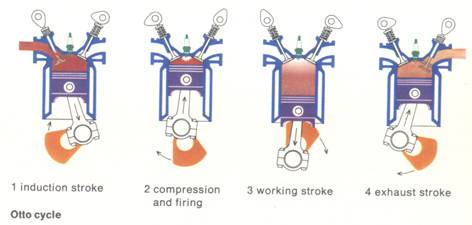
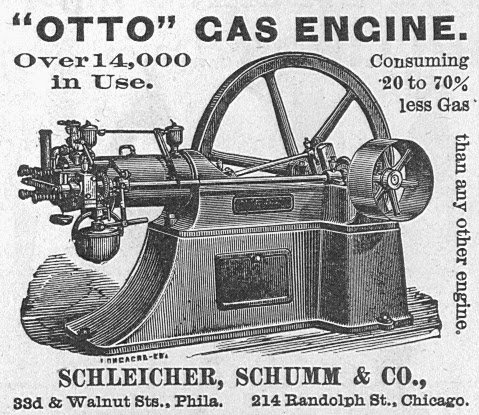
The tragedy of the oil age is that we used about half of the oil on these inefficient engines, when we invented a lot of other kinds of engines way back in the 1800's and early 1900's.
https://en.wikipedia.org/wiki/Otto_engine
The tragedy of the oil age is that we used about half of the oil on these inefficient engines, when we invented a lot of other kinds of engines way back in the 1800's and early 1900's.
Deep in the mud and slime of things, even there, something sings.
-

Revi - Light Sweet Crude

- Posts: 7417
- Joined: Mon 25 Apr 2005, 03:00:00
- Location: Maine
Re: New Engine Could Boost Fuel Economy by Half
by Outcast_Searcher » Thu 11 Jan 2018, 15:25:45
$this->bbcode_second_pass_quote('Revi', '
')The tragedy of the oil age is that we used about half of the oil on these inefficient engines, when we invented a lot of other kinds of engines way back in the 1800's and early 1900's.
')The tragedy of the oil age is that we used about half of the oil on these inefficient engines, when we invented a lot of other kinds of engines way back in the 1800's and early 1900's.
If motor fuels had gotten expensive enough, for long enough, for motorists to truly highly prioritize fuel efficiency, auto makers would have gained a competitive advantage by offering seriously more efficient engines.
Now that vehicle electrification appears to be on the horizon to offer serious competition, AND global oil demand seems likely to keep upward pressure on oil prices as a long term trend (at least until EV production rivals that of the ICE) engine efficiency might finally get some serious attention.
Economics and capitalism in no way ensure optimal longer term solutions are chosen, as they aren't necessarily required for short to mid term profits to be realized.
Given the track record of the perma-doomer blogs, I wouldn't bet a fast crash doomer's money on their predictions.
-

Outcast_Searcher - COB

- Posts: 10142
- Joined: Sat 27 Jun 2009, 21:26:42
- Location: Central KY



![[smilie=3some.gif]](https://udev.peakoil.com/forums/images/smilies/3some.gif "3some")
![[smilie=5cool.gif]](https://udev.peakoil.com/forums/images/smilies/5cool.gif "5cool")