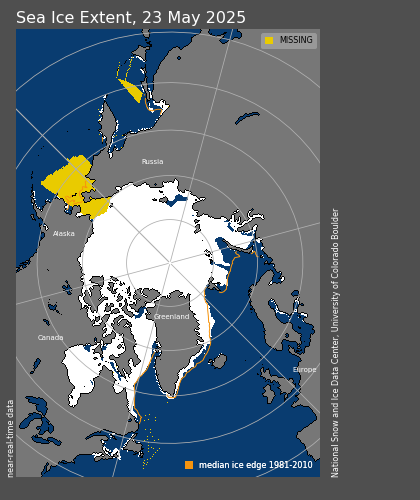
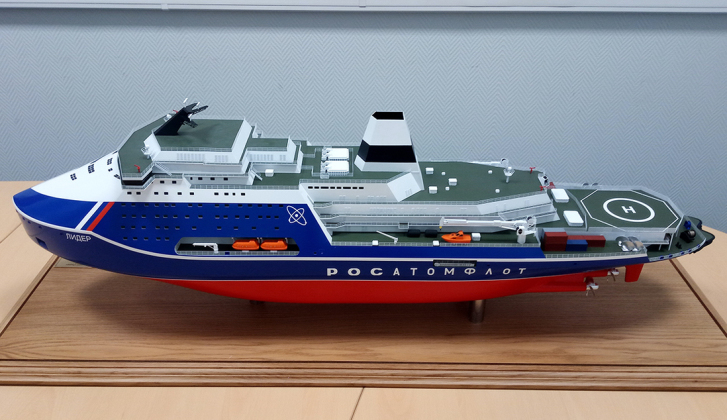
$this->bbcode_second_pass_quote('vtsnowedin', 'W')ell ships can certainly be built to an ice proof standard if ice breaker assistance is available. The question is how much extra does the heavier construction and the ice breaker service cost and will that out weigh the time and fuel savings apposed to going by the Suez canal? I could see convoys of ships in line following a big ice breaker providing backup assistance to each other. I would not think winter passages will ever be desirable just from the fact the whole voyage will be conducted in the dark.
It will be interesting to see if the Russians can build this up to 1000 full crossings per summer.



PeakOil is You
Arctic shipping to conserve energy.
Re: Arctic shipping to conserve energy.
 by Tanada » Thu 16 Jul 2020, 17:33:43
According to this pdf https://www.researchgate.net/figure/Est ... _264121577
the construction premium for building an ice capable merchant ship ranges from 10% to 120%
It looks like a good average would be 30-35% which is not much amortized over a 40 year service life. Labor is the largest cost for shipping companies and cutting as much as 40% off of transit time can add up to big savings in a short time frame. I suspect that even if the cost was 120% on construction if you could cut labor costs even 20% every journey it wouldn't take many years to pay off the difference. After that the shorter trip/lower labor costs would be all profits.
$this->bbcode_second_pass_quote('Alfred Tennyson', 'W')e are not now that strength which in old days
Moved earth and heaven, that which we are, we are;
One equal temper of heroic hearts,
Made weak by time and fate, but strong in will
To strive, to seek, to find, and not to yield.
Moved earth and heaven, that which we are, we are;
One equal temper of heroic hearts,
Made weak by time and fate, but strong in will
To strive, to seek, to find, and not to yield.
- Tanada
- Site Admin

- Posts: 17094
- Joined: Thu 28 Apr 2005, 03:00:00
- Location: South West shore Lake Erie, OH, USA
Re: Arctic shipping to conserve energy.
by sparky » Thu 16 Jul 2020, 23:30:21
.
To be fair to juan , a ship could use the north East passage all year around ...if ice-proof and following in the wake of a big icebreaker
as for a pamamax sized general container ship , the window is , as of today ,way more restricted
for a variety of reasons , most strictly commercial
as for extending the window , it's not that it's impossible but it's just not practical
on the North pole ice , the whole ice is rotating from West to East , this is due to floating free while the Earth is rotating ,
the ice pack is dragged along but lag behind ,
In 1893, Arctic explorer Fridtjof Nansen of Norway deliberately froze his wooden ship, the Fram, into the drifting sea ice north of Siberia. His rationale: Rather than fighting the ice, which had thwarted previous efforts to reach the North Pole, he’d allow the ice itself to carry him close to his goal. His polar bid failed, but 3 years later the wandering pack had carried the Fram some 2000 kilometers across the Arctic to the open North Atlantic Ocean, making Nansen an international hero.
To be fair to juan , a ship could use the north East passage all year around ...if ice-proof and following in the wake of a big icebreaker
as for a pamamax sized general container ship , the window is , as of today ,way more restricted
for a variety of reasons , most strictly commercial
as for extending the window , it's not that it's impossible but it's just not practical
on the North pole ice , the whole ice is rotating from West to East , this is due to floating free while the Earth is rotating ,
the ice pack is dragged along but lag behind ,
In 1893, Arctic explorer Fridtjof Nansen of Norway deliberately froze his wooden ship, the Fram, into the drifting sea ice north of Siberia. His rationale: Rather than fighting the ice, which had thwarted previous efforts to reach the North Pole, he’d allow the ice itself to carry him close to his goal. His polar bid failed, but 3 years later the wandering pack had carried the Fram some 2000 kilometers across the Arctic to the open North Atlantic Ocean, making Nansen an international hero.
-

sparky - Intermediate Crude

- Posts: 3587
- Joined: Mon 09 Apr 2007, 03:00:00
- Location: Sydney , OZ
Re: Arctic shipping to conserve energy.
by JuanP » Fri 17 Jul 2020, 00:46:31
So, I went over sparky's links and I learnt a lot, but nothing that contradicts my claims or those of the article I linked to, and several others I've read on the subject in the last couple of years. His links are from papers published from 2014 to 2017, and deal mostly with non ice capable shipping, the environmental impacts of Arctic shipping, and other issues connected to the NSR, but do not contradict my claim.
Much has changed in the last few years in the NSR, since Russia has been investing a large amount of resources in developing its Arctic infrastructure and fleets. The upgrades in deep sea ports, nuclear icebreakers, and ice capable ships, including LNG powered ones, in the last three to six years have been constant and exponential. Russia is capable today of shipping oil, LNG, and other cargo, including coal and containers, along the NSR using its nuclear icebreaker fleet, and ice capable shipping fleet to both Europe and Asia year round, and it is already doing so. The volume and value of this shipping is growing every year, and can be expected to continue growing for the foreseeable future. The ice capable shipping fleet and nuclear icebreaker fleet are growing every year and increasing their performance and capabilities, while lowering their operating costs. The newer nuclear icebreakers capable of sailing through 4.3 meters thick ice will be capable of sailing everywhere in the Arctic Ocean all year round. Russian Arctic ports are constantly improving their number, size, capabilities, and services, too. As pointed out above by another person, these investments are being made now and will provide returns for decades to come.
The NSR will become increasingly important as Russia continues developing it and increasing resource extraction in the area, ice continues to melt and lose thickness, and the melting season is extended because of Global Warming and Climate Change. The route is significantly shorter than going through the Suez Canal for a lot of the trade between Asia and Europe. It also offers an advantage for products that require refrigerating or freezing. Sailing in the dark is not an issue. Ships have been sailing in the dark half the time for thousands of years during nighttime. Modern ships have electricity and sail using satellite navigation, sonar, radar, radios, spotlights, and other instruments.
Much has changed in the last few years in the NSR, since Russia has been investing a large amount of resources in developing its Arctic infrastructure and fleets. The upgrades in deep sea ports, nuclear icebreakers, and ice capable ships, including LNG powered ones, in the last three to six years have been constant and exponential. Russia is capable today of shipping oil, LNG, and other cargo, including coal and containers, along the NSR using its nuclear icebreaker fleet, and ice capable shipping fleet to both Europe and Asia year round, and it is already doing so. The volume and value of this shipping is growing every year, and can be expected to continue growing for the foreseeable future. The ice capable shipping fleet and nuclear icebreaker fleet are growing every year and increasing their performance and capabilities, while lowering their operating costs. The newer nuclear icebreakers capable of sailing through 4.3 meters thick ice will be capable of sailing everywhere in the Arctic Ocean all year round. Russian Arctic ports are constantly improving their number, size, capabilities, and services, too. As pointed out above by another person, these investments are being made now and will provide returns for decades to come.
The NSR will become increasingly important as Russia continues developing it and increasing resource extraction in the area, ice continues to melt and lose thickness, and the melting season is extended because of Global Warming and Climate Change. The route is significantly shorter than going through the Suez Canal for a lot of the trade between Asia and Europe. It also offers an advantage for products that require refrigerating or freezing. Sailing in the dark is not an issue. Ships have been sailing in the dark half the time for thousands of years during nighttime. Modern ships have electricity and sail using satellite navigation, sonar, radar, radios, spotlights, and other instruments.
"Human stupidity has no limits" JuanP
- JuanP
- Heavy Crude

- Posts: 1957
- Joined: Sat 16 Aug 2014, 15:06:32
Re: Arctic shipping to conserve energy.
by vtsnowedin » Fri 17 Jul 2020, 10:07:58
$this->bbcode_second_pass_quote('JuanP', ' ')Sailing in the dark is not an issue. Ships have been sailing in the dark half the time for thousands of years during nighttime. Modern ships have electricity and sail using satellite navigation, sonar, radar, radios, spotlights, and other instruments.
Navigation is not the problem. You have the winter weather with howling winds or freezing fogs that builds ice up on decks that has to be removed and the constant darkness wears on the minds of the crews. A summer crossing will be more attractive and most certainly cheaper and those slots will fill up before anyone will choose to cross in winter without some time sensitive reason putting a premium on doing it then.
-

vtsnowedin - Fusion

- Posts: 14897
- Joined: Fri 11 Jul 2008, 03:00:00
Re: Arctic shipping to conserve energy.
by sparky » Fri 17 Jul 2020, 12:15:01
.
Certainly , the Polar melt is ongoing and Russia has invested into the practicability of the North East passage
China is very interested , it would free them from the US Navy control over the sea routes to the South
since the near totality of the route is in Russian waters interfering with it would be a very serious matter
The old Soviets have put a lot of effort into Ice Breakers
their fleet is considerable while the US has largely neglected them
by the way nuclear power for long distance Ice breakers is the only practical way of doing it
going through ice create an monstrous energy requirement ,
it's OK sort of for harbors and such
a trip of hundred of nautical miles plowing through two feet of ice would cost a fortune in fuel alone
thing are changing and one could expect more development , last month the US Navy for the first time since yonks
had military maneuver in the Barents sea , just to cheese of the Russians
Mike Pompeo actually came at the last Arctic council...... https://arctic-council.org/en/
and coolly affirmed that if the North East passage was used it should be an international seaway and it would void Russia claim to territorial waters , even the Norwegians and Canadians were not amused
https://thebarentsobserver.com/en/arcti ... inisterial
Certainly , the Polar melt is ongoing and Russia has invested into the practicability of the North East passage
China is very interested , it would free them from the US Navy control over the sea routes to the South
since the near totality of the route is in Russian waters interfering with it would be a very serious matter
The old Soviets have put a lot of effort into Ice Breakers
their fleet is considerable while the US has largely neglected them
by the way nuclear power for long distance Ice breakers is the only practical way of doing it
going through ice create an monstrous energy requirement ,
it's OK sort of for harbors and such
a trip of hundred of nautical miles plowing through two feet of ice would cost a fortune in fuel alone
thing are changing and one could expect more development , last month the US Navy for the first time since yonks
had military maneuver in the Barents sea , just to cheese of the Russians
Mike Pompeo actually came at the last Arctic council...... https://arctic-council.org/en/
and coolly affirmed that if the North East passage was used it should be an international seaway and it would void Russia claim to territorial waters , even the Norwegians and Canadians were not amused
https://thebarentsobserver.com/en/arcti ... inisterial
-
sparky - Intermediate Crude
- Posts: 3587
- Joined: Mon 09 Apr 2007, 03:00:00
- Location: Sydney , OZ
Re: Arctic shipping to conserve energy.
by vtsnowedin » Fri 17 Jul 2020, 12:37:50
$this->bbcode_second_pass_quote('', 's')ince the near totality of the route is in Russian waters interfering with it would be a very serious matter
One good missile launcher on Sarah Palin's porch could shut down the exit through the Bering straight.

-
vtsnowedin - Fusion
- Posts: 14897
- Joined: Fri 11 Jul 2008, 03:00:00