
PeakOil is You
Bizarre Particles
Bizarre Particles
 by onlooker » Sun 30 Sep 2018, 20:06:46
$this->bbcode_second_pass_quote('', ' ') Bizarre Particles Keep Flying Out of Antarctica's Ice, and They Might Shatter Modern Physics
https://www.livescience.com/63692-stand ... ysics.html
"We are mortal beings doomed to die
-

onlooker - Fission

- Posts: 10957
- Joined: Sun 10 Nov 2013, 13:49:04
- Location: NY, USA
Re: Bizarre Particles
by vox_mundi » Sun 30 Sep 2018, 23:55:36


“There are three classes of people: those who see. Those who see when they are shown. Those who do not see.” ― Leonardo da Vinci
Insensible before the wave so soon released by callous fate. Affected most, they understand the least, and understanding, when it comes, invariably arrives too late.
Insensible before the wave so soon released by callous fate. Affected most, they understand the least, and understanding, when it comes, invariably arrives too late.
-

vox_mundi - Intermediate Crude

- Posts: 3939
- Joined: Wed 27 Sep 2006, 03:00:00
Re: Bizarre Particles
by vox_mundi » Mon 01 Oct 2018, 11:30:34
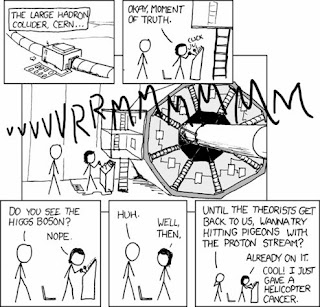
The ANITA Anomalous Events as Signatures of a Beyond Standard Model Particle, and Supporting Observations from IceCube
$this->bbcode_second_pass_quote('', '[')img]https://upload.wikimedia.org/wikipedia/commons/thumb/b/b7/Standard_Model_of_Elementary_Particles_%2B_Gravity.svg/400px-Standard_Model_of_Elementary_Particles_%2B_Gravity.svg.png[/img]
Abstract
The ANITA collaboration have reported observation of two anomalous events that appear to be εcr≈0.6 EeV cosmic ray showers emerging from the Earth with exit angles of 27∘ and 35∘, respectively. While EeV-scale upgoing showers have been anticipated as a result of astrophysical tau neutrinos converting to tau leptons during Earth passage, the observed exit angles are much steeper than expected in Standard Model (SM) scenarios. Indeed, under conservative extrapolations of the SM interactions, there is no particle that can propagate through the Earth with probability p>10−6 at these energies and exit angles. We explore here whether "beyond the Standard Model" (BSM) particles are required to explain the ANITA events, if correctly interpreted, and conclude that they are. Seeking confirmation or refutation of the physical phenomenon of sub-EeV Earth-emergent cosmic rays in data from other facilities, we find support for the reality of the ANITA events, and three candidate analog events, among the Extremely High Energy Northern Track neutrinos of the IceCube Neutrino Observatory. Properties of the implied BSM particle are anticipated, at least in part, by those predicted for the "stau" slepton (τ~R) in some supersymmetric models of the fundamental interactions, wherein the stau manifests as the next-to-lowest mass
$this->bbcode_second_pass_quote('', '[')img]https://upload.wikimedia.org/wikipedia/commons/thumb/b/b7/Standard_Model_of_Elementary_Particles_%2B_Gravity.svg/400px-Standard_Model_of_Elementary_Particles_%2B_Gravity.svg.png[/img]
Abstract
The ANITA collaboration have reported observation of two anomalous events that appear to be εcr≈0.6 EeV cosmic ray showers emerging from the Earth with exit angles of 27∘ and 35∘, respectively. While EeV-scale upgoing showers have been anticipated as a result of astrophysical tau neutrinos converting to tau leptons during Earth passage, the observed exit angles are much steeper than expected in Standard Model (SM) scenarios. Indeed, under conservative extrapolations of the SM interactions, there is no particle that can propagate through the Earth with probability p>10−6 at these energies and exit angles. We explore here whether "beyond the Standard Model" (BSM) particles are required to explain the ANITA events, if correctly interpreted, and conclude that they are. Seeking confirmation or refutation of the physical phenomenon of sub-EeV Earth-emergent cosmic rays in data from other facilities, we find support for the reality of the ANITA events, and three candidate analog events, among the Extremely High Energy Northern Track neutrinos of the IceCube Neutrino Observatory. Properties of the implied BSM particle are anticipated, at least in part, by those predicted for the "stau" slepton (τ~R) in some supersymmetric models of the fundamental interactions, wherein the stau manifests as the next-to-lowest mass
“There are three classes of people: those who see. Those who see when they are shown. Those who do not see.” ― Leonardo da Vinci
Insensible before the wave so soon released by callous fate. Affected most, they understand the least, and understanding, when it comes, invariably arrives too late.
Insensible before the wave so soon released by callous fate. Affected most, they understand the least, and understanding, when it comes, invariably arrives too late.
-
vox_mundi - Intermediate Crude
- Posts: 3939
- Joined: Wed 27 Sep 2006, 03:00:00
Re: Bizarre Particles
by vox_mundi » Mon 01 Oct 2018, 12:44:44
+1 Gas & onlooker


I'm bettin' there's a whole chuck of physics that's missing
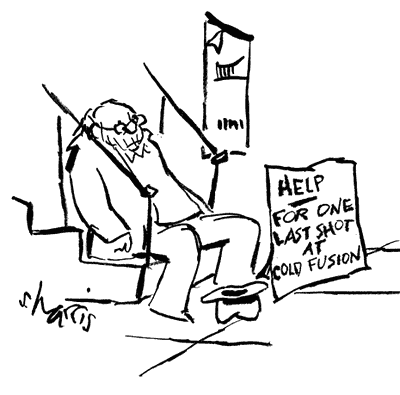
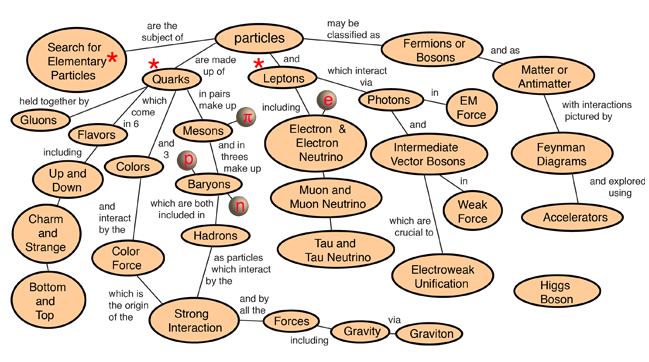
I'm bettin' there's a whole chuck of physics that's missing
“There are three classes of people: those who see. Those who see when they are shown. Those who do not see.” ― Leonardo da Vinci
Insensible before the wave so soon released by callous fate. Affected most, they understand the least, and understanding, when it comes, invariably arrives too late.
Insensible before the wave so soon released by callous fate. Affected most, they understand the least, and understanding, when it comes, invariably arrives too late.
-
vox_mundi - Intermediate Crude
- Posts: 3939
- Joined: Wed 27 Sep 2006, 03:00:00
Re: Bizarre Particles
by onlooker » Mon 01 Oct 2018, 14:05:05
Vox & Gas, any insights on what exactly are the Dark matter and Dark energy? Oh and your cartoon images certainly highlight the perils and pitfalls of technology Vox. Two examples being unintended consequences and falling into the hands of the unscrupulous
"We are mortal beings doomed to die
-
onlooker - Fission
- Posts: 10957
- Joined: Sun 10 Nov 2013, 13:49:04
- Location: NY, USA
Re: Bizarre Particles
by Cog » Mon 01 Oct 2018, 14:58:55
Don't panic onlooker. Strange particles won't turn you into a conservative republican.
-

Cog - Fusion

- Posts: 13416
- Joined: Sat 17 May 2008, 03:00:00
- Location: Northern Kekistan
Re: Bizarre Particles
by vox_mundi » Mon 01 Oct 2018, 15:03:26
$this->bbcode_second_pass_quote('onlooker', 'V')ox & Gas, any insights on what exactly are the Dark matter and Dark energy? ...
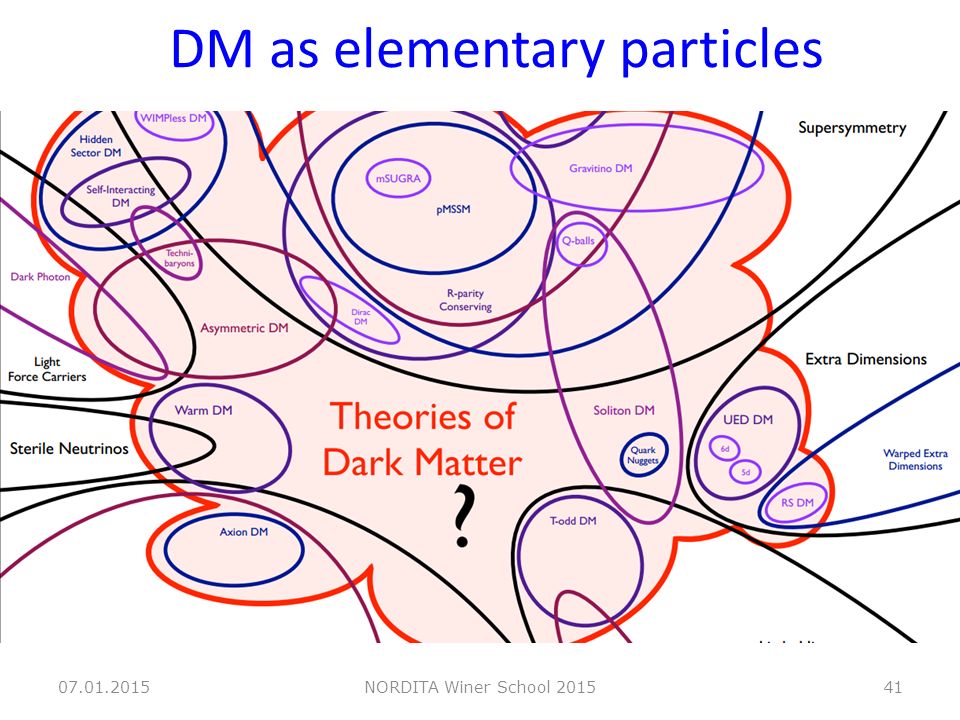
You'd get the Nobel Prize in Physics if you had the answer to that.
I'm going with extra dimensions - or a math error.
It's in there somewhere...
https://www.degruyter.com/view/j/phys.2 ... ig_002.jpg

“There are three classes of people: those who see. Those who see when they are shown. Those who do not see.” ― Leonardo da Vinci
Insensible before the wave so soon released by callous fate. Affected most, they understand the least, and understanding, when it comes, invariably arrives too late.
Insensible before the wave so soon released by callous fate. Affected most, they understand the least, and understanding, when it comes, invariably arrives too late.
-
vox_mundi - Intermediate Crude
- Posts: 3939
- Joined: Wed 27 Sep 2006, 03:00:00
Re: Bizarre Particles
by onlooker » Mon 01 Oct 2018, 15:14:13
$this->bbcode_second_pass_quote('vox_mundi', '')$this->bbcode_second_pass_quote('onlooker', 'V')ox & Gas, any insights on what exactly are the Dark matter and Dark energy? ...
You'd get the Nobel Prize in Physics if you had the answer to that.
I'm going with extra dimensions - or a math error.
It's in there somewhere...
https://www.degruyter.com/view/j/phys.2 ... ig_002.jpg
At least in regards to dark matter don't think it's a math error given the tangible observed effect of clustered galaxies. As for Dark Energy, scientists say it makes up much of the Universe and explains why large astrophysical objects are moving away from each other so rapidly, so some energetic force is propelling them in defiance of gravity
"We are mortal beings doomed to die
-
onlooker - Fission
- Posts: 10957
- Joined: Sun 10 Nov 2013, 13:49:04
- Location: NY, USA