by KaiserJeep » Fri 28 Apr 2017, 14:44:44
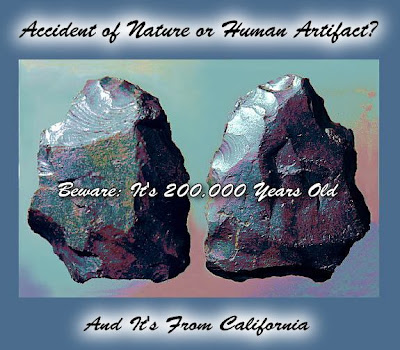
I personally believe in the existence of early humans in North America. I also can provide a valid reason that they did not contribute more of their DNA to the Human Genome. We have already discussed it once: The Younger Dryad Impact Hypothesis.
From Wikipedia:
$this->bbcode_second_pass_quote('', 'T')he Younger Dryas impact hypothesis or Clovis comet hypothesis originally proposed that a large air burst or earth impact of one or more comets initiated the Younger Dryas cold period about 12,900 BP calibrated (10,900 14C uncalibrated) years ago.[1][2][3] The hypothesis has been contested by research showing that most of the conclusions cannot be repeated by other scientists, and criticized because of misinterpretation of data and the lack of confirmatory evidence.[4][5][6][7] However, a more recent study lends support to the hypothesis, finding a layer of elevated platinum and other metals at numerous locales across North America and Greenland, levels associated with extraterrestrial bodies.[8]
The current impact hypothesis states that the air burst(s) or impact(s) of a swarm of carbonaceous chondrites or comet fragments set areas of the North American continent on fire, causing the extinction of most of the megafauna in North America and the demise of the North American Clovis culture after the last glacial period.[9] The Younger Dryas ice age lasted for about 1,200 years before the climate warmed again. This swarm is hypothesized to have exploded above or possibly on the Laurentide Ice Sheet in the region of the Great Lakes, though no impact crater has yet been identified and no physical model by which such a swarm could form or explode in the air has been proposed. Nevertheless, the proponents suggest that it would be physically possible for such an air burst to have been similar to, but orders of magnitude larger than, the Tunguska event of 1908. The hypothesis proposed that animal and human life in North America not directly killed by the blast or the resulting coast-to-coast wildfires would have likely starved on the burned surface of the continent.
1. Firestone, Richard; West, Allen; Warwick-Smith, Simon (4 June 2006). The Cycle of Cosmic Catastrophes: How a Stone-Age Comet Changed the Course of World Culture. Bear & Company. p. 392. ISBN 1591430615.
2. Firestone RB, West A, Kennett JP; et al. (October 2007). "Evidence for an extraterrestrial impact 12,900 years ago that contributed to the megafaunal extinctions and the Younger Dryas cooling". Proc. Natl. Acad. Sci. U.S.A. 104 (41): 16016–21. Bibcode:2007PNAS..10416016F. doi:10.1073/pnas.0706977104. PMC 1994902Freely accessible. PMID 17901202.
3. Bunch TE, Hermes RE, Moore AM; et al. (June 2012). "Very high-temperature impact melt products as evidence for cosmic airbursts and impacts 12,900 years ago". Proc Natl Acad Sci U S A. 109 (28): E1903–12. Bibcode:2012PNAS..109E1903B. doi:10.1073/pnas.1204453109. PMC 3396500Freely accessible. PMID 22711809.
4. Kerr, R. A. (3 September 2010). "Mammoth-Killer Impact Flunks Out". Science. 329 (5996): 1140–1. Bibcode:2010Sci...329.1140K. doi:10.1126/science.329.5996.1140. PMID 20813931.
5. Pinter, Nicholas; Scott, Andrew C.; Daulton, Tyrone L.; Podoll, Andrew; Koeberl, Christian; Anderson, R. Scott; Ishman, Scott E. (2011). "The Younger Dryas impact hypothesis: A requiem". Earth-Science Reviews. 106 (3–4): 247. Bibcode:2011ESRv..106..247P. doi:10.1016/j.earscirev.2011.02.005.
6. Pigati JS; Latorre C; Rech JA; Betancourt JL; Martínez KE; Budahn JR (April 2012). "Accumulation of impact markers in desert wetlands and implications for the Younger Dryas impact hypothesis". Proc Natl Acad Sci U S A. 109 (19): 7208–12. Bibcode:2012PNAS..109.7208P. doi:10.1073/pnas.1200296109. PMC 3358914Freely accessible. PMID 22529347. Retrieved 7 February 2017.
7. Boslough, M.; K. Nicoll; V. Holliday; T. L. Daulton; D. Meltzer; N. Pinter; A. C. Scott; T. Surovell; P. Claeys; J. Gill; F. Paquay; J. Marlon; P. Bartlein; C. Whitlock; D. Grayson & A. J. T. Jull (2012). "Arguments and Evidence Against a Younger Dryas Impact Event" (PDF). GEOPHYSICAL MONOGRAPH SERIES. 198: 13–26. Retrieved 7 February 2017.
8. Moore; et al. (2017). "Widespread platinum anomaly documented at the Younger Dryas onset in North American sedimentary sequences". Nature Scientific Reports. 7: 44031. doi:10.1038/srep44031.
9. Kennett DJ, Kennett JP, West A; et al. (January 2009). "Nanodiamonds in the Younger Dryas boundary sediment layer". Science. 323 (5910): 94. Bibcode:2009Sci...323...94K. doi:10.1126/science.1162819. PMID 19119227.
There is a later elaboration of tthe above hypothesis based on the formation of
impact nanodiamonds. These are found in two geological layers, one is the K-T layer of 65 million years ago that caused the extinction of the dinosaurs and other fauna[2], the other is the YDB (Younger Dryas Boundary)[1]:
1. Kinze, Charles R. (Aug 26, 2014). "Nanodiamond-Rich Layer across Three Continents Consistent with Major Cosmic Impact at 12,800 Cal BP". Journal of Geology. 122 (09/2014): 475–506. doi:10.1086/677046. ISSN 0022-1376.
2. Cohen, Julie (2014-08-28). "Nanodiamonds Are Forever | The UCSB Current". News.ucsb.edu. Retrieved 2015-11-24.
The YD impact effects are observable across three continents, which are North America, South America, and the Northern half of Africa. There is also a carbon mat (i.e. layer of ash) that indicates that over 90% of the plant life on the North American continent burned during wildfires following the YD impact. (The South American and African continents show the impact nano-diamonds but were spared the continent-wide wildfires.) This is the reason that the Clovis Culture died off, along with their DNA contribution to the Human Genome, and also the reason for the extinction of the North American megafauna, as those animals not killed outright starved from lack of fodder for the herbivores.
Yes, the YD Impact Hypothesis remains controversial. The prior most popular theory blamed human predation for megafauna extinction. As with that other unproven theory about AGW, some people would prefer to believe that humans are more significant on this globe than they actually are. I consider that pure hubris.