PeakOil is You
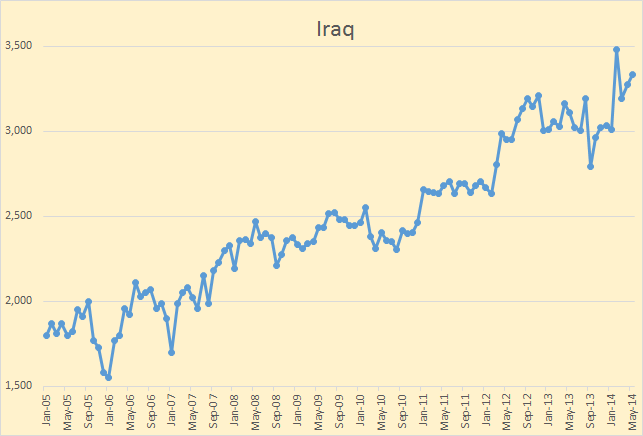
Iraq plans to expand production 7m bpd
First unread post • 18 posts
• Page 1 of 1
Iraq plans to expand production 7m bpd
 by kenberthiaume » Thu 13 Nov 2014, 00:22:23
Someone forgot to tell them about peak oil. I'll try to attach some links tomorrow. Huge undertaking. Anyone know how it's going?
- kenberthiaume
- Wood

- Posts: 49
- Joined: Thu 06 Nov 2014, 15:23:04
Re: Iraq plans to expand production 7m bpd
by Keith_McClary » Thu 13 Nov 2014, 02:31:37
$this->bbcode_second_pass_quote('kenberthiaume', 'S')omeone forgot to tell them about peak oil. I'll try to attach some links tomorrow. Huge undertaking. Anyone know how it's going?
Do you mean this????$this->bbcode_second_pass_quote('', 'S')un Jun 5, 2011
(Reuters)Iraq is rebuilding its oil infrastructure after years of conflict and has signed deals with major foreign oil companies to reach a proposed production capacity of 12 million bpd by 2017
http://af.reuters.com/article/idAFLDE7540GT20110605
Facebook knows you're a dog.
-

Keith_McClary - Light Sweet Crude

- Posts: 7344
- Joined: Wed 21 Jul 2004, 03:00:00
- Location: Suburban tar sands
Re: Iraq plans to expand production 7m bpd
by toolpush » Thu 13 Nov 2014, 03:36:59
Now this story begs the question, "Iraq and who's army?"
BTW by the time they are talking about producing all this oil, where will the Iraqi borders lie. Maybe they can snitch a bit from Iran to make up the loss of Kurdistan. Or if that doesn't work, a bit Kuwait. Hang on both of those have been tried before.
I am sure they ill think of something.
BTW by the time they are talking about producing all this oil, where will the Iraqi borders lie. Maybe they can snitch a bit from Iran to make up the loss of Kurdistan. Or if that doesn't work, a bit Kuwait. Hang on both of those have been tried before.
I am sure they ill think of something.
- toolpush
- Lignite
- Posts: 202
- Joined: Mon 06 Jan 2014, 09:49:16
Re: Iraq plans to expand production 7m bpd
by kenberthiaume » Thu 13 Nov 2014, 06:15:41
$this->bbcode_second_pass_quote('Keith_McClary', '')$this->bbcode_second_pass_quote('kenberthiaume', 'S')omeone forgot to tell them about peak oil. I'll try to attach some links tomorrow. Huge undertaking. Anyone know how it's going?
Do you mean this????$this->bbcode_second_pass_quote('', 'S')un Jun 5, 2011
(Reuters)Iraq is rebuilding its oil infrastructure after years of conflict and has signed deals with major foreign oil companies to reach a proposed production capacity of 12 million bpd by 2017
http://af.reuters.com/article/idAFLDE7540GT20110605
- kenberthiaume
- Wood
- Posts: 49
- Joined: Thu 06 Nov 2014, 15:23:04