apparently Mr. Hubbards rock oil shortage as predicted in the 1950's did not take place in time - leaves us all with one specific conclusion:
oil is not the remnant of "Sinclair Oil" dinosaur left over -semi plastic- indigestible somemthn` somethn..
the theory in itself is correct !



PeakOil is You
Rock Oil

Re: Rock Oil
 by sparky » Tue 19 Jul 2016, 01:50:36
.
Marion Hubbert paper was specifically referring to conventional oil extraction in the U.S.
no deep sea , no tight oil, no extra heavy ,
within those parameters his forecast was spotlessly accurate .
depletion of an extracted finite resource is a fact ,
peak extraction of this resource is also a fact .
It has been the case for all sort of extractive industries since the dawn of civilization .
If you have some facts faulting this .... please , please give them ,I for one would be very happy
Marion Hubbert paper was specifically referring to conventional oil extraction in the U.S.
no deep sea , no tight oil, no extra heavy ,
within those parameters his forecast was spotlessly accurate .
depletion of an extracted finite resource is a fact ,
peak extraction of this resource is also a fact .
It has been the case for all sort of extractive industries since the dawn of civilization .
If you have some facts faulting this .... please , please give them ,I for one would be very happy
-

sparky - Intermediate Crude

- Posts: 3587
- Joined: Mon 09 Apr 2007, 03:00:00
- Location: Sydney , OZ
Re: Rock Oil
by regardingpo » Tue 19 Jul 2016, 07:00:37
$this->bbcode_second_pass_quote('sparky', '.')
Marion Hubbert paper was specifically referring to conventional oil extraction in the U.S.
no deep sea , no tight oil, no extra heavy ,
within those parameters his forecast was spotlessly accurate .
Marion Hubbert paper was specifically referring to conventional oil extraction in the U.S.
no deep sea , no tight oil, no extra heavy ,
within those parameters his forecast was spotlessly accurate .
Exactly. The only people who say Hubbert was wrong are the ones who don't even know what he was talking about. Or they're trying to set up a strawman argument.
Don't follow this link: http://bit.ly/2dtWSrZ
-

regardingpo - Peat

- Posts: 106
- Joined: Thu 20 Aug 2015, 15:36:52
Re: Rock Oil
by AdamB » Tue 19 Jul 2016, 14:08:59
$this->bbcode_second_pass_quote('aldente', 'a')pparently Mr. Hubbards rock oil shortage as predicted in the 1950's did not take place in time - leaves us all with one specific conclusion:
oil is not the remnant of "Sinclair Oil" dinosaur left over -semi plastic- indigestible somemthn` somethn..
the theory in itself is correct !
oil is not the remnant of "Sinclair Oil" dinosaur left over -semi plastic- indigestible somemthn` somethn..
the theory in itself is correct !
Which theory? The one Hubbert used to predict peak oil by 1950 in the US, or later when he used a theory to predict that the world would peak at 12 billion barrels a year? Somewhere in the last century?
Plant Thu 27 Jul 2023 "Personally I think the IEA is exactly right when they predict peak oil in the 2020s, especially because it matches my own predictions."
Plant Wed 11 Apr 2007 "I think Deffeyes might have nailed it, and we are just past the overall peak in oil production. (Thanksgiving 2005)"
Plant Wed 11 Apr 2007 "I think Deffeyes might have nailed it, and we are just past the overall peak in oil production. (Thanksgiving 2005)"
-

AdamB - Volunteer
- Posts: 11018
- Joined: Mon 28 Dec 2015, 17:10:26
Re: Rock Oil
by AdamB » Tue 19 Jul 2016, 14:13:45
$this->bbcode_second_pass_quote('regardingpo', '')$this->bbcode_second_pass_quote('sparky', '.')
Marion Hubbert paper was specifically referring to conventional oil extraction in the U.S.
no deep sea , no tight oil, no extra heavy ,
within those parameters his forecast was spotlessly accurate .
Marion Hubbert paper was specifically referring to conventional oil extraction in the U.S.
no deep sea , no tight oil, no extra heavy ,
within those parameters his forecast was spotlessly accurate .
Exactly. The only people who say Hubbert was wrong are the ones who don't even know what he was talking about. Or they're trying to set up a strawman argument.
Exactly. It can't be the data that invalidated his ideas, no sirree bob.
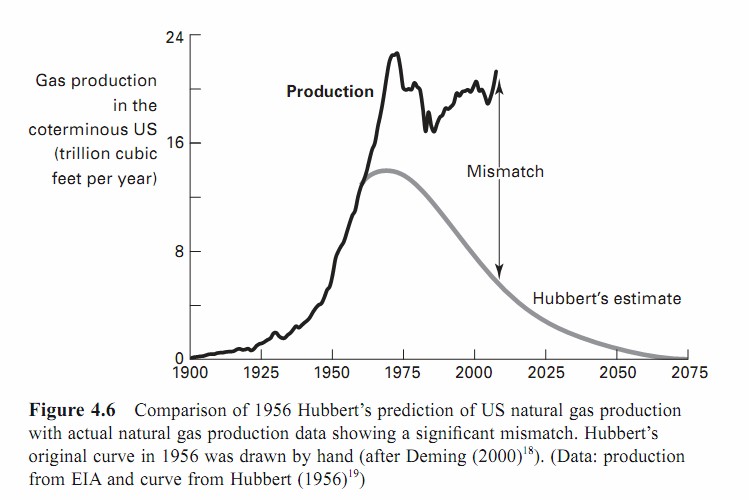
THE DATE-RR MUST BE WRONG!!!
Plant Thu 27 Jul 2023 "Personally I think the IEA is exactly right when they predict peak oil in the 2020s, especially because it matches my own predictions."
Plant Wed 11 Apr 2007 "I think Deffeyes might have nailed it, and we are just past the overall peak in oil production. (Thanksgiving 2005)"
Plant Wed 11 Apr 2007 "I think Deffeyes might have nailed it, and we are just past the overall peak in oil production. (Thanksgiving 2005)"
-
AdamB - Volunteer
- Posts: 11018
- Joined: Mon 28 Dec 2015, 17:10:26


