People search for anchors, a place where there is clarity. Frustration mounts over human stupidity. We have to all start learning there is no refuge from "peak oil" or human overshoot.
There is no wisdom we will follow.
The pathway is through the chaos. This is not futility, this is more like the feeling one gets when one is approaching white water while still in the quiet waters in a canoe.
Those who are frustrated over humanities plight and frustrated over those still in resilient denial are looking for anchors of wisdom. This site provides little refuge, there is no sanity.
Go drifting into chaos, and guide your canoe wisely.



PeakOil is You
When a cornucopian rejects Jevons Paradox
Re: When a cornucopian rejects Jevons Paradox
 by Ibon » Tue 12 Jul 2016, 08:03:56
Patiently awaiting the pathogens. Our resiliency resembles an invasive weed. We are the Kudzu Ape
blog: http://blog.mounttotumas.com/
website: http://www.mounttotumas.com
blog: http://blog.mounttotumas.com/
website: http://www.mounttotumas.com
-

Ibon - Expert

- Posts: 9572
- Joined: Fri 03 Dec 2004, 04:00:00
- Location: Volcan, Panama
Re: When a cornucopian rejects Jevons Paradox
by onlooker » Tue 12 Jul 2016, 08:11:34
Yes Ibon. The panorama before us paints the picture of a total overthrow of existing structures both physical and mental. To guide the canoe wisely signifies to me, humans banding together under ideologies that stress unity of purpose and intention. To salvage our species will require humans to realize what challenges are ahead and rise up to meet them united in common thought and action.
"We are mortal beings doomed to die
-

onlooker - Fission

- Posts: 10957
- Joined: Sun 10 Nov 2013, 13:49:04
- Location: NY, USA
Re: When a cornucopian rejects Jevons Paradox
by Tanada » Tue 12 Jul 2016, 11:00:14
$this->bbcode_second_pass_quote('onlooker', 'Y')es Ibon. The panorama before us paints the picture of a total overthrow of existing structures both physical and mental. To guide the canoe wisely signifies to me, humans banding together under ideologies that stress unity of purpose and intention. To salvage our species will require humans to realize what challenges are ahead and rise up to meet them united in common thought and action.
When you canoe down an unknown (to you) river through friendly territory the wise decision is to stay close to the river bank so you can come ashore rapidly if you need too. On the other hand if the river is going through hostile territory the best place to be is often the middle, as far from either shore as possible to make yourself a small target, at night, in the dark. On the gripping hand, when the river has troubled waters, like rapids and/or waterfalls you need to travel in broad daylight and portage around the worst obstacles in order to make a safe passage.
We are all paddling our way down the river of time through a murky future doing our best to navigate the unknown. Forgiving your friends and allies who mistake you for an enemy is one small step towards surviving the journey as long as possible. Anyone traveling alone in their kayak is much more vulnerable than a modest sized group traveling together for security.
Jevon's Paradox is the root of what I think of as the "Progress" disease, the idea that every change is an improvement over what came before it. Jevon's Paradox is what you get when you steadfastly ignore the law of diminishing returns.
Progress is best graphed on a Sigmoid Curve
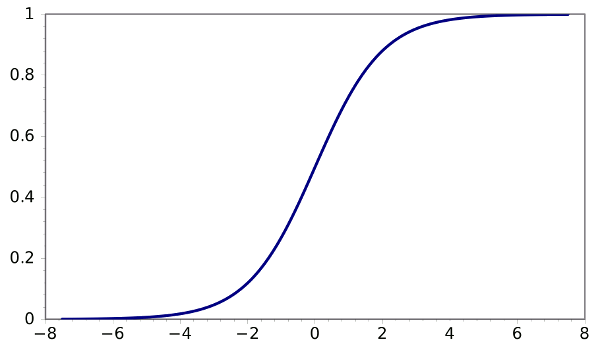
When a new process is invented you are at the very start at the bottom. As the idea/technique/technology gets more and more widespread and a lot of creative thinkers play with it you get rapid growth through the second phase, as each investment of time and energy yields large returns on your investment. Then when the new thing becomes the mature thing you have the top of the sigmoid function, where the law of diminishing returns rapidly cuts the gains. If you keep forcing advancement past a certain point your return on investment is negative instead of positive. Where the inventor spent months or years developing the new thing before anyone else saw it their investment was very large for very little return. When their new thing is taken up by the mass of creative people it gets investment from all over and it pays back that investment many times over, until your law of diminishing returns rears itself up. At the top of the curve the returns on investment are negative, only a subsidy by the culture as a whole makes it possible to continue "progress". My favorite example of this are the super jumbo aircraft that require incredibly maintenance costs for the facilities at airports that support them, but there are many other examples. Greer likes to use the computer example, but you can also use the international banking example or many others.
Jevon said investment in efficiency improvement always leads to greater consumption. Most people see this as greater efficiency lowering consumer price increasing the consumer base and thus increasing demand. I see a second step to this. To have consumers, which are the base that the current economy is built upon, the consumers must have a means of support that they can spend on consumption. When you have a small population where everyone can find a job this is not a problem, but as the population expands you encounter diminishing returns. More labor makes labor cheap, but it also makes consumers from the labor class unable to consume as much. Add in the concept of automation and suddenly the surplus labor force is even larger than it would have been from population growth alone, making labor even less valued. For a large manufacturing company the cost of increased automation was offset by the cost of labor going down, keeping things somewhat balanced. The initial cost of automation are high, and the maintenance on those automatic processes is far from free as well. If one of your workers calls in sick replacing them is not a huge cost, but if your fancy automated machine breaks down your process grinds to a halt. A large labor force is inherently redundant, a sophisticated automated process is inherently inclined to a single point failure halting the entire process.
To compensate for the natural disadvantages of building the system where single point failures are a strong possibility governments all over the place pay enormous subsidies for automation, and absorb the social costs of creating a large surplus labor pool. We have built a welfare system where unemployed labor class are not allowed to starve, and are given supplemental income to encourage continued consumption. We offer free or reduced education costs to the masses to shift them from the labor class to the management or soft science or banking or service industry. We even supplement retirement income for those too damaged or too old to actively participate in the labor force. This is the real paradox, so long as a society is wealthy it can keep all these subsidies to both the corporations on the one hand and the displaced workers on the other going, but it becomes increasingly unstable over time. Socialize the costs and privatize the profits is a house of cards, and any real hard wind or ground tremor will collapse the whole thing.
$this->bbcode_second_pass_quote('Alfred Tennyson', 'W')e are not now that strength which in old days
Moved earth and heaven, that which we are, we are;
One equal temper of heroic hearts,
Made weak by time and fate, but strong in will
To strive, to seek, to find, and not to yield.
Moved earth and heaven, that which we are, we are;
One equal temper of heroic hearts,
Made weak by time and fate, but strong in will
To strive, to seek, to find, and not to yield.
- Tanada
- Site Admin

- Posts: 17094
- Joined: Thu 28 Apr 2005, 03:00:00
- Location: South West shore Lake Erie, OH, USA
Re: When a cornucopian rejects Jevons Paradox
by onlooker » Tue 12 Jul 2016, 11:26:07
Very interesting Tanada. I encountered this concept of Jevon via discussions of a book by Joseph Tainter "The Collapse of Complex Societies" In which his thesis is about what you are saying that any complex system reaches a point of diminishing returns when the complexity begets the necessity of even more complexity and this can and will reach limits which bring about a diminishing return dynamic. This also I think parallels the 2nd law of thermodynamics or Entropy whereby the costs of maintaining anything is always subject to decay and chaotic interference. With regard to our current society, it does seem that in various ways our complex society has reached limits or the apex which you refer and now the momentum is downward as natural forces conspire to effect this diminishing return feedback. All humans can do is try to adapt and counter intuitively the manner to adapt is to accept this enforced simplicity I would think.
"We are mortal beings doomed to die
-
onlooker - Fission
- Posts: 10957
- Joined: Sun 10 Nov 2013, 13:49:04
- Location: NY, USA
Re: When a cornucopian rejects Jevons Paradox
by Whatever » Tue 12 Jul 2016, 12:05:05
$this->bbcode_second_pass_quote('Tanada', 'A') large labor force is inherently redundant, a sophisticated automated process is inherently inclined to a single point failure halting the entire process.
To compensate for the natural disadvantages of building the system where single point failures are a strong possibility governments all over the place pay enormous subsidies for automation, and absorb the social costs of creating a large surplus labor pool.
To compensate for the natural disadvantages of building the system where single point failures are a strong possibility governments all over the place pay enormous subsidies for automation, and absorb the social costs of creating a large surplus labor pool.
You make it sound like governments create large surplus labor pools as a fallback in case automation fails. That is silly. Having a large surplus labor pool is not insurance against collapse when a main system hub like the financial system fails. And a financial crash will be the natural result of declining total energy. In other words, collapse is the natural outcome of our present path. How could it be otherwise?
$this->bbcode_second_pass_quote('Tanada', '.')..any real hard wind or ground tremor will collapse the whole thing.
Yes, that is our current situation.
$this->bbcode_second_pass_quote('Tanada', 'P')rogress is best graphed on a Sigmoid Curve
But what happens after the curve flattens out due to diminishing returns?
In non-linear system dynamics, they refer to chaordic structures.
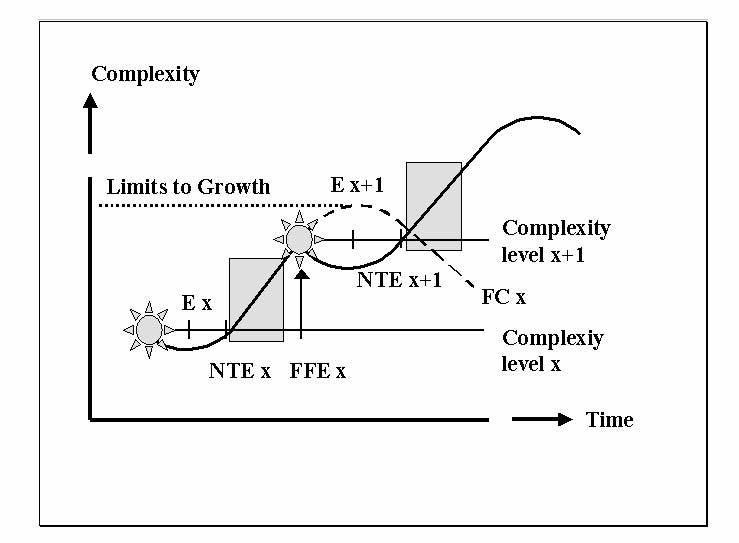
These arise in nature out of the Maximum Power Principle, which adds a time element to the second law of thermodynamics. Chaordic structures form and reinforce themselves to capture energy gradients and slow down the thermodynamic heat transfer. This is what life does. It is how complexity arises in nature.
Chaordic structures are inherently unstable due to entropy. When chaordic strutures begin to experience diminishing energy returns they either jump to a higher energy state or they collapse. Our civilization is one gigantic chaordic structure and there is zero chance that we are about to jump to a higher energy state.
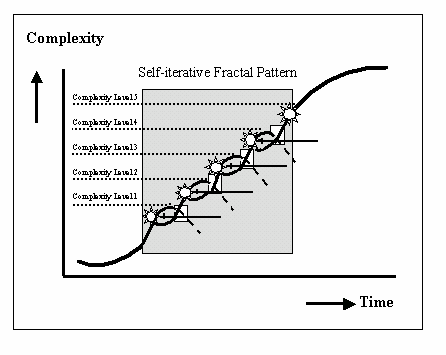
Collapse has already begun.
$this->bbcode_second_pass_quote('onlooker', 'V')ery interesting Tanada. I encountered this concept of Jevon via discussions of a book by Joseph Tainter "The Collapse of Complex Societies" In which his thesis is about what you are saying that any complex system reaches a point of diminishing returns when the complexity begets the necessity of even more complexity and this can and will reach limits which bring about a diminishing return dynamic.
What a strange sentence construction. You just said that when a complex system reaches a point of diminishing returns, it will reach limits which bring about diminishing returns.
 Joseph Tainter says that when a complex system reaches diminishing returns, it leads to COLLAPSE, not more diminishing returns. It sounds like you are taking the doomerly position, but you are really soft pedaling collapse!
 This site is composed mainly of outright peak oil deniers and people pretending to be doomers. This allows them to control the frame of the debate by carrying on safe, boring conversations that refuse to consider the reality that we are already in collapse. But you can't fool all of the people all of the time. SugarSeam was able to tell something was weird after only 11 posts worth of interaction with people here!
---Futilitist

Last edited by Whatever on Tue 12 Jul 2016, 13:58:22, edited 1 time in total.



![[smilie=3some.gif]](https://udev.peakoil.com/forums/images/smilies/3some.gif "3some")