PeakOil is You
Fort McMurray on fire 2016
Re: Fort McMurray on fire
 by WildRose » Thu 05 May 2016, 22:41:06
I live in the Edmonton area, rockdoc, care to say what part of Alberta you're in?
-

WildRose - Heavy Crude

- Posts: 1881
- Joined: Wed 21 Jun 2006, 03:00:00
Re: Fort McMurray on fire
by yellowcanoe » Thu 05 May 2016, 22:59:33
$this->bbcode_second_pass_quote('WildRose', 'I') live in Alberta rockdoc. I'm aware of the decreased snowfalls of recent winters, milder temperatures, hardly any standing water in early spring - there was not much moisture for the forest to begin with, since we had hardly any snow. Do you know that outdoor skating is something we can hardly do in Alberta now in the winter? We're lucky if we can keep an ice rink going for 4 weeks or so with the constant melting during the day and lack of good, cold temperatures at night. I used to run in winter temperatures of -30 to -35, haven't had to dress for that in a long time. Being an outdoor enthusiast, I see and feel the dryness, look at the trees and know they're struggling, see varieties of plants and weeds growing that have appeared from the south and grow here now. And the wind - all year long. Used to only be strong for 6 weeks or so in the spring, you could expect it then, but now it's rare to have a calm day. How do you explain all of this with just "weather"?
Related to this is the fact that the jet stream after being pushed north into Alaska and Western Canada then tends to plunge down into Ontario, Quebec and the NE US resulting in much colder winters than we normally receive. This winters El Nino did give us a warm December, January and February but as soon as the El Nino weakened we went right back to below normal temperatures. Lake ice was much thinner than usual due to the warm weather for most of the winter which suggested we would have an early ice out. However, March and April were so cold that ice out wound up being later than normal. Ice on the largest lake in Algonquin Park lasted to May 1 and we expect to encounter patches of snow on the portage trails when we start our first canoe trip of the year tomorrow. I fully expect we'll get another unusually cold winter later this year.
"new housing construction" is spelled h-a-b-i-t-a-t d-e-s-t-r-u-c-t-i-o-n.
- yellowcanoe
- Tar Sands

- Posts: 965
- Joined: Fri 15 Nov 2013, 14:42:27
- Location: Ottawa, Canada
Re: Fort McMurray on fire
by WildRose » Thu 05 May 2016, 23:33:32
Thanks for your information, yellowcanoe. I have family in the southern part of Ontario who actually used to bug us all the time about how cold we were in Alberta compared to how warm they were, but of late they've been surprised by the reversal.
Dohboi, thanks for that information from robertscribbler, interesting to say the least, as we don't hear all of that in the mainstream news, of course.
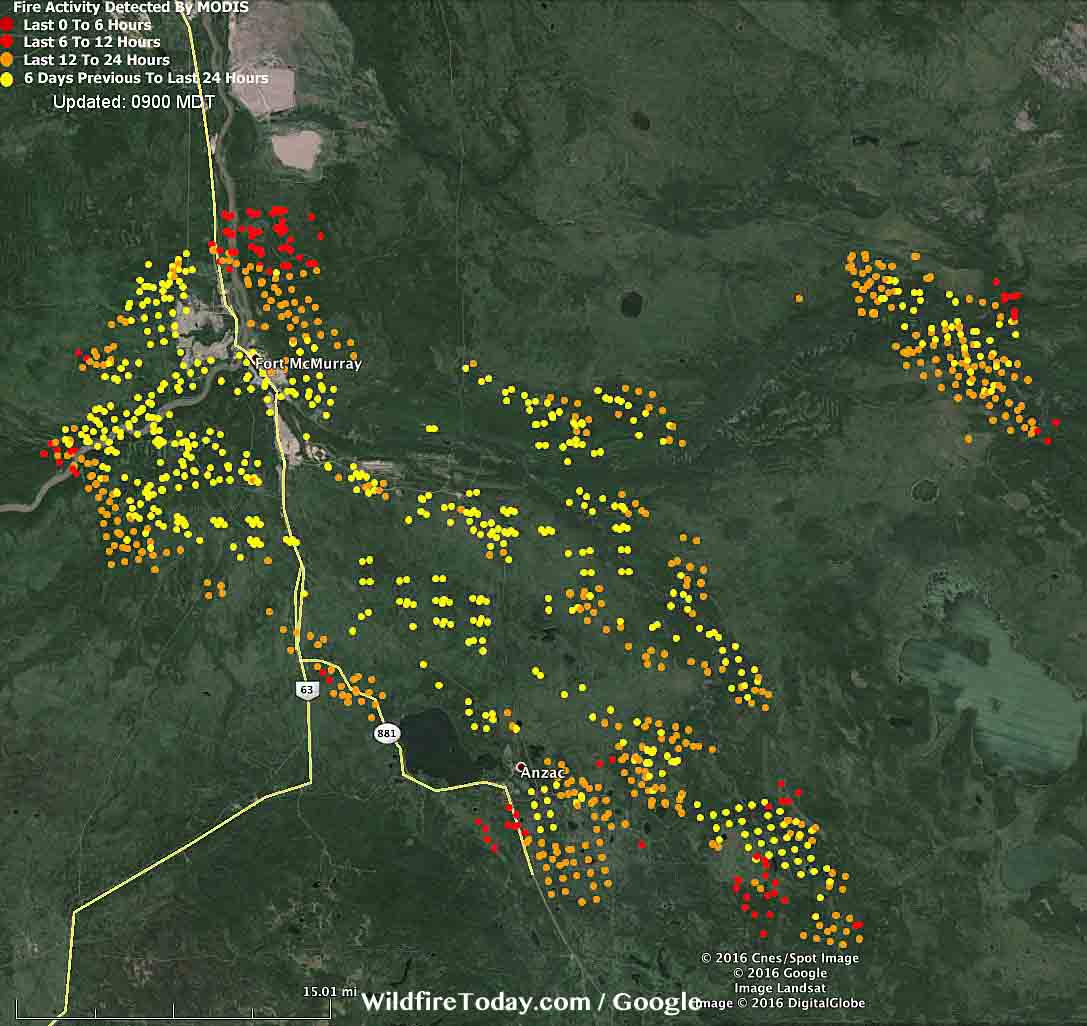
Just to put the size of the Fort McMurray fire in context, as of the morning of May 5 it was the size of the city of Calgary.
Dohboi, thanks for that information from robertscribbler, interesting to say the least, as we don't hear all of that in the mainstream news, of course.
Just to put the size of the Fort McMurray fire in context, as of the morning of May 5 it was the size of the city of Calgary.
-
WildRose - Heavy Crude
- Posts: 1881
- Joined: Wed 21 Jun 2006, 03:00:00
Re: Fort McMurray on fire
by WildRose » Fri 06 May 2016, 00:49:47
Oil sands projects south of Fort McMurray evacuated as fire is within a few kilometers:
http://www.cbc.ca/news/canada/calgary/a ... -1.3569303
http://www.cbc.ca/news/canada/calgary/a ... -1.3569303
-
WildRose - Heavy Crude
- Posts: 1881
- Joined: Wed 21 Jun 2006, 03:00:00
Fort McMurray wild fires
by EdwinSm » Fri 06 May 2016, 04:51:13
I have been following the Fort McMurray fires, because I have some distant relatives who were living there. Most of them were able to flee south to cabins they had on a lake, but a few went north with the hospital staff to set up in one of the oil camps.
Apart from personal interest, the oil question is what is this going to do to the supply of oil from the tar sands further north? The BBC said "The blaze started on Sunday in Canada's oil sands region and many oil sands projects have cut production." Is there any word on if this will make a significant dent in the oil production, or is it more like a tea cup in the ocean of surplus?
Apart from personal interest, the oil question is what is this going to do to the supply of oil from the tar sands further north? The BBC said "The blaze started on Sunday in Canada's oil sands region and many oil sands projects have cut production." Is there any word on if this will make a significant dent in the oil production, or is it more like a tea cup in the ocean of surplus?
- EdwinSm
- Tar Sands
- Posts: 601
- Joined: Thu 07 Jun 2012, 04:23:59
Re: Fort McMurray on fire
by Newfie » Fri 06 May 2016, 06:52:00
My cousins daughter and family were at the Shell site and were evacuated to Calgary.
A few years ago another cousin nd his family were evacuated from Labrador City due to fires. That time we had thick smoke, 1 mile vis 500 miles away in Bonavista.
A few years ago another cousin nd his family were evacuated from Labrador City due to fires. That time we had thick smoke, 1 mile vis 500 miles away in Bonavista.
-

Newfie - Forum Moderator

- Posts: 18651
- Joined: Thu 15 Nov 2007, 04:00:00
- Location: Between Canada and Carribean
Re: Fort McMurray on fire
by Tanada » Fri 06 May 2016, 08:45:10
$this->bbcode_second_pass_quote('Newfie', 'M')y cousins daughter and family were at the Shell site and were evacuated to Calgary.
A few years ago another cousin nd his family were evacuated from Labrador City due to fires. That time we had thick smoke, 1 mile vis 500 miles away in Bonavista.
A few years ago another cousin nd his family were evacuated from Labrador City due to fires. That time we had thick smoke, 1 mile vis 500 miles away in Bonavista.
Growing up in Michigan, where logging is still a smaller scale industry, it seems that a serious forest fire would break out about every 15 years in some part of the state. Usually in drought or at least dry years. During the major drought in 1988 there were pop up fires all over from people doing stupid things and those things getting out of control.
The good news is after a major fire clears out all the forest floor litter that has accumulated the chances of a new fire are pretty low for 20-50 years before the fuel accumulates again.
$this->bbcode_second_pass_quote('Alfred Tennyson', 'W')e are not now that strength which in old days
Moved earth and heaven, that which we are, we are;
One equal temper of heroic hearts,
Made weak by time and fate, but strong in will
To strive, to seek, to find, and not to yield.
Moved earth and heaven, that which we are, we are;
One equal temper of heroic hearts,
Made weak by time and fate, but strong in will
To strive, to seek, to find, and not to yield.
- Tanada
- Site Admin

- Posts: 17094
- Joined: Thu 28 Apr 2005, 03:00:00
- Location: South West shore Lake Erie, OH, USA
Re: Fort McMurray on fire
by vox_mundi » Fri 06 May 2016, 11:30:52

May 3, 2016

May 4, 2016
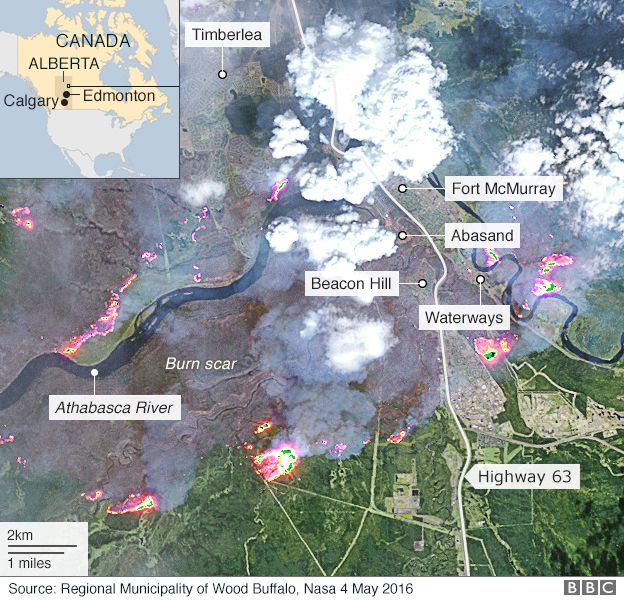
Size of Fort McMurray fire grows as fast as losses mount
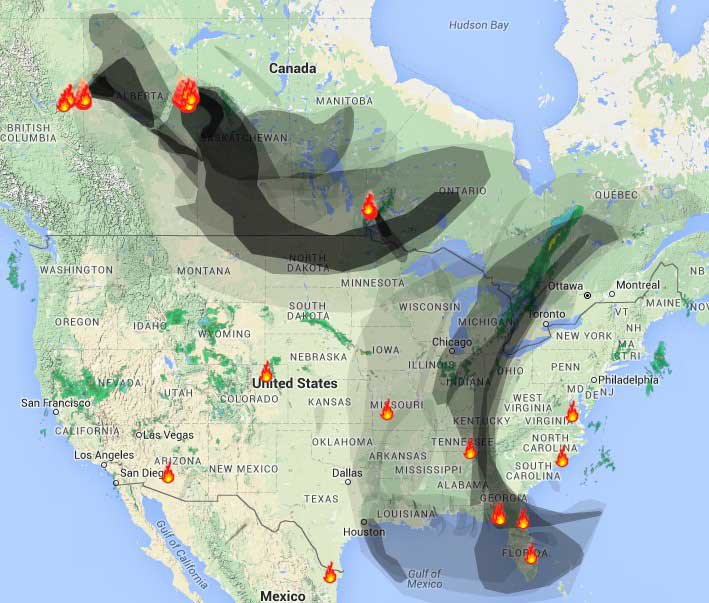
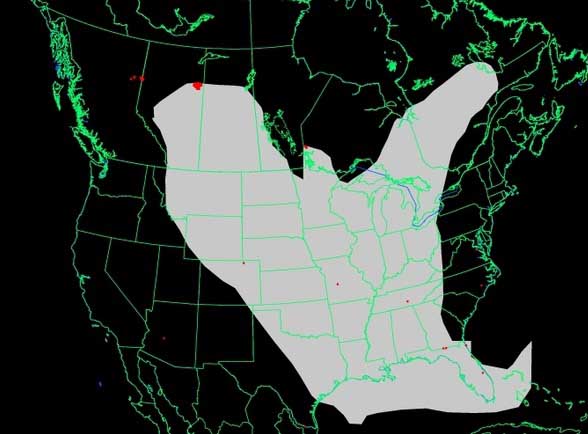
$this->bbcode_second_pass_quote('', '[')b]Wildfires ravaging the center of Canada’s oil production region in northern Alberta extended their reach overnight, covering 1,000 square kilometers (390 square miles) as police began shepherding a convoy of 1,500 vehicles to safety through the now-devastated town of Fort McMurray.
$this->bbcode_second_pass_quote('', 'B')ank of Montreal cut its second-quarter gross domestic product estimate to zero from 1.5 percent growth, citing “severe disruptions to oil production” due to the fires. BMO said the estimate was a placeholder, dependent on receiving more information on the scope of the disaster.
El Nino added to Alberta's fire woes before Fort McMurray burned
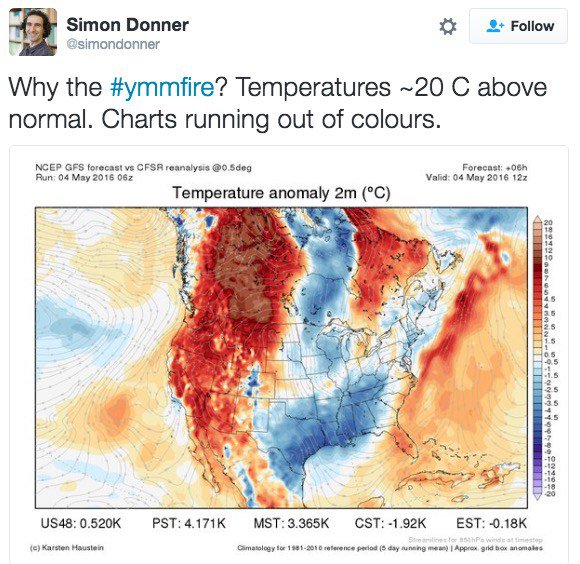
$this->bbcode_second_pass_quote('', '[')b]An El Nino in the Pacific disrupted weather patterns to bring northern Alberta a dry fall and very little snow throughout the winter, said Daniel Thompson, a fire research scientist with Natural Resources Canada in Edmonton. Then, in the last week, record temperatures along with dry air and winds added to the tinderbox environment.
That's what you get with El Nino, and not just in Canada: the phenomenon's been blamed for blazes in Indonesia and high-risk conditions across the western U.S. "In 1997-98, we saw a similar sort of setup," Thompson said. "It's safe to say that weather played a major role in the fire here."
$this->bbcode_second_pass_quote('', 'T')he area around the oil town of Fort McMurray, worst-hit by the fire, gets most of its rain in the summer months, so snow is important to give the ground a drink in spring when it melts off, Thompson said.
It's abnormally dry right now after various stages of drought since last year, according to the North American Drought Monitor, which is overseen by the U.S. National Centers for Environmental Information in Asheville, North Carolina.
$this->bbcode_second_pass_quote('', 'I')n Canada, the fire risk in much of Alberta and neighboring Saskatchewan is currently rated as extreme, the highest category a five-step danger scale, and the threat is forecast to remain high through August.
Alberta's weather conditions nudged the fire season two weeks earlier than usual, said Judith Kulig, a professor of health services at the University of Lethbridge in the province. ... "There have been predictions that, as climate change progresses, there would be more disasters," said Kulig, who studies the impacts of such events on communities. "We know this past winter was dryer, we didn't have the snowpack, the conditions were ripe for this perfect storm."
Thompson pointed to something else that's helped the spread of the fire -- the amount of daylight. In Fort McMurray, more than 500 miles north of the U.S. border, it starts getting light at around 4:45 a.m. and doesn't get dark till 10 p.m. With the sun in the sky longer than in, say, California, temperatures stay higher for more hours of the day and it keeps the air dry.