by Ibon » Fri 20 Mar 2015, 22:37:31
$this->bbcode_second_pass_quote('Pops', '
')
You are presenting exactly the same binary choice as KJ, and pardon me saying, just as self serving; Righteous Planet Protector (& mild mannered cloud forest hotelier) VS Evil Kudzu Ape.
Can you clarify the binary choice please? I didn't know I was presenting a choice of anything actually. Or do you think I am not including myself as a Kudzu Ape? And no where did I use the adjective evil in connection with Kudzu Ape. Kudzu Ape's current invasiveness is not good or evil. It just is.
Patiently awaiting the pathogens. Our resiliency resembles an invasive weed. We are the Kudzu Ape
blog: http://blog.mounttotumas.com/
website: http://www.mounttotumas.com
-

Ibon
- Expert

-
- Posts: 9572
- Joined: Fri 03 Dec 2004, 04:00:00
- Location: Volcan, Panama
-
by Keith_McClary » Sat 21 Mar 2015, 01:35:49
$this->bbcode_second_pass_quote('GASMON', 'O')h, for the good old days of real engineering.
Gas
I didn't know about
Isambard Kingdom Brunel:

or the
Royal Albert Bridge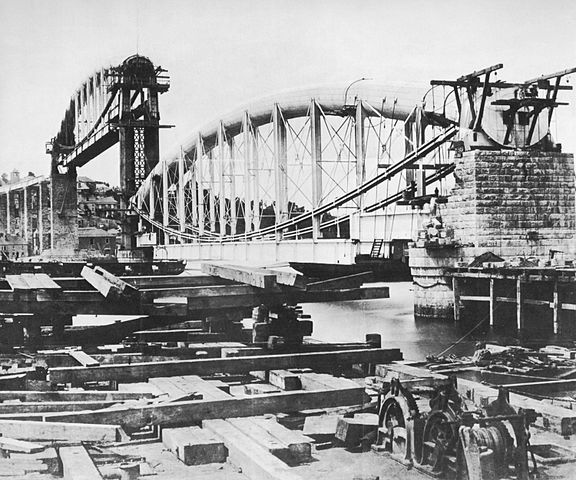
and his other engineering achievements.
Facebook knows you're a dog.
-

Keith_McClary
- Light Sweet Crude

-
- Posts: 7344
- Joined: Wed 21 Jul 2004, 03:00:00
- Location: Suburban tar sands
-
by Ibon » Sun 22 Mar 2015, 08:57:32
$this->bbcode_second_pass_quote('SeaGypsy', '
')Highlighted default+letting just to note that even 'letting' is a form of design
SeaGypsy's comment has been nagging at me the last couple of days. By not actively addressing and confronting human overshoot we are in a way designing the solution to come from external consequences. But we wont recognize them this way.
War for example. Current geopolitical conflicts in the middle east are about resources. This is something we have designed as much as it is a default consequence of allowing ourselves to be dependent on energy from an unstable region. Strictly speaking this is not a consequence of human overshoot since we could still feed ourselves and survive without the resources in the middle east.
Since we are defending a status quo that consumes so much non essential energy it is really difficult to conclude that war in the middle east is a consequence of human overshoot. The same could be said for all the other constraints. Since we use so much water for non essential use or since we waste so much food etc. it will be very difficult for our modern civilization to have this light bulb moment of realization that consequences around us are a result of ecological imbalances or human overshoot. Consequences will always be framed from issues within our civilization and not from the externality of our biosphere and environment. Even when the deeper origins are indeed related to ecological constraints.
This leaves me with a disquieting realization in terms of a central part of my thesis that consequences will be the driving force of transition.
At what point will consequences be understood for what they are, as ecological constraints, instead of as conflicts of civilization?
There are so few of us out there that look at our global situation through the lens of ecology. I have been maybe deluding myself in thinking that all we need to bring ecology back into central focus is for consequences to wake people up.
This line of thinking requires more incubation as I am not clear at the moment. Any thoughts are appreciated.
Patiently awaiting the pathogens. Our resiliency resembles an invasive weed. We are the Kudzu Ape
blog: http://blog.mounttotumas.com/
website: http://www.mounttotumas.com
-
Ibon
- Expert
-
- Posts: 9572
- Joined: Fri 03 Dec 2004, 04:00:00
- Location: Volcan, Panama
-
by Ibon » Sun 22 Mar 2015, 21:34:46
Back in the 70’s the environmental movement was ideologically driven but lost to a competing ideology of Yuppism and conspicuous consumption, starting in earnest during the Reagan years. Some of us oldsters here remember this well.
I have been saying for years on this site that this time around it isn’t ideology but rather the catalyst of consequences that will drive transition. I am beginning to realize that this assumption is not correct, for reasons we are discussing here. Consequences alone will not be enough.
$this->bbcode_second_pass_quote('h2', '
')The other glaring unexamined bias here of course is a fundamental humanism, which leads a mind to conclude that it is better to generate and sustain more humans at all costs today than to drop populations so humans can also live tomorrow, along with the remains of our fragmented and destroyed ecosystems. Humanism of course is a pathological mental disorder
This is part of the problem. Humans exceptional and apart from nature. This goes along with what I mentioned above about consequences being framed from within our civilization and not seen as ecological.
$this->bbcode_second_pass_quote('kanon', '
')The theory I have been trying to develop is that civilized people are motivated by social status concerns, and these could possibly be manipulated away from acquisition towards ecology. I am doubtful, as it occurs to me that the Humanist basis for philosophical or moral values is self-referential and prevents any values outside the social milieu being the basis for consensus or action.
I am also doubtful but there is some possibility here. Status seeking is innate for humans. The symbols however associated with that status can change.
$this->bbcode_second_pass_quote('kanon', '
')IMHO, it is not hopeless, but bringing ecology into central focus will not just happen. I think the ranks of "ecologists" are growing, but I don't see any congealing or ascendency at this time.
Yes perhaps growing but growing faster is the number born into urban landscapes. If you think of the largest story of human migration in history of our species, 400 million chinese migrating from subsistence agriculture to urban environments chasing their first factory job, the hundreds of millions in Indonesia India and Brazil and many other countries wanting to quench their thirst with material improvements, etc. Think of any inner city. There is no growing in the ranks of ecologists.
Here is my reason for some optimism though. In the 70's yuppism won the ideological struggle and environmentalists were portrayed as wearing burlap bags for clothes. Yuppism was new and gltizy, a shining new morning in America and what followed was an amazing chapter of affluence and materialism. Oil was cheap, technology blossomed and the Yuppi ideology of materialism was echoed by a strong economy, blossoming technology, the unfolding digital age, optimism. You Can have it all. To repeat Yuppism was a product of the abundant times. How could the environmentalists with their passive solar heaters compete with this exuberance?
Today this counter point to environmentalism has lost its shine. The status quo has cracks and is aging and does not have the gleam it did back then. There is not going to be another round of this exuberance and material cornucopia. Instead there will be flat lining and ratcheting down in the decades ahead as constraints squeeze. . In this scenario frugality and conservation and sustainability will create an ideology that will match these physical constraints. That is where an ecological orientation can win out this time, because consequences will keep the status quo constrained and there will be no "Yuppie competitor".
Consequences alone are not enough. But the ideology that can evolve around these consequences can be a winning ideology this time around. It is the status quo that is increasingly wearing the burlap bags as clothes this time around as it fails to delivery on its promises.
Short term urgency of crisis solving will take precedent over the longer view of ecological sustainability but there will be emerging generations that will question like they always do.... and they will look for a sexier set of status symbols than the dying paradigm around them is offering. So yes Kanon, maybe you are on to something there.
Patiently awaiting the pathogens. Our resiliency resembles an invasive weed. We are the Kudzu Ape
blog: http://blog.mounttotumas.com/
website: http://www.mounttotumas.com
by Ibon » Mon 23 Mar 2015, 07:25:05
$this->bbcode_second_pass_quote('WildRose', 'T')hings just aren't so important. I don't know how the economy is going to reconcile this.
Demand destruction may not only come from economic contraction but from culture as well if the emerging generations continue to disassociate themselves with "material things" as a source of happiness.
I am also noticing this trend with the young generation as you have said. Kanon mentioned the same when he said he observed the ranks of "ecologists" growing.
But we have to be careful about this assumption because of the huge chunk of humanity just entering higher consumption. That is why you mentioned you are seeing this culture of less consumption in Canadians who have lived in Canada all their lives. What you observe does not apply to recent Chinese and Filipino immigrants in your country.
On the other hand the North American way of life of owning your house and car has been the worlds model that is now being copied everywhere. But if North Americans themselves can no longer afford or culturally move away from jaded materialism what becomes the world's new cultural model?
Are we experiencing the opening acts of cultural transition away from materialism in this current crop of millennials?
Patiently awaiting the pathogens. Our resiliency resembles an invasive weed. We are the Kudzu Ape
blog: http://blog.mounttotumas.com/
website: http://www.mounttotumas.com
-
Ibon
- Expert
-
- Posts: 9572
- Joined: Fri 03 Dec 2004, 04:00:00
- Location: Volcan, Panama
-
by kanon » Mon 23 Mar 2015, 14:30:46
$this->bbcode_second_pass_quote('onlooker', 'O')nly in the aftermath will the need to educate those remaining be truly important. Those who remain will wonder what are the real causes for this Cataclysm. At that point, mankind must understand in the most profound sense that by using and abusing Earth, humans almost became extinct.
I suggest the possibility that it may be the ones who are educated that see the aftermath.
I was looking into critics of the humanist viewpoint and came across the old essay
The Historical Roots of Our Ecologic Crisis, published in 1967. He concludes:
$this->bbcode_second_pass_quote('', 'T')he greatest spiritual revolutionary in Western history, Saint Francis, proposed what he thought was an alternative Christian view of nature and man's relation to it; he tried to substitute the idea of the equality of all creatures, including man, for the idea of man's limitless rule of creation. He failed. Both our present science and our present technology are so tinctured with orthodox Christian arrogance toward nature that no
solution for our ecologic crisis can be expected from them alone.
Since the roots of our trouble are so largely religious, the remedy must also be essentially religious, whether we call it that or not. We must rethink and refeel our nature and destiny. The profoundly religious, but heretical, sense of the primitive Franciscans for the spiritual autonomy of all parts of nature may point a direction. I propose Francis as a patron saint for ecologists. (emphasis added)
And from the Franciscan religious order,
A Franciscan Approach to Climate Change which I take to be an elemental statement of their philosophy, despite knowing little about them.
$this->bbcode_second_pass_quote('', 'T')he stewardship approach sets humans at the top of the Creation hierarchy, and implores people to be responsible and considerate when they exercise dominion over Creation. Franciscans are much more humble and intimate in our outlook. We are to treat Creation as our brother and sister and mother, as members of our family. We are not in a position of power and control, but rather in a loving relationship of mutual concern and care for our family. Right relationship with Brother Wind, Sister Water and Mother Earth helps us to encounter God in Creation. Climate Change affects our family, and puts our entire family into harm’s way.
However, John Micheal Greer has a different take. He often talks of pendulous, slow developments of culture and makes the comment in
The Barbarism of Reflection$this->bbcode_second_pass_quote('', 't')he abstract conceptions of contemporary industrial culture have become dependent on the civil religion of progress, and are at least as vulnerable to the spreading failure of that secular faith to deal with a world in which progress is rapidly becoming a thing of the past.
It’s here that reflection, the third mode of thinking discussed in last week’s post, takes over the historical process. Reflection, thinking about thinking, is the most recent of the modes and the least thoroughly debugged. . . The trouble with reflection is that thinking about thinking, without the limits just named, quickly shows up the sharp limitations on the human mind mentioned earlier in this essay. . . . Jean-Paul Sartre’s fiction expressed the resulting dilemma memorably: given that it’s impossible to be certain of anything, how can you find a reason to do anything at all? . . .
It so happens, for example, that there’s one consistently effective way to short-circuit the plunge into nihilism and the psychological and social chaos that results from it. . .
the raw figurative narratives of religion. What Spengler called the Second Religiosity—the renewal of religion in the aftermath of an age of reason—thus emerges in every civilization’s late history as the answer to nihilism; what drives it is the failure of rationalism either to deal with the multiplying crises of a society in decline or to provide some alternative to the infinite regress of reflection run amok.
by Ibon » Mon 23 Mar 2015, 15:20:11
$this->bbcode_second_pass_quote('kanon', '
')
I was looking into critics of the humanist viewpoint and came across the old essay
The Historical Roots of Our Ecologic Crisis, published in 1967. He concludes:
$this->bbcode_second_pass_quote('', 'T')he greatest spiritual revolutionary in Western history, Saint Francis, proposed what he thought was an alternative Christian view of nature and man's relation to it; he tried to substitute the idea of the equality of all creatures, including man, for the idea of man's limitless rule of creation. He failed. Both our present science and our present technology are so tinctured with orthodox Christian arrogance toward nature that no
solution for our ecologic crisis can be expected from them alone.
Since the roots of our trouble are so largely religious, the remedy must also be essentially religious, whether we call it that or not. We must rethink and refeel our nature and destiny. The profoundly religious, but heretical, sense of the primitive Franciscans for the spiritual autonomy of all parts of nature may point a direction. I propose Francis as a patron saint for ecologists. (emphasis added)
Beautiful passage and spot on. On the thread I started regarding Worshiping the Overshoot Predator we discussed quite a bit the need of a religious renaissance of sorts in our relationship with nature. So many posters here are so jaded by institutional religions with their atheistic leanings that they cringe over any reference to religion.
Secular scientific materialism has done more harm to our environment than the Christian passage on dominion. There is the argument that the spiritual foundations of the industrial revolution are those very christian passages of domination over nature but I don't buy into that 100%. If we all became secular atheists tomorrow would we abandon our destructive relationship toward mother earth? I doubt it.
If you take Saint Francis proposed view of nature with equality of all creatures and humans instead of human domination then you can no longer rape and pillage native ecosystems and replace them with human artificial environments. What this actually means is the willful cutting off of resources that allows for our consumption and population growth. A new religious orientation toward nature that holds the sanctity of natural ecosystems with the same right that we extend toward property ownership.
Worshiping those forces that hold us within limits is not supporting a death cult. There are resource poor places on the planet today where communities humbly allow their aged to die without pumping insane amount of resources to extend life. Is this not related to the humility a Franciscan is promoting?
Cynics will shake their heads that we are truly delusional in even discussing this as we seem so hell bent on consuming our way through our planets resources.
I have always believed that the consequences will be draconian enough to lay the foundation for a religious renaissance that puts nature and our biosphere in the center displacing the current humanism...... which after all is an
ism also

Patiently awaiting the pathogens. Our resiliency resembles an invasive weed. We are the Kudzu Ape
blog: http://blog.mounttotumas.com/
website: http://www.mounttotumas.com
by Ibon » Mon 23 Mar 2015, 17:07:00
$this->bbcode_second_pass_quote('kanon', '')$this->bbcode_second_pass_quote('Ibon', '
')If you take Saint Francis proposed view of nature with equality of all creatures and humans instead of human domination then you can no longer rape and pillage native ecosystems and replace them with human artificial environments.
The only problem is the Franciscan view is generally ignored.
Exactly. Which is why we are speculating on those forces that can cause a change in our cultural outlook toward our mother earth. Consequences and ideology and how they will interplay. Younger generations emerging will deal with this. We can really only be mentors from what we have lived in our own generation. We can't do more than this and should also humbly accept our own increasing obsolescence every day.
The cultural tools that will resolve this will happen living through the realities as an emerging younger generation. We can at most be mentors in how we may inspire through our words and acts the younger generations who will physically live through this.
We should not forget we are sitting in our arm chairs still very much embedded in the culture that derived from affluence and abundance.
You have to remember that nothing changes now while resilience in the status quo remains. Don't expect the momentum of change to match your own biological life span. If you do you will get frustrated for the chances of change matching your own life's aging is very very remote.
I come and dabble in these topics and the drop them like a hot potato and go back to pinning bugs and walking the cloud forest trails.
Take my advice. Don't over obsess. Change is not in cerebral speculation. It happens in the interplay between physical consequences and ideology and the actors in this play are the generations emerging, not us.
Patiently awaiting the pathogens. Our resiliency resembles an invasive weed. We are the Kudzu Ape
blog: http://blog.mounttotumas.com/
website: http://www.mounttotumas.com