PeakOil is You
Peak Oil: a fertile concept
Re: Peak Oil: a fertile concept
 by Plantagenet » Sat 31 Aug 2013, 03:42:46
$this->bbcode_second_pass_quote('ROCKMAN', 'G')raeme - Can't stop...someone has got to keep all those kiwi cars fueled. Can't run them all with the power from Rotorua. I've also been lucky enough to see the glow worms.
The glow worms are a beautiful sight.
I wonder if any kiwis are trying to harness glow worm energy?
The glow worms go dark when there is noise but it shouldn't be too hard using DNA manipulation to breed a race of deaf super glow worms who would glow bright enough for room illumination
-

Plantagenet - Expert

- Posts: 26765
- Joined: Mon 09 Apr 2007, 03:00:00
- Location: Alaska (its much bigger than Texas).
Re: Peak Oil: a fertile concept
by ROCKMAN » Sat 31 Aug 2013, 09:12:54
Graeme - Sounds like a good group for all you hydrocarbon hogs to join. Then we wouldn't be tempted to supply your addiction. LOL
-

ROCKMAN - Expert
- Posts: 11397
- Joined: Tue 27 May 2008, 03:00:00
- Location: TEXAS
Re: Peak Oil: a fertile concept
by SamInNebraska » Sat 31 Aug 2013, 11:01:03
$this->bbcode_second_pass_quote('Graeme', '[')b]Peak Oil: a fertile concept
$this->bbcode_second_pass_quote('', '
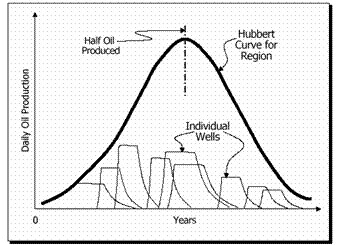
')The problem may be simply that the idea had too much success. Let's go back to 1998, when Colin Campbell and Jean Laherrere raised up again a problem that had been first noticed by Marion King Hubbert, in 1956.
The pioneering work by Cambell and Laherrere gave rise to a whole scientific field....
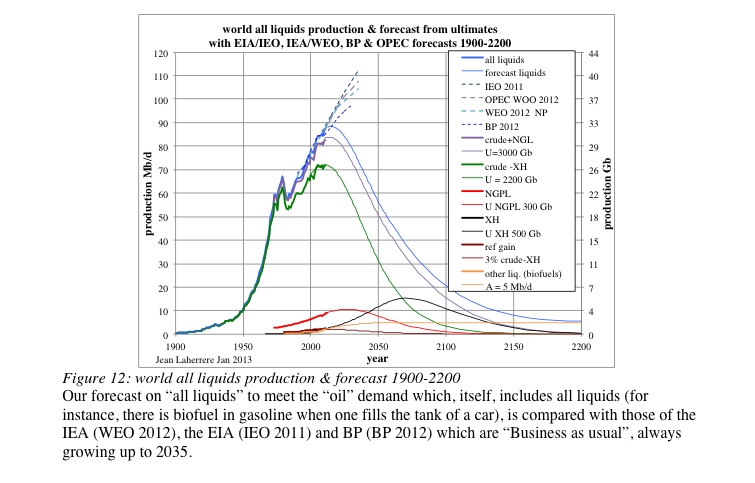
But the predictions based on the peak oil concept turned out to be spectacularly successful, at least within the unavoidable uncertainties involved....
So, “peakers” won their bet with cornucopians.....
$this->bbcode_second_pass_quote('', '
')The problem may be simply that the idea had too much success. Let's go back to 1998, when Colin Campbell and Jean Laherrere raised up again a problem that had been first noticed by Marion King Hubbert, in 1956.
The pioneering work by Cambell and Laherrere gave rise to a whole scientific field....
But the predictions based on the peak oil concept turned out to be spectacularly successful, at least within the unavoidable uncertainties involved....
So, “peakers” won their bet with cornucopians.....
WHAT????
This is perhaps the most self serving, factually and logically wrong articles I have ever seen related to peak oil. It appears to be an attempt to negate the Three Nails article of Euan in as grandiose way as possible, a klaxon call of triumph on the battlefield by the army who's only visible parts are their backsides as they drop their weapons and flee the consequences of their bad strategy and leadership.
Pioneering work by Campbell and Laherrere? What? Depletion was known, being studied rigorously and was feared since late in the 19th century, before either of these gentlemen were born. Hubbert in 1956? Are they kidding, or did they just not know about his work in 1949? Or 1938? Predictions spectacularly successful? Which ones? The 2008 call which has driven TOD from the field of battle in shame? The ones from 2005? 2000? Campbell's prediction of peak oil in 1989? The EIA prediction in 2037 which every day becomes a more reasonable estimate than the others? Peakers won their bet? With who? The only peaker "bet" made was by Simmons, and he LOST.
I wish everyone could have a memory as selective as this article demonstrates, we would all be happy, 6 inches taller, have better teeth, none of the foibles of age would show, we would be better endowed and popular. When you are this selective in what you allow yourself to see, it is usually referred to as a mental dysfunction of some sort or another.
The closing of TOD has triggered the next phase in the peak oil story...the attempts to save face. Those involved know, they KNOW, that what is coming within the decade will be the writing of peak oil history. And they know, deep down, that they are now about to become a part of it, and they are scared to death that the part they are defining for all the ages is how NOT to do peak oil predictions. They will be footnotes in papers, references in journals, the boogeyman used to scare future researchers and academics on how not to hype, discuss, or predict resource scarcity.
This is amazing to watch to action, you can see this kind of after action, post-mortem dissection in the geologic literature related to plate tectonics. Blogs like TOD are pop culture/MSM quality reporting, so maybe this type of dispute doesn't get settled quite the same way as the professionals in the science journals, but it sure looks like TOD wants to be considered as journalism above pop culture, so the price they will pay for failure might certainly look the same as the folks who didn't buy into plate tectonics until it was too late to salvage their professional reputations.
- SamInNebraska
- Lignite

- Posts: 313
- Joined: Sun 14 Oct 2012, 23:05:58
Re: Peak Oil: a fertile concept
by Graeme » Sun 01 Sep 2013, 05:53:33
$this->bbcode_second_pass_quote('ROCKMAN', 'G')raeme - Sounds like a good group for all you hydrocarbon hogs to join. Then we wouldn't be tempted to supply your addiction. LOL
Well, if I'm a so-called "addict" and you are a supplier, then I think it's about time that agents from the DEA were called in to stop you!
Human history becomes more and more a race between education and catastrophe. H. G. Wells.
Fatih Birol's motto: leave oil before it leaves us.
Fatih Birol's motto: leave oil before it leaves us.
-

Graeme - Fusion

- Posts: 13258
- Joined: Fri 04 Mar 2005, 04:00:00
- Location: New Zealand