Paleo - an answer befitting a systems engineer. Certainly in a system as complex as our economy there are plenty of stress indicators, particularly for those trained to observe it. In early August of 2008 my aunt, who had some significant Wall Street holdings, was quietly told by her broker to get out immediately. Background levels of system-wide stress, in consistently high oil/gas prices and decreased consumption, have become normal over the past few years. I first learned about the Baltic dry goods index as an indicator of global economic health in 2009 (when both were bad). Perhaps Lloyd's List Intelligence or something similar would be a good lens (though I don't doubt the subscription is pricey). On the consumer side, here in the States, perhaps interest rates aren't a bad warning? The Fed's been doing just about everything it can, bloating its balance sheet, to keep them low for the last four or five years. Now its stated intention is to stop doing that. Interest rates (which it helps to set) are probably a good warning as to what the market's reaction will be. But I'm no economist (and I don't have too much of a clue what the different interest rates are tied to). An actual economist would hopefully have a faster and more reliable marker than that.
On the topic of renewables, according to recent EIA data, the situation in my opinion actually looks good:
with one gigantic caveat: we use petroleum primarily for transportation, and some sectors (like air travel and shipping) aren't susceptible to getting off of it any time soon. We might possibly stand a chance with personal vehicles, but the barriers here are still pretty high. Critical elements like lithium are limited. Cost is a serious constraint. Since I want to pay a house off, I won't be buying a $70+ K Tesla any time soon, and a Volt or a Leaf simply don't have the capability I need. Their range is too short (not even 100 miles)--that's the lot of many folks (not all and maybe not most). Range and capability doesn't even apply to work vehicles like light trucks and anything heavier. Still, reducing oil consumption by moving even part of the market to electric would be helpful--or the bare minimum. And it's precisely this I'm least hopeful about. Until such time as EVs have been viable for long enough, and are widespread enough, that a viable secondary market for the sub-$10K purchasers to realistically think about them (and in today's economy, that's an increasing number of people), then I think their potential is limited (0.37% US market share in 2012). Add to that the charge station build-out which would need to happen sooner than later. Insurmountable challenges? Perhaps not, within 20 years. Within five years, probably.



PeakOil is You
Signs to look for that an impending oil shock is coming?
Re: Signs to look for that an impending oil shock is coming?
 by agramante » Sat 06 Jul 2013, 04:40:33
You do not have the required permissions to view the files attached to this post.
- agramante
- Peat

- Posts: 131
- Joined: Fri 31 May 2013, 23:06:39
Re: Signs to look for that an impending oil shock is coming?
by dolanbaker » Sat 06 Jul 2013, 06:03:36
$this->bbcode_second_pass_quote('AgentR11', 'T')o the header topic. Simple answer.
When distributors and producers start whining loudly about losing money, even while prices are high.
When distributors and producers start whining loudly about losing money, even while prices are high.
And prices stay high in the face of "demand destruction" brought about by consumers cutting back on fuel purchases.
Religion is regarded by the common people as true, by the wise as false, and by rulers as useful.:Anonymous
Our whole economy is based on planned obsolescence.
Hungrymoggy "I am now predicting that Europe will NUKE ITSELF sometime in the first week of January"
Our whole economy is based on planned obsolescence.
Hungrymoggy "I am now predicting that Europe will NUKE ITSELF sometime in the first week of January"
-

dolanbaker - Intermediate Crude

- Posts: 3855
- Joined: Wed 14 Apr 2010, 10:38:47
- Location: Éire
Re: Signs to look for that an impending oil shock is coming?
by ralfy » Sat 06 Jul 2013, 22:59:41
$this->bbcode_second_pass_quote('John_A', '
')
Fortunately we already know where another 7 trillion barrels are to make the transition. And how much they will cost. And the transition, well, good thing we are already doing this in the deserts...

and this in the prairies......
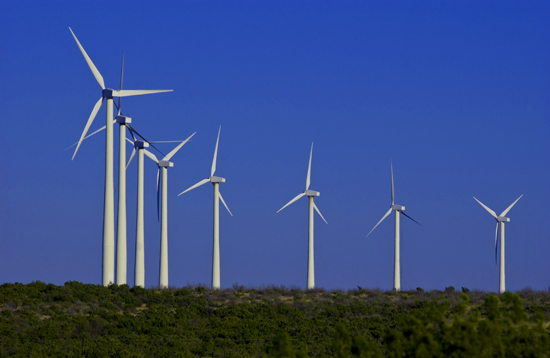
Picture of the transition underway is worth 1000 links trying to distract, right ralfy?
America's competitive advantage from this stuff, along with our abundance of natural gas, will probably hold us in good stead for more than a few decades through the transition.
')
Fortunately we already know where another 7 trillion barrels are to make the transition. And how much they will cost. And the transition, well, good thing we are already doing this in the deserts...
and this in the prairies......
Picture of the transition underway is worth 1000 links trying to distract, right ralfy?
America's competitive advantage from this stuff, along with our abundance of natural gas, will probably hold us in good stead for more than a few decades through the transition.
Actually, it's the other way round: pictures are meant to distract.
The problem is not abundance but rate of flow:
http://www.resilience.org/stories/2013- ... te-of-flow
For other sources of energy, an energy trap:
http://physics.ucsd.edu/do-the-math/201 ... ergy-trap/
and dealing with lag time:
http://www.businessinsider.com/131-year ... il-2010-11
plus the need for increasing production to cover increasing debt:
http://theautomaticearth.com/Finance/oi ... redit.html
which is ironically driven by a "competitive advantage".
-

ralfy - Light Sweet Crude

- Posts: 5651
- Joined: Sat 28 Mar 2009, 11:36:38
- Location: The Wasteland
43 posts
• Page 3 of 3 • 1, 2, 3
Who is online
Users browsing this forum: No registered users and 21 guests