I won’t guess about Damman Fld…don’t know any details. But I’ll assume yours is a more general question. And from there I’ll have to split my general answers between the US and the rest of the world.
Most here probably know that US operators are THE masters at squeezing out the last drops of oil. That’s why our average well produces less than 10 bopd. I suspect many expectations of increased oil production via EOR projects are much too optimistic. First, if there were an applicable production technique, such as water flooding, that would increase URR it would have been employed for decades. IMHO there is no big inventory of neglected US oil fields to exploit via EOR.
More expensive methods, such as horizontal drilling, might be applied now thanks to current oil prices. In several months I’ll drill a hz pilot well to test the potential recovery of additional reserves from a series of Texas fields that have produced over 4 billion bo. Typical recovery from these nearly depleted fields has been around 50%. If I’m very lucky I might get an additional 5% if my model works. But even then the method won’t be applicable to all the residual oil for a variety of reasons.
One of the major fields in the this trend is having a CO2 pipeline being built to it from a power plant about 100 miles away at a cost of $160 million. Obviously they expect to increase recovery enough to justify that cost. OTOH the govt is paying $120 million of that capex. Time will tell if their model is correct. CO2 EOR has always been a viable approach and has been successfully used when there was an economically available source. Unfortunately the vast majority of fields that might benefit don’t have an available source for the CO2. The best hope for such potential recovery may be combining the EOR effort with a sequestering requirement. A slow forward process and one that won’t increase US oil production significantly IMHO. Another hindrance is the abandonment of depleted wells. An EOR project might be economic at today’s prices if the wells still existed. But once plugged and abandoned the cost to redrill those wells along with the EOR costs kill the project.
Foreign fields have a much greater potential for enhanced recovery. Unfortunately the reason for that potential is also the stumbling block they face IMHO. In additional to lacking the infrastructure and service companies as we have stateside many of the NOC’s lack the financial incentive to exploit smaller reserves. As their major fields deplete that incentive should increase but I suspect that will be a slow and inconsistent transition. Additionally much of the US mineral rights are privately owned. Those folks have their own incentives to get wells drilled. Elsewhere those rights tend to be owned by the govts that don’t t end to be as aggressive leasing.
The individual wells in the fields that I’ll be trying my hz project produce just several bopd along with a significant amount of water that cost to dispose of. But at current oil prices those operators are making decent cash flow. But that’s revenue going into individual checking account with much of it earned through sweat equity. That business plan just doesn’t exist anywhere in the world to the degree it does in the US.



PeakOil is You
Oil's tipping point has passed
Re: Oil's tipping point has passed
 by ROCKMAN » Sun 31 Mar 2013, 16:06:23
-

ROCKMAN - Expert

- Posts: 11397
- Joined: Tue 27 May 2008, 03:00:00
- Location: TEXAS
Re: Oil's tipping point has passed
by rockdoc123 » Sun 31 Mar 2013, 17:10:03
$this->bbcode_second_pass_quote('', 'H')ow much difference does Technology actually make? For example KSA closed their first oil field, Dammam, decades ago because production had fallen to uneconomic levels. A few years ago they decided to rework the field using new techniques like horizontal drilling to get more of the OIP (original oil in place) out because technology and higher price make doing so a paying proposition.
But how much more oil will they ultimately recover from the field? How much could they have recovered using the old techniques if they had simply decided to convert the field over to a stripper well system like so many USA fields and kept just pumping it out slowly as OIP migrated through the reservoir rocks to the well bores?
But how much more oil will they ultimately recover from the field? How much could they have recovered using the old techniques if they had simply decided to convert the field over to a stripper well system like so many USA fields and kept just pumping it out slowly as OIP migrated through the reservoir rocks to the well bores?
The KSA case book which includes a number of fields including Damman is a well documented case history given much of the results of various techniques and studies has been published in SPE. In the case of Ghawar technology made all the difference. The large water influx that Ghawar ran into was driving water cut up rapidly. The advent of special processing for 3D seismic allowed for proper imaging of faults which were found to be conduits from the water leg into well bores. By avoiding these faults with well bores much of the water cut increase was avoided. As well using the MRC (maximum reservoir contact) wells which are long reach horizontals with a number of legs (up to about 10 km of total reservoir contact now in some wells) allowed for the wells to be produced at lower draw down pressure which means the risk of coning water is also lower. The implementation of SMART completions allowed for each individual sidetrack to be monitored for water influx. As the water cut increased in an individual sidetrack it could be shutoff so that overall water cut in the well did not increase rapidly. In order to keep production rates stable the use of expandable liners allowed for a replacement sidetrack to be drilled without losing tubing size. Note that recovery factors in some fields has been documented to have increased to 60% with ultimate recovery predicted based on models to be closer to 70%.
converting the wells to strippers would not prevent water influx so the life of wells in the KSA situation would probably have been decreased considerably.
No two fields are the same, however. There are fields onshore in the Golden Lane region of Mexico that were brought on stream in the first half of the twentieth century (some at very large rates back then) which have wells that are still producing at tens of barrels a day. No intervention was attempted in these fields and a number of wells are producing without downhole pumps or even tubing in the well. Given that these fields have pretty incredible reservoir properties it is unlikely that ultimate recovery will be affected to a large extent by applying modern technology but the speed of recovery and hence cashflow could be affected.
Reservoirs are often complex animals. Some have very large connected pore systems (eg. reefs), some have large unconnected pore systems (karsted carbonates), others have small well distributed pore systems with high permeability (well sorted beach sandstones) others have a variety of pore sizes with variable permeability and some have been affected by late diagenesis which can plug pore spaces and pore throats with clays or cements. There are a host of other differences such as drive mechanism (eg. solution gas drive, water drive), wettability (oil wet reservoirs behave differently than water wet reservoirs and sometimes through its history fields can see a change in wettability) and variable mobility ratios that all need to be taken into account when looking at enhanced recovery methods. The job is made even more difficult when you think that observations are all being made remotely and you really never know exactly what is happening in the subsurface. There is no one size fits all I'm afraid. I think it is dangerous to claim that ultimate recovery factor in any reservoir will never exceed a certain number as there is still research going on in this area. It's not easy due to the complexity and hence you do not tend to see new important technologies emerge all that often.
-
rockdoc123 - Expert
- Posts: 7685
- Joined: Mon 16 May 2005, 03:00:00
Re: Oil's tipping point has passed
by Graeme » Sun 31 Mar 2013, 19:02:55
Thanks Raify for your post. It provides further interesting information regarding the theme of this this thread.
As an outsider, the vast majority of my posts reflect reporting in the media. I've covered a wide range of topics but in this case, peak oil is not reported as much as say global warming. The number of PO articles are minuscule compared to AGW. When it is reported, it is usually not revealing the true situation. For instance, "peak oil is dead", "Have concerns over peak oil peaked?". The Murray and King article was not reported in the mainstream media.
As an insider, ROCKMAN has provided additional insights. He tells us that POD was known in the industry since the 70's. And
$this->bbcode_second_pass_quote('', '3')0 years ago Mobil management literally beat the fear of PO (reserve replacement problem) into us on a regular basis
As an outsider, the vast majority of my posts reflect reporting in the media. I've covered a wide range of topics but in this case, peak oil is not reported as much as say global warming. The number of PO articles are minuscule compared to AGW. When it is reported, it is usually not revealing the true situation. For instance, "peak oil is dead", "Have concerns over peak oil peaked?". The Murray and King article was not reported in the mainstream media.
As an insider, ROCKMAN has provided additional insights. He tells us that POD was known in the industry since the 70's. And
$this->bbcode_second_pass_quote('', '3')0 years ago Mobil management literally beat the fear of PO (reserve replacement problem) into us on a regular basis
Murray and King also emphasis this point too but in relation to global warming and the economy.
"the economic pain of a flattening supply will trump the environment as a reason to curb fossil fuels"
ROCKMAN seems to be aware of the economic consequences:
$this->bbcode_second_pass_quote('', 't')he current chatter about “US energy independence” only reinforces that pessimism.
And yet he still continues to operate in the industry as a private enterprise. That is quite admirable. How long do you think you can do this, ROCK? What was also interesting from ROCKMAN was that he will not pursue shale gas.
$this->bbcode_second_pass_quote('', ' ')Which is why we’ve never drilled nor ever will drill the fractured shale plays.
Do you have additional competition from the alternative energy industry? I saw this yesterday:
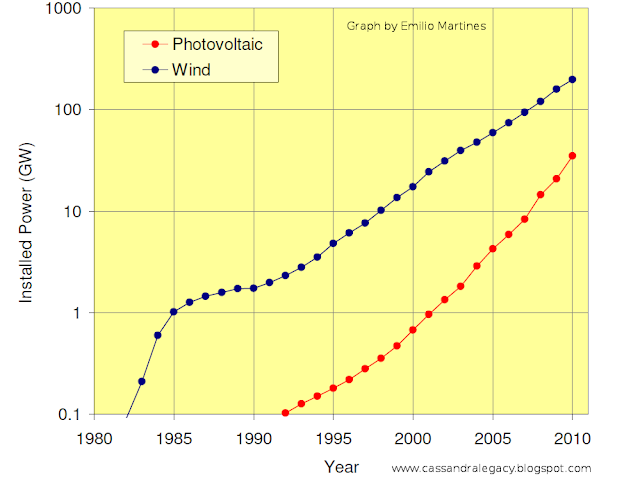
Shale Gas Won’t Kill Solar & Wind, Renewable Growth Unstoppable
$this->bbcode_second_pass_quote('', 'R')ather than replacing renewables, the Citi analysts suggest that the shale gas industry will actually be dependent on the broader deployment of wind and solar for its future. That’s because gas will be priced out of the conventional market in the short term, but will then be required to fill in the gaps as wind and solar are deployed more widely, and coal generation is shut down.
So where do you see your operation in the years ahead?
Human history becomes more and more a race between education and catastrophe. H. G. Wells.
Fatih Birol's motto: leave oil before it leaves us.
Fatih Birol's motto: leave oil before it leaves us.
-

Graeme - Fusion

- Posts: 13258
- Joined: Fri 04 Mar 2005, 04:00:00
- Location: New Zealand