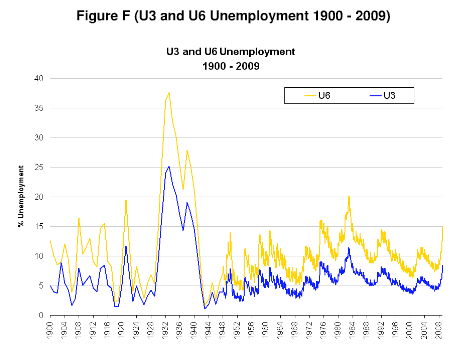
The converging catastrophes. Some of this is the dissaperance of large amounts of tax into black holes and loop holes by large corperations (hello Google), other parts are the near endless of supply of low cost wage meaning the labour value of goods is now very low, destroying western middle classes. Some of this is the feedback from the debt binge of the 2000s and the housing housing boom dying and other parts of this crisis is off course the end of cheap energy.
And this is only the beginning. The real deep trouble is years and even decades away.
There is no one reason for this perma-crisis. There is certainly no one solution (if there is any). Neither Keynsian spending will make the good times come back, nor cutting government spending. The old solutions are a fools gold.



PeakOil is You
This is the WORST RECOVERY EVER
Re: This is the WORST RECOVERY EVER
 by dorlomin » Thu 31 Jan 2013, 08:07:58
-

dorlomin - Light Sweet Crude

- Posts: 5193
- Joined: Sun 05 Aug 2007, 03:00:00
Re: This is the WORST RECOVERY EVER
by Plantagenet » Thu 31 Jan 2013, 13:08:03
$this->bbcode_second_pass_quote('dorlomin', '
')
There is no one reason for this perma-crisis.
')
There is no one reason for this perma-crisis.
High energy costs are a good candidate for an underlying cause to start the crisis, and a good candidate for explaining why the crisis continues.
We hit Peak Oil in late 2005, the price of oil exploded, and economic dominoes started tumbling around the world. While the spot price of oil briefly hit $148/bbl in 2008 and has appeared to decrease since, actually its still been going up when you average oil prices through the year. Taking the average cost through the year, last year saw the highest energy costs on record.
No wonder the US since mid-2009 has been in the WORST RECOVERY EVER.
-

Plantagenet - Expert

- Posts: 26765
- Joined: Mon 09 Apr 2007, 03:00:00
- Location: Alaska (its much bigger than Texas).
Re: This is the WORST RECOVERY EVER
by Plantagenet » Thu 31 Jan 2013, 14:02:24
$this->bbcode_second_pass_quote('pstarr', '')$this->bbcode_second_pass_quote('Plantagenet', '
')High energy costs are a good candidate for an underlying cause to start the crisis, and a good candidate for explaining why the crisis continues.
We hit Peak Oil in late 2005, the price of oil exploded, and economic dominoes started tumbling around the world. While the spot price of oil briefly hit $148/bbl in 2008 and has appeared to decrease since, actually its still been going up when you average oil prices through the year. Taking the average cost through the year, last year saw the highest energy costs on record.
No wonder the US since mid-2009 has been in the WORST RECOVERY EVER.
')High energy costs are a good candidate for an underlying cause to start the crisis, and a good candidate for explaining why the crisis continues.
We hit Peak Oil in late 2005, the price of oil exploded, and economic dominoes started tumbling around the world. While the spot price of oil briefly hit $148/bbl in 2008 and has appeared to decrease since, actually its still been going up when you average oil prices through the year. Taking the average cost through the year, last year saw the highest energy costs on record.
No wonder the US since mid-2009 has been in the WORST RECOVERY EVER.
it was all Obama's fault?
Peak Oil isn't Obama's fault, but his failure to understand the problem and enact policies in response to Peak Oil absolutely is Obama's fault.

-
Plantagenet - Expert
- Posts: 26765
- Joined: Mon 09 Apr 2007, 03:00:00
- Location: Alaska (its much bigger than Texas).
Re: This is the WORST RECOVERY EVER
by Quinny » Thu 31 Jan 2013, 16:06:32
Bollocks
Live, Love, Learn, Leave Legacy.....oh and have a Laugh while you're doing it!
-

Quinny - Intermediate Crude

- Posts: 3337
- Joined: Thu 03 Jul 2008, 03:00:00
Re: This is the WORST RECOVERY EVER
by Plantagenet » Thu 31 Jan 2013, 16:28:27
Obama terminates his "Jobs Council".
Obama cancels "Jobs Council"
I guess the jobs council's work is done. Obama's job is safe, so the jobs council can disband.
Too bad about the 12 million people in the USA still without jobs---their lives are trashed but who cares----now that the election is over any pretense this administration cares about jobs is over and the millions who remain unemployed---well they're just nameless casualties of the WORST RECOVERY EVER.
Obama cancels "Jobs Council"
I guess the jobs council's work is done. Obama's job is safe, so the jobs council can disband.
Too bad about the 12 million people in the USA still without jobs---their lives are trashed but who cares----now that the election is over any pretense this administration cares about jobs is over and the millions who remain unemployed---well they're just nameless casualties of the WORST RECOVERY EVER.
-
Plantagenet - Expert
- Posts: 26765
- Joined: Mon 09 Apr 2007, 03:00:00
- Location: Alaska (its much bigger than Texas).
Re: This is the WORST RECOVERY EVER
by basil_hayden » Thu 31 Jan 2013, 16:48:07
Wake up! This is not part of the "recovery", this your new normal, get used to it.
-

basil_hayden - Heavy Crude

- Posts: 1581
- Joined: Mon 08 Aug 2005, 03:00:00
- Location: CT, USA
Re: This is the WORST RECOVERY EVER
by Plantagenet » Fri 01 Feb 2013, 00:41:44
Sen. Harry Reid, leader of the the Senate, clearly rattled by the negative GDP in the 4th qtr, proclaimed today "We are in a recovery!"
But he left out the part about it being the WORST RECOVERY EVER.
But he left out the part about it being the WORST RECOVERY EVER.
-
Plantagenet - Expert
- Posts: 26765
- Joined: Mon 09 Apr 2007, 03:00:00
- Location: Alaska (its much bigger than Texas).
Re: This is the WORST RECOVERY EVER
by kublikhan » Fri 01 Feb 2013, 01:06:56
$this->bbcode_second_pass_quote('Plantagenet', '')$this->bbcode_second_pass_quote('mmasters', 'i')t's better than the great depression
No its not. Read the linkie in the first post.
In 1929 people lost their jobs and stood in breadlines. In 2008 people lost their jobs and went on unemployment, foodstamps, and disability
After the 1929 crash there was a recovery. Things were going pretty good by 1936 when there was a double dip.
After the 2008 crash there was a recovery. This recovery is worse than the post-1929 recovery.
This is the worst recovery ever.
$this->bbcode_second_pass_quote('', ' ')The charts plot Real Gross Domestic Product (SAAR, Chn. 2005$) and its major components; each series is indexed to 100 at the start of the expansion. The current expansion (green line) started in the third quarter of 2009. The solid blue line indicates the average over the past ten expansions. The two dashed lines report the highest and lowest values recorded across the past ten expansions.
The oil barrel is half-full.