

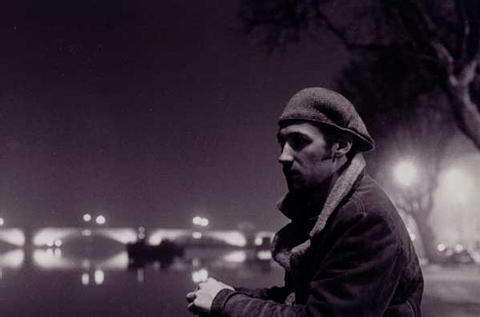


1958 was the era of chrome-laden, ever increasing horsepower monsters from Detroit's big 3 automakers. It was the Eisenhower era, and although we practiced ducking and covering under our desks or in the hallways of our schools in case Russia attacked us with nuclear weapons, it was a giddy time for America. We had the most powerful economy and productive industry in the world, recently built to help win the second world war while our European allies' industry and economies were torn to shreds in the actual theaters where the war was fought. America could do no wrong, and the whole world envied us - or so we thought!
This was the era in which I grew up. I was born a few days after the attack on Pearl Harbor when the U.S. joined in the fighting of WW2, which put me about 4 years before the beginning of the "baby-boomers."
When I went to high school in Chicago, only a few families had more than one car, and cars for high school students were quite rare - usually a few hot-rodders or basic car nuts. I took the bus and the "El" when I traveled around the city, and in retrospect, it was a good way to travel in a large metropolis. But the interstate highway system was being built, and petroleum madness was taking over our society.
In 1962, I dropped out of college and joined the Navy. Although I was recruited to be a nuclear power electronics technician, my slight color vision problem ended up shifting me over to becoming a Hospital Corpsman or "medic." As soon as I finished training and got a long term assignment at the Oakland Hospital facility, Soon thereafter, I went shopping for a car, and have never been without one since.
So, fellow "peak-niks", I was not only raised in the dead center of the mad rush to rampant petroleum consumption, I actually lived it to the fullest. (Although I hated commuting by car, and avoided it as much as possible.)
A few years ago, I discovered www.dieoff.org and saw the truth in the information there, although that web site seems to not be updated much any more, It opened my eyes to the near-term inevitability of peak oil. I bought Kenneth Deffeyes book "Hubbert's Peak," earlier this year, met Richard Heinberg at Earth Day and read his book "The Party's Over," discovered the ASPO web site and this set of forums. What I have learned about the high probability of a peak in oil sooner than later has motivated me to join the peak/post-peak planning community as an activist - and finally make use of my 1976 U.C. Berkeley degree in Conservation. I have already started eliminating some of the "frivolous" hobbies and interests from my life - like selling my collection of energy-wasting vacuum-tube audio gear and my participation and moderation duties at www.audioasylum.com, and preparing my windsurfing gear for sale because each day's sailing now requires an 80 mile round trip. I will be spending my spare time over the next few weeks trying to connect with other peakniks in the community, and setting up organizations to plan and hopefully get ready for the first wave of economic impacts from the petroleum plateau and peak
I think that we will see the both the best and the worst in human nature expressing itself as the peak becomes a downhill economic reality. I appreciate the opinions and insights from both optimists like Jay Morrison and pessimists like Matt Savinar (a local whom I am in the process of hooking up with for peak and post-peak issues and planning.) The issues we face are extremely complex and full of very frightening possibilities. I hope that others will tell some of their personal stories here as we grow into an on-line force that will blossom into a network of community and regional activists and leaders.
Please excuse the long rant, but I am feeling very motivated. I am extremely impressed with the level of intelligent discussion here at www.peakoil.com, and hope to contribute in a more focussed and broadly applicable manner starting immediately as I begin to do something useful in peak/post-peak planning - with mostly MUCH shorter posts. I went to a men's seminar a few years ago where the theme was purpose - purpose in life. When you are motivated to do something that is useful and beneficial to your friends and community, and even mankind in general, life is much more fulfilling, I look forward to the challenge of post-peak life, and hope to help the younger people of today - and future generations - face a reality that my generation never had to face.
If anyone else has stories about how they came to recognize the inevitability of peak oil, and their backgrounds and motivations for becoming peak-oil activists, I would enjoy reading about it. When push comes to shove, life is a very personal thing.
Dave van Harn



 But he warned me that the Green Revolution didn't disprove Malthus' theory, it just delayed it.


