Solar Without Subsidies: Installations Grow to 38.3 GW in 2017 as the Market Goes Global
$this->bbcode_second_pass_quote('', 'S')olar installations will stall this year, but make rapid strides in emerging markets and find sustained growth without government subsidies, says Lux Research.
After recent explosive growth capped by a 66% surge to 26.5 GW in 2011, solar installations will grind to a near halt this year — adding a mere 0.4 GW, totaling 26.9 GW of new installations — while industry revenues drop from $110 billion in 2011 to $92 million in 2012 due to crashing prices. However, new installations rebound to 38.3 GW in 2017 as the industry learns to navigate a global market fast losing its subsidies, according to a Lux Research report.
A supply glut, caused mainly by Chinese manufacturers, speculation of incentive cuts in Europe and the end of the 1603 Cash Grant in the U.S., fueled the sharp growth in installations last year. “The solar industry’s storied history has created a massive misperception of technology maturity and commodity status,” said Matthew Feinstein, Lux Research Analyst and the lead author of the report titled, “Market Size Update 2012: The Push to a Post-Subsidy Solar Industry.”


PeakOil is You
Solar Without Subsidies Installatns Grow to 38.3 GW in 2017
First unread post • 17 posts
• Page 1 of 1
Solar Without Subsidies Installatns Grow to 38.3 GW in 2017
 by Graeme » Fri 06 Apr 2012, 19:56:23
distributedenergy
Human history becomes more and more a race between education and catastrophe. H. G. Wells.
Fatih Birol's motto: leave oil before it leaves us.
Fatih Birol's motto: leave oil before it leaves us.
-

Graeme - Fusion

- Posts: 13258
- Joined: Fri 04 Mar 2005, 04:00:00
- Location: New Zealand
Re: Solar Without Subsidies Installatns Grow to 38.3 GW in 2
by sunweb » Sat 07 Apr 2012, 15:02:22
Solar is directly and indirectly subsidized by fossil fuels and their subsidies.
Solar and wind energy capturing devices as well as nuclear are not alternative energy sources. They are extensions of the fossil fuel supply system. There is an illusion of looking at the trees and not the forest in the “Renewable” energy world. Not seeing the systems, machineries, fossil fuel uses and environmental degradation that create the devices to capture the sun, wind and biofuels allows myopia and false claims of renewable, clean, green and sustainable.
Energy Return on Energy Invested (ERoEI) is only a part of the equation. There is a massive infrastructure of mining, processing, manufacturing, fabricating, installation, transportation and the associated environmental assaults. Each of these processes and machines may only add a miniscule amount of energy to the final component of solar or wind devices yet the devices cannot arise without them. There would be no devices with out this infrastructure.
How else would we do it? There is always the old way. Who of us will go down in the mine first?
A story in pictures and diagrams:
From Machines making machines making machines
http://sunweber.blogspot.com/2011/12/ma ... aking.html
John Weber
Northern Minnesota
http://sunweber.blogspot.com/
Solar and wind energy capturing devices as well as nuclear are not alternative energy sources. They are extensions of the fossil fuel supply system. There is an illusion of looking at the trees and not the forest in the “Renewable” energy world. Not seeing the systems, machineries, fossil fuel uses and environmental degradation that create the devices to capture the sun, wind and biofuels allows myopia and false claims of renewable, clean, green and sustainable.
Energy Return on Energy Invested (ERoEI) is only a part of the equation. There is a massive infrastructure of mining, processing, manufacturing, fabricating, installation, transportation and the associated environmental assaults. Each of these processes and machines may only add a miniscule amount of energy to the final component of solar or wind devices yet the devices cannot arise without them. There would be no devices with out this infrastructure.
How else would we do it? There is always the old way. Who of us will go down in the mine first?
A story in pictures and diagrams:
From Machines making machines making machines
http://sunweber.blogspot.com/2011/12/ma ... aking.html
John Weber
Northern Minnesota
http://sunweber.blogspot.com/
-

sunweb - Peat

- Posts: 150
- Joined: Thu 04 May 2006, 03:00:00
- Location: Minnesota
Re: Solar Without Subsidies Installatns Grow to 38.3 GW in 2
by Graeme » Sat 07 Apr 2012, 19:28:32
Sunweb, Thank you for your post. You raised a very interesting point regarding the use of fossil fuels to build to solar industry. Before I address that issue, I would like to point out that the solar industry has stagnated somewhat recently for a variety of reasons outlined in this article. One of them is that Chinese manufacturers have flooded the market with cheap panels. This is known to many posting on this site. It was of interest to me to see that at least one analyst is predicting strong growth again by 2017. Unfortunately, we can't see the details because it is hidden behind a pay wall but others who are actually manufacturing panels would want to purchase this report so they can plan their business.
Unfortunately for the environment, we will have to continue to use fossil fuels for the foreseeable future during the transition to 100% renewable energy use. Everybody here knows that we have passed peak oil and the cost of ff is rising. So how will solar companies adapt to this environment? Well, you can get some idea by following another thread on this very subject! Fedex is using electric vans for short hauls, natural-gas powered trucks for long hauls, and biofuel-powered planes for air freight.
Unfortunately for the environment, we will have to continue to use fossil fuels for the foreseeable future during the transition to 100% renewable energy use. Everybody here knows that we have passed peak oil and the cost of ff is rising. So how will solar companies adapt to this environment? Well, you can get some idea by following another thread on this very subject! Fedex is using electric vans for short hauls, natural-gas powered trucks for long hauls, and biofuel-powered planes for air freight.
Human history becomes more and more a race between education and catastrophe. H. G. Wells.
Fatih Birol's motto: leave oil before it leaves us.
Fatih Birol's motto: leave oil before it leaves us.
-
Graeme - Fusion
- Posts: 13258
- Joined: Fri 04 Mar 2005, 04:00:00
- Location: New Zealand
Re: Solar Without Subsidies Installatns Grow to 38.3 GW in 2
by sunweb » Sun 08 Apr 2012, 14:27:20
Graeme - there is no math that will show solar, wind, ethanol, biodiesel, nuclear reproducing themselves. This is a dream of business as usual. I suggest two of my essays:
Solar and Wind are not renewable. The energy from solar and from wind is of course renewable but the devices used to capture the energy of the sun and wind are not renewable. Nor are they green or sustainable. Nor are they clean or green if you include the mining, huge machines, fossil fuel requirements, transportation, toxic chemicals to get the components.
An oak tree is renewable. A horse is renewable. They reproduce themselves. The human-made equipment used to capture solar energy or wind energy is not renewable. There is considerable fossil fuel energy embedded in this equipment. The many components used in devices to capture solar energy, wind energy, tidal energy and biomass energy – aluminum, glass, copper, rare metals, petroleum in many forms to name a few – are fossil fuel dependent.
Wind used by sailing ships and old style “dutch” wind machines is renewable and sustainable.
From: Energy in the Real World with pictures of proof.
http://sunweber.blogspot.com/2011/01/en ... world.html
And
We will go kicking and screaming down the path to the new Middle Ages as fossil fuels desert us. With the decline of available energy, those of most of us who have sat at the top of the energy pyramid will become the new peasants. With the popular view of the Middle Ages as a brutal and dirty time filled with famine and disease and at the mercy of armed overlords. We cringe at the thought.
With great sadness, we must recognize the direct connection between present day population levels and the use of fossil fuels in food production, medical procedures, medicines and hygiene. With the fall in fossil fuel availability there will be a reduction in population. Population soared with the industrial revolution and the development of industrial, fossil fuel based agriculture. It cannot be sustained.
From: The New Middle Ages
http://sunweber.blogspot.com/2011/05/ne ... -ages.html
I submit that the middle ages/medieval times were not so dark.
Solar and Wind are not renewable. The energy from solar and from wind is of course renewable but the devices used to capture the energy of the sun and wind are not renewable. Nor are they green or sustainable. Nor are they clean or green if you include the mining, huge machines, fossil fuel requirements, transportation, toxic chemicals to get the components.
An oak tree is renewable. A horse is renewable. They reproduce themselves. The human-made equipment used to capture solar energy or wind energy is not renewable. There is considerable fossil fuel energy embedded in this equipment. The many components used in devices to capture solar energy, wind energy, tidal energy and biomass energy – aluminum, glass, copper, rare metals, petroleum in many forms to name a few – are fossil fuel dependent.
Wind used by sailing ships and old style “dutch” wind machines is renewable and sustainable.
From: Energy in the Real World with pictures of proof.
http://sunweber.blogspot.com/2011/01/en ... world.html
And
We will go kicking and screaming down the path to the new Middle Ages as fossil fuels desert us. With the decline of available energy, those of most of us who have sat at the top of the energy pyramid will become the new peasants. With the popular view of the Middle Ages as a brutal and dirty time filled with famine and disease and at the mercy of armed overlords. We cringe at the thought.
With great sadness, we must recognize the direct connection between present day population levels and the use of fossil fuels in food production, medical procedures, medicines and hygiene. With the fall in fossil fuel availability there will be a reduction in population. Population soared with the industrial revolution and the development of industrial, fossil fuel based agriculture. It cannot be sustained.
From: The New Middle Ages
http://sunweber.blogspot.com/2011/05/ne ... -ages.html
I submit that the middle ages/medieval times were not so dark.
-
sunweb - Peat
- Posts: 150
- Joined: Thu 04 May 2006, 03:00:00
- Location: Minnesota
Re: Solar Without Subsidies Installatns Grow to 38.3 GW in 2
by kublikhan » Sun 08 Apr 2012, 17:12:51
Sunweb, I read your "Energy in the Real World" article. You touch on some important points such as fossil fuels used in renewables, pollution, embodied energy, etc. All of which have been debated here before. I don't agree with your analysis or conclusions however. Take pollution for example. We know that the manufacture of wind turbines creates pollution. However the pollution created is miniscule created to the amount of pollution coal mining and power generation produce. Therefore I find your argument that we should use renewables sparingly wrong headed. The faster we get our energy production off of coal, the less damage we will do to the planet.
$this->bbcode_second_pass_quote('article', 'R')equested by Congress, the report assesses what economists call external effects caused by various energy sources over their entire life cycle -- for example, not only the pollution generated when gasoline is used to run a car but also the pollution created by extracting and refining oil and transporting fuel to gas stations. Because these effects are not reflected in energy prices, government, businesses and consumers may not realize the full impact of their choices.
Coal accounts for about half the electricity produced in the U.S. In 2005 the total annual external damages from sulfur dioxide, nitrogen oxides, and particulate matter created by burning coal at 406 coal-fired power plants, which produce 95 percent of the nation's coal-generated electricity, were about $62 billion; these nonclimate damages average about 3.2 cents for every kilowatt-hour (kwh) of energy produced. A relatively small number of plants -- 10 percent of the total number -- accounted for 43 percent of the damages. Coal-fired power plants are the single largest source of greenhouse gases in the U.S., emitting on average about a ton of CO2 per megawatt-hour of electricity produced, the report says. Climate-related monetary damages range from 0.1 cents to 10 cents per kilowatt-hour, based on previous modeling studies. Estimated climate damages from natural gas were half that of coal, ranging from 0.05 cents to 5 cents per kilowatt-hour.
Burning natural gas generated far less damage than coal, both overall and per kilowatt-hour of electricity generated. A sample of 498 natural gas fueled plants, which accounted for 71 percent of gas-generated electricity, produced $740 million in total nonclimate damages in 2005, an average of 0.16 cents per kwh. As with coal, there was a vast difference among plants; half the plants account for only 4 percent of the total nonclimate damages from air pollution, while 10 percent produce 65 percent of the damages.
Transportation, which today relies almost exclusively on oil, accounts for nearly 30 percent of U.S. energy demand. In 2005 motor vehicles produced $56 billion in health and other nonclimate-related damages, says the report. The committee evaluated damages for a variety of types of vehicles and fuels over their full life cycles, from extracting and transporting the fuel to manufacturing and operating the vehicle.
The life-cycle damages of wind power, which produces just over 1 percent of U.S. electricity but has large growth potential, are small compared with those from coal and natural gas. So are the damages associated with normal operation of the nation's 104 nuclear reactors, which provide almost 20 percent of the country’s electricity.
Hidden Costs of Energy: Unpriced Consequences of Energy Production and Use$this->bbcode_second_pass_quote('article', 'R')equested by Congress, the report assesses what economists call external effects caused by various energy sources over their entire life cycle -- for example, not only the pollution generated when gasoline is used to run a car but also the pollution created by extracting and refining oil and transporting fuel to gas stations. Because these effects are not reflected in energy prices, government, businesses and consumers may not realize the full impact of their choices.
Coal accounts for about half the electricity produced in the U.S. In 2005 the total annual external damages from sulfur dioxide, nitrogen oxides, and particulate matter created by burning coal at 406 coal-fired power plants, which produce 95 percent of the nation's coal-generated electricity, were about $62 billion; these nonclimate damages average about 3.2 cents for every kilowatt-hour (kwh) of energy produced. A relatively small number of plants -- 10 percent of the total number -- accounted for 43 percent of the damages. Coal-fired power plants are the single largest source of greenhouse gases in the U.S., emitting on average about a ton of CO2 per megawatt-hour of electricity produced, the report says. Climate-related monetary damages range from 0.1 cents to 10 cents per kilowatt-hour, based on previous modeling studies. Estimated climate damages from natural gas were half that of coal, ranging from 0.05 cents to 5 cents per kilowatt-hour.
Burning natural gas generated far less damage than coal, both overall and per kilowatt-hour of electricity generated. A sample of 498 natural gas fueled plants, which accounted for 71 percent of gas-generated electricity, produced $740 million in total nonclimate damages in 2005, an average of 0.16 cents per kwh. As with coal, there was a vast difference among plants; half the plants account for only 4 percent of the total nonclimate damages from air pollution, while 10 percent produce 65 percent of the damages.
Transportation, which today relies almost exclusively on oil, accounts for nearly 30 percent of U.S. energy demand. In 2005 motor vehicles produced $56 billion in health and other nonclimate-related damages, says the report. The committee evaluated damages for a variety of types of vehicles and fuels over their full life cycles, from extracting and transporting the fuel to manufacturing and operating the vehicle.
The life-cycle damages of wind power, which produces just over 1 percent of U.S. electricity but has large growth potential, are small compared with those from coal and natural gas. So are the damages associated with normal operation of the nation's 104 nuclear reactors, which provide almost 20 percent of the country’s electricity.
Also, you mentioned fossil fuels were used to manufacture renewable energy devices like wind. But alot of mining equipment used today runs on electricity, not fossil fuels. Such as the Bagger 288 you linked to in your article. Or trolley systems for mining vehicles:
Trolley History
You might be interested in a discussion we had on fossil fuels used in wind turbines we had a few years ago:
Wind power in the US stalled?
Even if every last drop of oil is sucked out of the Earth, I don't think mining is going to stop. Nor revert to the mining used in the old days such as the Roman empire.
You also talked about embodied energy. Yet the amount of energy produced during the entire lifetime of the renewable device far outweighs the amount of energy that went into it. All of these is routinely included in comprehensive life cycle analysis of renewable energy. Here's one study on solar cells if you were interested:
Net Energy Analysis for Sustainable Energy Production From Silicon Based Solar Cells
The oil barrel is half-full.
-

kublikhan - Master Prognosticator

- Posts: 5064
- Joined: Tue 06 Nov 2007, 04:00:00
- Location: Illinois
Re: Solar Without Subsidies Installatns Grow to 38.3 GW in 2
by sunweb » Sun 08 Apr 2012, 19:10:35
We can agree to disagree. For me it is a total system question. The huge mining trucks are diesel/electric like trains. Trolley's electricity comes from? I do believe that photovoltaics can pay back the energy used to make them, how about the machines used to make them. And when we need new machines? And my world is the earth with billions of people that don't have my energy advantage. Peoples and lands that give me resources so I can have this advantage. I will leave it at that. I don't believe we will accomplish maintaining "business as usual" and fully believe that the earth and its inhabitants will be better off after the end of fossil fuels if we don't do something really stupid.
Good luck with your dream.
Good luck with your dream.
-
sunweb - Peat
- Posts: 150
- Joined: Thu 04 May 2006, 03:00:00
- Location: Minnesota
Re: Solar Without Subsidies Installatns Grow to 38.3 GW in 2
by kublikhan » Sun 08 Apr 2012, 19:52:25
Agree to disagree works for me. Good luck with your doom.
The oil barrel is half-full.
-
kublikhan - Master Prognosticator
- Posts: 5064
- Joined: Tue 06 Nov 2007, 04:00:00
- Location: Illinois
Re: Solar Without Subsidies Installatns Grow to 38.3 GW in 2
by sunweb » Sun 08 Apr 2012, 21:09:21
There are those that think that I am a doomer. I think I am a realist. In fact, I agree with a wise woman on one of my mailing lists:
Posted by: kathy Sep 3, 2011
“Got thinking about this morning. Supposing a wife tells her 6 pack a day husband that he is going to die from lung cancer or emphysema? Is she a doomer? Or is he perhaps the doomer as he is continuing to do things that may doom him to an early death?
Is a scientist who warns of global warming a doomer or are the dirty coal burning factories the true doomers?
Is someone who warns of the dire possibility of collapsing more and more fisheries a doomer or are the factory fishing boats the doomers?
Are the people who warn about building nuclear power plants on fault lines doomers, or are those who build them there the doomers? Would living with less energy in Japan be a worse doom than Fukushima?
Warning of potential doom does not make you a doomer IMHO, participating in activities that make that doom more likely - that makes you a doomer”
Of course, we are all caught. Not one of us is voluntarily going to really reduce our consumption to levels that are truly sustainable across decades. It is not the nature of the beast. (See - http://sunweber.blogspot.com/2011/05/we-are-here.html
Try this:
I would like to have lights. Having lived off the grid for 30 years, ten of which was without electricity, I would like to have lights.
During the ten years without electricity, I got my lights from kerosene lamps. I got a masters degree in psychology using kerosene lights. The experience taught me the old saying, “a place for everything and everything in its place” because a kerosene lamp doesn’t give off a lot of light. I love to read and I did okay.
I can’t make kerosene. I could make oil from various plants by pressing them. Whales are scarce in Northern Minnesota so that option is out. So I thought I might make an electric light. Below find an image of an electric light and its components from a mining company.
From: http://sunweber.blogspot.com/2011/10/to ... -bulb.html
Posted by: kathy Sep 3, 2011
“Got thinking about this morning. Supposing a wife tells her 6 pack a day husband that he is going to die from lung cancer or emphysema? Is she a doomer? Or is he perhaps the doomer as he is continuing to do things that may doom him to an early death?
Is a scientist who warns of global warming a doomer or are the dirty coal burning factories the true doomers?
Is someone who warns of the dire possibility of collapsing more and more fisheries a doomer or are the factory fishing boats the doomers?
Are the people who warn about building nuclear power plants on fault lines doomers, or are those who build them there the doomers? Would living with less energy in Japan be a worse doom than Fukushima?
Warning of potential doom does not make you a doomer IMHO, participating in activities that make that doom more likely - that makes you a doomer”
Of course, we are all caught. Not one of us is voluntarily going to really reduce our consumption to levels that are truly sustainable across decades. It is not the nature of the beast. (See - http://sunweber.blogspot.com/2011/05/we-are-here.html
Try this:
I would like to have lights. Having lived off the grid for 30 years, ten of which was without electricity, I would like to have lights.
During the ten years without electricity, I got my lights from kerosene lamps. I got a masters degree in psychology using kerosene lights. The experience taught me the old saying, “a place for everything and everything in its place” because a kerosene lamp doesn’t give off a lot of light. I love to read and I did okay.
I can’t make kerosene. I could make oil from various plants by pressing them. Whales are scarce in Northern Minnesota so that option is out. So I thought I might make an electric light. Below find an image of an electric light and its components from a mining company.
From: http://sunweber.blogspot.com/2011/10/to ... -bulb.html
-
sunweb - Peat
- Posts: 150
- Joined: Thu 04 May 2006, 03:00:00
- Location: Minnesota
Re: Solar Without Subsidies Installatns Grow to 38.3 GW in 2
by Graeme » Sun 08 Apr 2012, 21:17:42
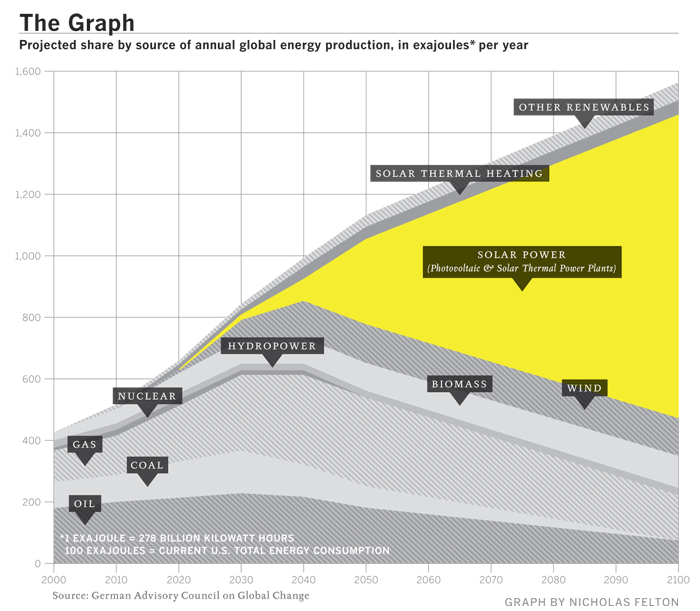
Sunweb raised a very important issue about where we will obtain our energy resources in future. Initially, I found this report by the National Conference of State Legislatures on Meeting Energy Challenges of the Future. And this 2010 survey of world energy resources by the World Energy Council. Executive summary here. He may wish to read the Future Energy Technology News thread I started here. Then I found this graph, which puts the future of solar in perspective.
To continue with the theme of the thread, I would like to add this recent report on PV installations for 2012.
$this->bbcode_second_pass_quote('', 'I')nstallations of solar PV will grow by at least 3.5% in 2012, despite many governments slashing financial incentives for the technology, a study has revealed.
According to the report from IMS Research, which tracks installations in more than 60 countries, global installations of PV could increase by as much as 21%.
The company forecasts that despite incentive cuts in most of the world’s largest markets, global installations will grow from 26.9 GW in 2011 to between 27.8 GW and 32.6 GW in 2012, with Europe’s share of installations falling from 69% last year to 50% this year.
To continue with the theme of the thread, I would like to add this recent report on PV installations for 2012.
$this->bbcode_second_pass_quote('', 'I')nstallations of solar PV will grow by at least 3.5% in 2012, despite many governments slashing financial incentives for the technology, a study has revealed.
According to the report from IMS Research, which tracks installations in more than 60 countries, global installations of PV could increase by as much as 21%.
The company forecasts that despite incentive cuts in most of the world’s largest markets, global installations will grow from 26.9 GW in 2011 to between 27.8 GW and 32.6 GW in 2012, with Europe’s share of installations falling from 69% last year to 50% this year.
And this:
Halotechnics – Molten Glass Thermal Storage Could Mean 6 Cent Solar
$this->bbcode_second_pass_quote('', 'H')alotechnics, an early-stage solar-thermal startup and ARPA-E recipient, has developed two radical new materials for storing solar heat energy, using new kinds of salts and even a new kind of glass.
These allow much higher temperatures than have been used to date to store the heat in solar thermal power plants so they can produce power at night. This will greatly improve the efficiency and lower the costs for solar thermal power.
This is a first. While practically every other day we hear about efficiency innovations that will lower the costs of PV solar, this is a major innovation for solar thermal.
PS, Thanks K for your contribution.
Human history becomes more and more a race between education and catastrophe. H. G. Wells.
Fatih Birol's motto: leave oil before it leaves us.
Fatih Birol's motto: leave oil before it leaves us.
-
Graeme - Fusion
- Posts: 13258
- Joined: Fri 04 Mar 2005, 04:00:00
- Location: New Zealand