PeakOil is You
Is earth growing?
Is earth growing?
 by seahorse3 » Tue 16 Aug 2011, 18:03:49
Someone posted this video elsewhere taking the position that geology says the earth is growing over time. I don't know enough to know, but found it interesting. Hopefully Rockdoc and others can view and make comments. I've never heard this idea before.http://www.youtube.com/watch?v=oJfBSc6e7QQ
- seahorse3
- Lignite

- Posts: 375
- Joined: Tue 01 Mar 2011, 16:14:13
Re: Is earth growing?
by dolanbaker » Tue 16 Aug 2011, 18:22:02
Just looked at the video, the first question that jumps out is "where did all the sea water come from to fill in the oceans?"
Did it just appear like magic!
Did it just appear like magic!
Religion is regarded by the common people as true, by the wise as false, and by rulers as useful.:Anonymous
Our whole economy is based on planned obsolescence.
Hungrymoggy "I am now predicting that Europe will NUKE ITSELF sometime in the first week of January"
Our whole economy is based on planned obsolescence.
Hungrymoggy "I am now predicting that Europe will NUKE ITSELF sometime in the first week of January"
-

dolanbaker - Intermediate Crude

- Posts: 3855
- Joined: Wed 14 Apr 2010, 10:38:47
- Location: Éire
Re: Is earth growing?
by Plantagenet » Tue 16 Aug 2011, 19:36:32
$this->bbcode_second_pass_quote('dolanbaker', ' ')"where did all the sea water come from to fill in the oceans?"
Did it just appear like magic!
Did it just appear like magic!
No. The earth is not expanding.
This is a curious idea from the 19th century that can be easily disproved using modern geophysical data on plate motions and subduction rates.
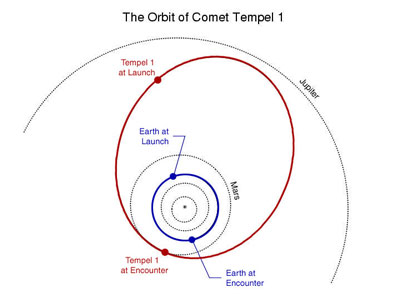
The earth has had oceans for billions of years. Some of the water in the oceans outgassed from the earth as it cooled after planetary accretion. Other parts of it may have accumulated from comet impacts on the earth.
Cheers!
-

Plantagenet - Expert

- Posts: 26765
- Joined: Mon 09 Apr 2007, 03:00:00
- Location: Alaska (its much bigger than Texas).
Re: Is earth growing?
by peeker01 » Tue 16 Aug 2011, 19:48:42
I've got a better question.......86 million barrels of crude being turned into heat, energy and
co2, every day. A major percentage of this mass escapes into space. Is our orbit changing due to the decreasing mass of the earth? Anybody? 86M x30x6x365=56 trillion pounds +- every year, of course decreasing backwards in time, but it is still alot of angular momentum being lost. No?
co2, every day. A major percentage of this mass escapes into space. Is our orbit changing due to the decreasing mass of the earth? Anybody? 86M x30x6x365=56 trillion pounds +- every year, of course decreasing backwards in time, but it is still alot of angular momentum being lost. No?
- peeker01
- Permanently Banned
- Posts: 725
- Joined: Fri 24 Jun 2011, 18:19:54
Re: Is earth growing?
by The Practician » Tue 16 Aug 2011, 20:14:46
$this->bbcode_second_pass_quote('peeker01', 'I')'ve got a better question.......86 million barrels of crude being turned into heat, energy and
co2, every day. A major percentage of this mass escapes into space. Is our orbit changing due to the decreasing mass of the earth? Anybody? 86M x30x6x365=56 trillion pounds +- every year, of course decreasing backwards in time, but it is still alot of angular momentum being lost. No?
co2, every day. A major percentage of this mass escapes into space. Is our orbit changing due to the decreasing mass of the earth? Anybody? 86M x30x6x365=56 trillion pounds +- every year, of course decreasing backwards in time, but it is still alot of angular momentum being lost. No?
From wikipedia on atmospheric loss:
$this->bbcode_second_pass_quote('', 'E')arth is too large to lose particles efficiently through Jeans Escape.[dubious – discuss] The exosphere is the high altitude region where atmospheric density is sparse and Jeans Escape occurs. Jeans escape calculations assuming an exosphere temperature of 1,800 degrees show that to deplete O+ ions by a factor of e (2.78...) would take nearly a billion years. 1,800 degrees is higher than the actual observed exosphere temperature; at the actual average exosphere temperature, depletion of O+ ions would not occur even over a trillion years. Furthermore, most oxygen on Earth is bound as O2, which is too massive to escape Earth by Jeans Escape.[citation needed]
Earth’s magnetic field protects it from solar winds and prevents escape of ions, except along open field lines at the magnetic poles. The gravitational attraction of Earth’s mass prevents other non-thermal loss processes from appreciably depleting the atmosphere. Yet Earth’s atmosphere is two orders of magnitude less dense than that of Venus at the surface. Because of the temperature regime of Earth, CO2 and H2O are sequestered in the hydrosphere and lithosphere. H2O vapor is sequestered as liquid H2O in oceans, greatly decreasing the atmospheric density. With liquid water running over the surface of Earth, CO2 can be drawn down from the atmosphere and sequestered in sedimentary rocks. Some estimates indicate that nearly all carbon on Earth is contained in sedimentary rocks, with the atmospheric portion being approximately 1/250,000 of Earth’s CO2 reservoir.[citation needed] If both of the reservoirs were released to the atmosphere, Earth’s atmosphere would be denser than even Venus’s atmosphere. Therefore, the dominant “loss” mechanism of Earth’s atmosphere is not escape to space, but sequestration.
so now you can sleep easy at night knowing all that heat, energy and C02 isn't being lost into space. In fact, all that extra CO2 we're burning is working to keep the heat -- which isn't particularly heavy by the way-- in.
- The Practician
- Lignite
- Posts: 270
- Joined: Wed 20 Jul 2011, 22:08:02
Re: Is earth growing?
by peeker01 » Tue 16 Aug 2011, 20:22:32
Hmmmm.....I read that three times and I am not sure it is talking about heat and energy.
- peeker01
- Permanently Banned
- Posts: 725
- Joined: Fri 24 Jun 2011, 18:19:54
Re: Is earth growing?
by The Practician » Tue 16 Aug 2011, 20:26:23
$this->bbcode_second_pass_quote('peeker01', 'H')mmmm.....I read that three times and I am not sure it is talking about heat and energy.
Then why don't you go put some heat energy on your bathroom scale and tell me what it reads.
- The Practician
- Lignite
- Posts: 270
- Joined: Wed 20 Jul 2011, 22:08:02