Has peak oil theory passed its peak?
$this->bbcode_second_pass_quote('', 'O')pinions vary as to when oil production will peak. But a series of big finds, along with increased efficiency following the recession, may buy us some time. Simon Wilson investigates.
Do we face an energy crunch?
YES
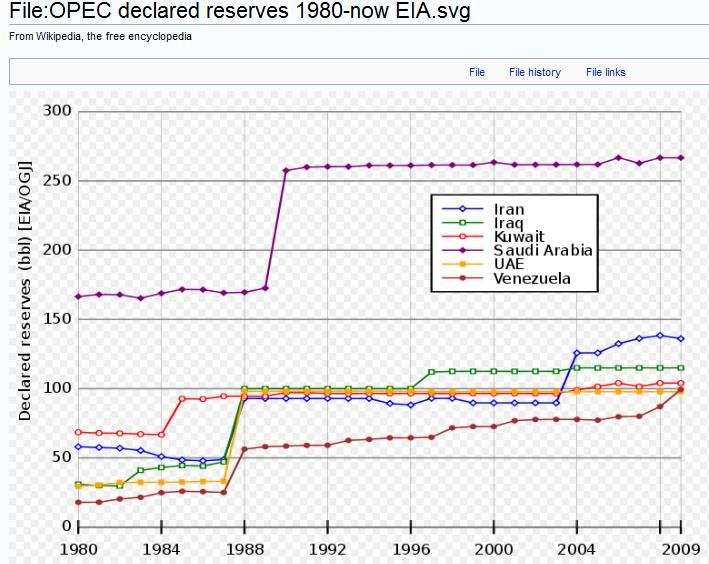
• Oil companies and Opec have been overstating their reserves for years, according to some peak oil analysts.
• The Deepwater Horizon disaster will inflate the costs and risks of offshore drilling, decimating oil exploration (just as the Three Mile Island accident put back the nuclear industry by 30 years).
• Developing world demand is set to explode: much of Asia, Latin America and the Middle East are on the cusp of the $3,000-$4,000 income bracket – the point where demand for energy surges.
NO
• The world's proven oil reserves have doubled roughly every 15 years since 1850, and we now have more than ever before – over 1.4 trillion barrels.
• High prices will continue to drive new technologies and oil discoveries, while the surge in liquefied natural gas and shale gas will take some of the heat off oil.
• Slower economic growth in rich countries has moderated demand in the past, and is likely to do so now.



PeakOil is You
Has peak oil theory passed its peak?
Human history becomes more and more a race between education and catastrophe. H. G. Wells.
Fatih Birol's motto: leave oil before it leaves us.
Fatih Birol's motto: leave oil before it leaves us.
-

Graeme - Fusion

- Posts: 13258
- Joined: Fri 04 Mar 2005, 04:00:00
- Location: New Zealand
Re: Has peak oil theory passed its peak?
 by ian807 » Sun 04 Jul 2010, 14:46:45
$this->bbcode_second_pass_quote('Graeme', 'â')€¢ High prices will continue to drive new technologies and oil discoveries, while the surge in liquefied natural gas and shale gas will take some of the heat off oil.
Sure, for a while. Technologies tend to plateau as they mature. The number of discoveries lessens. The impact does too. You'll notice that we're not driving cars that get 500mpg and oh, that we passed peak oil in the continental USA in the 1970s and somehow the magic of technology hasn't changed that.
Gas is great, and will slow powerdown, but only for a decade or two. Gas plays deplete far more rapidly than oil fields.
Peak oil looks like one of the biggest challenges to our planetary culture. It's not. The challenges are overpopulation and overcomplexity. It's not that we can't live with less energy. It's that the whole multi-system integration that makes modern life possible is dependent on cheap liquid fuels and cheap energy in general. Knock it out too suddenly and we don't get time to adapt. It's not that we can't adapt, it's just that many of us will starve before we do.
-

ian807 - Tar Sands

- Posts: 899
- Joined: Mon 03 Nov 2008, 04:00:00
Re: Has peak oil theory passed its peak?
by tubaplayer » Sun 04 Jul 2010, 16:49:53
Yeah right 
Have you seen the production figures for BPs Thunderhorse field. It is falling off a cliff already. They will be lucky to get 15% of what they originally claimed out of it.
AND for the umpteenth time it is NOT about reserves - it is all about how fast we can pump it out of the ground. It doesn't matter a tiny bit if there are ten thousand trillian barrels of reserves. If we cannot pump it at more than 85 MILLION barrels a day it is game over.
Have you seen the production figures for BPs Thunderhorse field. It is falling off a cliff already. They will be lucky to get 15% of what they originally claimed out of it.
AND for the umpteenth time it is NOT about reserves - it is all about how fast we can pump it out of the ground. It doesn't matter a tiny bit if there are ten thousand trillian barrels of reserves. If we cannot pump it at more than 85 MILLION barrels a day it is game over.
-
tubaplayer - Wood

- Posts: 6
- Joined: Fri 01 Feb 2008, 04:00:00
Re: Has peak oil theory passed its peak?
by Tami » Sun 04 Jul 2010, 22:06:05
$this->bbcode_second_pass_quote('pstarr', 'Y')es indeedy. Those worry-wart Malthusists are sooo wrong.
Of course Malthus was wrong. And to a large extent, because he couldn't predict the future direction of mans ingenuity any better than we can today. The conversion of a noxious, foul, sticky and ugly, tough to dispose and property value reducing substance like oil, into a transport fuel and excellent chemical feedstock, was a turn which Thomas had no chance of seeing in advance.
Judging the validity of peak oil on the failings of Malthus just doesn't seem fair though.
- Tami
- Wood
- Posts: 17
- Joined: Thu 10 Jun 2010, 00:37:59
Re: Has peak oil theory passed its peak?
by Tami » Sun 04 Jul 2010, 22:09:32
$this->bbcode_second_pass_quote('tubaplayer', '
')AND for the umpteenth time it is NOT about reserves - it is all about how fast we can pump it out of the ground. It doesn't matter a tiny bit if there are ten thousand trillian barrels of reserves. If we cannot pump it at more than 85 MILLION barrels a day it is game over.
')AND for the umpteenth time it is NOT about reserves - it is all about how fast we can pump it out of the ground. It doesn't matter a tiny bit if there are ten thousand trillian barrels of reserves. If we cannot pump it at more than 85 MILLION barrels a day it is game over.
What is so special about 85 million barrels a day? Is it a magic number of oil production, or just the one most associated with peak, or plateau?
- Tami
- Wood
- Posts: 17
- Joined: Thu 10 Jun 2010, 00:37:59