
PeakOil is You
JD comes BACK!!!
Re: JD comes BACK!!!
 by dashster » Thu 22 Aug 2013, 23:00:14
When you debunk Peak Oil, you must be making an argument for an alternative "theory". Is there any other theory that contradicts Peak Oil besides the Infinite Oil Theory? Is that what "JD" believes in - the Infinite Oil Theory?
- dashster
- Lignite

- Posts: 385
- Joined: Fri 28 Dec 2012, 08:39:24
- Location: California
Re: JD comes BACK!!!
by AirlinePilot » Fri 23 Aug 2013, 00:22:15
I think..If I recall..JD was more about claiming reserve growth was never estimated correctly and its here where the PO folks fall down. He is partly right, but wishing that it continues seems hard to support given all that has gone on during the last 5 years with global production, GNE, and the price paradigm.
I also recall a large part of his debunking PO has to do with Hubbert Linearization being flawed.
I also recall a large part of his debunking PO has to do with Hubbert Linearization being flawed.
-

AirlinePilot - Moderator

- Posts: 4378
- Joined: Tue 05 Apr 2005, 03:00:00
- Location: South of Atlanta
Re: JD comes BACK!!!
by dashster » Fri 23 Aug 2013, 00:30:48
$this->bbcode_second_pass_quote('AirlinePilot', 'I') think..If I recall..JD was more about claiming reserve growth was never estimated correctly and its here where the PO folks fall down. He is partly right, but wishing that it continues seems hard to support given all that has gone in during the last 5 years with global production, GNE, and the price paradigm.
I also recall a large part of his debunking PO has to do with Hubbert Linearization being flawed.
I also recall a large part of his debunking PO has to do with Hubbert Linearization being flawed.
So he believes in Peak Oil. But he thinks it is aways off. So it should be "Near Term Peak Oil Debunked" or "Peak Oil Delayed".
The amazing thing is that the difference between the pessimists and the optimists with regard to oil production is only a few decades. The response to either prediction should be the same - stop population growth, massive move to alternative energy, electrification of transportation. And yet, those who see it two decades out seem to think we can party on for now, as if we have all the time in the world.
- dashster
- Lignite
- Posts: 385
- Joined: Fri 28 Dec 2012, 08:39:24
- Location: California
Re: JD comes BACK!!!
by John_A » Fri 23 Aug 2013, 01:01:18
$this->bbcode_second_pass_quote('dashster', 'W')hen you debunk Peak Oil, you must be making an argument for an alternative "theory". Is there any other theory that contradicts Peak Oil besides the Infinite Oil Theory? Is that what "JD" believes in - the Infinite Oil Theory?
I think he was a fan of the electrification of transport.
http://peakoildebunked.blogspot.com/200 ... ation.html
45ACP: For when you want to send the very best.
- John_A
- Heavy Crude

- Posts: 1193
- Joined: Sat 25 Jun 2011, 21:16:36
Re: JD comes BACK!!!
by John_A » Fri 23 Aug 2013, 01:03:29
$this->bbcode_second_pass_quote('pstarr', '')$this->bbcode_second_pass_quote('AirlinePilot', 'I') think..If I recall..JD was more about claiming reserve growth was never estimated correctly and its here where the PO folks fall down. He is partly right, but wishing that it continues seems hard to support given all that has gone in during the last 5 years with global production, GNE, and the price paradigm.
I also recall a large part of his debunking PO has to do with Hubbert Linearization being flawed.
Yea. But Defreyess is still uncanningly correct.I also recall a large part of his debunking PO has to do with Hubbert Linearization being flawed.
Well, except for the peak part being back in 2005 anyway.
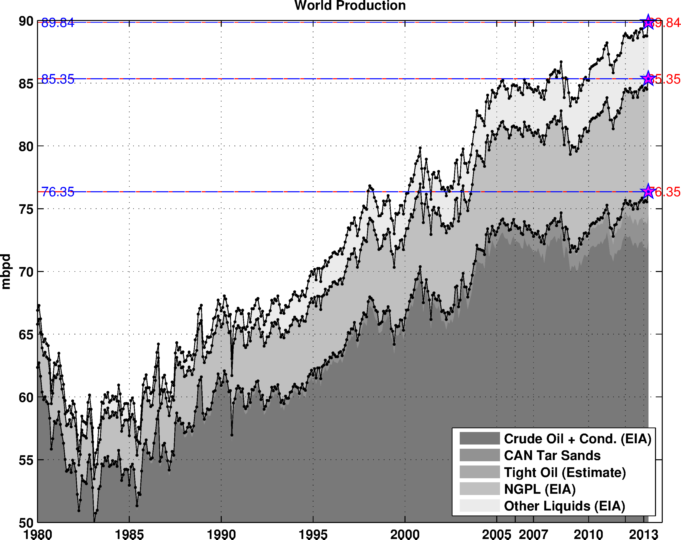
45ACP: For when you want to send the very best.
- John_A
- Heavy Crude
- Posts: 1193
- Joined: Sat 25 Jun 2011, 21:16:36