 by thuja » Wed 07 Apr 2010, 22:30:17
$this->bbcode_second_pass_quote('mos6507', '')$this->bbcode_second_pass_quote('Sixstrings', '
')You only speculate in commodities that you think will rise in price, and that comes from demand overtaking supply.
The moral for peakers in all this is that price instability is a function of speculation. This speculation obscures the fundamental "pure" oil prices that we would otherwise face if it were purely a matter of supply and demand.
So we can't just interpret the charts in a self-serving manner.
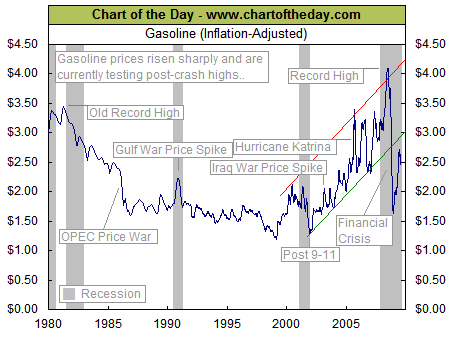
What peakers tend to do is interpret all high prices as reflecting geological depletion, without factoring in speculation. Then when prices tank, it's interpreted solely as demand destruction (aka
peak oil broke the back of the world economy, and causing GD 2.0).
The psychology of speculators is no different from Wall Street in the sense that they can push prices high in a bubble and then cash out and cause prices to tank.
Any analysis of peak oil should be much more nuanced than merely obsessing on the oil price du jour.
For instance, I don't think TOD has done a good job of really digging into speculation, certainly not as much as the 60 minutes piece that was aired right after oil prices tanked. That piece explained that speculation in the oil markets is a relatively new phenomenon, opened up via the same sort of lax regulatory policies and the desire among investors to find some new way to game the system when other investments run dry. This is really something that should be better understood. I've heard that some new controls were put in place to try to limit oil speculation but I don't have any details on it. We really should have a better handle on this so we don't have to guess how much oil prices reflect speculatory frenzy vs. underlying supply and demand.
Quick simple question Mos- do you think speculation could run up oil prices so dramatically in the absence of oil production limitations?
 Where's all the Mad Max drama?









 Gasoline below $1.50