
Peak Oil is You

Donate Bitcoins ;-) or Paypal :-)


Page added on December 22, 2015

What Geological, Economic, or Policy Forces Might Limit Fossil Fuel Production?
Presentation to the American Geophysical Union fall meeting, December 17, 2015, San Francisco; Union Session on “Is Peak Oil Dead and What Does It Mean for Climate Change?”
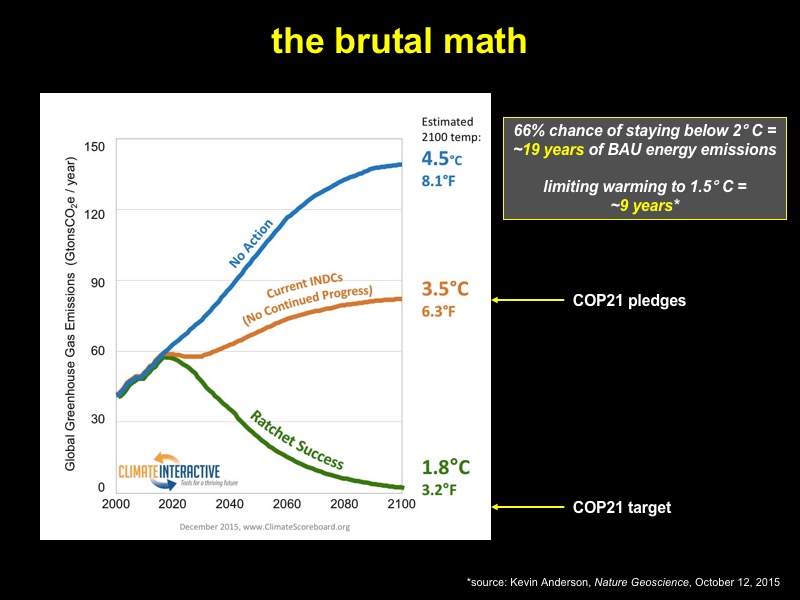
According to the IPCC’s Synthesis Report, achieving a 66 percent chance (or better) of Earth surface temperatures warming only 2 degrees Centigrade over preindustrial times requires emitting no more than 1,000 Gigatons of CO2 between 2011 and 2100. However, as climate scientist Kevin Anderson has pointed out, emissions from energy production between 2011 and 2014 were about 140 Gt. Subtracting realistic emissions budgets for deforestation and cement production, the remaining budget for energy-only emissions to 2100 is about 650 Gt of CO2. That equates to just 19 years of continued business-as-usual emissions from global fossil energy use. The recent Paris agreement states the aspirational goal of not exceeding 1.5 degrees, which would translate to less than a decade’s worth of fossil fuel consumption at current rates—though some climate scientists would argue that we may reach 1.5 degrees and higher on the basis of carbon already released into the atmosphere and oceans.
In any case, as we have heard, some estimates of global fossil fuel reserves—including unconventional oil and gas—imply several times that 650 Gt budget of potential greenhouse gas emissions. While, as previous speakers noted, there is cause to be skeptical of these estimates, it is clear that the carbon budget available to stay within a 1.5 degrees or even 2 degrees warming limit is small. That means a lot of fossil fuels will have to be left in the ground. What socio-political, technological, or economic forces might keep these energy resources from being burned?
There are at least four key potential drivers:
1. Under-investment and the economics of unconventional oil and natural gas.
As Jim Murray has explained, tight oil and shale gas—which offer the greatest and most immediate promise of increased production rates for oil and gas—suffer from high decline rates and the resulting need for high rates of drilling.
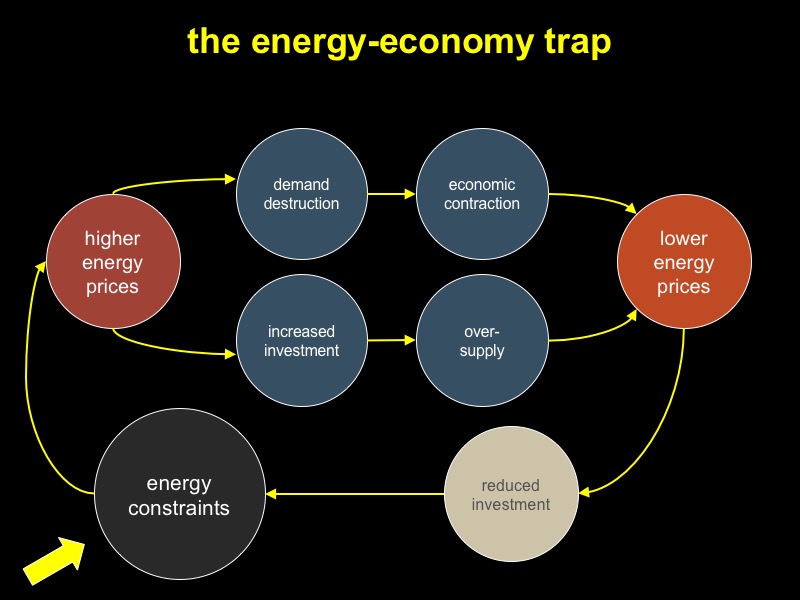
These resources also need high oil and gas prices and cheap, abundant investment capital. But as economist James Hamilton has shown, periods of high oil prices correlate with historic recessions and presumably helped cause them. Recessions reduce oil demand. This may mean that unconventional oil and gas booms are self-limiting.
The assumption of those who do not accept the peak oil reference frame is that when the market rebalances, currently depressed gas and oil prices will go up, leading to more drilling and more production. Subsequently, overall rates of oil and gas production will continue to increase for many years or decades, with prices rising incrementally to support this. But as we heard from Jim Murray and David Hughes, tight oil and shale gas wells are of variable quality, and choice drilling locations are limited in number. Production rates from these resources may already have maxed out regardless of price.
It is probably safe to say that most peak oil theorists assumed until recently that fossil fuel depletion would lead to steadily higher prices. But now different understandings of price dynamics are common. One possibility is that depletion will lead to increasing price volatility, as boom and bust cycles within the industry become more extreme. Another view is that prices may become permanently depressed due to suppressed demand. In either of these cases, investment and production would be constrained, leading to large portions of existing oil and gas resources remaining untapped.
The oil industry needs higher investment per unit of output: between 2009 and 2014, production costs rose at 10.9 percent per year, according to Steve Kopits of energy analysis firm Douglas-Westwood. This is due to the inherent challenge of producing non-renewable resources at ever-increasing rates: Once the low-hanging fruit are gone the next increment of production requires more effort, more technology, and more research and development. Recent industry cutbacks on investment are not because new prospects are cheaper; they’re simply due to low prices. Thus ebbing investment will inevitably mean declining production during the next few years.
The situation for coal is murkier: consumption is rising in India, the Philippines, and some other Asian nations, though China has apparently reached, or nearly so, its peak of consumption of this fuel, and global prices are depressed. Even though very large resources remain, if current prices persist it is entirely possible that most of those resources will stay put.
2. International policy, driven by citizen demand and leadership from key nations.
The results of COP 21 are in, and are mixed at best in the view of many climate activists. While the inclusion of a 1.5 degrees Celsius aspirational target was a welcome surprise, current national pledges to cut emissions put us on a path to 2.7 degrees of warming or more.

Nevertheless, the world is inexorably on the road to adopting carbon taxes, carbon caps, and other policy measures to reduce emissions and hence fossil fuel use. Not only are nations doing so, but also states (such as California and Vermont) and even localities like San Diego, hundreds of which have signed on to goals of achieving significant greenhouse gas reductions.
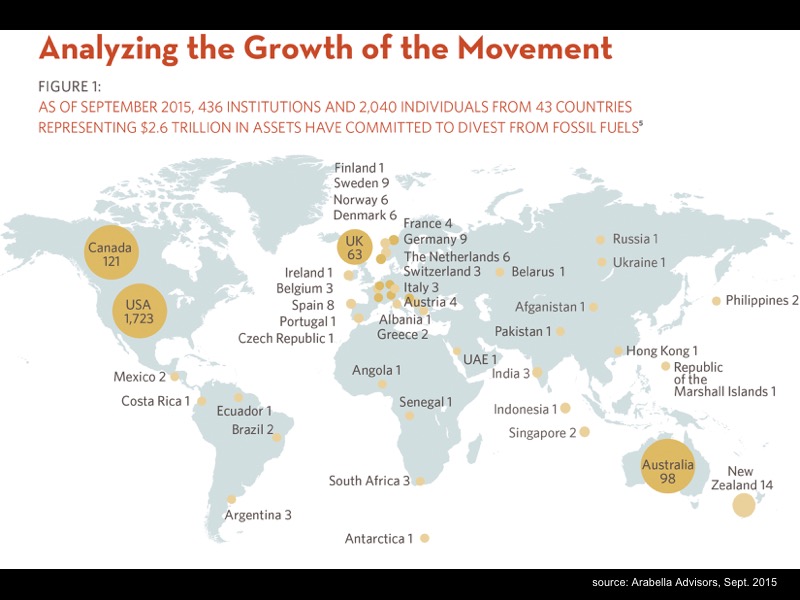
At the same time, climate activist organizations, notably 350.org, have mounted efforts to persuade investment funds to sell their shares in fossil fuel companies. So far, 350.org claims to have secured promises from funds with a total of $3 Trillion in assets to divest from coal, oil, and natural gas. Fiscal responsibility, it is argued, requires acknowledging that most of these companies’ assets are unburnable under the likely terms of existing and future emissions limits agreements. Of course, this divestment strategy works only with publicly traded companies (which amounts to about a tenth of the industry), not with state-owned companies like Saudi Aramco, Pemex, or Statoil.
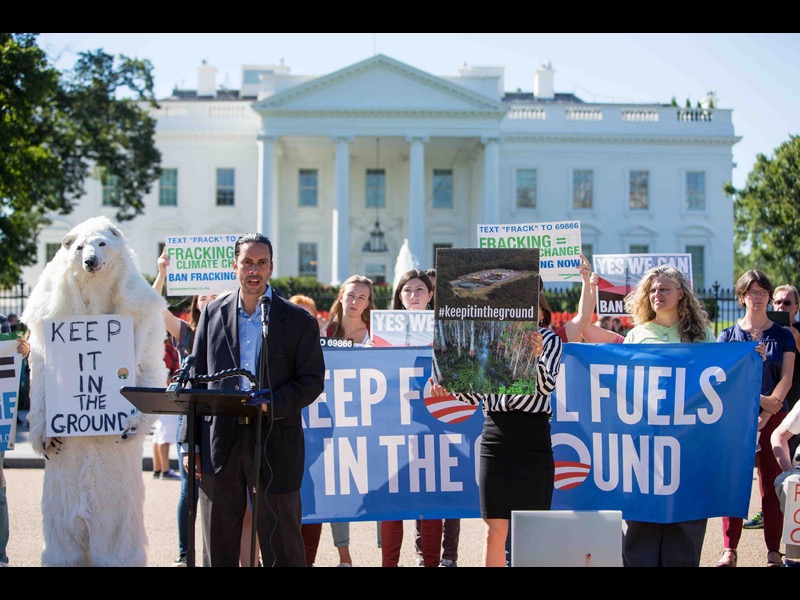
Still, divestment campaigns do appear to be changing perceptions among the general public and among investors, sowing the opinion that fossil fuels really don’t have much of a future.

3. Massive deployment of renewable energy sources and other technological solutions.
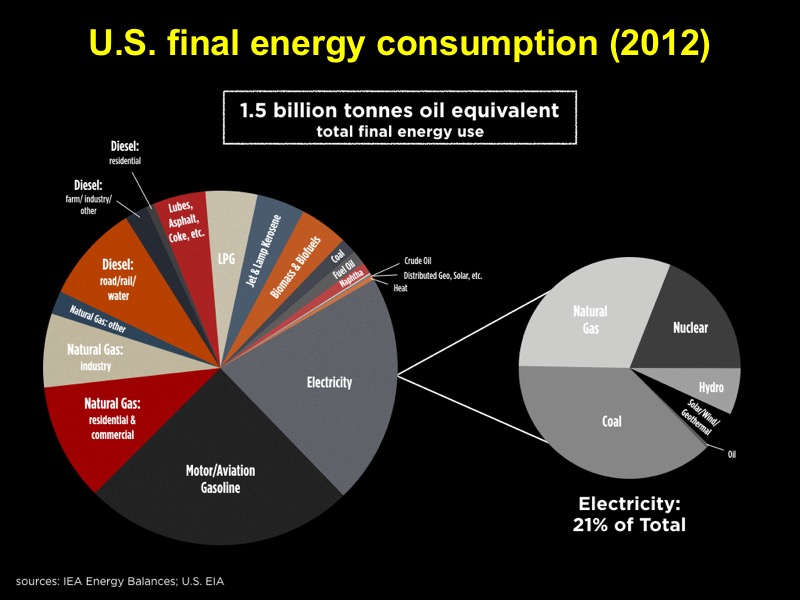
Advocates of solar and wind power propose a massive deployment of these alternative energy sources to reduce fossil fuel use without attenuating the flow of energy to society.
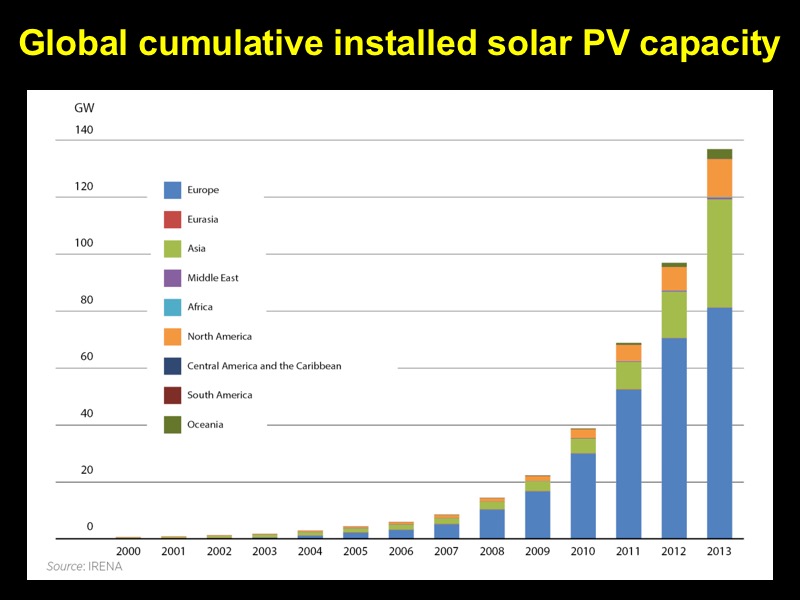
The cost of solar and wind is falling and the rate of adoption is high, though not nearly high enough to avert catastrophic climate change. Since renewables mostly produce electricity, coal will be the fossil fuel impacted first and foremost. Then adoption of electric cars could reduce our oil consumption.
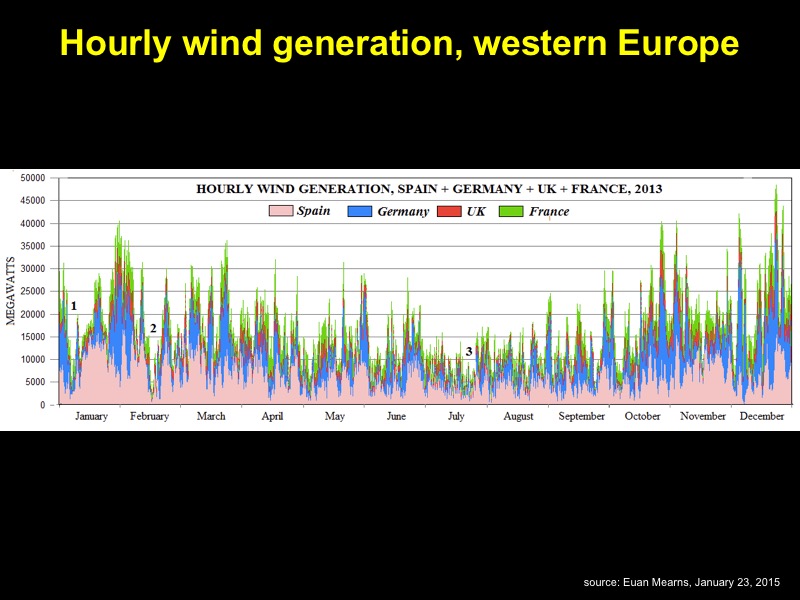
Some energy analysts say solar and wind are incapable of fully replacing fossil fuels in the time we have for the transition because they produce power intermittently; many of these analysts instead advocate a rapid deployment of nuclear power. New versions (modular mini-reactors, thorium reactors, fast breeders) are on the drawing boards and, if the promotional literature is to be believed, they will to be cheaper and safer than existing models.
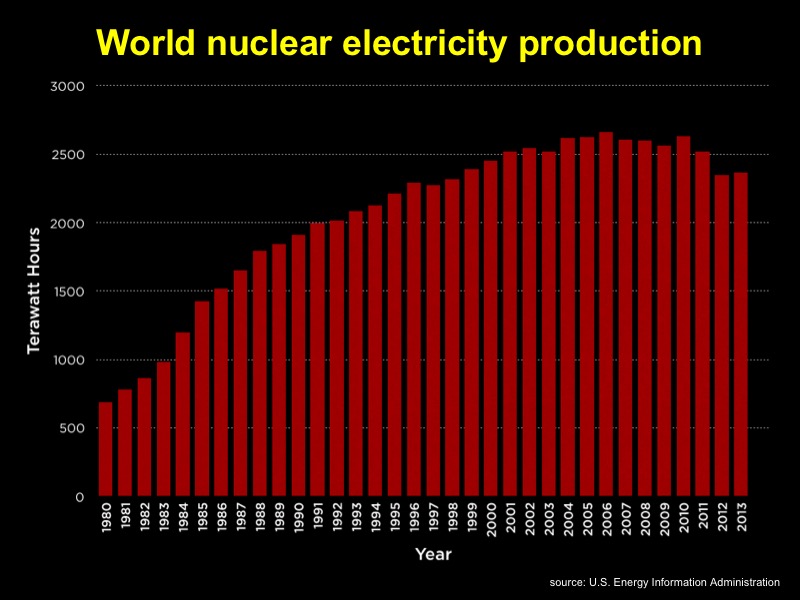
However, nuclear power capacity is still expensive to build, and the nuclear waste problem is yet to be solved. Few nations are expanding their fleets of reactors, while the ongoing Fukushima crisis continues to highlight the risks and costs of existing nuclear technology. Tellingly, the nuclear industry seems incapable of delivering new plants on time and on budget. Given the expense and long lead-time entailed in plant construction, the nuclear industry may do well merely to build enough new plants to replace old ones that are nearing retirement.
Nevertheless, despite challenges with both renewables and nuclear, a major shift toward these energy sources is reflected in all but the business-as-usual IPCC scenarios.
4. Large-scale energy curtailment resulting from global economic contraction.
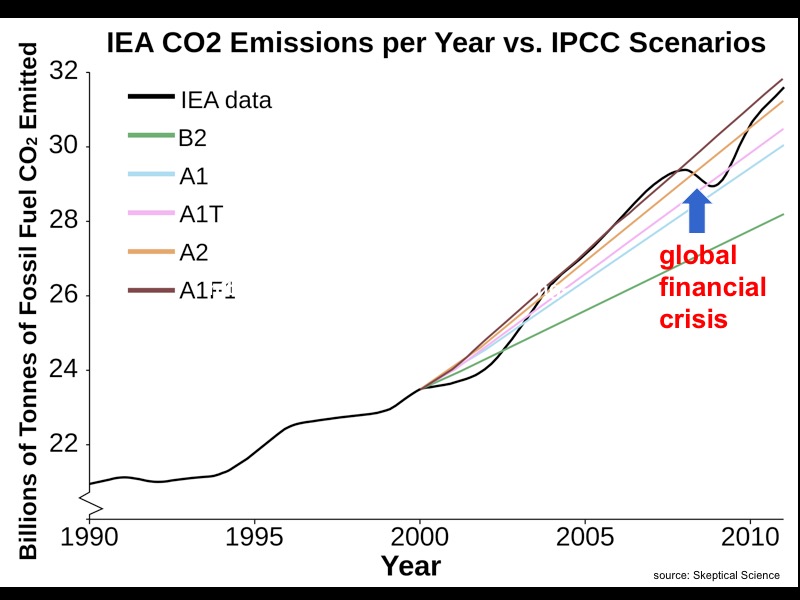
Among the lessons of the 2008 global financial crisis was that recessions result in falling energy demand and investment. In 2009 the oil price dove to $36, hundreds of energy projects were delayed, and carbon emissions dipped by 1.3 percent.
But the effect was short-lived. National governments and central banks quickly deployed quantitative easing, low interest rates, stimulus spending, and bailouts; some of these are still in place seven years later. The effects of these extraordinary efforts included rebounds in stock values and real estate prices, along with the inflation of asset bubbles, including one in the fracking industry. Oil demand and prices also recovered (until recently).
Some say when the next recession arrives, the same tactics can’t be deployed again at the same scale, or they won’t work as successfully. The notion that another de-leveraging recession might be on its way is supported by a study by McKinsey in 2014, which showed that total global debt last year had surpassed its 2007 level by $57 Trillion.
Peak oil theorists argue that depletion of the world’s top energy resource guarantees an endless energy-starved recession beginning at some point in the relatively near future, while climate scientists warn that extreme weather events will increasingly hammer national economies.

But peak oil and climate change are both elements within a larger dynamic described in the 1972 Limits to Growth scenario series, which explored the likely interactions between population growth, resource depletion, and environmental pollution. The standard run scenario, which a recent study confirms the world is following most closely, showed a peak and decline in world industrial output in the first half of the 21st century, followed by declines in food production and population. These trends of course imply a significant decline in energy use as well.
Discussion
From a climate perspective, our best-case future would likely be one in which world leaders negotiate global carbon caps, investment in fossil fuels is insufficient, and both of these developments together ensure reduced coal, oil, and gas production rates and an acceleration in renewables deployment, with the latter growing to replace fossil fuels seamlessly.
But such an outcome faces some impediments.
Even if solar and wind energy supplies could be increased sufficiently, our energy usage infrastructure would require major adaptation.
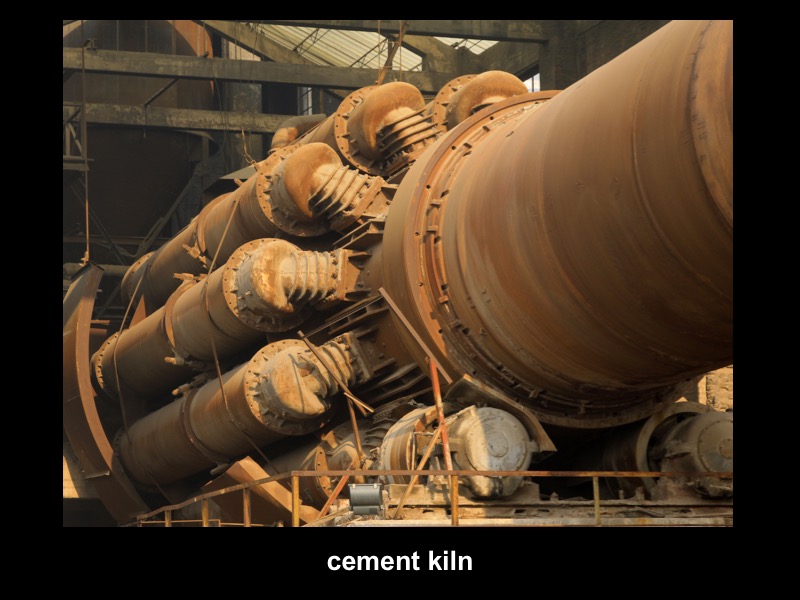
For example, either the cement production process would have to be completely redesigned, or society would have to learn to get by without concrete. The transport sector—notably trucking, shipping, and aviation—also poses hurdles to a no-carbon energy transition.
Also, solar and wind intermittency may present serious problems, depending on whose analysis you accept. If it does, then the cheapest and easiest renewable energy system to engineer would be one led by hydro, geothermal, and biomass, which do not suffer as much from variability. But because these sources do not have large potential for growth, a global energy system that relied primarily upon them would likely not provide nearly as much energy as we currently use.
Indeed, our biggest constraint to achieving a post-fossil energy economy is probably the assumption that we must continue industrial expansion and economic growth. The scale of energy use that we have gotten accustomed to, and that we insist upon expanding into the future, is vast and unprecedented. Economists and planners hate the idea of substantially reducing global energy use. But it is precisely the challenge of scale that poses the biggest hurdle to dealing with climate change.
Many analysts fudge the issue by appealing to decoupling—achieving more growth while using less energy. But according to a recent study by Wiedmann et al., past apparent evidence of decoupling is actually attributable to false accounting. So, apart from efficiency gains from phasing out coal and gas in the electricity sector, we probably can’t grow the economy more while using less energy.
This suggests world leaders should focus much more attention on how to maintain high levels of human development (which is not the same as economic growth) as energy supplies wane.

In summary
Fossil fuel limits might come from any of several directions. That would be good for the climate. But unless we are able to replace energy services from those fuels relatively seamlessly with energy services from alternative sources, we may have to figure out how to get by without economic growth. It might therefore be helpful for world leaders to begin now to examine how to manage the transition to a post-carbon and post-growth economy with the least negative impact to human welfare.
17 Comments on "What Geological, Economic, or Policy Forces Might Limit Fossil Fuel Production?"
buddavis on Tue, 22nd Dec 2015 9:42 am
Without economic growth, how are big government statists going to pay for all of their government programs. Free health care, free college, guaranteed housing, etc
onlooker on Tue, 22nd Dec 2015 9:46 am
Richard Heinberg, sober and analytical in his dissertations. Yes those are factors underlying a reduction in fossil fuel consumption. Of course obviously he assumes the other factor of the geological basis for peak oil is understood by readers and factored in.
Truth Has A Liberal Bias on Tue, 22nd Dec 2015 9:58 am
As soon as someone says ‘statists’ I know they’re an idiot.
paulo1 on Tue, 22nd Dec 2015 10:09 am
This is an excellent article. I was just going to copy and paste it into a distributing email to friends who I occasionally correspond with, and stopped my hand in mouse mid-reach.
To be honest, they all beleive that the current state of low prices and the hyped up ‘glut’ means that Peak Oil was a misguided farce. What is the effing point trying to communicate this stuff to the general population? They don’t beleieve it because they do not want it to be true.
I am using my energy (pun intended) and time to continue with preps. Today, is a FFueled trip to town for more fencing and some hardware with a stop at the liquor store for our yearly Christmas Eve open house we host for other rural friends. I am re-building a predator proof chicken coop and run which is a lot of work. I am 60 and building it to last for 30 years, if not longer!! It has to keep out hawks, racoons, mink, bears, and cougars….pests we have lost chickens to over the years. Its war, brothers, and I am putting up my defensive Maginot line. I was thinking about IEDs, but have settled on a 24/7 live trap under cover which I will open with a firearm. There are also motion lights and barb wire above the 6′ fencing to keep the elk from nosing around. Maybe it would be easier to just teach the racoons to lay eggs.
buddavis on Tue, 22nd Dec 2015 11:12 am
I have done lots of stupid things Truth, so now that we both agree, answer the question.
Revi on Tue, 22nd Dec 2015 11:15 am
It’s exactly what is needed, but nobody will agree to it. They have to keep up the growth meme, even though there is no way it will happen any more. We are going to keep that nonsense going while the whole world is shrinking. We borrowed money to keep the economy going, but that is ending soon…
BobInget on Tue, 22nd Dec 2015 12:32 pm
http://www.aitonline.tv/post-senate_warns_fg_against_nigeria___s_population_increase
In fifteen years Nigeria’s population will equal that of USA.
WHEN Nigeria’s oil runs out, so does two thirds of Nigeria’s income.
The world’s poorest nations are gaining population five time faster then ‘developed’.
https://www.google.com/search?q=Africa%27s+population+growth&espv=2&biw=1164&bih=641&tbm=isch&tbo=u&source=univ&sa=X&ved=0ahUKEwiGjcS0jPDJAhVS72MKHbmDDqYQsAQIKQ
We shouldn’t be wishing for more or less growth but ‘managed’ growth.
Go Speed Racer on Tue, 22nd Dec 2015 4:10 pm
What if we power the entire world economy by burning old tires?
see, here is the link:
http://www.tsktpe.com.tw/english/system_a_e.htm
And here:
http://gbsekhar.com/scrap-passenger-car-tires-tire-derived-fuel
Those annoying south-district tire fires can be a thing of the past:
https://froyonation.wordpress.com/2012/05/03/an-awsome-photo-of-al-jahras-tire-fire/
Won’t that be a perfect technology for our happy motoring society?
http://www.plan59.com/images/JPGs/chevrolet_1957_red_breathe_01.jpg
pennsyguy on Tue, 22nd Dec 2015 6:47 pm
More fine analysis by R. Heinberg, but the last sentence is asking a bit too much. It would’ve been nice if the Nazis embraced tolerance circa 1935 for example, but people in power don’t seem to be flexible or adaptive.
makati1 on Tue, 22nd Dec 2015 7:41 pm
paulo1, I too am planning for another 20 or so years to watch the unfolding events. At 71, and with a long lived family (My mom celebrates 90 years next summer. My dad passed at 88. His brother is 94 and still going strong.), I have a good chance at my goal.
We too need a chicken coop that is varmint proof, but our varmints are smaller and less destructive than yours. We have eagles big enough to carry away a chicken, piglet, small dog, etc and will, given the opportunity. Our night predators are monitor lizards as big as a dog and as hungry. Then there are the occasional monkey tribes, which we have not found a way to discourage from pilfering fruit or getting into everything to satisfy their curiosity.
Those are much more interesting challenges than trying to educate my family in the US that doesn’t want to hear it or thinks I am crazy. I have converted one out of, say, 100 and she is probably the most intelligent of the bunch. At 46, she went back to college and is a few months from being a Registered Nurse. She did it all while helping her hubby in his business and raising 4 kids. She is the only reason I have hope for humanity. Maybe there are enough like her to pick up the pieces and move on after. If there is an ‘after’ to do so. I hope so.
adonis on Tue, 22nd Dec 2015 7:44 pm
ill never look at concrete the same way again
GregT on Tue, 22nd Dec 2015 9:58 pm
END THE FED, and all of the other Central Banks that TPTB control. Allow the people to issue their own currencies, without interest attached. There is no good reason for continued economic growth, other than to continue feeding the beast that will ultimately destroy what is left of our societies.
Stop voting the puppets in, and vote for people that have the balls to stand up against the globalists, and stop supporting the MIC.
makati1 on Tue, 22nd Dec 2015 10:11 pm
GregT, intelligent voting takes intelligence. But since that is rare in the US, and all real government offices have to be vetted by TPTB, nothing will change until it is forced to change by reality’s 2X4. By then, it will be too late.
theedrich on Wed, 23rd Dec 2015 4:42 am
The real merit of Richard Heinberg and his crew lies in the fact that they expose the media and the oligarchs behind them. If the masses are not entertained by diversions of all sorts and by cheery stories of helping the proliferating low-IQs to increase and multiply, the viewers will simply turn the channel. Mental deviance is pretty clearly on the rise in America. One sees it in the increasing acceptance of IQ-destroying narcotics, in the rising suicide rates for White men (applauded by the Lefties and the race-mixers), and in the perversion of the political system by bribe-o-crats behind both major parties, among other things.
The Post Carbon Institute is a kind of Distant Early Warning line for our planet. (The DEW was a string of radar posts in the circumpolar regions to monitor Soviet missile launches and warn against them in time to allow the U.S. to counterattack the USSR.) Unfortunately, there is no one in any government who is seriously listening to the PCI’s alerts. BAU reign supreme. The only fly in the ointment seems to be the fact that our regime’s project to subjugate Allahland does not seem to be going well (except for the military-industrial lobby). Meanwhile, the hundreds of thousands of lower anthropoids now being imported from World Three by the oligarchs require vast new amounts of energy of all types. With puppet despots like Ø determined to provide the importees with everything “American values” (i.e., refried Christianity) can dream up, there is zero chance of avoiding the forced demise caused by the limits to growth. But Heinberg nonetheless deserves a Medal of Honor for his efforts to awaken us.
Kenz300 on Thu, 24th Dec 2015 9:37 am
Climate Change is real…….deal with it………
It Wasn’t Only Exxon That Knew About Global Warming Since the 1970s
http://ecowatch.com/2015/12/24/exxon-knew-global-warming/?utm_source=EcoWatch+List&utm_campaign=6d322e1a1b-Top_News_12_24_2015&utm_medium=email&utm_term=0_49c7d43dc9-6d322e1a1b-86023917
Kenz300 on Thu, 24th Dec 2015 9:02 pm
The smaller producers go under to be cherry picked by the big guys……
Oil Bankruptcies Reach Highest Quarterly Level Since Recession – Bloomberg Business
http://www.bloomberg.com/news/articles/2015-12-24/oil-bankruptcies-reach-highest-quarterly-level-since-recession
makati1 on Fri, 25th Dec 2015 7:28 am
Kenz, they have known about global warming since, at least, the 40s.
http://www.globalresearch.ca/climate-engineering-and-polar-meltdown-how-long-has-it-been-going-on/5497738
“The power structure deployed the first large scale geoengineering efforts immediately after WWll. Massive historical congressional reports and presidential reports prove climate engineering has been conducted since the mid 1940s. The warming of the planet was temporarily slowed (till the mid 70s) due to the short term cooling effect of injecting of aerosols into the atmosphere (as mentioned earlier in this article). The toxic battle between the buildup of greenhouse gases and the loading of the atmosphere with light scattering particles was underway.”