
Peak Oil is You

Donate Bitcoins ;-) or Paypal :-)


Page added on November 2, 2015

Ten years that changed everything; and prevented all change
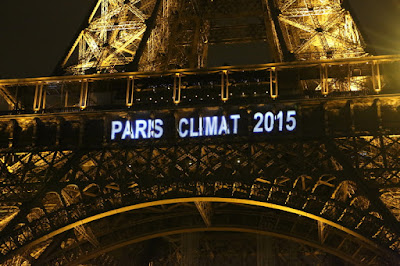
We are one month away from the COP-21, in Paris, that should change everything – and will probably change nothing relevant. But change does occur, even though in ways that often surprise us, and in ways we may not like to see. The past decade has been a period of enormous changes and, also, a decade of gigantic efforts aimed at avoiding change at all costs. It is one of the many contradictions of our world. So, let me try to tell the story of these difficult years.
– The acceleration of climate change. In 2005, climate change seemed to be still a relatively tame beast. The scenarios presented by the IPCC (at that time updated to 2001) showed gradual temperature increases and the problems seemed to be decades away – if not centuries. But 2005 was also the year when it became clear that limiting warming to no more than 2 degrees C was much more difficult than previously thought. At the same time, the concept that climate change is a non linear process started to penetrate the debate and the danger of the “runaway climate change” was more and more understood. The events of the decade showed the rapid progression of climate change. Hurricanes (Katrina in 2005, Sandy in 2012, and many others), the melting of the ice caps, the melting of the permafrost, releasing its deadly charge of stored methane, giant forest fires, entire states going dry, the loss of biodiversity, the acidification of the oceans, and much more. It was found that high temperatures affect humans more than it was believed and, as a last straw, that the negative effects on the human behavior of increasing CO2 concentrations are much more important than previously believed. We are discovering with horror that we are transforming our planet into a gas chamber and we don’t know how to stop.
– The rise of denial. In 2005, the denial of climate science seemed to be in decline, to be buried in the dustbin of history by the accumulation of scientific knowledge on climate. It was not to be so. The campaign against science went into high gear, using the full range of propaganda techniques available. In 2008, we saw the so-called “climategate” scandal, possibly the most successful negative PR campaign ever mounted. In 2011, the “pause” meme was diffused by the Daily Mail, and it was another remarkably successful propaganda attack. Then, individual climate scientists were harassed, demonized, investigated, and even physically threatened, while the public was the objective of a barrage of contradictory information destined to create uncertainty and doubt. The campaign was successful, especially in the US. During the 2012 presidential campaign, we saw both candidates avoiding the climate change issue as if it was laced with poison. And, in 2015, we see something never seen before: none of the Republican presidential candidates agree that climate change is caused by human activities, and that it is a problem. Denial remains a heavy burden to the attempt of doing something practical to stop climate change.
– The peak that wasn’t. In 1998, Colin Campbell and Jean Laherrere re-examined the ideas of Marion King Hubbert, who, in the 1950s, had introduced the concept of “peaking” for the production of crude oil. Their calculations indicated that the world peak – that they dubbed “peak oil” – would occur in 2004-2005. It was a reasonably good prediction in terms of “conventional” oil, which seems to have peaked between 2005 and 2008. But Campbell and Laherrere had not considered the role of “non conventional” oil; combustible liquids such as shale (or “tight”) oil. Using these new sources, the production of “all liquids” kept increasing and that has made the concept of peak oil as popular, more or less, as Saddam Hussein was in the previous decade. The effort of the oil industry to produce from difficult resources led to various bad consequences for the ecosystem (remember Macondo in 2010?), but the main one is that the CO2 emissions did not decline as a consequence of depletion, as it might have been expected.
– The fading of green. In the 1990s, sustainability was still a fashionable idea and Green parties had considerable representation in many European parliaments. Over time, however, the political weight of the environmental movement has constantly eroded. The destiny of the Green parties closely follows that of all the ideas about environmental sustainability, which are not any more part of the arsenal of slogans of winning politicians. Even the European Union, once a bulwark of reason and of environmental consciousness, lost its focus,in particular with the mad hope of importing natural gas from the US. Most people all over the world seem to be so busy with their day-to-day economic worries, that they have no time or inclination to worry about an abstract entity called “the Environment”, which seems to be an expensive luxury that we can’t afford right now. It seems that “growth” has swept away “the Environment” everywhere as the thing to cherish most.
– The financial collapse. The deep causes of great financial crisis of 2008 were never really understood and were reduced to contingent bad practices in finance. However, it was not just a financial crisis, it led the world’s real economic machine to grind to a near complete stop. Production and transportation of goods collapsed for a while, showing the fragility of the whole system. The crisis was overcome by printing more money and the economy restarted to work; but it never recovered completely. And nobody knows whether another financial collapse is around the corner and what could be done if it comes.
– The rise of conflicts. Military confrontation and violent strife are on the rise. We have seen tanks rolling in the very heart of Europe and an immense strip of land in a nearly continuous military confrontation, from North Africa to the Middle East, and all the way further to Afghanistan. Entire nations are crumbling down under massive aerial bombing and civil strife, producing hundreds of thousands of refugees fleeing. Is like a fire that flared once, and now is growing, engulfing one country after another. And nobody can say where the fire will stop, if it will. The only thing we can say is that destructive conflict tends to erupt in those states where the economy was in large part supported by the revenues from fossil fuel exports and where depletion led to the total or partial loss of this revenue. This was the case, for instance, of Egypt, Yemen, and Syria. The struggle may also be related to climate change and the consequent drought, as it is the case of Syria. We can’t say for sure of all this is a harbinger of things to come in other places, but it might well be.
– And more…. The above is not an exhaustive list of all the things that have been going on during the past decade. One could add the erosion of democracy and of personal freedom in the West, the decline or even the collapse of several national economies, the ongoing de-globalization, the increasing competition for rare and limited mineral resources, and much more. But all these events have a common origin. In all cases, people and institutions reacted to change by trying to stop it. For instance, facing the oil and gas depletion, the industry reacted by doubling the effort to find more at all costs, both financial and environmental. And they also stepped up its effort to deny the existence and the danger of climate change. Then, most people tried to solve their immediate economic difficulties by working hard and ignoring the deep reasons of their troubles. And here we are: after a decade of effort to ignore and contain changes, we are facing unavoidable and drastic changes. And we don’t know how exactly to adapt to these changes. It is a difficult time that we are facing.
On the other hand, there has been at least one positive trend during the past ten years.
– The renewable revolution. Solar and wind technologies have dramatically improved in terms of both costs and efficiency. There have been no technological miracles, just steady, incremental improvements. The result is that, in ten years, renewables such as silicon based photovoltaics and wind plants have grown from toys for environmentalists to serious technologies that can produce energy at costs competitive with those of fossil fuels. Renewable energy is the greatest hope we have for a non destructive adaptation to the unavoidable changes ahead. It will not be easy, but it is possible; we need to work hard on it.
14 Comments on "Ten years that changed everything; and prevented all change"
Peak Oil Prognosticator on Mon, 2nd Nov 2015 7:25 pm
“We are one month away from the COP-21, in Paris, that should change everything – and will probably change nothing relevant.”
And by all means ignore peak oil as well.
makati1 on Mon, 2nd Nov 2015 7:37 pm
Followed it all and substantially agreed with the author until the unicorn hugging last paragraph. So sad. Still promoting a system that is totally reliant on oil to exist. I guess ignorance is bliss.
eugene on Mon, 2nd Nov 2015 8:11 pm
All hail the renewables!!! Solar produces about 1/2 of one percent of our electricity. And the rest aren’t any better. Climate change is already in unstoppable territory. In essence, this is a denial article which is what happens when you can’t handle reality.
Meantime Americans are buying big vehicles again and gas consumption is up. Long ago, I learned hope is, often, a deadly thing.
onlooker on Tue, 3rd Nov 2015 1:19 am
Yes, even if we could gear up Renewable which we cannot, by the time we did both peak oil and peak minerals, peak economy and peak alot of things would make it all futile. We should have done it 30 years ago. Now too late. The rest of the article is pretty accurate. We have ignored and resisted change. Well change is coming whether we want it or not.
JuanP on Tue, 3rd Nov 2015 7:33 am
The biggest change that happened to this planet in the last decade is that we have added another 800,000,000 stupid, ignorant people to it. Thank the Gods for renewable energy! If it weren’t for renewables we’d be doomed, but everything will be fine thanks to renewable energy’s capacity to solve all our problems. I have to admit that human stupidity and bat shit craziness had me worried there for a while.
This Paris piece of shit whatever meeting of delusional retards and assholes will not change anything either. Overpopulation won’t be on the agenda. Next year the population will grow by another 80,000,000. You can’t fix stupid!
claman on Tue, 3rd Nov 2015 7:51 am
Over population is THE problem – and, i’m sorry to say, not peak oil. We are not running out of oil in the near future.
P.O. is a part of the big scenario, but there are so many other aspects of world food production, that could/will create a mass die off. And basically it will be over population, AGW and lack of water.
Kenz300 on Tue, 3rd Nov 2015 8:47 am
Climate Change, declining fish stocks, droughts, floods, pollution, water and food shortages all stem from the worlds worst environmental problem……. OVER POPULATION.
Yet the world adds 80 million more mouths to feed, clothe, house and provide energy and water for every year… this is unsustainable…
Pope Francis’s edict on climate change will anger deniers and US churches | World news | The Guardian
http://www.theguardian.com/world/2014/dec/27/pope-francis-edict-climate-change-us-rightwing
Ed on Tue, 3rd Nov 2015 2:43 pm
We all know how this ends. Limits to Growth, published in 1972 set it all out before us. It predicted a population collapse within 100 years. ie sometime before 2072 unless we stopped growing our population AND our GDP right away. It was probably too late at the time the book was published to be honest with you however now we have no chance what’s so ever to avoid a collapse this century, even if the desire is there (which it isn’t).
That is hard to accept, I know.
ps. I worked out renewables provided less that 2kWh/day per person of energy compared to 200kWh/day per person we consume today in the developed world. Dream on if you think renewables will save humanity and then think about how you intend to “renew” the renewables when fossil fuels have all been burnt.
claman on Tue, 3rd Nov 2015 4:48 pm
Ed, Wind and solar renewables are extremly hightech these days, and I admit that you could fear that essential parts of them would be difficult to replace in a global meltdown.
After all, the renewables doesn’t have a life expectancy over more than 20-30 years, and thats it.
Biofuels are probably the long time winner.
GregT on Tue, 3rd Nov 2015 6:58 pm
Why biofuels are not a sensible solution to climate change
http://www.climatechangenews.com/2013/05/03/why-biofuels-are-not-a-sensible-solution-to-climate-change/
Biofuels – Disadvantages of Biofuels – Global Warming
This probably goes without saying and won’t be belabored here, but burning biofuels, which are mostly hydrogen and carbon, produces carbon dioxide, which contributes to global warming. So, even though biofuels may be able to help ease our energy needs, they won’t solve all of our problems.
Now, it may be true that biofuels produce LESS GHG emissions that fossil fuels, but that can only serve to slow global warming and not to stop or reverse it. Thus, biofuels can only be substitutes for the short term as we invest in other technologies.
http://biofuel.org.uk/global-warming.html
claman on Tue, 3rd Nov 2015 7:48 pm
GregT, there’s been a little missunderstanding here.
I guess you see biofuel as corn, salix, sugarcane etc, but in sweden it is understood as waste products from forestring, that is branches bark etc.
It is relatively cheap energy-wise, only takes chopping and transport before it goes into the burner.
GregT on Tue, 3rd Nov 2015 11:11 pm
If it emits greenhouse gases when it is gathered, processed, or burned, it isn’t a solution climate change.
Ed on Wed, 4th Nov 2015 3:46 am
I agree with you, Claman, when you said
“Biofuels are probably the long time winner.”
We’ll be back to a world fuelled by wood by the end of this century.
Kenz300 on Wed, 4th Nov 2015 9:09 am
Climate Change is real…. it will impact all of us……we need to move to clean energy production with wind and solar power and clean energy consumption with electric vehicles……… Fossil fuels are the cause of Climate Change….. we need to deal with the cause….