
Peak Oil is You
Donate Bitcoins ;-) or Paypal :-)


Page added on February 2, 2012

San Diego Nuclear Plant Closed After Radiation Leak
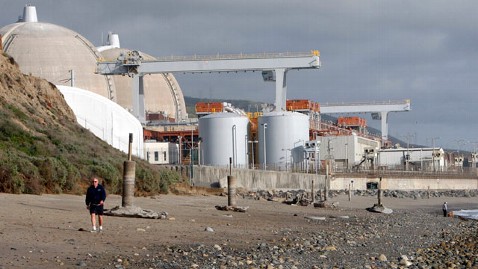
A small quantity of radioactive gas leaked inside one of the buildings at San Onofre nuclear power plant north of San Diego, according to a spokesman for the Nuclear Regulatory Commission.
The spokesman said the radiation levels were “barely measurable,” but the plant was shut down as a precaution.
“At no point were the public or our workers in any danger,” Southern California Edison spokesman Gil Alexander told ABC News.
Officials say the radiation leak likely occurred in the steam generator tubes of San Onofre’s reactor #3. The steam system, which is supposed to be shielded from exposure to radiation, was replaced in December 2010. Alexander said plant officials will be conducting an investigation into why the new steam tubes leaked.
Gary Headrick is part of the environmental group San Clemente Green and lives just eight miles away from San Onofre.
“If we don’t make them shut it down, it’s going to be too late,” Headrick said.
San Onofre is one of dozens of U.S. reactors facing new scrutiny after Japan’s nuclear crisis. It is located right on the coast, and in the heart of America’s earthquake country.
It also is right next door to Camp Pendleton, a Marine Corps base where 38,000 military families live, and another 32,000 people work each day, all of whom would be in immediate danger if there’s ever a meltdown.
ABC News visited San Onofre the day the Fukushima Daiichi plant in Japan melted down. At the time, plant officials were eager to reassure the public that the same thing could not happen on the California coast.
“This plant is safe,” California Edison’s Chief Nuclear Officer Pete Dietrich told ABC News.
After Japan, the Nuclear Regulatory Commission updated its seismic model and in a report issued yesterday found that 96 reactors in the central and southern U.S. are in regions at a higher risk for quakes than previously thought.
The report included parts of the country that are not traditionally seen as geologically active, places like Chattanooga, Tenn., Savannah, Ga., Jackson, Miss., Manchester, N.H., and Houston, Texas.
Major metropolitan areas are uncomfortably close to nuclear plants, with as many as 120 million Americans living within 50 miles of a nuclear reactor, according to the Union of Concerned Scientists.
Indian Point, outside of New York City, has 20 million people living within a 50-mile radius. And Dresden is just 50 miles from the heavily-populated suburbs of Chicago.
Nuclear regulators plan to give plant operators four years to reevaluate seismic risks, but some of the plants may be too expensive to make earthquake safe.
However, in the case of San Onofre, it’s unlikely the leak had anything to do with seismic safety and was probably just faulty equipment. Officials have been taking extra care to reassure the public that there’s no danger, since after Japan, the idea of radiation leaking from a nuclear plant tends to set people on edge.
3 Comments on "San Diego Nuclear Plant Closed After Radiation Leak"
BillT on Thu, 2nd Feb 2012 4:14 am
I live in a country that made a smart decision regarding nuclear power. The Philippines. They have one that was built in the 70s and 80s, by the dictator Marcos, and engineered by Westinghouse.
After Chernobyl, they decided to not use it and it was mothballed. They sued Westinghouse for over pricing and bribery, but the US courts refused to hear the case. At least the Filipino people have no nuclear waste to deal with or radiation leaks to worry about. But, they are still paying the $3.2 billion they were charged for it.
The governments of the world cover up any such leak info to prevent the nuclear plants from being closed by the irate public.
BillT on Thu, 2nd Feb 2012 4:16 am
BTW: The Philippine plant is located near Mt. Pinatubo…yes, the one that erupted and pushed the US military out of it’s base, and major fault lines. Shades of Fukushima Daiichi!!!
DC on Thu, 2nd Feb 2012 4:59 am
Well, thats nuclear power for yea. 5 or maybe 6 decades of the most expensive and dangerous way to boil an egg ever devised, and a 100,000 waste management problem, all at no extra charge.
fine print: 100,000 year waste management problem will actually cost trillions of dollars.The nuclear power industry is not responsible for any death, mutations or glow-in-the-dark-children our operations may cause.