
Peak Oil is You

Donate Bitcoins ;-) or Paypal :-)


Page added on June 11, 2015

Population and Resources
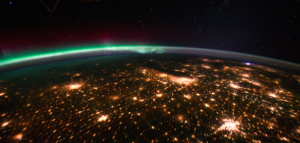
As part of the Millenium Project, 15 Global Challenges have been established to provide a framework to assess the global and local prospects for humanity.
One of these urgent challenges involves population growth, and the globe’s capacity to establish how populations and resources can be brought into balance.
Viewed in terms of the broad sweep of human evolution we live in exceptional times. Before the industrial revolution began in northwest Europe just over two centuries ago and subsequently developed and spread to all the inhabited continents world population had never experienced such rapid, widespread and sustained demographic growth. This unprecedented growth in human numbers, combined in many places with rising living standards, has depended on, and in turn accelerated, a massive increase in the exploitation of natural resources.
The accumulated effects of all this are so large that they are now significantly reshaping our planet’s climate system, the chemistry of her oceans, and the balance and distribution of both plant and animal species. According to some prominent scientists, we now live in the Anthropocene, a new geological era and the first to be defined by human impact on the Earth’s physical systems.

Scientists have adopted a variety of perspectives to examine the relationship between population and resources in closer detail. Writing during the earliest stages of industrialization Malthus believed the relationship contained a fundamental contradiction: while population has the potential to grow exponentially (due to what he called the “passion of the sexes”), the use of natural resources to serve human ends (for example, conversion of land to agriculture) could at most grow arithmetically.
The rapid expansion in the use of fossil fuels, however, and the vast range of industrial technologies this brought about, soon showed that in the modern era the exploitation of resources could grow exponentially too, at least for many decades (and perhaps even centuries). Although non-renewables are finite economists are quick to point out that technological innovation usually means substitutes can be found to ameliorate scarcity. Meanwhile environmental scientists point to the disastrous unintended consequences for ecological systems and human wellbeing of the way many resource are actually used, mainly because of the resulting pollution and the fact that even so-called renewables are being harvested unsustainably, sometimes to the point of extinction.
We have reached the stage where these issues need to be addressed in a holistic perspective. The benefits and costs of resource use are not distributed evenly within or across populations, and dealing with one environmental issue at a time in isolation often simply exacerbates others, frequently to the disadvantage of the poorest members of society. There is a growing body of evidence showing that we cannot balance population and resources unless development itself is made more socially inclusive. Economic growth, environmental sustainability, and social equity are interrelated, and are now widely recognised as the three principal dimensions of sustainable development (SD); population dynamics and good governance impact strategically on all three dimensions.
The infographic accompanying this commentary lists many things people can do to mitigate the current severe imbalance between population and resources – encouraging vegetarianism, anticipating the potential impacts of synthetic biology and other longevity technologies, and so on – but unless these actions are coordinated within a broad SD policy framework their respective impacts are unlikely to combine synergistically. Balancing population and resources is best viewed today as one important objective embedded within the broader goals of SD.
UN Secretary-General Ban Ki-moon describes sustainable development as the “central challenge of our times.” Earlier this year Jeffrey Sachs, special advisor to the Secretary-General and director of the Earth Institute at Columbia University, published an authoritative account of the scientific and normative aspects of SD, and of how all countries need to mobilize to reach its goals. Scientists, policymakers and other stakeholders around the world have been working hard for several years on a new development agenda, and world leaders are on schedule to adopt ten sustainable development goals (SDGs) later this year, to supersede the eight millennium development goals (MDGs). As Sachs puts it, “SDGs call for socially inclusive and environmentally sustainable economic growth.”
Balancing population and resources is not an explicit SDG per se but it is implicit in all ten. Proposed SDG 2, for example, is to “Achieve economic development within planetary boundaries”; SDG 9 is to “Secure ecosystem services and biodiversity and ensure good management of water and other natural resources.” Moreover when we think of population we should not think only of population size and growth; the changing composition of population is of vital importance too, for example, the distribution between urban and rural, the age structure of the population, and the human capital embodied in the population’s membership. Resource use (and its negative consequences as well as its benefits) depends on a population’s composition as well as its size.
While the MDGs focused on eradicating extreme poverty in developing countries the SDGs will apply to both developed and developing countries. (Poverty eradication remains a priority, however: SDG 1 reads, “End extreme poverty, including hunger.”) Australia, like other OECD countries, will be committing to pursuing its economic prosperity in ways fully consistent with social inclusion and environmental sustainability. Improving the balance between changes in the country’s population and her exploitation of natural resources will be an essential element in meeting those commitments.
19 Comments on "Population and Resources"
Makati1 on Thu, 11th Jun 2015 7:30 am
Too little … to late.
penury on Thu, 11th Jun 2015 11:34 am
Dreams of the fields of plenty. There are a sufficient number of struggles for the control of resources around the world to prove to anyone who would care to look that we as a specie are destined to be reduced in number to a much lower number. Check out the studies which have been done on the effects of overcrowding. The complete collapse may be slow but the first wave of the population reduction may be soon.
Lawfish1964 on Thu, 11th Jun 2015 12:27 pm
The central problem in the coming years will not be “sustainable development,” but managed contraction.
Jerry McManus on Thu, 11th Jun 2015 12:33 pm
Ignoring for the moment the sheer absurdity of putting the words “sustainable” and “development” (read: growth) in the same sentence, of the 15 challenges only about 4 or 5 are directly relevant to how “sustainable” (whatever that means) industrial civilization is:
1. Climate change
2. Fresh Water
3. Population
13. Energy Supplies
and maybe 5. Global Foresight
http://www.millennium-project.org/millennium/challeng.html
These map more or less directly to the following critical factors identified by the Limits to Growth (LTG) study first done in 1972 and most recently updated in 2002:
– Population
– Pollution
– Resource depletion
The rest of the 15 Millennium Project Global Challenges can best be described as “social justice” issues and not directly related to our abiltiy as a species to avoid global ecological overshoot and collapse, as described in the LTG study.
If we had started a concerted global effort to meet even those 4 or 5 directly relevant goals 40-odd years ago, when the LTG study was first published, then we might have actually had a shot at avoiding a brutal and bloody die-off of some several billion people.
Sadly, as has been pointed out, even the most well intentioned efforts are now far too little and far too late.
Kenz300 on Thu, 11th Jun 2015 12:45 pm
Renewable energy targets quadrupled globally since 2005
http://www.biodieselmagazine.com/articles/416978/renewable-energy-targets-quadrupled-globally-since-2005
The sooner we move away from fossil fuels to a more sustainable alternative energy source the better.
Kenz300 on Thu, 11th Jun 2015 12:48 pm
The world adds 80 million more people to feed, clothe, house, and provide energy and water for every year.
This endless population growth is not sustainable.
It only leads to more poverty suffering and despair.
If you can not provide for yourself you can not provide for a child.
Wrap it up…. get it snipped…… learn about birth control methods and their effectiveness…
penury on Thu, 11th Jun 2015 1:12 pm
“Renewable energy targets quadrupled globally since 2005.” The news that countries are taking more interest is good. Setting targets is a good exercise. The difficult part always is: How many targets have actually been met. I have a “target” to have a million dollar house and three beautiful 22 year old women to take care of me. Please keep us informed on which targets are met.
Apneaman on Thu, 11th Jun 2015 4:20 pm
A sick world: More than 95% of us are ill
http://www.abc.net.au/health/thepulse/stories/2015/06/11/4253253.htm
theedrich on Thu, 11th Jun 2015 4:49 pm
The reality is: civilization is incapable of excreting.
Perk Earl on Thu, 11th Jun 2015 6:54 pm
“The world adds 80 million more people to feed, clothe, house, and provide energy and water for every year.”
Kenz300, do you if the renewable added each year is more or less than the added energy needs of those 80 million new births?
Makati1 on Thu, 11th Jun 2015 9:46 pm
Waste in the US could feed another 100,000,000 people…
“More than a third of the U.S. food supply goes to waste each year…”
http://www.upi.com/Science_News/2015/06/10/Study-Americans-waste-1616-billion-worth-of-food-annually/9641433966798/
Davy on Fri, 12th Jun 2015 1:46 am
Mak, no doubt, the US waste’s food but so does Asia. The population disparity make even a small difference magnified. Overpopulation is the more significant problem now. Consumption can and will be dialed down significantly when the economic crash comes. Whether that crash is financial, oil based or both systematically we will see a descent to a much lower economic level of activity. It is the overpopulation relative to carrying capacity that cannot be dialed down quickly unless we just want to kill people.
http://www.worldwatch.org/food-waste-and-recycling-china-growing-trend-1
Makati1 on Fri, 12th Jun 2015 4:25 am
Davy, I think you need to come to Asia and see it in real life and up close before you spout US MSM ‘facts’. In China it may be a ‘growing trend’ but in America is is an old way of life. Waste is as American as apple pie and Chevrolet. Waste of everything with no accountability for it. When <5% of the population 'consumes' ~30% of the world's resources, constantly, something is truly wrong. This is in the process of being corrected. Be patient. The 3rd world is coming to Missouri.
Davy on Fri, 12th Jun 2015 7:58 am
Please Makster, you have to side step and mask any truths that are bad coming out in regards to your Asia. Asia is going down the wrong path of overpopulation AND overconsumption. The numbers don’t lie Makster. Asia is no better than any other area in the world but with a huge population magnifying any kind of problem.
I have no intentions of ever going to Asia. My mom went to China and loved some of it but commented on the pollution and crowded cities. I now have an Italian wife so I will go to Northern Italy with her every other year. She is from the Alps in a beautiful small village near Austria. This is another option for me with climate change or collapse. They have a wonderful cattle culture there I could easily fit into.
I am trying to reduce my carbon footprint which is too large as it is. But like you Mak we have to see family far away while we can. If I had my way I would be totally local. I would eliminate fossil fuel transport. I hate travel. When I was in the business world I had the frequent flyer points from so much travel in the US and in Europe. I hate traveling now anywhere period. I am happy when I am on the farm and that is where I want to stay.
Hubbert on Fri, 12th Jun 2015 7:38 pm
Sustainable development sounds like an oxymoron.
Muvh of the world will hit a brick wall in 50 years. Just be ready for it.
Bob Owens on Fri, 12th Jun 2015 8:58 pm
The World has been working on the Population problem ever since the book “The Population Bomb” was written by Stanford University Professor Paul R. Ehrlich and his wife, Anne Ehrlich (who was uncredited), in 1968. End result of all this work: Nothing. Actually, less than Nothing, as our population continues to increase. Humanity is not capable of solving this problem; time to admit failure. The UN, with all its Global Challenges, is a complete waste of time. If women can’t limit their families to 1 child each there is no chance of success on the population front. What say you, Women? Don’t look to the Men for any help on this.
Makati1 on Fri, 12th Jun 2015 9:18 pm
Davy, you seem to ignore the numbers you don’t like. But then you ignore a lot of facts about the rest of the world.
The EU is about to enter the 3rd world as it bows to the empire. If all of the EU doesn’t crash following Greece, I will be surprised. The US is out to destroy Europe along with the rest of the world as the empire gasps it’s last.
Bring your wife’s family to live on the farm. You will never go to Italy to live because it will soon be overrun by Africans and be worse than Asia. Conditions today are no guarantee of conditions tomorrow, anywhere.
I would bring my daughter and family to the Ps, if I could, but the Ps have strict limits on immigration, and I do not have the money to meet the requirements for them. You need a valid ticket out of the Ps before you can even fly here. They have no borders you can just walk over, like the US. or Europe.
Makati1 on Fri, 12th Jun 2015 9:25 pm
Hubbard, 50 years? You are very optimistic! I give it 10 at best and probably a lot less. When it happens it will be a cascade all over the world. Globalization is a curse we will all soon realize as it vanishes, taking most of what we know away forever.
If you are a typical American, you have no idea what your country imports every year to keep BAU.
“America is the world’s second-richest country and largest importer. In 2014, the US bought $2.410 trillion worth of imported products. That total is up by 22.5% since 2010.”
Take a look at the list:
http://www.worldsrichestcountries.com/top_us_imports.html
Top 10 US Imports from China:
China’s exports to America amounted to
$486.3 billion or 20.2% of its overall imports.
1. Electronic equipment: $129.8 billion
2. Machines, engines, pumps: $108.1 billion
3. Furniture, lighting, signs: $28 billion
4. Toys, games: $23.7 billion
5. Footwear: $17.8 billion
6. Knit or crochet clothing: $16.7 billion
7. Clothing (not knit or crochet): $14.9 billion
8. Plastics: $14.9 billion
9. Vehicles: $12.2 billion
10. Medical, technical equipment: $10.6 billion
And on and on…
Davy on Sat, 13th Jun 2015 6:23 am
Folks this is how Mak’s attack should read
I ignore the numbers I don’t like and I ignore a lot of facts about the rest of the world.
The P’s is 3rd world. It will soon be a colony of the Chinese empire. If all of Asia doesn’t crash following China’s crash, I will be surprised. The China is out to usurp all of Asia along with any resources in the rest of the world in an attempt to stave off overshoot and ecological disaster.
I wish I had a farm but I live in a mega 3rd world city called Manila of 12MIL dwelling in a cheap 10th floor apartment. I live on a social security check that could end at any time then I will be destitute. Conditions today are no guarantee of conditions tomorrow, anywhere.
I would bring my daughter and family to the Ps, if I could, but they have no desire to live with a father that deserted them in a selfishness. Ps have strict limits on immigration because it has 100MIL people in an area the size of Arizona with a destroyed ecosystem. The P’s fisheries and forests are near collapse. It is in the cross hairs of destructive climate change with the likes of heat waves and typhoons. I do not have money and wish I did that is why I hate Americans because I have a failed American Life and all I have to show for that life is a social security check that is barely livable even in the P’s. I am old and a failure and life sucks so I criticize and boast. What else can I do?